
News
Judge Strips Google’s Last App Store Friction After Epic Demo
Judge Donato called Play Store search and install steps anticompetitive friction and gave Google seven days to fix them after Epic’s live demo.

Judge James Donato ordered Google on August 13 to strip several remaining steps that make rival Android app stores harder to find and install, giving the company one week to comply after Epic Games staged a live courtroom demo of the process.
The fixes cover search results that bury stores, an extra “view” tap before install, and an interstitial banner that routes users away from normal app listings. Google’s counsel agreed on the spot.
The Demo That Drew the Bench’s Fire
Epic lawyer Yonatan Even walked the San Francisco courtroom through ordinary Play Store searches. A query for “store for apps” returned physical retailers such as Walmart. No third-party digital stores appeared.
“Wait, why did Walmart come up?” Donato asked. “That’s not good.” He then ordered broader coverage: “That is not acceptable, that has to be fixed. I want every possible variation that’s even only 70 percent properly phrased.”
Even next showed the install flow for a rival store. Users had to tap “view” before they could reach “install.” Donato compared it with ordinary apps. “You don’t get that when you’re looking at Apple Music,” he said. “Make that install, not view.”
The third friction came when searching for “app store” or the name of Aptoide, the first rival store now listed. Instead of a normal results list, Play displayed a banner that forced a click into a dedicated third-party stores page.
Take off the ‘are you looking for’ screen, there’s no purpose for that. There’s a friction there that has no purpose whatsoever.
Donato delivered that line after Google’s attorney noted the parties had treated app stores as a special category with advanced permissions. The judge replied that the warning already on the third-party page itself was enough. He wants the changes done “by a week from today.”
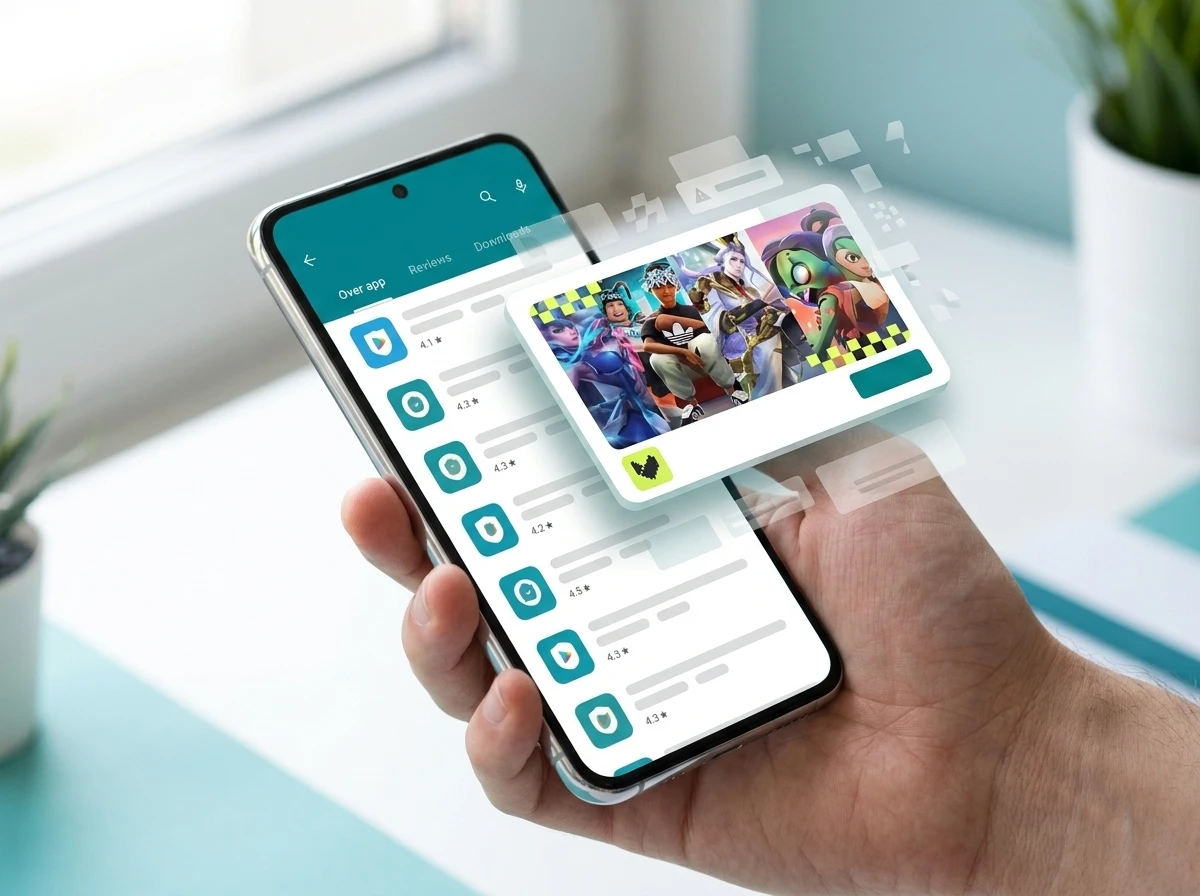
How the Remedy Reached This Courtroom
The hearing sits atop a multi-year antitrust path. A jury in December 2023 found Google maintained an illegal monopoly over Android app distribution. Donato issued a permanent injunction in October 2024 that required Google to carry rival stores inside Play and give them complete access to its app catalog for three years.
- December 2023: Jury rules unanimously for Epic on monopoly counts covering Play and billing.
- October 2024: Donato’s permanent injunction orders rival stores inside Play plus full catalog access and bars exclusive deals for three years.
- 2025-early 2026: Appeals and a proposed settlement that would have certified external stores without hosting them inside Play; the deal is later withdrawn.
- March 2026: Fortnite returns to Play; fee structures drop well below the old 30 percent baseline for many transactions.
- July 22, 2026: Google’s Third-party App Store on Play and Catalog Access programs go live in the United States.
- August 10, 2026: Aptoide becomes the first approved rival store listed inside Play.
- August 13, 2026: Donato orders the remaining search and install frictions removed within seven days.
The original injunction already forced the structural opening. Thursday’s order simply enforces the user experience the court said the monopoly had blocked.
Aptoide Steps Through the Door First
Portugal-based Aptoide, founded in 2009, is the first store to clear Google’s new process. U.S. users can now install it directly from Play with no sideloading warnings. Its CEO Paulo Trezentos confirmed access to Google’s full catalog of roughly 1.9 million apps and 295,000 games under the ruling.
Aptoide itself reports about 25 million monthly active users and more than 400,000 applications of its own. The company framed the return as the end of more than a decade of exclusion. In its announcement, Trezentos said users regain choice and developers gain another distribution path.
The Aptoide returns after more than a decade release also noted the store’s investments in malware detection and developer verification. Early listings remain thinner than Play’s, but the shared catalog is designed to grow.
Google still keeps the third-party stores section relatively buried: users reach it under Apps then Categories, or by searching the store name and following the banner. That burial is exactly what Donato told the company to stop reinforcing through search.
What Google Still Requires of Rival Stores
Participation is not free or automatic. Google published detailed rules for the two linked programs that went live July 22.
| Program element | Third-party store on Play | Catalog Access |
|---|---|---|
| Upfront / annual fee | $15,000 ($5,000 credit toward reviews) | $5,000 |
| Core obligation | Distribute the store itself via Play; submit APKs for review | Offer Play catalog apps via Inline Install; refresh data daily or weekly |
| Security floor | Under 1% malware install attempts over 30 days | Same malware threshold |
| Policy audits | Sample content violation rate under 2% | Aligned trust-and-safety processes |
| Geographic scope | U.S. users | U.S. users only for catalog apps |
Stores must operate as legitimate open marketplaces, keep clear non-discriminatory policies, provide parental controls, and submit their own APK and (for the store program) catalog APKs for Google review before serving them. Google’s third-party app store program fees and rules spell out the annual fee, manual review billing once costs hit $10,000 or monthly, and the requirement that apps follow Play content policies.
The companion Play Catalog Access requirements add that rivals cannot charge extra for catalog apps, must disclose the Play origin, and cannot share the data with other stores. Developers may opt out of catalog sharing, though most are expected to stay in because the channel uses the same versioning and billing.
- Organization developer account and U.S. targeting required
- Transparent user experience with install, uninstall and update controls
- Public trust-and-safety policies covering malware, IP, privacy and restricted content
- No more than 1% malware distribution rate
- Advance APK submission for the store and, where applicable, its catalog
These gates keep Google in the review loop even while the court forces distribution inside Play. Smaller operators may find the $15,000 floor plus variable review costs steep; larger ones can absorb them.
Why Larger Players Hesitated Until Now
Even told the court the search and interstitial problems were not just nuisances for startups. Established companies such as Amazon could decide against launching stores if they lost the ability to appear in ordinary Play search results. A buried dedicated page and extra confirmation steps reduce discovery to near zero for anyone who does not already know the exact name.
That calculation is the second-order effect of Thursday’s order. Aptoide cleared the technical bar first, but Amazon, Microsoft’s planned Xbox mobile store, Samsung’s Galaxy Store, or Epic’s own storefront gain far more once a user typing “app store” or a brand name lands on a normal install button instead of a special banner. Donato’s analogy was blunt: searching “music store” does not trigger an “are you looking for music” interstitial. He saw no reason app stores should be different.
Crowd reaction on X after Aptoide’s appearance already treated the moment as the start of a multi-store era, with speculation that Epic, Amazon and Samsung would follow. The older view from Epic CEO Tim Sweeney that installation from a third-party source must be as simple as a first-party search-and-click remains the benchmark the court is now enforcing in practice.
Google’s earlier settlement attempt would have certified external stores without hosting them inside Play. Once that deal collapsed and the injunction terms stuck, the company began the minimum required hosting. The remaining friction looked, to the judge, like an attempt to keep the spirit of the old exclusive model alive inside the new legal shell.
What Changes for Users and Developers Next
U.S. Android users who open the third-party stores page inside Play currently see Aptoide alone. After the ordered fixes, searches for generic terms and store names should surface rivals in ordinary results, and the install path should match any other app. No more “view” detour, no more forced interstitial for the thing the user already typed.
Developers gain another acquisition channel that still uses Play’s versioning and billing for catalog titles. They can opt out, but the economics favor staying visible in multiple stores. Rival store operators still face Google’s security and policy review, so the safety model does not disappear; it simply stops being a complete distribution barrier.
Google retains powerful levers: the review APIs, the fee structure, the malware and content-rate thresholds, and the ability to pause a store that falls short. The three-year clock on the core injunction continues to run. Monthly compliance reporting is already in place from earlier hearings.
The practical test arrives inside seven days. If search and install behave like ordinary apps, the paper remedy becomes a usable marketplace opening. Larger names that stayed on the sidelines because discovery was broken now have fewer excuses. Aptoide proved the door can open. Donato just ordered Google to stop leaning on it.
That is the shift the courtroom demo forced into the open.


Judge Strips Google’s Last App Store Friction After Epic Demo

Fold 8 Success Makes Its Dusty Hinge Costlier Than Ever

Silver Lake Workday Talks Test PE Appetite for AI-Hit Software

Wholesale Prices Flat but Wage Lag Keeps Households Squeezed

Teen E-Motos Draw Hells Angels Label and Risk Legal Ebike Gains

Apple’s Siri Pay-Per-Use Plan Rewrites News Licensing Rules

Cramer Calls Cisco Plunge a Buy as AI Orders Surge

Play Points Platinum Quietly Cuts Pixel 11 Prices Again

Quincy Gas Station Sold the $1.04 Billion Powerball Ticket

Microsoft Scraps Failed Copilot Features in Forced App Merge

ZA/UM Lays Off 32 Staff as Zero Parades Wins Reviews, Not Players

EA’s New In-Game Ad Platform Skips the Games That Need It Most

Mortgage Rates Climb to 6.55%, the Highest Level in Nearly a Year

Colby Covington Stuns Tsarukyan as Askren Retires in Tears at RAF 11

Netflix Heads Into Earnings With Its 2022 Playbook Already Spent

Spain’s Diaspora-Rooted Squad Wins Over New York Ahead of the Final

NHL’s Monday Matinee Push Puts Capitals Fans on the Clock

DeChambeau’s Two-Shot Penalty Rewrites the Open’s Weekend Draw

Guardians Rout Twins With Seven Homers, Leave Joe Ryan One Shy of Record

England Beats France 6-4 to Claim World Cup Bronze Medal
-

 TECHNOLOGY3 years ago
How to Adjust a Bulova Watch Band – An Easy Guide
-

 News3 years ago
Fred Pentland: Athletic Bilbao’s English mentor who changed the essence of Spanish football
-

 FINANCE3 years ago
Tax Planning for Every Season: Guide to Maximizing Your Tax Benefits
-

 Education3 years ago
African Ministers New Education Plan
-

 BUSINESS3 years ago
What is Entrepreneurial Operating System? A Comprehensive Guide to EOS
-

 Education3 years ago
Innovate Your Learning Journey with Technology and Enhance Education
-

 News3 years ago
Russians formally out of World Athletics Championships
-

 BUSINESS3 years ago
Top 9 Most Expensive American Cities to Rent an Apartment