
News
Microsoft Scraps Failed Copilot Features in Forced App Merge
Microsoft unifies consumer and 365 Copilot apps while retiring Group Chat, podcasts, Deep Research and Mico by August 18.

Microsoft is merging its consumer Copilot app with the Microsoft 365 Copilot app into one experience and retiring several underused AI features by August 18, 2026. The company frames the shift as a simpler, more cohesive product. It also marks a public reckoning with a two-year strategy that scattered effort across dual apps and experimental tools while rivals stayed focused.
The changes, first detailed in Microsoft support pages and reported by GeekWire and TechCrunch, begin rolling out in waves this week. Personal and work accounts stay separated by design. Files move to OneDrive. And the animated Mico character exits the main voice mode.
The Single App Takes Shape
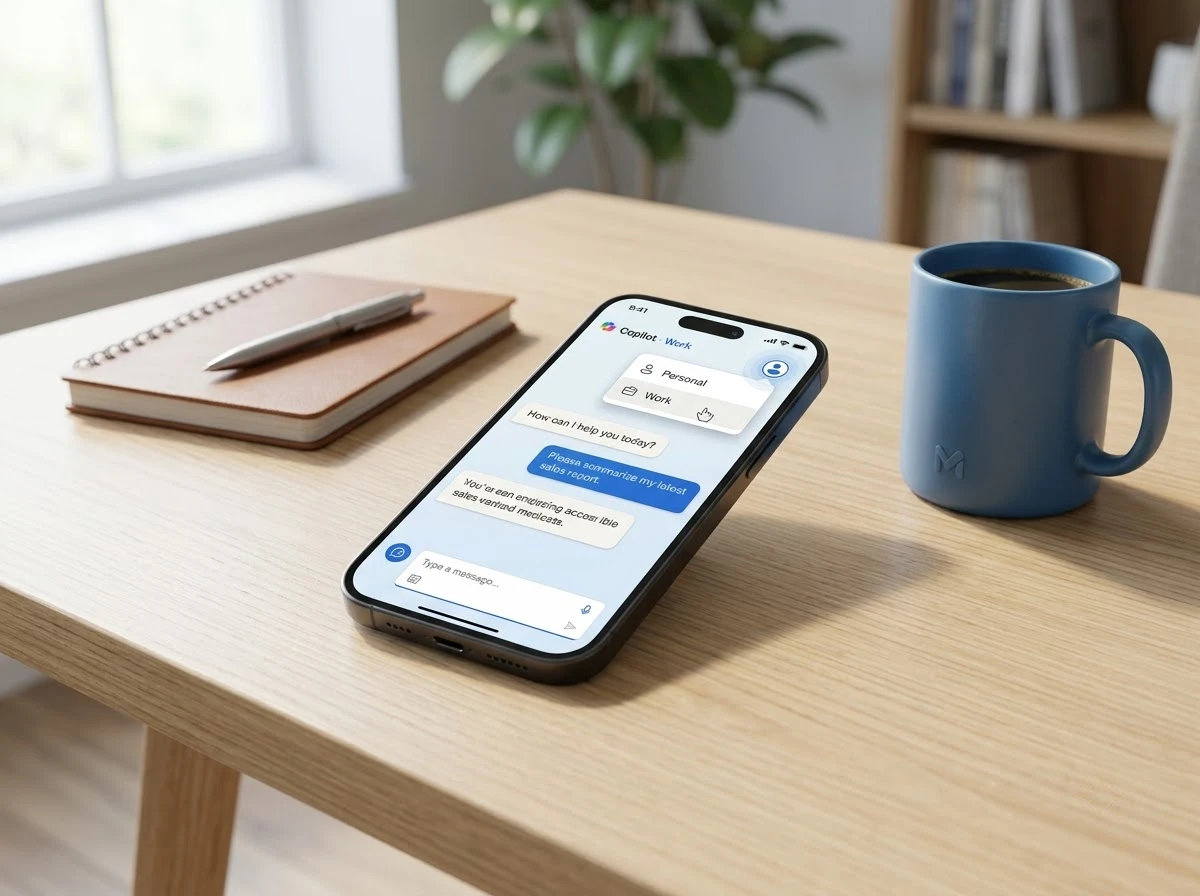
Microsoft’s updated Copilot app support documentation describes a fresh look that pulls chat, image creation and Microsoft 365 power into one place. Users can sign in with a personal Microsoft account, a work or school account, or both, and switch between them. Work data never mixes with personal data. Organization security and compliance controls remain fully in force on the work side.
Core free chat, image generation and file uploads continue, subject to capacity limits. Hitting a limit prompts an upgrade path or a wait. Microsoft 365 subscribers keep higher usage ceilings, advanced models and agent features. The free tier still does the everyday work. Paid tiers hold the headroom and the advanced tools.
- Direct access inside the app to Word, Excel, Outlook and other Microsoft 365 tools plus files and content
- Account switcher that keeps personal and work experiences isolated
- Automatic migration of most chats, images and created content for personal users
- New icon and, for commercial web, a shift from m365.cloud.microsoft to copilot.cloud.microsoft with redirects later in August
Mobile and web lead the worldwide push in mid-August. Windows and macOS follow in mid-September. A small Windows Insider group started this week. Mobile users need an updated app download. Most desktop and web transitions happen automatically with on-screen guidance.
The practical effect is one icon, one chat surface, and one place to open files or launch Microsoft 365 tools. Users who once juggled two Copilot entry points now land in a single shell that still respects the personal and work boundary.
Features That Did Not Survive
Several consumer-side experiments disappear as accounts update. Microsoft published details on retiring Copilot features so users can act before the cutoff.
| Feature | What happens | User action | Replacement notes |
|---|---|---|---|
| Group Chat | Retired after Aug. 18 updates; threads become individual chats with Copilot | Download media shared by others before update | Own messages and artifacts stay; others’ content does not migrate |
| Podcasts | AI-generated audio from sites or docs ends after Aug. 18 | Download individual podcasts from the library menu | No new creation or in-app access afterward |
| Deep Research | Consumer version retires Aug. 18 | Save existing reports from chat history to Word | Researcher tool available to Microsoft 365 Premium and professional tiers |
| Copilot Labs | Experimental early features retire with account update | Save any 3D assets or audio clips beforehand | Frontier in Copilot and MAI Playground expected for future previews |
| Mico character | Removed from Copilot Voice; voice itself continues | Screenshot preferred looks if desired | Character continues in Learn Live tutoring |
Some features such as Shopping or Copilot Health may vanish temporarily for certain users mid-migration and return later. Heavy Health users get delayed migration so the tool is ready on arrival. Free usage limits may feel tighter for some once the new app is live.
The pattern across the retirements is consistent. Shared or experimental surfaces that never became daily habits leave the main product. Capabilities that still matter move behind clearer tiers or into narrower homes such as Learn Live and Researcher.
Mico Leaves the Main Voice Stage
Mico, the floating animated blob that reacted during Copilot Voice conversations, launched less than a year ago and drew immediate Clippy comparisons. It is leaving the core voice experience. Voice chat itself stays. Microsoft says Mico taught the company about warmth and expressiveness, and those lessons feed future work. The character moves to Learn Live, where it acts as a real-time animated tutor.
Settings such as custom colors and looks do not carry over. Voice conversation history migrates with the rest of the chat log. The change rolls out in waves rather than on one global day, so some users will see it sooner than others.
On X and elsewhere the reaction treated Mico as the clearest symbol of the cleanup. The broader crowd read the cuts as Microsoft ending an era of shipping every experimental idea into the main product. Copilot had become a place where features landed first and earned their keep later, or never.
Removing the character from the default voice path simplifies what new users see first. Voice remains a core mode. The personality layer now lives where tutoring benefits from a visible guide rather than where every casual chat begins.
How Different Accounts Move Across
Impact depends on what someone uses today.
| Current setup | What changes |
|---|---|
| Microsoft Copilot with personal account (Microsoft, Google or Apple sign-in) | Moved to updated Copilot app; chats and most content come along; mobile needs new download |
| Microsoft 365 Copilot app with personal account | Minor navigation and icon updates; free Copilot chat now available without extra cost |
| Both apps with the same personal account | Chats and content merge into one updated app; personal and work data stay separate if both account types exist |
| Microsoft 365 Copilot with work or school account | Mostly cosmetic: icon and name update to Microsoft Copilot; minimal experience change otherwise |
No preparation is required for most people. Web users redirect automatically. Existing users receive guidance. Files generated by the standalone Copilot app land in OneDrive. Extra storage needs a Microsoft 365 subscription.
IT teams that excluded the old Copilot app from Windows Recall screenshots must re-apply the exclusion to the new app. The setting does not transfer on its own.
Personal users who kept both apps open will notice the merge most clearly when chats and created content land in one place. Work and school tenants keep the same isolation rules they already rely on. The account switcher is the control that makes both worlds usable without mixing them.
Super App Deadline and the Rival Pattern
This unification is infrastructure, not the full Super App. CEO Satya Nadella told investors the Super App, which is meant to combine chat, coding, Cowork-style agent work and new AutoPilot agents, should ship this quarter, by the end of September. The current merge clears the dual-app clutter so that larger product can land cleanly.
Microsoft is not alone in consolidating. OpenAI folded its Operator agentic feature into ChatGPT and is merging the Codex app into a new ChatGPT desktop experience. Anthropic folded Cowork into Claude Chat. Google has layered deep research and browsing capabilities into the Gemini app rather than spinning out separate surfaces. The industry pattern is clear: one primary surface beats a portfolio of half-adopted ones.
| Company | Consolidation move |
|---|---|
| Microsoft | Merges consumer Copilot and Microsoft 365 Copilot into one app; retires underused experiments |
| OpenAI | Folded Operator into ChatGPT; merging Codex into ChatGPT desktop |
| Anthropic | Folded Cowork into Claude Chat |
| Layered deep research and browsing into the Gemini app |
- This week, Small Windows Insider cohort begins migration
- Mid-August 2026, Mobile and web worldwide rollout starts; retiring features cutoff for updated accounts begins Aug. 18
- Late August, Commercial web address redirects begin
- Mid-September, Windows and macOS unified apps expand
- End of September (target), Broader Super App elements expected
The timeline leaves little room for further delayed experiments. Features either earn daily use or exit.
Seats Versus the Scale Gap
Microsoft reported over 30 million paid Microsoft 365 Copilot seats in its FY2026 Q4 results, up from 20 million in April, with net adds more than doubling quarter over quarter. That figure still represents roughly 7 percent of the more than 450 million commercial Microsoft 365 paid seats the company cited earlier. Sensor Tower put consumer Copilot monthly active users near 38.5 million in July. ChatGPT crossed 1 billion monthly users earlier in the year.
- 30 million+ paid Microsoft 365 Copilot seats (Q4 FY2026)
- ~7% of commercial Microsoft 365 seat base
- 38.5 million estimated consumer MAU (Sensor Tower, July)
- 1 billion ChatGPT monthly users (prior 2026 report)
The gap explains the urgency. Distribution through Office and Windows is massive. Habit and preference for the standalone AI chat surface have lagged. Jacob Andreou, the former Snap executive elevated in March to run Copilot after Mustafa Suleyman shifted to models, told the roughly 11,000-person organization in a July memo that the product had to “earn the right to exist” in customers’ lives. That required dropping what did not work. The memo, reported by The Information, set the tone for the August cuts.
Investors have already priced in large parts of the AI story, visible in earlier Microsoft stock reaction to its AI bets. The product cleanup is the operational half of the same wager: convert infrastructure advantage into daily reliance.
Paid seats grew quickly from the April mark, yet penetration inside the wider commercial base remains thin. Consumer monthly actives trail the leading chat product by a wide margin. Those two gaps are the numbers behind the prune-and-merge push.
The Dual App Strategy Hits Its Limit
For two years Microsoft ran consumer Copilot and Microsoft 365 Copilot as parallel doors into related AI experiences. The split let personal and work identities stay cleanly apart. It also forced users and the company to maintain two shells, two icons, and two mental models for what was often the same underlying chat and creation stack.
Rivals spent that same stretch folding agent tools, coding surfaces and research features back into one primary app. Microsoft’s own Super App target now depends on the same logic. Chat, coding, Cowork-style agent work and AutoPilot agents need a single front door, not a pair of near-duplicates plus a trail of labs experiments.
The August cutoff forces the choice. Group Chat, Podcasts, consumer Deep Research, Copilot Labs and Mico in main voice either lacked sticky daily use or belonged in a narrower home. Keeping them in the default path diluted focus. Retiring them, and merging the apps, is how the company answers Andreou’s demand that Copilot earn its place in people’s routines.
How the Cutover Changes Daily Habits
Once an account updates, the default path is the unified app. Free users still get chat, image generation and uploads inside capacity limits. Crossing a limit means waiting or moving to a paid path. Microsoft 365 subscribers keep the higher ceilings, advanced models and agent features they already pay for.
Content handling follows a few simple rules drawn from the support guidance:
- Most personal chats, images and created content migrate automatically
- Files from the standalone Copilot app land in OneDrive
- Shared media inside retiring Group Chat threads must be saved before the update
- Existing Deep Research reports should be saved to Word if the user wants to keep them
- Voice history moves with the rest of the chat log even though Mico leaves main voice
Work and school users largely see branding and navigation polish. Tenant boundaries, security controls and compliance posture stay in force. The continuity story for enterprises is deliberate: the name and icon change, the controls do not.
The Super App elements still targeted for the end of September would then land on a cleaner base. Unification removes the dual-app tax. Whether that is enough to close the habit gap against a billion-user rival is the open question the next quarter will test.
Users and Admins Face the Cutover
Personal users who leaned on Group Chat for family or friend brainstorming lose the shared thread model. Podcast creators must download audio now or lose easy access. Deep Research heavy users on free or basic Microsoft 365 plans keep old reports but lose the ability to generate new ones unless they move to higher tiers that include Researcher. Labs experimenters need to archive any keepers immediately.
Work users see mostly branding and navigation polish. The real continuity sits in the enterprise controls, tenant boundaries and compliance posture, which Microsoft emphasizes remain unchanged. Admins should re-check Recall exclusions and prepare help-desk notes for the icon and name change.
The company is also pruning elsewhere in AI delivery, including specialist model routing for cyber workloads that aims at lower cost without full general models. Focus is the new operating rule.
Microsoft spent two years describing AI as a generational shift it intended to lead, then built a dual-app, multi-feature surface that proved hard to explain and harder to make sticky against single-surface rivals. The August merge and feature retirements are the consequence of that choice arriving on schedule. The Super App target in the coming weeks will show whether the cleanup was enough to make Copilot the place people actually open first.


Judge Strips Google’s Last App Store Friction After Epic Demo

Fold 8 Success Makes Its Dusty Hinge Costlier Than Ever

Silver Lake Workday Talks Test PE Appetite for AI-Hit Software

Wholesale Prices Flat but Wage Lag Keeps Households Squeezed

Teen E-Motos Draw Hells Angels Label and Risk Legal Ebike Gains

Apple’s Siri Pay-Per-Use Plan Rewrites News Licensing Rules

Cramer Calls Cisco Plunge a Buy as AI Orders Surge

Play Points Platinum Quietly Cuts Pixel 11 Prices Again

Quincy Gas Station Sold the $1.04 Billion Powerball Ticket

Microsoft Scraps Failed Copilot Features in Forced App Merge

ZA/UM Lays Off 32 Staff as Zero Parades Wins Reviews, Not Players

EA’s New In-Game Ad Platform Skips the Games That Need It Most

Mortgage Rates Climb to 6.55%, the Highest Level in Nearly a Year

Colby Covington Stuns Tsarukyan as Askren Retires in Tears at RAF 11

Netflix Heads Into Earnings With Its 2022 Playbook Already Spent

Spain’s Diaspora-Rooted Squad Wins Over New York Ahead of the Final

NHL’s Monday Matinee Push Puts Capitals Fans on the Clock

DeChambeau’s Two-Shot Penalty Rewrites the Open’s Weekend Draw

Guardians Rout Twins With Seven Homers, Leave Joe Ryan One Shy of Record

England Beats France 6-4 to Claim World Cup Bronze Medal
-

 TECHNOLOGY3 years ago
How to Adjust a Bulova Watch Band – An Easy Guide
-

 News3 years ago
Fred Pentland: Athletic Bilbao’s English mentor who changed the essence of Spanish football
-

 FINANCE3 years ago
Tax Planning for Every Season: Guide to Maximizing Your Tax Benefits
-

 Education3 years ago
African Ministers New Education Plan
-

 BUSINESS3 years ago
What is Entrepreneurial Operating System? A Comprehensive Guide to EOS
-

 Education3 years ago
Innovate Your Learning Journey with Technology and Enhance Education
-

 News3 years ago
Russians formally out of World Athletics Championships
-

 BUSINESS3 years ago
Top 9 Most Expensive American Cities to Rent an Apartment