
News
New Twitter.now Bets the Brand Musk Left Behind
Operation Bluebird opens Twitter.now with $20 founders, Gemini Vera fact checks and a trust dial, daring X to prove it never abandoned the name.

Operation Bluebird opened twitter.now early access site this week, charging $20 for founder status and running a Gemini-based fact checker named Vera on every post while insisting Elon Musk’s X Corp. abandoned the Twitter name years ago.
The Virginia startup says it is not affiliated with X in any way. Hundreds of users have signed on so far. The legal fight that began with a cancellation petition last December is still live in Delaware federal court.
The launch bundles three bets at once: a paid gate that funds both product and counsel, an automated trust layer that leaves speech up while cutting reach, and a trademark theory that treats X’s 2023 rebrand as a clean break. Each piece depends on the others holding.
Paid Founders and the Slingshot Badge
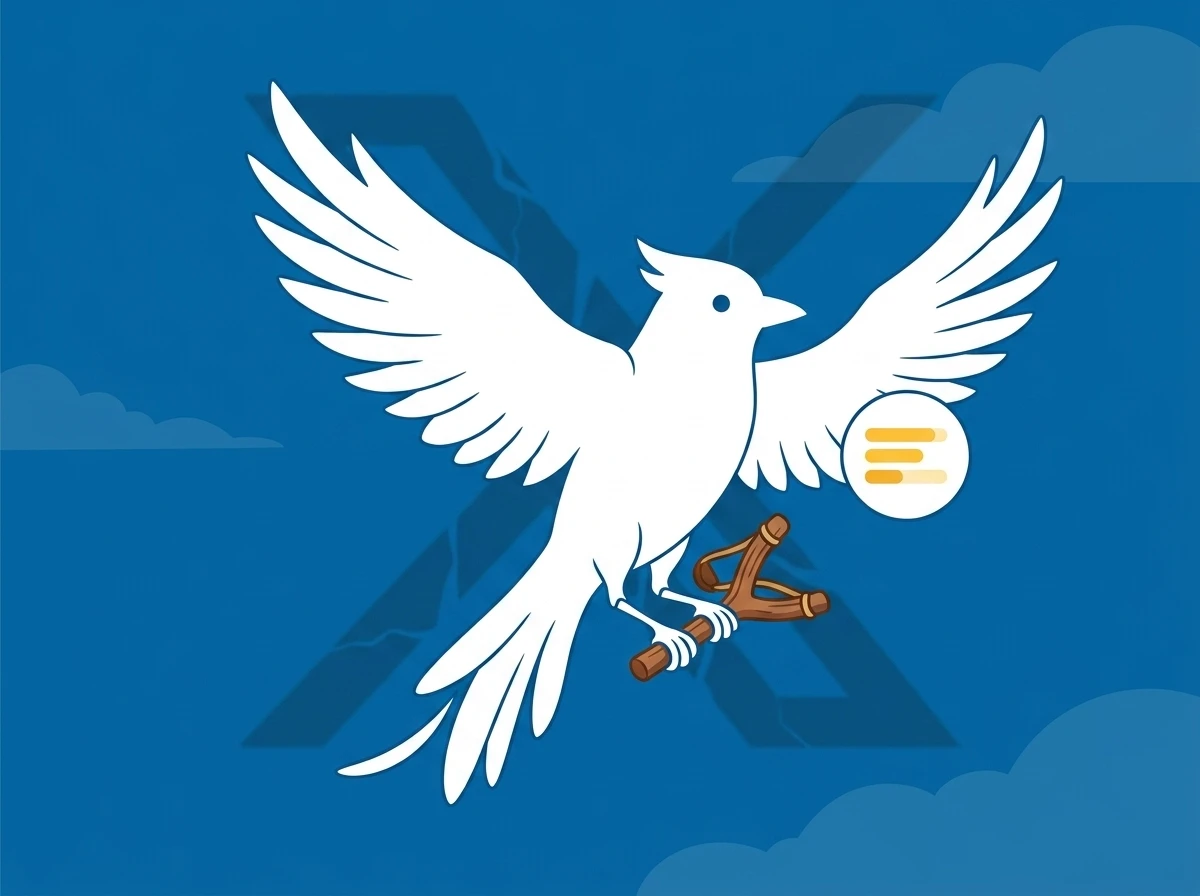
Early access is not free. A $20 payment locks a handle of choice, a numbered founder badge starting at #00001, and entry before any wider public opening. Paying $40 or more upgrades the member to Fighter status and adds a bird-with-slingshot badge.
The company is clear about where the money goes. It funds the build and the trademark defense. The paid door is also meant to keep bots out from day one.
| Tier | Cost | What You Get |
|---|---|---|
| Founder | $20 | Early access, chosen handle, numbered badge |
| Fighter | $40+ | All founder perks plus slingshot bird badge |
The site frames the higher tier as standing up for the square rather than simply buying a seat. When early access closes, founder numbers close with it.
That dual purpose matters. A free open sign-up would invite the same automated swarms the founders want to block. A paid handle raises the cost of bulk registration and, at the same time, fills the war chest for the Delaware case. The numbered badge turns the purchase into a status mark that early testers already circulate.
Fighter status pushes the framing further. The slingshot bird is not a cosmetic extra. It sells the underdog story in plain sight: small company, big opponent, public square at stake. Users who pay the higher amount are buying both perks and a visible side in that story.
Vera Runs on Every Post
The standout product feature is Vera, described as a veracity engine for real-time analysis. It is built on Google’s Gemini model and scores posts automatically. Co-founder Stephen Coates has tested it by posting obvious falsehoods such as “George Washington was our second president.”
Users see trust signals on posts and control a dial that hides material below a chosen score. The company calls the principle freedom of speech, not freedom of reach. Nothing is banned for being wrong. It simply loses distribution.
- Posts carry open trust scores based on the claim, not the person.
- Users set their own threshold; the algorithm does not decide for them.
- Illegal content, child exploitation, threats, harassment and scams remain prohibited.
- The full Birdhouse Constitution and community guidelines are promised with the wider platform.
Our first goal is to see if we can truly bring back a town square that’s safer and less harmful. We say freedom of speech and not freedom of reach.
Stephen Coates, Operation Bluebird cofounder, to Ars Technica
The Operation Bluebird principles page expands on the same ideas: user control over the feed, one set of rules for everyone, and technology that supports judgment instead of replacing it.
The mechanism is simple on paper. Vera scores the claim in the post. The score travels with the content. Each reader sets a personal floor. Material below that floor drops out of view for that reader alone. The poster is not removed for being wrong. Distribution shrinks instead.
Hard limits still apply. Illegal content, child exploitation, threats, harassment and scams stay off the platform entirely. Those categories do not get a trust dial. They get a ban. The promised Birdhouse Constitution is meant to spell out the full line between scored speech and prohibited harm once the wider launch arrives.
The Bench Comment That Opened the Door
Operation Bluebird’s legal theory is straightforward. After Musk rebranded the company to X in 2023, continued use of the Twitter name, the word tweet and the blue bird logo dropped away. The startup filed a petition at the Trademark Trial and Appeal Board to cancel X’s registrations and filed its own applications.
X Corp. sued in Delaware District Court on December 16, 2025, case 1:25-cv-01510, before Judge Colm F. Connolly. It sought a preliminary injunction to stop any new Twitter product. At an April 8, 2026 evidentiary hearing the judge offered a tentative bench assessment that X appeared to have abandoned rights in “tweet,” the bird logo, and possibly the word Twitter itself. No written order has issued. Discovery deadlines have been extended into late August.
- December 2025: Operation Bluebird files cancellation petition and trademark applications; X sues for infringement and seeks injunction.
- April 8, 2026: Evidentiary hearing; Judge Connolly makes tentative abandonment comments from the bench.
- July 2026: Parties stipulate to extend document production to August 31.
- August 2026: Twitter.now launches anyway while the injunction motion remains unresolved.
The full Delaware docket for the trademark case shows active briefing and no final ruling on the core abandonment claim.
The tentative bench comments did not end the case. They did change the risk calculation. A judge signaling possible abandonment on “tweet,” the bird logo, and maybe Twitter itself gave the startup a public opening to proceed while discovery still runs. The injunction motion remains unresolved. Launching before a written order is the bet that the bench tone will hold.
Extended document production into late August keeps both sides in discovery while the live service already carries the disputed marks. That overlap is deliberate pressure. Every day the product stays up tests whether X can still show continuous trademark use after the 2023 rebrand.
Coates Knew the Brand From the Inside
Stephen Coates previously served as Twitter’s associate director of trademarks and later as general counsel before the Musk era. Illinois trademark attorney Michael Peroff is the other named founder. They formed Operation Bluebird specifically to test the abandonment theory and rebuild a public square.
Coates told Ars the company is small, has investors, has a product, and waited months. “We are not going to wait anymore.” In a LinkedIn post announcing the launch he wrote that when X retired the brand they saw a chance to organize a square around trust, transparency and user choice. The bird is back, he added, and definitely not affiliated with X.
That history of Musk’s original Twitter acquisition path is what created the opening they are now walking through.
Coates’s prior roles matter for more than biography. An associate director of trademarks who later served as general counsel knows how the old registrations were maintained, how the bird and the word tweet were used, and where continuous use might have lapsed after the rebrand. Peroff supplies outside trademark counsel depth. Together they built the company around a single testable claim: abandonment after 2023 left room for a new owner of the old marks.
The LinkedIn note and the Ars comments share one tone. The wait is over. Investors are in. The product is live. Affiliation with X is denied in plain language. The bird returns under a different corporate roof, funded by the same early users who wear the founder numbers.
How Abandonment Theory Shapes the Launch
The legal bet and the product bet are the same wager stated two ways. If X dropped continuous use of Twitter, tweet, and the blue bird after the 2023 shift to X, then those marks can be cancelled and re-filed. If the marks still hold, the live service is infringement under active suit.
Judge Connolly’s April comments gave the startup its strongest public signal so far. Tentative findings from the bench are not a final judgment. They still lowered the perceived cost of opening the gates in August while the injunction request sits unresolved and document production runs to the end of the month.
- Cancellation petition and new applications came first, before any public product.
- X answered in federal court rather than only at the Trademark Trial and Appeal Board.
- The preliminary injunction request aimed to freeze any new Twitter-branded service.
- Launch proceeded anyway after the bench comments and during extended discovery.
That sequence shows the strategy. File early. Force X to litigate. Treat a favorable bench tone as cover for a live test. Use founder fees to pay for both code and counsel while the docket stays open. The product is the proof of concept for the trademark theory, and the trademark theory is the only shield the product has.
Trademark Lawyers See Chutzpah and a Hard Fight
Josh Gerben, a Washington DC trademark attorney who has tracked the matter from the start, told Ars the legal theory is workable but far from open-and-shut. “I would say that there’s an element of chutzpah to do this, and they’re going to get the best fight that X has,” he said. Filing the application was one step; launching the live service “really upped the ante.” He advised putting another round of popcorn in the microwave.
His earlier Gerben analysis of the cancellation petition noted that X could have simply defended at the Trademark Trial and Appeal Board yet chose federal court instead, signaling it is not ready to let the brand go.
X has not commented on the launch. Neither has Musk nor counsel Andrew Mayo. The company has already rewritten its terms to bar unauthorized use of Twitter or X names and logos.
Gerben’s popcorn line captures the spectacle. A workable theory is not a won case. Launching the service raised the stakes past paper filings. X’s choice of Delaware federal court over a quieter board defense already showed it would spend to keep the marks. Rewritten terms barring unauthorized Twitter or X branding add another layer of corporate position even without a public statement on this specific launch.
Silence from Musk, Mayo, and X Corp. leaves the docket and the product to speak. Active briefing continues. No final ruling on abandonment has issued. The live site keeps using the name, the bird, and the familiar interaction patterns while that silence holds.
Why the Money Door and Vera Travel Together
Founder fees and the veracity engine solve different problems that arrive at the same time. The $20 and $40 tiers underwrite servers, counsel, and a human-scale early crowd. Vera underwrites the claim that the new square can stay open to speech without handing every falsehood the same reach.
| Lever | Problem it targets | How it works on day one |
|---|---|---|
| Paid founder tiers | Bots, funding gap, weak loyalty | $20 or $40+ buys handle, badge, early entry |
| Vera trust scores | False claims spreading unchecked | Gemini scores posts; users set hide thresholds |
| Hard content bans | Illegal and abusive material | Exploitation, threats, harassment, scams stay prohibited |
Without the paid gate, the defense fund and the bot filter both weaken. Without Vera, the freedom-of-reach line is only a slogan. Without the hard bans, the trust dial would be asked to do work it is not built for. The three pieces are presented as one system: pay to enter, score to rank, ban only the categories the law and safety already require.
Coates’s test post about George Washington showed the scoring path in public. An obvious falsehood still appears. It carries a low trust signal. Readers who set a high threshold never see it. That is the model the principles page describes as technology supporting judgment rather than replacing it.
Hundreds of Users and a Very Public Test
The service still feels like the old Twitter: replies, retweets, a familiar blue aesthetic. Early testers on X have noted the trust scores appear on posts and the founder badges are already circulating. Some call the $20 door a smart bot filter. Others see it mainly as a legal war chest.
Crowd reaction so far treats the launch as both nostalgia play and underdog stunt. The slingshot badge sells the David-versus-Goliath framing hard. Whether a few hundred paying users and an AI fact checker can grow into anything larger while X’s lawyers press the case is the open question the product itself cannot answer.
The platform prohibits the usual harmful categories and says policies will evolve. For now the square is open, the bird is back, and the trademark fight that made the whole experiment possible is also the force most likely to end it.
Early volume is still measured in hundreds, not millions. That scale is enough to prove the gates open, the badges render, and Vera attaches scores in real time. It is not enough to prove a durable network. Growth now depends on whether the nostalgia pull and the trust dial outweigh the risk that a later injunction or final ruling shuts the name down.
Testers split on the fee itself. Bot filter and war chest are both fair readings of the same $20. The company states both goals without apology. Fighter upgrades and slingshot badges lean into the spectacle. The legal docket remains the clock. Extended discovery to August 31 and an unresolved injunction mean the public test and the courtroom test are running on overlapping calendars, with no written order yet to separate them.


NFL Three-Strike Safety Fouls Now Pull Coaches and Clubs In

Browns Fans Tape Protest Signs to Jim Brown Statue Over Watson

Amazon Pixel 11 Deal Erases the $100 Hike for One More Day

Elden Ring on Switch 2 Turns Its Own Worst Label Into a Portable Win

Ternus Takes the Stage With Apple’s Foldable Debut

Ikea Xbox Yxstaby Turns Controller Thumbstick Into Home Furniture

Pokémon Center Turns Past Worlds Wins Into Bundles and a Pikachu Coin

NFL Scraps Pro Bowl Game to Restore Pure Player Honor

New Twitter.now Bets the Brand Musk Left Behind

Bella Mir’s Famous First Loss Meets the Accountant Who Won

Double Fine Cuts 23 Jobs Weeks After Xbox Independence

Day-One Big Walk Lifts PS Plus August Beyond Recycled AAA

Curtis Mead’s Red Sox Debut Ends With Fractured Wrist

John Hight Exits Wizards After Digital Reckoning Hits

Moesch and Dressel Rewrite Night One at 2026 U.S. Nationals

Red Sox Squander Hot Streak Chance in 4-3 Loss to Athletics

Boutte’s Quiet Camp Takeover Forces Patriots Receiver Choices

Take-Two CEO Pushes Netflix Subs for GTA 6 Extended Look

Halo Campaign Evolved Skulls Meet Death Barriers That Kill the Hunt

Wildlands Free Update Hands Players the Tools They Already Invented
-

 TECHNOLOGY3 years ago
How to Adjust a Bulova Watch Band – An Easy Guide
-

 News3 years ago
Fred Pentland: Athletic Bilbao’s English mentor who changed the essence of Spanish football
-

 FINANCE3 years ago
Tax Planning for Every Season: Guide to Maximizing Your Tax Benefits
-

 Education3 years ago
African Ministers New Education Plan
-

 BUSINESS3 years ago
What is Entrepreneurial Operating System? A Comprehensive Guide to EOS
-

 Education3 years ago
Innovate Your Learning Journey with Technology and Enhance Education
-

 News3 years ago
Russians formally out of World Athletics Championships
-

 BUSINESS3 years ago
Top 9 Most Expensive American Cities to Rent an Apartment