
News
American YouTuber Lands on Forbidden Island, Leaves Diet Coke for the World’s Most Isolated Tribe
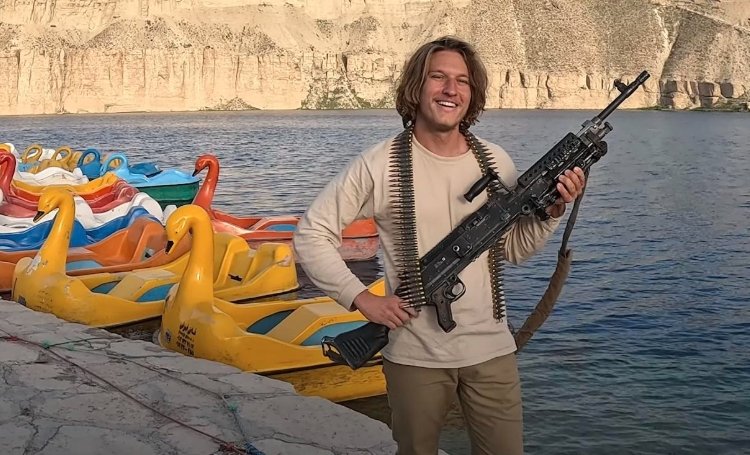
For most, North Sentinel Island exists only in satellite photos and mystery. For 24-year-old Arizona YouTuber Mykhailo Viktorovych Polyakov, it became the centerpiece of a misadventure that now has him facing criminal charges — and global condemnation.
Authorities in India arrested Polyakov late last month after he made unauthorized contact with one of the world’s last uncontacted tribes, the Sentinelese. His offering? A can of Diet Coke and a coconut — all caught on camera for his social media followers.
“I Just Wanted to Say Hello”
It sounds like the opening line of a parody video. But Polyakov, whose YouTube channel often features daredevil travel exploits, took things dangerously far.
On March 29, 2025, Polyakov reportedly breached the three-mile exclusion zone surrounding North Sentinel Island, a restricted territory in the Bay of Bengal administered by India. The island is home to the Sentinelese, a fiercely reclusive people who have violently rejected all outside contact.
Undeterred by history or law, Polyakov navigated toward the island using binoculars, GPS, and what Indian officials called “a reckless disregard for human life.” After two failed attempts in late 2024 and early 2025, he finally made landfall.
There, according to police statements, he blew a whistle, shouted toward the tree line, and waited. When no Sentinelese appeared, he left a can of Diet Coke, a coconut, filmed the moment, and quietly slipped away — or so he thought.
Not the First to Try. Not the First to Almost Die.
Polyakov joins a dangerous legacy of outsiders attempting to reach the Sentinelese. Most infamously, John Allen Chau, a 26-year-old American missionary, was killed in 2018 after a similar unauthorized landing.
India has made it abundantly clear: this is illegal, not to mention potentially catastrophic.
-
Why the law exists: The Sentinelese have no immunity to common diseases. Even minor contact could wipe out the population.
-
Legal protection: Indian law prohibits any approach within 3 nautical miles of the island under the Andaman and Nicobar Protection of Aboriginal Tribes Regulation.
-
Enforcement: Violators can face up to seven years in prison and significant fines.
Despite the risks, Polyakov pushed forward — driven, it seems, by content creation. His arrest came two days later, on March 31, after fishermen spotted his return and alerted authorities.
YouTuber, Explorer — or Reckless Trespasser?
Polyakov’s YouTube content, now partially scrubbed, included footage from dangerous locations around the world — abandoned Soviet facilities, unstable mountain passes, and alleged “off-limits” zones in conflict areas. But this, officials say, was a step too far.
“His actions posed a serious threat to the safety and well-being of the Sentinelese people,” said a spokesperson for the Andaman and Nicobar Police. “He is fortunate to be alive.”
Legal experts in India called the violation both serious and deeply irresponsible. “This isn’t just about violating Indian law,” said anthropologist Dr. Neelika Desai of Delhi University. “It’s about endangering an entire uncontacted population that has made its desire for isolation extremely clear.”
Why the Sentinelese Want to Be Left Alone
The Sentinelese are believed to be descendants of the first human migrations out of Africa — isolated on their jungle-covered island for tens of thousands of years.
Attempts to contact them have largely been met with hostility:
-
In 2004, they shot arrows at a hovering Indian Coast Guard helicopter surveying tsunami damage.
-
In 2006, they killed two fishermen who drifted too close.
-
And in 2018, they fatally attacked John Allen Chau within minutes of his arrival.
With an estimated population of just 50 to 150, their survival depends on strict isolation. The Indian government has opted for a “hands-off” protection strategy, enforcing a total no-contact policy and declining to interfere with their self-sustaining way of life.
Digital Fame, Real-World Consequences
So what comes next for Polyakov?
He is currently in custody and may face multiple charges under Indian law, including trespassing on tribal territory, violating protected zone restrictions, and potentially endangering indigenous lives.
But the case also underscores a wider conversation: the collision between digital fame and ethical boundaries.
As YouTube and TikTok culture incentivize ever more extreme stunts, some content creators are willing to cross lines — legal, moral, and in this case, anthropological.
“We’re seeing a worrying trend of adventurism without accountability,” said Mitali Rao, a cultural sociologist in Mumbai. “The need to go viral is now outweighing common sense — and even human life.”
Whether Polyakov will face jail time remains unclear, but authorities say they’re making an example of the case.
“This is not entertainment,” the Andaman and Nicobar Islands’ Chief Conservator of Forests said in a press briefing. “This is a matter of indigenous rights, public health, and national sovereignty.”
From Arizona to Arrest
Polyakov, originally from Scottsdale, Arizona, had reportedly been planning the expedition for over a year. Sources close to his online community say he was inspired by so-called “forbidden zone” exploration videos.
His channel, which previously boasted over 300,000 subscribers, is now private. Clips of the Sentinel Island stunt circulated briefly before being taken down — though not before Indian authorities had saved enough evidence to build their case.
A quick overview:
| Name | Mykhailo Viktorovych Polyakov |
|---|---|
| Age | 24 |
| Nationality | American (Arizona-based) |
| Charges | Violation of Indian tribal protection laws |
| Date of Arrest | March 31, 2025 |
| Notable Act | Left Diet Coke on North Sentinel Island |
As of this writing, Polyakov remains in custody in Port Blair, awaiting further legal proceedings.












Walmart’s $50 Million Opioid Settlement Closes Case Without Admission

California Sues Over $120 Million Morro Bay Wind Lease Buyout

Gilead Bixlenvo FDA Nod Opens Single Pill Path for Complex HIV Cases

Meta’s $18B Kids Deal Forever Shields Data Used to Spot Under-13s

Lettuce Outbreak Drove Record Cyclospora Spike Across 20 States

Amazon Shaves $20 Off M6 Mac Mini Before It Even Ships

SpaceX Louisiana Port Tests Debt Markets on Orbital AI Scale

Microsoft High Lifts Indexes as Small Caps Crack Support

Apple Replays 2015 Saturday Midnight Preorder for iPhone 18 Pro

Updated COVID Shots Clear FDA but Access Friction Hits High-Risk Groups

Take-Two CEO Pushes Netflix Subs for GTA 6 Extended Look

Halo Campaign Evolved Skulls Meet Death Barriers That Kill the Hunt

Wildlands Free Update Hands Players the Tools They Already Invented

Destiny 2 Fans Unlock Vaulted Maps After Live Service Ends

Quake Gets 19 Free Maps From MachineGames Quake Club

Quordle Monday Delivers Gavel Crush Speed Ethos Cleanly

Stripe Bid Shows PayPal Moat Cracked After Years of Slide

Tyson’s Five-Year Utah Plant Falls to Cattle Shortage Reckoning

Silver Lake Workday Talks Signal Private Floor for Software

Kennedy Lewis Takes Majority Control of The Greenbrier in $500M Deal
-

 TECHNOLOGY3 years ago
How to Adjust a Bulova Watch Band – An Easy Guide
-

 News3 years ago
Fred Pentland: Athletic Bilbao’s English mentor who changed the essence of Spanish football
-

 FINANCE3 years ago
Tax Planning for Every Season: Guide to Maximizing Your Tax Benefits
-

 Education3 years ago
African Ministers New Education Plan
-

 BUSINESS3 years ago
What is Entrepreneurial Operating System? A Comprehensive Guide to EOS
-

 Education3 years ago
Innovate Your Learning Journey with Technology and Enhance Education
-

 News3 years ago
Russians formally out of World Athletics Championships
-

 BUSINESS3 years ago
Top 9 Most Expensive American Cities to Rent an Apartment