
News
Colorado Fire Crew Issues Urgent Battery Fire Warning

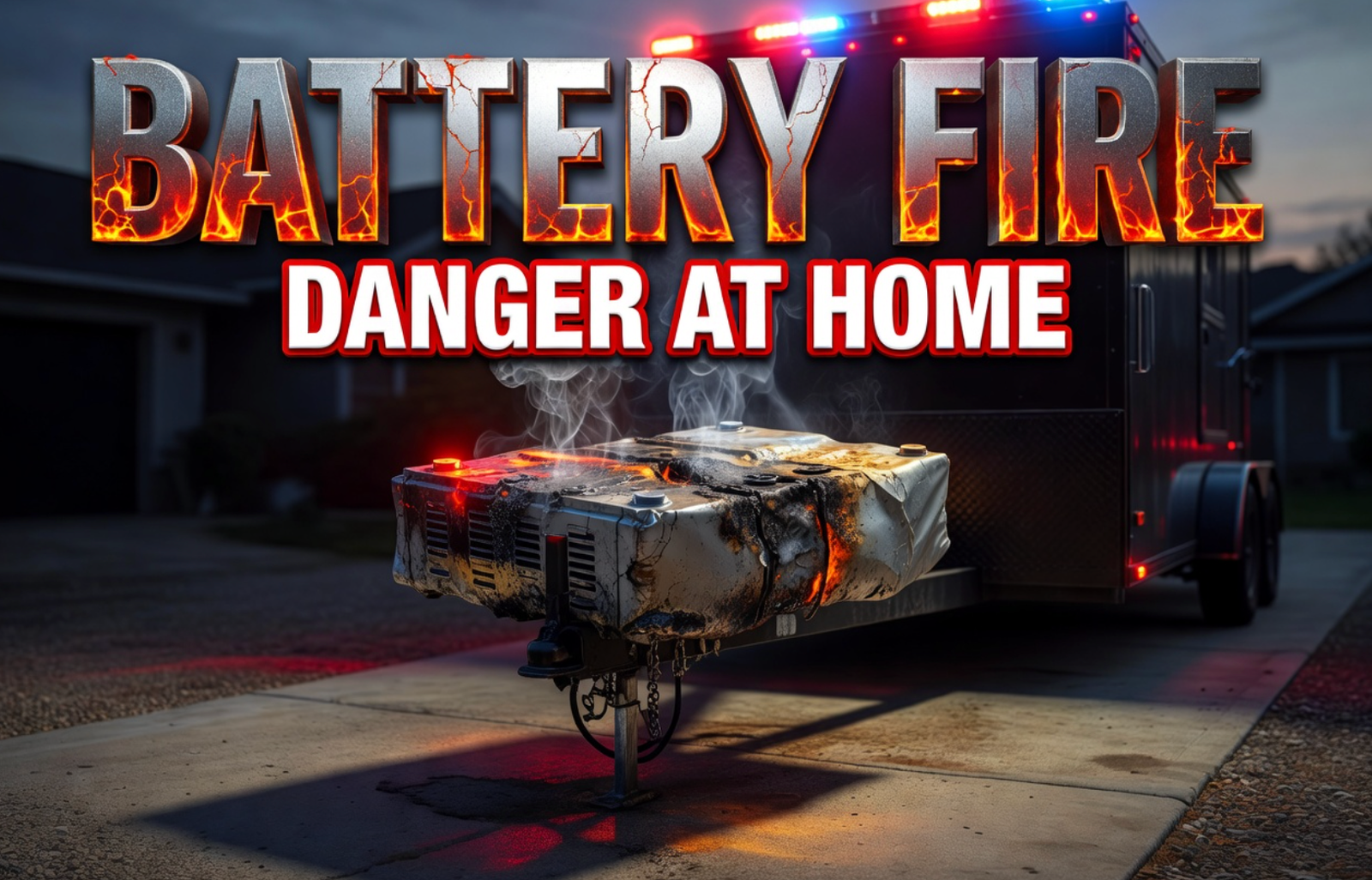
A charging battery on a trailer turned into a weekend scare in Grand Junction, Colorado. Now, the Lower Valley Fire District is speaking out with a message every homeowner needs to hear before it is too late.
What Unfolded Saturday Morning in Grand Junction
At exactly 9:33 a.m. on May 9, 2026, the Lower Valley Fire District received reports of a smoking battery connected to a charger on a trailer in the Grand Junction area. Crews responded immediately and rushed straight to the scene. When they arrived, the homeowners had already taken matters into their own hands. They had started cooling the battery with a garden hose, a quick decision that very likely kept the situation from spiraling into something far worse. Fire crews were able to safely secure and cool the battery, and the incident did not escalate into a full fire. That outcome was fortunate. But the district says this close call is exactly the kind of moment that demands a serious public conversation about battery safety.
This Is Part of a Much Bigger National Problem
What happened in Grand Junction is far from a one-off event. The National Fire Protection Association estimates that U.S. fire departments respond to approximately 1,500 home fires caused by batteries every single year. Lithium-ion batteries alone account for roughly 18% of all battery-related residential fires across the country. The numbers are trending in the wrong direction. The Federal Aviation Administration recorded 97 lithium battery incidents involving smoke, fire, or extreme heat aboard aircraft in 2025. That figure was up from 89 the year before. On the ground, UL Standards and Engagement reported a 42% jump in incidents involving portable chargers in 2025 alone, with experts tracking roughly two battery incidents every single week across the country. The surge in battery-powered devices at home, from camping trailers and e-bikes to smartphones and power tools, means more batteries are being plugged in every day, often without a second thought about the risks.
Why Batteries Become Dangerous and What Happens Inside
The science behind a battery fire is alarming once you understand it. The core threat is called thermal runaway. Thermal runaway is an uncontrollable, fast-spreading chain reaction that starts when an overheating battery cell begins damaging the cells sitting right next to it. Once that cycle starts, it becomes extremely difficult to stop. There are several ways a battery can be pushed into this dangerous state:
- Overcharging: Charging beyond the battery’s designed capacity generates dangerous heat buildup
- Physical damage: A dropped or punctured battery can cause an internal short circuit
- Wrong charger: Using low-quality or incompatible charging equipment accelerates failure
- Extreme heat: Leaving a battery in direct sunlight or a hot outdoor environment destabilizes its structure
- Aging and wear: Older batteries become less stable and more prone to sudden failure
The consequences stretch far beyond just a visible fire. When thermal runaway kicks in, the battery actively releases toxic gases including hydrogen fluoride, hydrogen cyanide, and carbon monoxide. These gases are lethal in enclosed or semi-enclosed spaces and can cause serious injury even before flames appear. Once visible smoke shows up, experts warn that you may have less than one minute to escape safely. And regular fire extinguishers simply will not put out a lithium-ion battery fire.
Warning Signs Every Person at Home Must Know
Batteries often send out clear warning signals before a situation turns truly dangerous. Knowing what to watch for can be the difference between a close call and a tragedy. Here are the five critical warning signs, ranked by urgency:
| Warning Sign | What It Means |
|---|---|
| Excessive heat | Battery or device feels unusually hot to the touch |
| Strange odor | A sweet, chemical, or metallic smell coming from the device |
| Swelling or bulging | Battery casing is visibly cracked, expanded, or warped |
| Odd noises | Hissing, cracking, or popping sounds from the battery |
| Smoke | White or gray wispy smoke signals immediate danger |
Smoke is the final warning. The moment you see it, do not pause, do not try to take a photo, and do not attempt to move it. Evacuate the area right away and call for help. It is also worth noting that the NFPA made lithium-ion battery safety the centerpiece of its national Fire Prevention Week in 2025, under the theme “Charge Into Fire Safety: Lithium-Ion Batteries in Your Home.” That campaign underscores just how seriously fire protection experts across the country are taking this growing risk.
What the Fire District Wants You to Do Right Now
The Lower Valley Fire District is using the May 9 incident to push a clear set of actions. If you ever spot a battery that is smoking, sparking, or producing a strong unusual odor, fire officials say you should:
- Disconnect the battery from power, but only if it is completely safe to do so
- Never touch or handle a smoking or overheating battery with your bare hands
- Move away from the area immediately
- Call 911 right away and let trained crews handle the rest
Prevention is equally important. Always use the original charger that came with the device and avoid using cheap or uncertified replacements. Do not leave batteries charging overnight or unattended for long periods. Store batteries in a cool, dry place away from direct sunlight and anything flammable. Inspect batteries regularly for signs of swelling, cracking, or leaking. When buying any battery-powered product, always look for a UL, ETL, or CSA safety certification mark. Products without these marks may not meet basic safety standards and carry a much higher risk of failure. Fire officials also advise charging devices on hard surfaces rather than beds, couches, or carpeted areas where heat can build up rapidly and go unnoticed. Old or damaged batteries should never be thrown in regular trash or recycling bins, as they can start fires at waste handling facilities. The close call in Grand Junction is a reminder that the batteries quietly sitting on our chargers can become dangerous very fast. The homeowners acted quickly, the crews responded well, and nobody was hurt. But every battery incident does not end that way. The Lower Valley Fire District is asking the community to take these warnings seriously now, not after smoke fills a room. Take a moment today to check how you store and charge your batteries at home, because no device or convenience is worth a fire that puts your family at risk. Share your thoughts in the comments below: do you follow battery safety habits at home, and did this story change the way you think about your charging devices?











Walmart’s $50 Million Opioid Settlement Closes Case Without Admission

California Sues Over $120 Million Morro Bay Wind Lease Buyout

Gilead Bixlenvo FDA Nod Opens Single Pill Path for Complex HIV Cases

Meta’s $18B Kids Deal Forever Shields Data Used to Spot Under-13s

Lettuce Outbreak Drove Record Cyclospora Spike Across 20 States

Amazon Shaves $20 Off M6 Mac Mini Before It Even Ships

SpaceX Louisiana Port Tests Debt Markets on Orbital AI Scale

Microsoft High Lifts Indexes as Small Caps Crack Support

Apple Replays 2015 Saturday Midnight Preorder for iPhone 18 Pro

Updated COVID Shots Clear FDA but Access Friction Hits High-Risk Groups

Take-Two CEO Pushes Netflix Subs for GTA 6 Extended Look

Quake Gets 19 Free Maps From MachineGames Quake Club

Destiny 2 Fans Unlock Vaulted Maps After Live Service Ends

Wildlands Free Update Hands Players the Tools They Already Invented

Quordle Monday Delivers Gavel Crush Speed Ethos Cleanly

Stripe Bid Shows PayPal Moat Cracked After Years of Slide

Tyson’s Five-Year Utah Plant Falls to Cattle Shortage Reckoning

Silver Lake Workday Talks Signal Private Floor for Software

Kennedy Lewis Takes Majority Control of The Greenbrier in $500M Deal

Best Buy Marks 60 Years With Sale That Echoes Its Audio Shop Roots
-

 TECHNOLOGY3 years ago
How to Adjust a Bulova Watch Band – An Easy Guide
-

 News3 years ago
Fred Pentland: Athletic Bilbao’s English mentor who changed the essence of Spanish football
-

 FINANCE3 years ago
Tax Planning for Every Season: Guide to Maximizing Your Tax Benefits
-

 Education3 years ago
African Ministers New Education Plan
-

 BUSINESS3 years ago
What is Entrepreneurial Operating System? A Comprehensive Guide to EOS
-

 Education3 years ago
Innovate Your Learning Journey with Technology and Enhance Education
-

 News3 years ago
Russians formally out of World Athletics Championships
-

 BUSINESS3 years ago
Top 9 Most Expensive American Cities to Rent an Apartment