
News
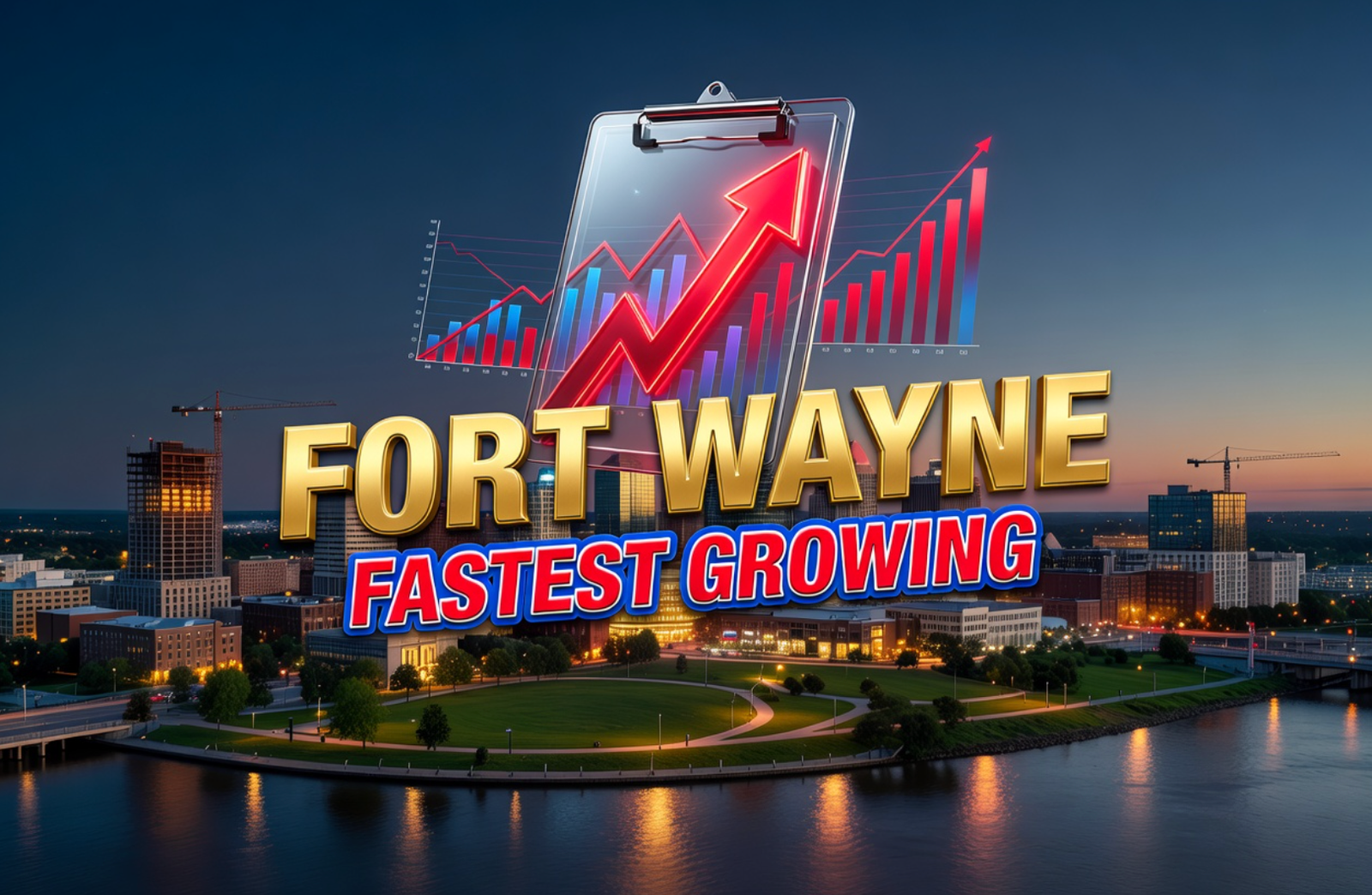
Fort Wayne Named Midwest’s Fastest-Growing Big City

Fresh U.S. Census Bureau data released Thursday confirms Fort Wayne is now the fastest-growing big city in the Midwest. Among cities with 250,000 or more residents, the Summit City ranks 26th in the country for population growth from 2020 to 2025, placing it in the same league as New York, Los Angeles, and Chicago. The numbers signal a quiet shift in America’s heartland.
Fort Wayne Joins the Big League of U.S. Cities
The Vintage 2025 estimates released by the Census Bureau on May 14, 2026 tell a powerful story about Indiana’s second-largest city.
Fort Wayne is the only Midwestern city in the 250,000-plus bracket to claim the top growth spot among the Great Lakes States. That category groups it with America’s biggest population centers, including coastal giants and Sun Belt magnets.
The wider national picture, however, is not as bright. Amid a widespread national slowdown in population growth, midsized cities remained close to the previous year’s patterns between July 1, 2024, and July 1, 2025. Drop-offs in average growth were steeper among the largest cities.
Allen County, which includes Fort Wayne, also posted strong numbers. As of July 1, 2025, the county’s population reached 402,329 residents, reflecting a 4.4% jump of 16,912 people since 2020.
Here is how Fort Wayne stacks up against other major cities in growth ranking from 2020 to 2025:
| City | Region | Growth Status |
|---|---|---|
| Fort Wayne, IN | Midwest | Fastest-growing in Great Lakes States |
| Celina, TX | South | Fastest in nation at 24.6% |
| Charlotte, NC | South | Largest numeric gain at 20,731 residents |
| New York City | Northeast | Largest numeric loss at 12,196 residents |
Why People Keep Moving to the Summit City
Fort Wayne’s rise is no accident. It is the payoff from nearly two decades of bold downtown investment and smart planning.
The $1 billion riverfront overhaul along the St. Marys River is widely seen as the spark. Promenade Park opened the door, and now Riverfront Phase IIB is under construction with new public spaces, an esplanade, and improved trails.
“As the 2025 numbers show, population growth is no longer a given with some counties seeing deaths outpacing births and national trends with fewer people moving.” Rachel Blakeman, Director, Purdue University Fort Wayne Community Research Institute
City leaders point to jobs, affordability, and a livable downtown as the magnets. The Eddy, a $45 million mixed-use project near Promenade Park, broke ground in December 2025. It will add 111 apartments, a 236-space parking garage, and retail space to the booming north side of the river.
Greater Fort Wayne Inc. President and CEO John Urbahns has credited the trend to a 30-year choice by city leaders to invest in themselves. A business survey he cited found downtown and riverfront development scored higher than K-12 education and public safety as drivers of talent attraction.
Small Towns Around Fort Wayne Are Booming
The growth story is not just about the city limits. Several smaller communities in the Fort Wayne area are surging right alongside.
The towns with the strongest population gains in the region include:
- Grabill, the small Amish-influenced town northeast of Fort Wayne
- Woodburn, a quiet community near the Ohio border
- New Haven, the region’s second-largest city after Fort Wayne
- Huntertown, a fast-growing suburb to the north
- Leo-Cedarville, a family-friendly town with a strong school district
Huntertown has been one of the standouts. The town’s 2025 population is estimated near 11,481, a 3.46% jump from the 2020 census.
Did You Know? Fort Wayne carries the nickname the Summit City. It also hosts the largest Burmese American community in the United States, with roughly 6,000 residents calling it home.
Some Indiana Cities Are Losing Residents
Not every part of the region is celebrating. Several towns in the broader area saw their populations slip by one to three percent.
The communities losing ground include Hartford City, Wabash, Portland, Bryant, and North Manchester. Statewide, more than a quarter of Indiana counties, 26 in total, lost population between 2024 and 2025.
Wayne County recorded the largest single-year loss at 167 residents. Miami County logged the biggest drop since 2020, losing 1,473 people.
This trend mirrors what is happening across much of the Midwest. While the South still dominates the lists of the nation’s fastest-growing and highest-gaining cities, places like Fort Wayne are proving that legacy industrial regions can fight back.
What This Means for Fort Wayne’s Future
The new census numbers are more than just bragging rights. They translate into more federal funding, more jobs, and more business interest.
Indiana University projects Allen County will grow by 54,723 residents over the next 30 years, marking a 14.2% increase that far outpaces the state’s projected 5.4% rise. By 2030, Allen County is expected to swap rankings with Hamilton County, becoming the state’s third-largest county.
Mayor Sharon Tucker’s administration is now working on a fresh 10-year downtown plan, with consultants set to begin in March 2026. Major projects like the North River District fieldhouse, MoRE Brewing, and the Arts United Center expansion are expected to keep the momentum rolling.
For longtime residents, the numbers carry an emotional weight. Fort Wayne has shed its old image as just another Rust Belt city, and the new census release is proof that the work is paying off. The city that once watched neighbors like South Bend, Evansville, and Indianapolis battle population losses is now writing a different story, one block, one family, and one neighborhood at a time. What do you think is driving Fort Wayne’s growth, and would you ever consider calling the Summit City home? Drop your thoughts in the comments below and share this news with friends who care about the future of the Midwest.










Stock Futures Wobble as Trump’s Hormuz Blockade Meets Earnings Season

Chipotle Enters Mexico, the Market That Sank Taco Bell Twice

Samsung’s Galaxy Watch 9 and Watch Ultra 2 Bet on a Borrowed Chip

Pentagon Suspends CMMC Phase 2, Relieving Small Firms, Straining Assessors

PS5 Adds a Weekly Wrap-Up Widget While Recently Played Stays Broken

A Brazilian Gamer Sued Microsoft Over a Hacked Xbox Account, and Won

Volkswagen’s CEO Confirms 100,000 Jobs Are on the Table

Assassin’s Creed Black Flag Resynced Splits Handhelds by Price

Lorde Calls Smart Glasses ‘Not Sexy’ Right on Ray-Ban’s Own Stage

Nintendo Eyes a Switch 2 OLED Model as the Memory Crisis Bites

Halo Studios Reverses PS Plus for Halo: Campaign Evolved on PS5

Black Ops 1 and 2 PS5 Ports: $40 Price Tag Has Fans Uneasy

Matt Brown Dismisses Rousey and Paul’s MVP MMA Ratings Win Over UFC

Star Wars: Galactic Racer Is a Roguelite Racer With a Podracing Skin

Julius Randle Traded to Nets as Wolves Reclaim Cap Space for Dosunmu

Sega’s $49.99 Sonic Classic and Modern Bundles Hit Switch in October

Colombia Edge DR Congo as Muñoz Books World Cup Knockout Place

Douze Dixièmes Closes Five Months After MIO: Memories in Orbit

Warriors Take Yaxel Lendeborg, the Oldest Pick in the 2026 NBA Draft

Meta’s Muse Image Lets Anyone Use Your Instagram Photos in AI
-

 TECHNOLOGY3 years ago
How to Adjust a Bulova Watch Band – An Easy Guide
-

 News3 years ago
Fred Pentland: Athletic Bilbao’s English mentor who changed the essence of Spanish football
-

 FINANCE3 years ago
Tax Planning for Every Season: Guide to Maximizing Your Tax Benefits
-

 Education3 years ago
African Ministers New Education Plan
-

 BUSINESS3 years ago
What is Entrepreneurial Operating System? A Comprehensive Guide to EOS
-

 Education3 years ago
Innovate Your Learning Journey with Technology and Enhance Education
-

 News3 years ago
Russians formally out of World Athletics Championships
-

 BUSINESS3 years ago
Top 9 Most Expensive American Cities to Rent an Apartment