
News
Racing Against the Bulldozers: 5,000-Year-Old Iranian Fishing Site Yields Clues to Prehistoric Coastal Life

As modern roads push forward, ancient tools tell the story of a civilization long forgotten — until now.
On a narrow stretch of Iran’s southeastern coastline, near the Sea of Oman, archaeologists working ahead of road construction have uncovered a remarkable collection of tools and artifacts that shed new light on how prehistoric societies lived, fished, and adapted to their environment.
The site, known as Kopal, could be as old as 5,000 years. But with bulldozers looming, experts fear the ancient legacy may soon vanish beneath concrete.
Fishing in the Fourth Millennium B.C.E.
The excavations, led by Iranian archaeologist Morteza Hessari, revealed a suite of fishing tools dating back to the fourth millennium B.C.E. These aren’t just relics — they’re clues.
“We found not only Paleolithic stone tools,” Hessari said, “but also unprecedented evidence of fishing equipment such as hooks and net weights.” The site also produced shells, bones, and pottery shards, indicating that prehistoric Iranians relied heavily on marine life for food and trade.
Among the most striking discoveries was a stone fishing weight, unearthed from a trench along with animal remains and pottery. Dated to around 3000 B.C.E., the find paints a picture of a society attuned to the rhythms of the sea — and skilled in adapting nature to human needs.
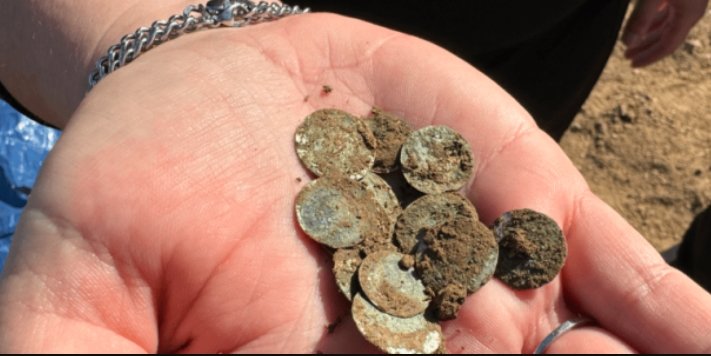
What They Ate, How They Lived
Researchers believe the tools and remains could offer deeper insights into the dietary habits of early coastal settlers.
“Laboratory studies of these marine remains,” Hessari noted, “could provide valuable insights into the aquatic species utilized by the inhabitants of this area during the late prehistoric period.”
That means species identification, seasonal hunting patterns, and even early marine biodiversity studies could all stem from the fragile findings at Kopal.
But Time Is Running Out
Despite the significance of the discovery, the site’s future is uncertain.
“Unfortunately, the Kopal site is at risk of destruction due to the construction of a new road,” Hessari explained. Salvage excavations — a kind of archaeological triage — were launched in an attempt to recover what could be saved before heavy machinery moved in.
In other words: it’s a race between preservation and progress.
Such tension is nothing new in archaeology. Infrastructure demands often override heritage concerns, particularly in rapidly developing regions. Still, the loss of a site as old and intact as Kopal would be a severe blow to researchers — and a missed opportunity for cultural education.
A Vision for a Heritage Center
To counter this, Hessari and his team are calling for the creation of a Makran Cultural Heritage Studies Center. The idea is simple: instead of erasing the past, invest in it.
“This center could serve as a hub for investigating and preserving this region’s unique heritage,” he said. The Makran coast, after all, isn’t just an archaeological site — it’s a chapter in the story of human adaptation to coastal life.
The coast’s historical importance stretches far beyond the local. A semi-arid ribbon along the Sea of Oman, the Makran region has long served as a critical junction for trade, migration, and cultural exchange.
A Region With Roots in the Deep Past
The Makran coast is believed to have supported early seafaring cultures, possibly even linked to ancient maritime routes between the Indus Valley and Mesopotamia. As such, finds like those at Kopal aren’t just local footnotes — they’re potential keys to understanding broader regional development in prehistoric Eurasia.
It’s also an area that, until recently, remained relatively unexplored by archaeologists. Political instability, funding challenges, and geography have long hindered comprehensive study.
That may be changing. With more salvage excavations like Kopal and growing awareness of Iran’s archaeological wealth, experts hope for a new wave of research — assuming the bulldozers don’t get there first.
The Tools That Made the Coast Home
The stone and shell tools found at Kopal reflect not only functionality but innovation. Early humans didn’t just live on the coast; they engineered a way of life around it.
These tools suggest:
-
Seasonal fishing knowledge
-
Long-term settlement patterns
-
Tool specialization and design evolution
-
Trade or food-sharing networks with inland communities
They’re also indicative of intentional living, where people shaped their environment — and their tools — for survival. This is what makes the discovery so vital.
A single fishing weight, made and used 5,000 years ago, can tell us how early Iranians balanced resource use with environmental awareness. It shows thought, design, and adaptation — in short, the qualities that define civilization.
| Artifact Type | Estimated Age | Function |
|---|---|---|
| Stone Fishing Weight | ~5,000 years old | Weighted fishing nets |
| Shells & Bones | Mixed, 4,000–5,000 years | Dietary remains |
| Pottery Shards | ~4,000 years old | Cooking, storage |
| Net Hooks | ~4,500 years old | Coastal fishing |
The Question That Remains
Will Iran protect this ancient site before it disappears forever?
The answer isn’t clear yet. But archaeologists like Hessari are making a compelling case — not just for preserving old tools, but for recognizing them as part of an ancient human story still being told.













A Stalled Volkswagen EV Triggered a Deadly Loop 202 Pileup

ChatGPT, Gemini and Claude Traded Praise as Billions Ride on It

New Jersey Bans Surveillance Pricing After a Union Push

SpaceX Stock Sits Just $15 From a Zero Value AI Verdict

ChatGPT Health Data Skips HIPAA as Telehealth Stocks Slide

Apple Wagers Years of Delay on Smart Glasses Privacy

FDA Recall Pulls Nearly 19 Million Eggs Over Salmonella

Ubisoft’s New Far Cry Game Rides on Tencent’s Billions

PlayStation Blackout Protest Could Hit the Wrong Targets

Taylor Farms Gave Trump Allies $2 Million Before Its Recall Call

Pokémon GO Developer Niantic Rebrands as Scopely Explore

Persona 4 Revival Hands All Anime Cutscenes to Studio MAPPA

Jaylen Brown Traded to 76ers for Paul George and Four Draft Picks

Doom Studio id Software Cuts Half Its Staff in Xbox Layoffs

Nintendo Switch Online Adds Four Classics and One Japan-Only Title

Jordan Henderson Hospitalized After Wrist Injury at the Azteca

Mexico’s World Cup Run Ends at Azteca as England Hold On 3-2

Meta’s Muse Image Lets Anyone Use Your Instagram Photos in AI

Louis Vuitton Beats Molly Tea in China, Triggers Cultural Backlash

Pink Bearista Cup Returns July 13 as Starbucks Pink Vibes Drops
-

 TECHNOLOGY3 years ago
How to Adjust a Bulova Watch Band – An Easy Guide
-

 News3 years ago
Fred Pentland: Athletic Bilbao’s English mentor who changed the essence of Spanish football
-

 FINANCE3 years ago
Tax Planning for Every Season: Guide to Maximizing Your Tax Benefits
-

 Education3 years ago
African Ministers New Education Plan
-

 BUSINESS3 years ago
What is Entrepreneurial Operating System? A Comprehensive Guide to EOS
-

 Education3 years ago
Innovate Your Learning Journey with Technology and Enhance Education
-

 News3 years ago
Russians formally out of World Athletics Championships
-

 BUSINESS3 years ago
Top 9 Most Expensive American Cities to Rent an Apartment