
News
Google DeepMind Loses Shazeer and Jumper in One Week of AI Talent Exits
Noam Shazeer leaves Google for OpenAI and Nobel winner John Jumper joins Anthropic, in the same week Nvidia hires another Transformer co-author from Essential AI.

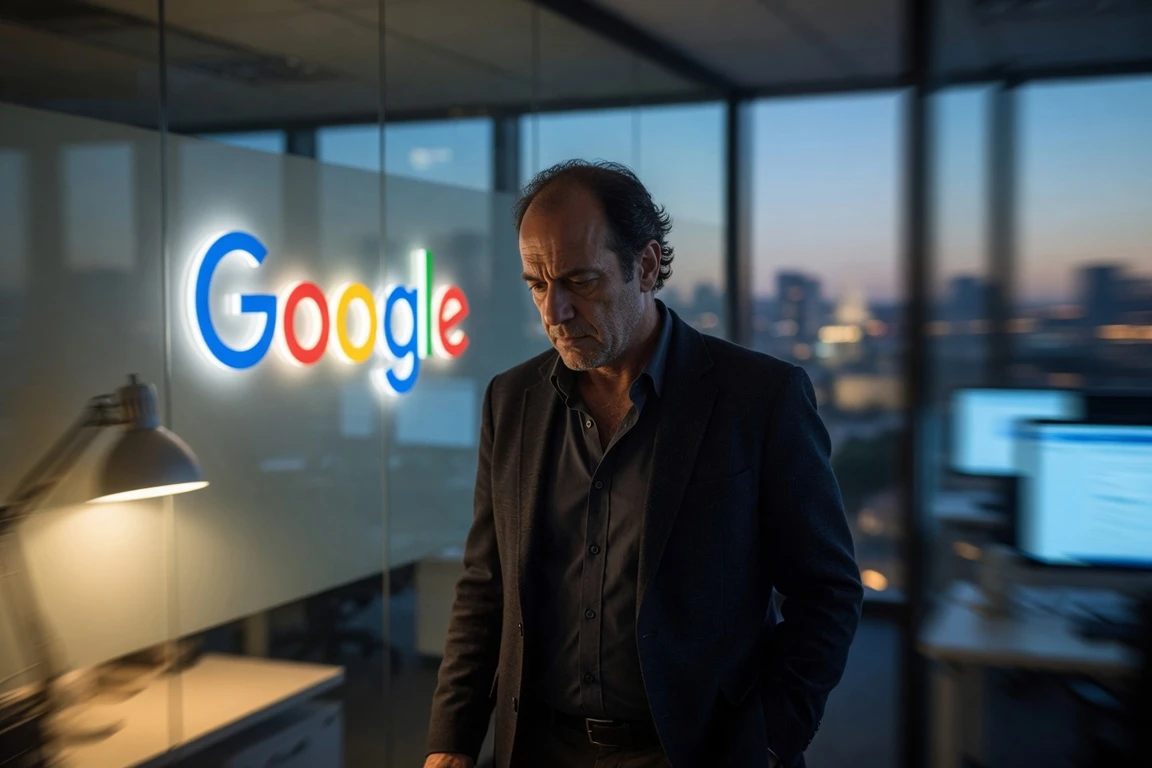
Google DeepMind lost two of its most senior researchers inside three days last week, and both defections landed at AI labs that are about to list on the stock market. On June 18, Noam Shazeer, Google’s vice president of engineering and a co-lead of its Gemini AI models, said on X that he was joining OpenAI. One day later, John Jumper, the DeepMind scientist who shared the 2024 Nobel Prize in Chemistry for AlphaFold, said on X that he was leaving for Anthropic. The back-to-back exits, the highest profile of the AI talent war so far, come as both target labs prepare to go public and as Nvidia quietly scoops up another Transformer co-founder from a struggling startup.
Both men are not ordinary hires. Shazeer co-authored the 2017 paper “Attention Is All You Need” that introduced the Transformer architecture, the “T” in ChatGPT. Jumper led the AlphaFold team that predicts protein structures, a system credited with predicting more than 200 million structures and credited by DeepMind founder Demis Hassabis with “changing the world.” Their departures leave Alphabet’s AI lab with one fewer name on the marquee and one fewer Nobel laureate on staff.
What Each Researcher Brings
Shazeer’s value to Google was never just the model weights he could ship. In his X announcement, he thanked “the amazing team at Google and everything we’ve built together” and called the move “a difficult decision.” CNBC reported that he had returned to Google less than two years ago, in August 2024, as part of a deal that brought him and fellow researcher Daniel De Freitas back into DeepMind from their chatbot startup Character.AI.
Jumper, in his own X post, was direct about what he was leaving behind. “After nearly 9 years, I have decided to leave Google DeepMind and join Anthropic,” he wrote. “@demishassabis took a real chance letting me lead the AlphaFold team just six months after finishing my PhD, and the entire GDM team taught me so much about how to do great science.” Hassabis, in a reply on X, called the work “a lasting legacy” and said “What we achieved with AlphaFold changed the world.” Business Insider reported that Jumper did not say what his role at Anthropic would be and that he would first take time to “recharge.”
For the labs gaining them, the appeal sits well past any single paper. The most coveted researchers carry judgment about which ideas are worth chasing, experience running enormous experiments, and the network to pull other sought-after scientists behind them. A single hire can set off a chain of follow-on hires, and a single departure can set off a chain of follow-on departures. The June 2026 sequence suggests both dynamics are now in play at Google DeepMind.
Why OpenAI and Anthropic Won the Week
The two labs gaining Shazeer and Jumper share a feature Google does not have: they are private companies preparing to go public. Anthropic confidentially filed for a US IPO on June 1, 2026, days after closing a $65 billion Series H at a $965 billion post-money valuation, according to the company. OpenAI submitted its own confidential S-1 to the SEC on June 8, 2026, a filing Reuters and other outlets tied to a market valuation that could reach as much as $1 trillion.
For senior researchers weighing job offers, the equity math favors the private labs. Pre-IPO equity packages carry upside that public companies like Alphabet cannot easily match with cash and RSUs alone. Both labs also control large, dedicated compute allocations, the scarce input that decides which experiments actually run. Together those two factors, paper wealth and silicon access, do most of the work in explaining why this round of musical chairs kept ending at the same two doors.
A snapshot of the week that reset the AI lab roster:
- June 18: Shazeer announces on X that he is leaving Google for OpenAI.
- June 19: Jumper announces on X that he is leaving Google DeepMind for Anthropic.
- June 20: Ground Level AI reports that Nvidia has acqui-hired Ashish Vaswani, founder of Essential AI and another co-author of “Attention Is All You Need,” along with several other Essential team members.
- June 22: Alphabet shares fall after Jumper’s exit to Anthropic.
Nvidia’s Quiet Scoop
The week’s third move, and the easiest to miss, happened off the front pages. According to Ground Level AI, Nvidia hired Vaswani, founder and CEO of Essential AI, and several other Essential researchers to work on Nvidia’s Nemotron open-source models. A source close to the startup said Vaswani had been struggling to raise money and that “taking Ashish/Essential away from AMD was also a motivator.” AMD, one of Nvidia’s main chip rivals, was an early strategic investor in Essential AI, and the startup had long relied on AMD GPUs.
Vaswani founded Essential in 2023 with Niki Parmar, another Transformer co-author who has since moved to Anthropic. He had earlier founded Adept AI and, before that, worked at Google Brain. With Shazeer now at OpenAI, Jumper at Anthropic, and Vaswani at Nvidia, three of the eight co-authors of “Attention Is All You Need” are no longer at Google, where the paper was written. The same source flagged some uncertainty, noting he was not sure “if the deal is finally done” even as Essential researchers updated their LinkedIn profiles to reflect the new employer.
Nvidia has been on a buying tear. Two weeks before the Essential deal, Fortune reported that Nvidia had acquired Kumo AI, a four-year-old foundation-model startup. On Christmas Eve 2025, the chipmaker also announced a $20 billion deal to license AI chip startup Groq’s technology and bring over most of its team, including cofounder and CEO Jonathan Ross.
The $2.7 Billion Reversal
Shazeer’s path back to OpenAI closes a five-year loop. In 2021, after Google declined to release a chatbot he had built with De Freitas, citing safety and brand concerns, the two left to found Character.AI. In August 2024, Google brought both back to DeepMind through a deal widely reported as worth $2.7 billion. CNBC noted that Shazeer had been named a co-lead of Gemini only after the return. The exit to OpenAI, less than two years later, is the public unraveling of that bet.
OpenAI also absorbed a less flattering return this week. Barret Zoph, who had been fired from Mira Murati’s Thinking Machines Lab in January 2026 after reports of alleged misconduct involving an undisclosed relationship with a colleague, departed OpenAI again in mid-June, about five months after Fidji Simo, OpenAI’s CEO of Applications, welcomed him back on X. The Verge reported that OpenAI had assigned Zoph to lead its push into enterprise sales, a key revenue line ahead of the planned IPO. His exit, unexplained by the company, leaves OpenAI with the same kind of personnel story it has spent the week collecting at Google.
What Stays at DeepMind
None of the three moves is, on its own, a killing blow. Google still has Demis Hassabis, who shared the 2024 Nobel with Jumper and remains the public face of the lab. The Gemini model line keeps shipping: Google unveiled Gemini 3.5 Flash and a Gemini Spark AI agent at its I/O developer conference weeks before the exits, and CNBC noted the timing of the departures relative to that release. DeepMind, for its part, has produced more breakthroughs by count than any other AI lab, and the structural advantages of owning TPUs, a captive distribution channel through Search and Android, and a defense contract pipeline through the US government have not changed.
What has changed is the salary ceiling. With two private labs about to issue public stock and a chip company willing to write nine-figure checks for single researchers, the gap between what Alphabet can offer in cash and what private rivals can offer in paper has widened at exactly the wrong moment. AI Weekly reported that Hassabis’s response to Jumper, tribute language with no successor announcement, signaled that DeepMind has no ready internal replacement for the AlphaFold lead. A senior research scientist’s exit, followed by the engineer behind Gemini, followed by a third Transformer co-author absorbed by a chipmaker, is a week, not a verdict. It is, however, the largest single signal yet that the AI lab hierarchy Google helped build is being rebuilt above it.
Frequently Asked Questions
Who is Noam Shazeer and why does his move matter?
Shazeer is a co-author of the 2017 paper “Attention Is All You Need,” the research that introduced the Transformer architecture used in ChatGPT and nearly every modern large language model. He left Google in 2021 to co-found Character.AI, returned to Google in August 2024 as part of a deal widely reported as worth $2.7 billion, and was named a co-lead of Gemini. His June 18, 2026 announcement that he is joining OpenAI is the first time a sitting Gemini co-lead has defected to a direct competitor.
Who is John Jumper and what did he do at DeepMind?
Jumper led the AlphaFold team at Google DeepMind, an AI system that predicts the 3D structure of proteins from their amino acid sequences. He shared the 2024 Nobel Prize in Chemistry with Demis Hassabis and David Baker for the work. AlphaFold has produced more than 200 million protein structure predictions, a resource widely credited with cutting months or years from biology and drug-discovery research. Jumper said on X on June 19, 2026 that he is joining Anthropic.
Why are OpenAI and Anthropic winning the AI talent war right now?
Two reasons stand out. Both labs have filed confidentially for US IPOs, Anthropic on June 1, 2026 and OpenAI on June 8, 2026, giving them the ability to offer pre-IPO equity packages with upside Alphabet cannot easily match. Both also control large, dedicated compute allocations, the binding constraint on which experiments can run at all.
Is Google still competitive in AI after these departures?
Google still has Demis Hassabis, the Gemini model line, its own TPUs, and distribution through Search and Android. The risk is structural, not immediate: as long as the most senior researchers can be poached by privately held rivals with fatter equity packages and bigger compute budgets, the gap compounds with every cycle of model training. The June 2026 week is one data point, but it is the largest single signal yet of the pressure on the lab.











Spotify Running Mode hits Android and revives its old tempo experiment

Galaxy Tab S12 Ultra Renders Keep the Notch Fans Hate

Novato Spinning Round House Sells With Six Neighbors for $3.3 Million

Crop Tour Finds Indiana and Nebraska Corn Yields Lagging 2025

Best Buy 60th sale brings Android deals back to its roots

American Airlines reverses seatback screen bet years too late

Iran Hormuz Strikes Force Gulf Oil Onto Costlier Paths

Plague Tale Prequel Day One Joins Game Pass Wave 2 as Witcher Exits

NBA 2K27 opens The City to everyone and rewrites career eras

iOS 26.6.1 Patches 29 Flaws as AI Forces Faster Apple Updates

Double Fine Cuts 23 Jobs Weeks After Xbox Independence

Day-One Big Walk Lifts PS Plus August Beyond Recycled AAA

John Hight Exits Wizards After Digital Reckoning Hits

Curtis Mead’s Red Sox Debut Ends With Fractured Wrist

Moesch and Dressel Rewrite Night One at 2026 U.S. Nationals

Red Sox Squander Hot Streak Chance in 4-3 Loss to Athletics

Boutte’s Quiet Camp Takeover Forces Patriots Receiver Choices

Take-Two CEO Pushes Netflix Subs for GTA 6 Extended Look

Halo Campaign Evolved Skulls Meet Death Barriers That Kill the Hunt

Wildlands Free Update Hands Players the Tools They Already Invented
-

 TECHNOLOGY3 years ago
How to Adjust a Bulova Watch Band – An Easy Guide
-

 News3 years ago
Fred Pentland: Athletic Bilbao’s English mentor who changed the essence of Spanish football
-

 FINANCE3 years ago
Tax Planning for Every Season: Guide to Maximizing Your Tax Benefits
-

 Education3 years ago
African Ministers New Education Plan
-

 BUSINESS3 years ago
What is Entrepreneurial Operating System? A Comprehensive Guide to EOS
-

 Education3 years ago
Innovate Your Learning Journey with Technology and Enhance Education
-

 News3 years ago
Russians formally out of World Athletics Championships
-

 BUSINESS3 years ago
Top 9 Most Expensive American Cities to Rent an Apartment