
Health
ChatGPT Health Data Skips HIPAA as Telehealth Stocks Slide
OpenAI’s new ChatGPT Health feature links Apple Health and medical records for 300 million weekly users, but the data falls outside HIPAA’s protections.

OpenAI started letting ChatGPT read users’ lab results and medical records on July 23, and telehealth stocks slid within hours. The company’s new Health platform, rolled out this week to logged in US users 18 and older, connects Apple Health data and records from partners including One Medical and Function Health so the chatbot can answer with a patient’s actual history in view. OpenAI says roughly 300 million people already ask it health related questions every week.
What the announcement did not advertise: the medical data users hand over now sits outside the federal law most people assume protects it, and two telehealth stocks dropped the same day the feature went wide.
Lab Results, Medications and Wearable Data, All in One Chat
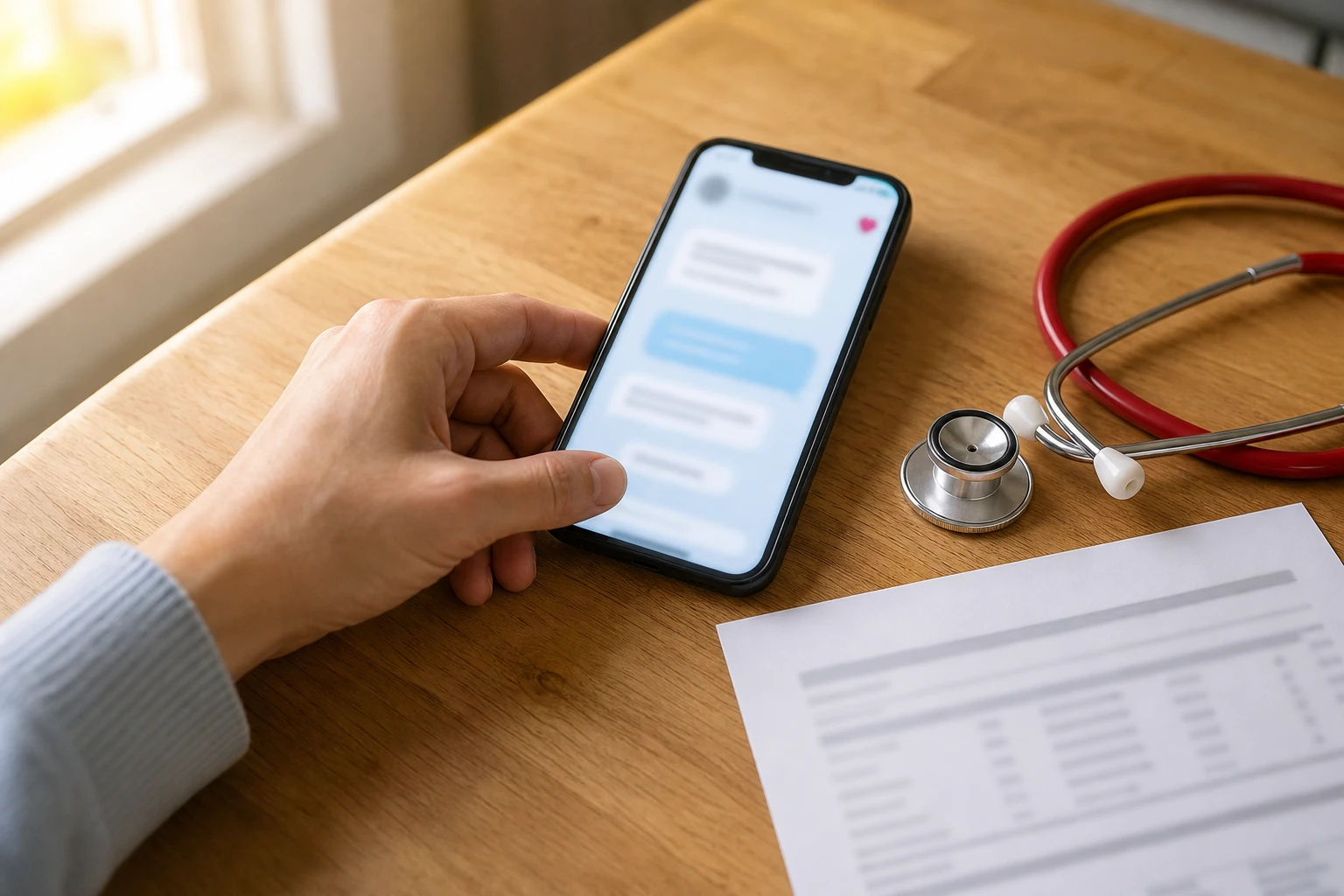
Health in ChatGPT lets users securely link Apple Health data along with medical records from supported US hospital systems, One Medical and Function Health, a consumer lab-testing startup. Once someone connects an account, ChatGPT stops answering in the abstract and starts referencing that person’s actual history.
The assistant can now:
- Compare new lab results against older ones and flag what changed
- Summarize what has shifted since a patient’s last appointment
- Track medications and dosages over time
- Explain how sleep, activity and workouts are affecting a user’s health trends
- Pull in data from wearables and other fitness or nutrition apps that already sync with Apple Health
OpenAI built permission checkpoints into the feature. ChatGPT asks before using a person’s health information in a conversation, and users can grant access once, grant it permanently, or shut it off entirely from the Health settings menu. Connected records and the conversations built on them are never used to train its foundation models or to target ads, the company says, a carve out it does not apply to ordinary chat history.
A Habit 300 Million People Already Have
This was not OpenAI’s first attempt at this. The company quietly previewed a narrower version of health record connections inside ChatGPT back in February, months before this week’s wider rollout across web and iOS on the Free, Go, Plus and Pro tiers. OpenAI has not said when, or if, the feature reaches Android or markets outside the United States.
OpenAI is not starting from zero on demand. The company says roughly 300 million people already ask ChatGPT health related questions every week, a built in audience no competing health app has ever launched with. Connecting records did not create that behavior. It gave an existing habit somewhere better to go.
Teladoc and GoodRx Feel It First
Wall Street read the launch as competitive news. Shares of Teladoc Health, the telehealth company, fell 2.8% and GoodRx, the prescription discount app, dropped 2.6% within hours of the announcement, according to market data. American Well, the telehealth provider known as Amwell, slipped the same day. All three run businesses that depend, in part, on being where people go first with a health question or a prescription.
That reaction lines up with how people close to the industry described the moment. Startup Fortune, a publication covering the sector, wrote that the launch undercut startups that had spent years building patient facing record retrieval, since OpenAI did not need to build a new app or portal. It simply became an ambient layer inside a product hundreds of millions of people already open daily.
The records list itself contains an irony. One Medical, the primary care chain Amazon bought in 2023, is among the systems whose patient records can now flow into a rival’s chatbot.
Is Your Health Data Still HIPAA-Protected?
Largely, no. Medical records a user uploads or connects inside ChatGPT Health are not covered by the Health Insurance Portability and Accountability Act (HIPAA, the federal law that limits how hospitals, insurers and doctors can share medical information), because OpenAI is not acting as a HIPAA covered entity in that exchange. The hospital or lab that generated the record is still bound by HIPAA. Once a copy moves into ChatGPT, that specific legal protection does not travel with it.
The gap predates OpenAI. It is easy for users to miss, though, since most people assume the words medical record automatically mean HIPAA protection applies.
The data is not entirely unregulated. The Federal Trade Commission (FTC, the US agency that enforces consumer protection law) enforces the Health Breach Notification Rule, which requires certain apps and services outside HIPAA’s reach to notify customers and the agency after a breach of unsecured health information. A 2024 update widened which health apps the rule covers.
Regulators have already shown they are watching ChatGPT’s expanding footprint on other fronts. European Union authorities recently ordered Google to open Android’s default assistant slot to rivals including ChatGPT, a separate fight but a sign of how closely regulators are tracking the chatbot’s reach into daily life.
What we know:
- Connected medical records are not used to train OpenAI’s models or to target ads, the company says
- ChatGPT Health operates outside HIPAA because OpenAI is not a covered entity
- The FTC’s Health Breach Notification Rule already applies to at least some non-HIPAA health apps
What’s unconfirmed:
- Whether the Health Breach Notification Rule applies to ChatGPT Health’s specific data flows
- Whether state regulators or lawmakers will move to close the gap
- How OpenAI would handle a breach of connected health records in practice
OpenAI has not publicly addressed the Health Breach Notification Rule question directly.
Big Tech’s Health Ambitions Have a Graveyard
OpenAI is not the first technology company to bet it could reorganize healthcare around its own platform. Three of the most heavily funded attempts from the last decade ended in retreat.
| Venture | Backer(s) | Ended | What Happened |
|---|---|---|---|
| Watson Health | IBM | 2022 | Sold its data and analytics assets to a private equity firm after IBM spent more than $4 billion building it, reportedly seeking about $1 billion in the sale |
| Google Health | 2021 | Division shut down in August; Google later faced litigation over how it handled user health data | |
| Haven | Amazon, JPMorgan Chase, Berkshire Hathaway | 2021 | Joint venture aimed at cutting employee healthcare costs dissolved as the three partners pursued separate efforts |
Each project had scale, capital and, in IBM’s case, a decade long head start on medical data. Not one of them had what OpenAI is starting with now: hundreds of millions of people already inside the product, asking health questions by default rather than being recruited into a new one.
The Line OpenAI Still Cannot Cross
OpenAI has paired the consumer rollout with a separate push toward the clinical side of medicine, including tools aimed at doctors rather than patients and a benchmark it calls HealthBench Professional. The two tracks point at the same goal from opposite ends: one embeds ChatGPT into how patients gather information, the other into how clinicians work.
Health is just one front in a wider expansion. OpenAI has spent 2026 pushing ChatGPT past the chat window, pairing the health rollout with consumer hardware experiments like its $70 basketball controller device, part of a broader effort to make the assistant a default layer across daily routines instead of a destination people visit on purpose.
Weighing a lab result against a patient’s fear of a procedure, their ability to pay for treatment, or a family history no spreadsheet captures still takes a licensed clinician’s judgment. No feature list changes who carries liability when a diagnosis goes wrong.
Frequently Asked Questions
What health records can connect to ChatGPT Health?
ChatGPT Health connects to Apple Health along with records from supported US hospital systems, One Medical and Function Health. Because Apple Health already syncs with most wearables and many fitness or nutrition apps, data from those connected devices can flow through automatically once a user links their Apple Health account.
Does ChatGPT use my medical data to train its AI models?
No. OpenAI says connected health records, and any conversation that draws on them, are excluded from the data used to train its foundation models or to target advertising, a stricter standard than the company applies to ordinary chat history.
Is ChatGPT Health available outside the United States?
Not yet. The rollout currently covers logged in users 18 and older in the US on web and iOS across the Free, Go, Plus and Pro tiers. OpenAI has not announced a timeline for Android support or international availability.
Did OpenAI offer a health feature before this week?
Yes. OpenAI previewed a narrower version of health record connections in February, months before expanding access and adding more supported record sources this week.
Can ChatGPT Health replace a doctor visit?
No. OpenAI positions the feature as a way to understand and organize personal health information, not as a diagnostic tool, and the company continues to direct users toward licensed medical professionals for treatment decisions.


Stripe Bid Shows PayPal Moat Cracked After Years of Slide

FDA Class I Tag Hits Finished Egg Recall Weeks Later

Berkshire’s Alphabet Surge Marks Abel’s Cash Deployment Shift

Aston Martin Bets 150 Valen V12s Will Print the Cash

Walmart Took Most of the Recalled Lettuce Behind Cyclospora Wave

Silver Lake Workday Talks Signal Private Floor for Software

Zuckerberg’s AI Letter Joins a Wave of Tech Manifestos

Pixel 11 Takes Battery Edge as Galaxy S26 Keeps the Power Lead

Trump Economy Faces Reckoning as Sentiment and Sales Slide

Apple’s 15% External Cut Still Faces Its Own Zero Admission

Colby Covington Stuns Tsarukyan as Askren Retires in Tears at RAF 11

Spain’s Diaspora-Rooted Squad Wins Over New York Ahead of the Final

Guardians Rout Twins With Seven Homers, Leave Joe Ryan One Shy of Record

England Beats France 6-4 to Claim World Cup Bronze Medal

Rainout Gives Red Sox Two Shots at a Franchise-Record Win Streak

Caitlin Clark Skips the WNBA 3-Point Contest for a Third Straight Year

Double Fine Cuts 23 Jobs Weeks After Xbox Independence

John Hight Exits Wizards After Digital Reckoning Hits

Day-One Big Walk Lifts PS Plus August Beyond Recycled AAA

Red Sox Squander Hot Streak Chance in 4-3 Loss to Athletics
-

 TECHNOLOGY3 years ago
How to Adjust a Bulova Watch Band – An Easy Guide
-

 News3 years ago
Fred Pentland: Athletic Bilbao’s English mentor who changed the essence of Spanish football
-

 FINANCE3 years ago
Tax Planning for Every Season: Guide to Maximizing Your Tax Benefits
-

 Education3 years ago
African Ministers New Education Plan
-

 BUSINESS3 years ago
What is Entrepreneurial Operating System? A Comprehensive Guide to EOS
-

 Education3 years ago
Innovate Your Learning Journey with Technology and Enhance Education
-

 News3 years ago
Russians formally out of World Athletics Championships
-

 BUSINESS3 years ago
Top 9 Most Expensive American Cities to Rent an Apartment