
Health
FDA Recall Pulls Nearly 19 Million Eggs Over Salmonella
A 19 million egg recall over salmonella is the smaller of two outbreaks now straining the same health investigators, with Michigan hit hardest by the other one.

Federal health officials want shoppers in six states checking their egg cartons for two printed codes right now. Midwest Poultry Services, L.P. is voluntarily recalling 1,589,577 dozen eggs, nearly 19 million individual eggs, after Salmonella Enteritidis sickened 98 people and put 26 in the hospital across 17 states. No one has died.
The recall is the smaller of two foodborne outbreaks now running through the same federal investigators at the same time. A separate, far larger outbreak tied to lettuce has infected thousands more people this summer, and it has hit Michigan hardest of all, even though Michigan barely registers in the egg case count.
The Recall Spans Six States and Five Brand Names
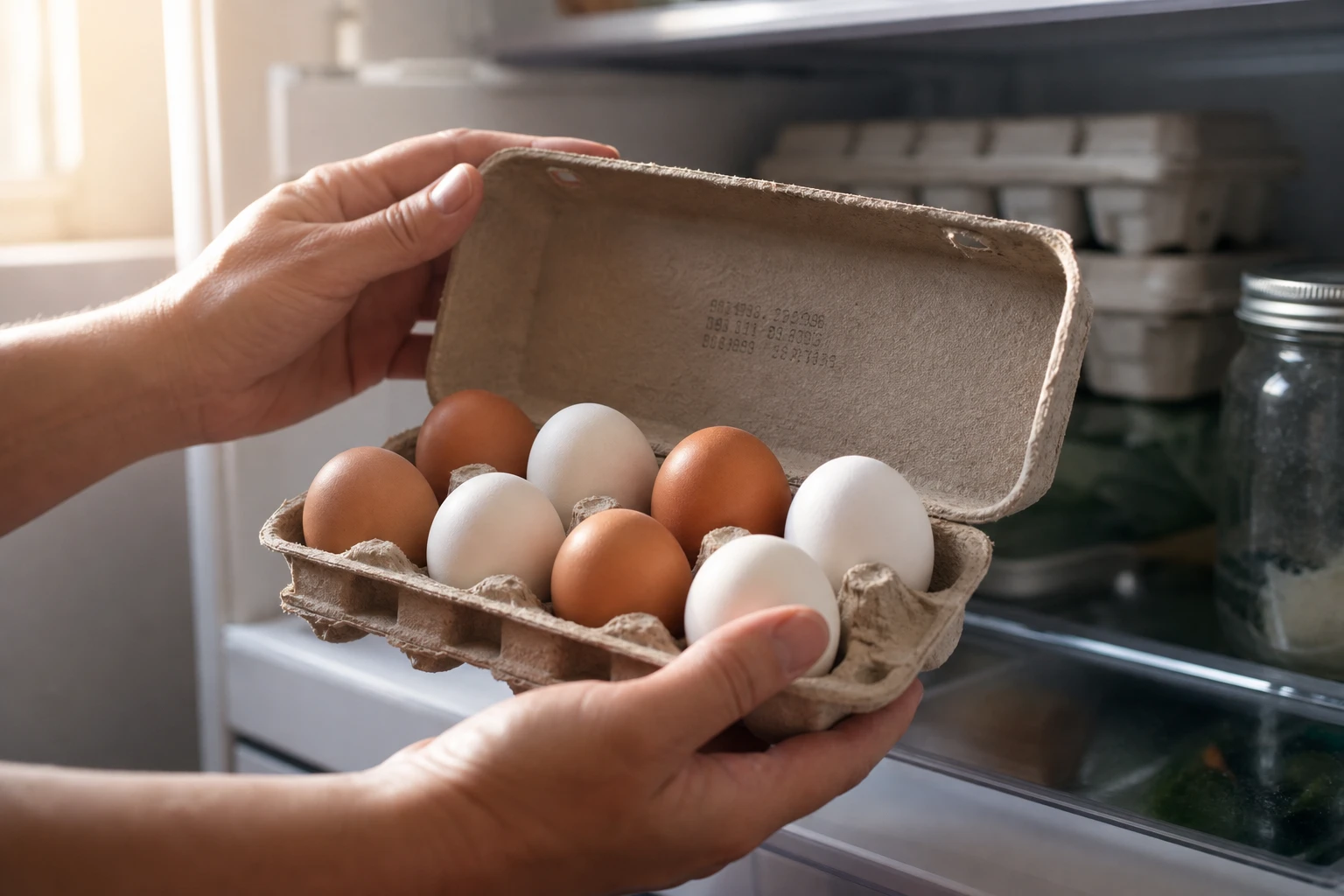
The eggs, both white shell eggs and brown cage free eggs, were produced on Texas farms between June 6 and July 3, 2026, according to the FDA’s recall notice for the affected lots. Indiana-based Midwest Poultry Services distributed them to foodservice and retail customers in Texas, Oklahoma and Louisiana, and they reached shelves more broadly through Brookshire Grocery locations in Arkansas, Mississippi and New Mexico as well.
Retail brands on the cartons include the Kroger name and Kroger’s Simple Truth label, plus Country Corning, Cal-Maine’s Sunups and Brookshire’s. Package sizes range from six eggs to 60. Sell by or best by dates fall between July 20 and Aug. 17, 2026.
- Check the date: sell by or best by between July 20 and August 17, 2026
- Check the brand: Kroger, Simple Truth, Country Corning, Cal-Maine’s Sunups or Brookshire’s
- Check the plant code: P-1950 or 0840962, printed on the carton’s side
- Check the Julian date: a number between 157 and 184 stamped beside the plant code
- Check where you bought them: mainly Kroger and Brookshire Grocery stores in Texas, Oklahoma, Louisiana, Arkansas, Mississippi and New Mexico
Anyone holding a matching carton should toss it or return it to the store. Retailers and restaurants in those six states have been told not to serve or sell the eggs at all, including wholesale supply.
Investigators Say One Farm Doesn’t Explain Every Case
Of the 98 confirmed illnesses, 73 are in Texas. Michigan has logged just one or two, according to the CDC’s case map, despite sitting on the official list of 17 states with reported infections. Illness onset ranges from 12 to 72 hours after exposure, and Salmonella can be fatal in young children, older adults and people with weakened immune systems.
Health officials identified Midwest Poultry Services as a common source across the cluster. But they were explicit that the farm does not account for all the illnesses in this outbreak, and the investigation into other possible sources is still open.
- What we know: 98 illnesses in 17 states, 26 hospitalizations, zero deaths; Midwest Poultry Services confirmed as a common source; recalled lots carry codes P-1950 or 0840962 with Julian dates 157 through 184
- What’s unconfirmed: whether a second contaminated source is feeding the outbreak; the full illness count once further cases are confirmed; whether additional states or retailers will be added to the recall
That gap between a named source and an unresolved case count is why the FDA is still asking anyone with symptoms to contact a doctor and report it, rather than assuming the recall alone has closed the loop.
Michigan’s Real 2026 Outbreak Is a Different Bug Entirely
Michigan’s one or two egg-linked illnesses sit inside a state that is otherwise the epicenter of the country’s worst cyclosporiasis season on record. The CDC’s latest update counts more than 4,100 confirmed cyclosporiasis cases nationwide this season across 41 states. Michigan’s own outbreak tally, which folds in probable cases still moving through lab confirmation, has climbed past 7,664, with 160 hospitalizations, a gap between the state count and the national confirmed figure that reflects reporting lag rather than a discrepancy in the underlying spread.
Cyclospora cayetanensis is a parasite, not a bacterium, and it has nothing to do with eggs. CDC and FDA investigators traced a cluster traced to shredded iceberg lettuce served at Taco Bell locations to at least 1,644 illnesses across nine states, including Michigan, Ohio, Indiana, Kentucky and West Virginia. Taylor Farms de Mexico recalled its central Mexico-sourced iceberg lettuce on July 17, 2026, covering Marketside-brand products sold at Walmart as well.
| Detail | Egg Salmonella Outbreak | Cyclospora Outbreak |
|---|---|---|
| Pathogen | Salmonella Enteritidis (bacteria) | Cyclospora cayetanensis (parasite) |
| Confirmed cases | 98 nationwide | 4,100+ nationwide; 7,664 in Michigan alone |
| Hospitalizations | 26 | 160 in Michigan |
| States involved | 17 | 41 nationally; a 9-state lettuce cluster |
| Traced source | Texas egg farms via Midwest Poultry Services | Iceberg lettuce from Taylor Farms de Mexico |
| Status | Named source does not explain every case | Case counts expected to climb through Aug. 31 |
Two different agencies inside the same federal apparatus are running two unrelated multistate investigations at once, in the same state, in the same month. Michigan’s health department is a bystander in the egg story and ground zero in the other one.
The Last Time Eggs Did This, It Was 550 Million
Shell eggs and Salmonella Enteritidis have a long shared history. In August 2010, Iowa-based Wright County Egg recalled 380 million eggs, and Hillandale Farms recalled another 170 million, for a combined 550 million eggs pulled from shelves nationwide. Both companies traced back to DeCoster Egg Farms, then the country’s third-largest egg producer.
The CDC ultimately confirmed 1,609 illnesses tied to that outbreak, out of more than 3,500 Salmonella reports logged across 11 states between May and November of 2010. Measured against that event, this month’s recall is a fraction of the scale, in eggs pulled and in people sickened. But the pattern, a large commercial egg operation, a contaminated flock, a slow-building illness count, looks familiar.
An Egg Industry Already Absorbing a Price Collapse
This recall lands on a sector already unsettled. Cal-Maine Foods, the country’s largest egg producer, reported a 53% drop in net sales for its fiscal third quarter of 2026, to $667 million from $1.4 billion a year earlier. Conventional egg selling prices alone fell more than 70% as flocks recovered from the avian influenza outbreaks that wiped out egg-laying hens and sent prices to record highs the year before, detailed in the company’s own bird flu production guidance for customers.
Cal-Maine has leaned harder into specialty eggs and prepared foods to offset the swing, and it has told investors to expect margins trending back toward normal through fiscal 2027 and 2028. CNBC also reported in June that major egg producers separately settled a Department of Justice price-inflation investigation for $3.3 million, tied to roughly 53 million eggs, months before this salmonella recall added a second front of regulatory attention to the industry’s year.
How Long Do Salmonella Symptoms Last?
Salmonella symptoms usually begin 12 to 72 hours after eating contaminated food and last four to seven days, according to the FDA. Most healthy adults recover without treatment, but diarrhea, which can be bloody, along with fever and abdominal cramps, can turn serious fast in young children, older adults and anyone with a weakened immune system.
Cooking kills the bacteria, which is why the FDA’s guidance leans hardest on restaurants and foodservice operators handling raw eggs. Anyone who touched a recalled carton should wash hands, utensils and surfaces with hot, soapy water, and sanitize anything the eggs contacted to avoid spreading contamination to other food. Anyone with symptoms should call a health care provider rather than wait them out.
Both outbreaks remain open. The FDA has not named every source behind the egg illnesses, and Michigan’s cyclospora count is expected to keep climbing through the end of peak season on Aug. 31.
Frequently Asked Questions
Does Cooking Eggs Kill Salmonella?
Yes. Cooking eggs thoroughly, until both the yolk and white are firm, kills Salmonella bacteria. Raw or undercooked eggs carry the highest risk, which is why FDA guidance for this recall focuses heavily on foodservice operators using eggs in dishes that aren’t fully cooked.
Is the Egg Recall Connected to Michigan’s Cyclospora Outbreak?
No. Salmonella Enteritidis is a bacterium tied to Texas egg farms and Midwest Poultry Services. Cyclosporiasis is caused by a parasite tied to imported iceberg lettuce. The two outbreaks are being investigated by the same federal and state health agencies at the same time, but they share no common source.
Are Other Major Egg Brands Included in the Recall?
As of publication, the recall covers only Kroger, Kroger’s Simple Truth, Country Corning, Cal-Maine’s Sunups and Brookshire’s cartons carrying the specific plant codes and Julian dates listed in the FDA notice. No other national egg brands have been named.
What Should I Do if I Already Ate the Recalled Eggs and Feel Fine?
Health officials say to monitor for symptoms for up to 72 hours after eating them. If none appear, no further action is needed beyond discarding or returning any remaining eggs. If diarrhea, fever or cramps show up, contact a health care provider and mention the recall.


Stripe Bid Shows PayPal Moat Cracked After Years of Slide

FDA Class I Tag Hits Finished Egg Recall Weeks Later

Berkshire’s Alphabet Surge Marks Abel’s Cash Deployment Shift

Aston Martin Bets 150 Valen V12s Will Print the Cash

Walmart Took Most of the Recalled Lettuce Behind Cyclospora Wave

Silver Lake Workday Talks Signal Private Floor for Software

Zuckerberg’s AI Letter Joins a Wave of Tech Manifestos

Pixel 11 Takes Battery Edge as Galaxy S26 Keeps the Power Lead

Trump Economy Faces Reckoning as Sentiment and Sales Slide

Apple’s 15% External Cut Still Faces Its Own Zero Admission

Colby Covington Stuns Tsarukyan as Askren Retires in Tears at RAF 11

Spain’s Diaspora-Rooted Squad Wins Over New York Ahead of the Final

Guardians Rout Twins With Seven Homers, Leave Joe Ryan One Shy of Record

England Beats France 6-4 to Claim World Cup Bronze Medal

Rainout Gives Red Sox Two Shots at a Franchise-Record Win Streak

Caitlin Clark Skips the WNBA 3-Point Contest for a Third Straight Year

Double Fine Cuts 23 Jobs Weeks After Xbox Independence

John Hight Exits Wizards After Digital Reckoning Hits

Day-One Big Walk Lifts PS Plus August Beyond Recycled AAA

Red Sox Squander Hot Streak Chance in 4-3 Loss to Athletics
-

 TECHNOLOGY3 years ago
How to Adjust a Bulova Watch Band – An Easy Guide
-

 News3 years ago
Fred Pentland: Athletic Bilbao’s English mentor who changed the essence of Spanish football
-

 FINANCE3 years ago
Tax Planning for Every Season: Guide to Maximizing Your Tax Benefits
-

 Education3 years ago
African Ministers New Education Plan
-

 BUSINESS3 years ago
What is Entrepreneurial Operating System? A Comprehensive Guide to EOS
-

 Education3 years ago
Innovate Your Learning Journey with Technology and Enhance Education
-

 News3 years ago
Russians formally out of World Athletics Championships
-

 BUSINESS3 years ago
Top 9 Most Expensive American Cities to Rent an Apartment