
News
Googlebook Repeats Google’s Decade-Long Laptop Pattern

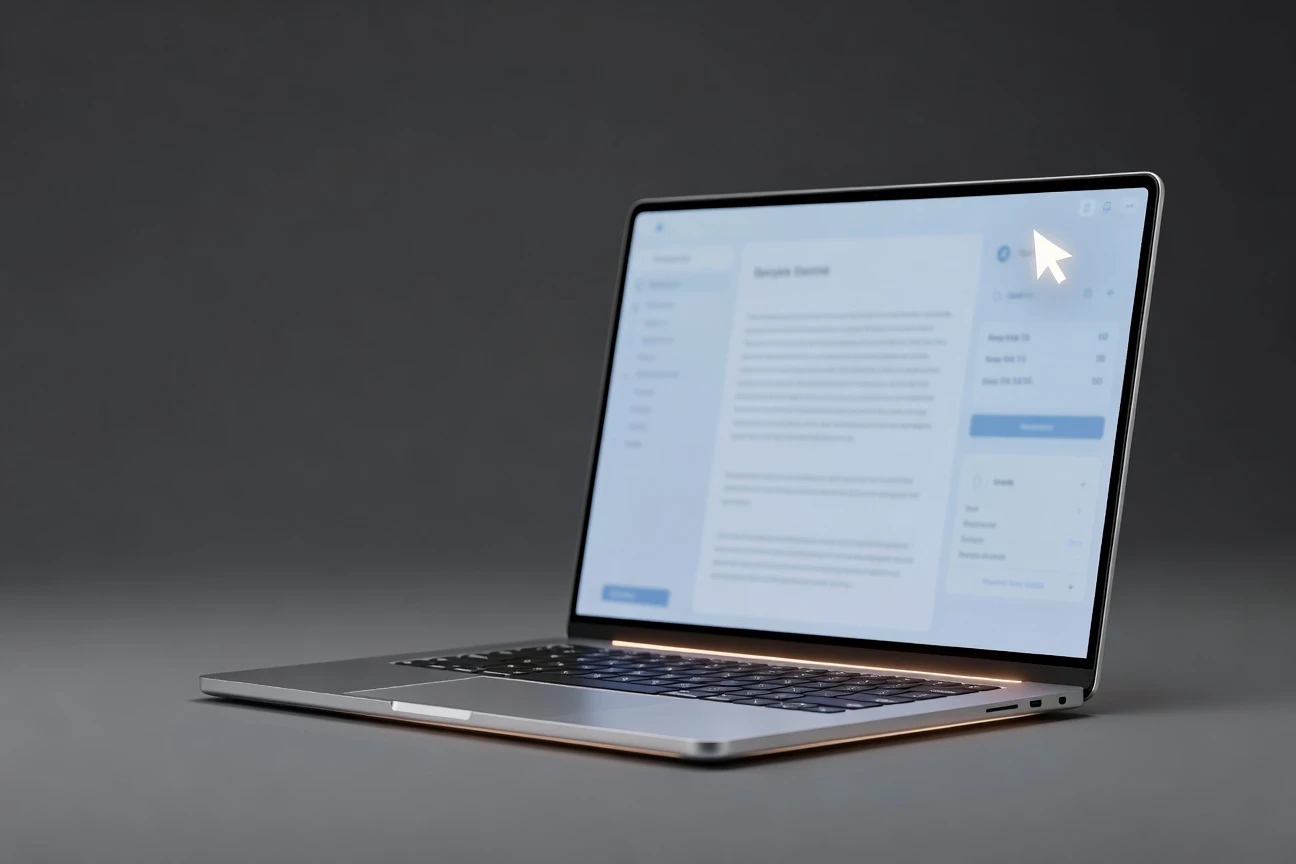
Google revealed Googlebook on May 12 at the Android Show, an Android-based laptop category arriving this fall from Acer, ASUS, Dell, HP and Lenovo. The pitch leads with Magic Pointer, a Gemini-powered cursor that, per a DeepMind post published the same week, is also rolling out to Chrome on Windows and macOS.
Glowbar, a soft light strip along the screen bezel, is the only piece of hardware identity Google has been willing to name. No processor, no display rating, no price. The pitch arrives ten years after Google first promised to merge Android and ChromeOS into a single laptop platform.
The Reveal That Asked One Question and Answered None
Alex Kuscher, Senior Director of Laptops and Tablets at Google, framed the new category as a laptop “built from the ground up for Gemini Intelligence” in the company’s official Googlebook launch post. The demo reel showed three software pieces and one hardware flourish.
Magic Pointer is a cursor that reads what is under it and hands the context to Gemini, so a user can wiggle over an email date to spin up a calendar event, or hover two product images to ask the assistant to mock them together. Create Your Widget is a generative tile builder that pulls live data from Gmail, Calendar and the open web on a natural-language prompt. Quick Access mirrors files from an Android phone, a capability ChromeOS shipped years ago.
Glowbar is the physical tell, a strip running across the bottom of the screen bezel that pulses during voice interactions. Google described it as “both functional and beautiful.” Beyond that, the announcement listed five OEM partners and an unspecified fall window. No chip vendor was named. No screen size, no battery rating, no price band was published.
The 9to5Google take after the reveal was blunt: outside the cursor demo, every feature shown was either already on ChromeOS or already heading to Android phones. That is a fair read of the slide deck.
Magic Pointer Is Coming to Chrome Anyway
The flagship feature is not exclusive to the new hardware. A DeepMind research post on the AI pointer published the same week as the Android Show confirms that the same cursor experience is rolling into Gemini in Chrome on Windows and macOS, starting with US beta channels and expanding through the summer to French, German, Italian and Spanish.
That timeline matters. The Chrome rollout begins before Googlebook hardware ships in the fall, which means anyone running Chrome on a Windows laptop, a MacBook, or an existing Chromebook can try Magic Pointer on a machine they already own, weeks or months before the first Googlebook reaches a shelf.
Glowbar and the chassis design remain hardware-only, of course. But the cursor was the headline. Stripping it from the exclusivity story leaves the new category leaning on a glowing strip and a phone-mirror feature that ChromeOS has shipped since 2019.
Google’s own DeepMind framing also undercuts the segmentation. The pointer is described there as a general-purpose AI interaction model, not a hardware-bound experience. When the maker’s research arm describes a feature as platform-agnostic and the marketing site describes it as the reason to buy a new device, the marketing site is the one that has to bend.
A Decade of Google Laptop Restarts
Googlebook is not the first time Google has tried to put its own stack on a premium laptop, and the script looks familiar. Andromeda, Pixelbook, Pixel Slate, Pixelbook Go, Fuchsia and now Aluminium OS form a ten-year ledger of restarts that mostly ended quietly.
Andromeda and the First Merger Pitch
Andromeda was Google’s 2016 plan to merge Android and Chrome OS into one operating system, slated to debut on a flagship laptop. It never shipped. Reporting from 2017 confirmed that future Pixel laptop work and Andromeda itself had stalled, and by the end of that year the project was effectively shelved without a public funeral.
The Pixelbook Era
The original Pixelbook arrived in October 2017 at a starting price of $999 and a Chrome OS install, not an Android one. Pixel Slate followed in 2018 as a detachable tablet and was widely panned for software bugs. Pixelbook Go shipped in 2019 as a more conventional clamshell and turned out to be the last device in the family. In September 2022, Google canceled the next Pixelbook and dissolved the team as part of broader cost cuts. A next-generation model in advanced development never reached production.
Fuchsia, Aluminium OS, and the Reboot
Fuchsia, an in-house operating system separate from Linux, was rumored for years as the long-term laptop bet but ultimately landed only on Nest Hub smart displays. In July 2025, a Google executive publicly committed to merging Android and ChromeOS, and the codename Aluminium OS surfaced. Googlebook is the consumer name for that effort.
The cancellation history can be read as a single list:
- Andromeda (2016): never shipped on any device
- Pixelbook (2017): last refresh in 2019, software support ended after seven years
- Pixel Slate (2018): single generation, no successor
- Next-gen Pixelbook (2022): killed in development by Sundar Pichai cost cuts
- Fuchsia for laptops: redirected to smart displays
That is the ledger against which Googlebook arrives.
The Desktop Apps Problem Hasn’t Moved
The throughline across every prior restart is the same: Google could not convince premium-laptop buyers that an Android or Chrome-based device could replace a Mac or a Windows machine for the work those buyers actually open a laptop to do. Photo editing, video editing, accounting suites, code IDEs, CAD, the long tail of professional software, all of it still lives on macOS and Windows.
Adobe is the cleanest example. Photoshop on Android launched in beta in June 2025 and reached general availability over the following months, but Adobe’s own documentation places the mobile version at roughly iPad-level capability, not full desktop parity. Premiere Rush was discontinued on September 30, 2025, and the new Premiere mobile shipped first on iPhone, with Android still in development. Lightroom, Illustrator and InDesign mobile builds remain similarly trimmed.
ChromeOS at least papered over that gap by supporting Android apps and Linux apps in parallel, which let power users sideload a real Photoshop alternative or run a desktop build of GIMP, Blender or Visual Studio Code. If Googlebook is a pure Android base with a Chrome browser bolted on, the ChromeOS Linux container is the obvious thing at risk.
- 1.86% of the global desktop OS market belongs to Chrome OS, against 71.68% for Windows and 15.7% for macOS
- 60.1% of education Chromebook share is held by Lenovo’s ecosystem, with 3.5 million units shipped in the first half of 2025
- 93% of US school districts say they plan to buy Chromebooks in 2026, up from 84% in 2023
Education is the floor Google cannot afford to wobble. The premium laptop market is the ceiling it has never reached. Googlebook has to sell to the second without breaking the first.
What Apple and Microsoft Are Doing in the Same Window
Googlebook is shipping into a fall when both rival platforms are already in motion. Apple released the MacBook Neo in March 2026 at a starting price of $599, fitted with the A18 Pro chip, a 13-inch Liquid Retina display and a 16-core Neural Engine pitched directly at on-device AI work. Inc. magazine called it the perfect AI computer; Bloomberg framed it as Apple’s biggest push into the budget market in a decade.
Microsoft is meanwhile working through public dissatisfaction with Windows 11 update fatigue and a long line of Copilot Plus PC reference hardware across Surface, Dell, HP and Lenovo lines. The same OEMs Google just named as Googlebook partners are running parallel AI-laptop pitches under Windows.
| Platform | Headline Device | Starting Price | AI Hook | Desktop App Story |
|---|---|---|---|---|
| Apple | MacBook Neo | $599 | A18 Pro, 16-core Neural Engine, Apple Intelligence | Native macOS apps, full Adobe suite |
| Microsoft | Copilot Plus PCs | From about $799 | Copilot, NPU-class silicon from Qualcomm, Intel, AMD | Full Win32 plus Adobe, Autodesk, Office native |
| Googlebook | Not announced | Gemini Intelligence, Magic Pointer cursor | Android apps plus Chrome browser; ChromeOS Linux container status unclear |
The OEMs sitting on both sides of that table have a vote in how this lands. Dell, HP, Lenovo and Acer are not going to walk away from the Windows revenue line, and a Googlebook that fails to bring a clear margin story will get the back-of-store shelf treatment Pixel Slate received in 2018.
What Googlebook Has Left to Show
Three things will decide whether Googlebook gets past the launch slide. The chip story, because Apple has set a high bar on on-device AI at the budget end. The app story, because Android-only without a real Adobe suite or a usable Linux container is a downgrade from a 2024 Chromebook for any creative buyer. And the price, because the OEMs need a number that competes with both the $599 MacBook Neo and the Copilot Plus mid-tier.
Google has so far named none of the three. The Android Show framed Googlebook as a category and a feeling, with Glowbar and Magic Pointer doing the visual work. Hardware partners are committed for the fall, which gives Google roughly five months to translate concept art into a configuration sheet a buyer can read.
If Googlebook ships in October with a credible desktop-app path, a clear price below the MacBook Neo, and a Linux story that does not abandon the existing ChromeOS install base, the historical pattern breaks. If it ships with the same demo reel Kuscher walked through in May, the next Pixelbook obituary writes itself.






Geekbench 7 Launches and Erases Three Years of Scores

Google’s Selfie Video Sign-In Arrives as Deepfake Fraud Surges

Samsung’s New Galaxy Z Fold 8 Undercuts Its Own Ultra

Kroger and Brookshire’s Recall Over 19 Million Eggs for Salmonella

Mortgage Rates Hit an 11-Month High as Oil Fears Bite

Oil’s Price Shock Collides With Wall Street’s AI Spending Boom

Parsley and Cilantro Emerge as Cyclospora Suspects in North Carolina

Walmart Dresser Recall Reveals a Wider Furniture Safety Sweep

Apple’s iOS 27 Speed Fixes Echo Its 2018 Playbook

Cheshire Medical Center Cyclospora Cluster Exposes a Wider Outbreak

Pokémon GO Developer Niantic Rebrands as Scopely Explore

Persona 4 Revival Hands All Anime Cutscenes to Studio MAPPA

Doom Studio id Software Cuts Half Its Staff in Xbox Layoffs

Jaylen Brown Traded to 76ers for Paul George and Four Draft Picks

Nintendo Switch Online Adds Four Classics and One Japan-Only Title

Jordan Henderson Hospitalized After Wrist Injury at the Azteca

Mexico’s World Cup Run Ends at Azteca as England Hold On 3-2

Meta’s Muse Image Lets Anyone Use Your Instagram Photos in AI

Louis Vuitton Beats Molly Tea in China, Triggers Cultural Backlash

Marine Cloud Brightening Could Weaken Super El Niños, Study Says
-

 TECHNOLOGY3 years ago
How to Adjust a Bulova Watch Band – An Easy Guide
-

 News3 years ago
Fred Pentland: Athletic Bilbao’s English mentor who changed the essence of Spanish football
-

 FINANCE3 years ago
Tax Planning for Every Season: Guide to Maximizing Your Tax Benefits
-

 Education3 years ago
African Ministers New Education Plan
-

 BUSINESS3 years ago
What is Entrepreneurial Operating System? A Comprehensive Guide to EOS
-

 Education3 years ago
Innovate Your Learning Journey with Technology and Enhance Education
-

 News3 years ago
Russians formally out of World Athletics Championships
-

 BUSINESS3 years ago
Top 9 Most Expensive American Cities to Rent an Apartment