
News
Xperia 1 VIII Holds Price, Xiaomi 17 Max Loads Up: Week 20 Phone News

Sony pinned the Xperia 1 VIII at €1,499 in Europe and £1,399 in the UK last Wednesday, holding the line on the launch tag from the Mark VII while quadrupling the size of the rear telephoto sensor. The new 48-megapixel module locks the zoom at a fixed 70mm equivalent, trading the predecessor’s variable 85mm-to-170mm optic for a single larger 1/1.56-inch chip.
Across the supply chain, Xiaomi spent the same week telegraphing the opposite play. An 8,000mAh silicon-carbon battery, a 200-megapixel main camera and a 6.9-inch flat panel will headline the Xiaomi 17 Max when it lands in China on May 21, with prices reported to start near 5,199 yuan (about $720).
Sony Trades Zoom Range for a Bigger Telephoto Sensor
The Xperia 1 VIII keeps Sony’s signature kit intact. A 3.5mm headphone jack, a microSD card slot, a two-stage dedicated shutter button and front-firing stereo speakers all return, and the screen sticks to the 21:9 aspect ratio Sony has used since the Mark I. The rest of the spec sheet moves more slowly than rivals: 12GB of random-access memory (RAM), 256GB of base storage and a 5,000mAh battery that charges at 30W wired and 15W wireless.
The bigger camera change is the lens choice. Sony has dropped the variable 85mm-to-170mm zoom optic that defined the Mark VII’s telephoto, replacing it with a fixed 70mm equivalent paired to a 1/1.56-inch, 48-megapixel sensor. By surface area, that chip is roughly four times larger than the 1/3.5-inch module it succeeds, with four times the pixel count. Sony positions the new 70mm hardware for portrait and short-range zoom work, ceding the previous generation’s 170mm reach.
The 24mm main and 16mm ultrawide cameras carry over with no sensor change. Power comes from Qualcomm’s Snapdragon 8 Elite Gen 5, the same chip going into every premium Android flagship this cycle. The phone ships with Android 16 out of the box and a Sony commitment to five major operating system upgrades and six years of security patches. Sony has confirmed there will be no United States launch, narrowing distribution to Europe, the UK and parts of Asia, with shipments starting June 26.
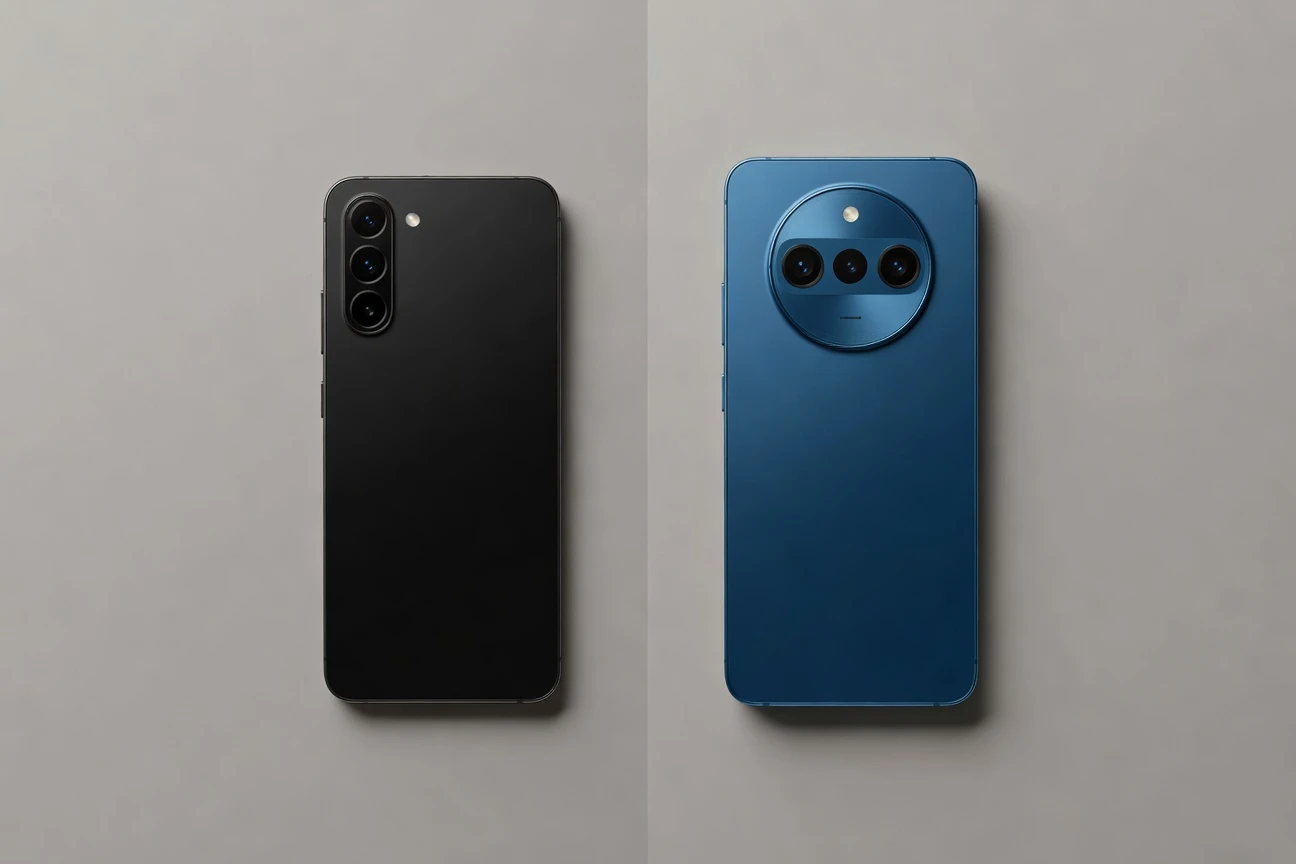
Xperia VIII vs VII at a Glance
Side by side, the year-over-year changes look narrow on paper but matter most in the parts of the spec sheet Sony’s enthusiast buyer cares about.
| Spec | Xperia 1 VIII | Xperia 1 VII |
|---|---|---|
| Display | 6.5″ LTPO OLED, FHD+, 120Hz | 6.5″ LTPO OLED, FHD+, 120Hz |
| Chipset | Snapdragon 8 Elite Gen 5 | Snapdragon 8 Elite |
| Telephoto camera | 48MP, 1/1.56″, fixed 70mm | 12MP, 1/3.5″, 85-170mm variable |
| Main camera | 24mm f/1.9 | 24mm f/1.9 |
| Ultrawide | 16mm f/2.0 | 16mm f/2.0 |
| RAM / storage | 12GB / 256GB or 1TB | 12GB / 256GB or 512GB |
| Battery | 5,000mAh, 30W wired | 5,000mAh, 30W wired |
| Headphone jack & microSD | Yes | Yes |
| Base price | €1,499 / £1,399 | €1,499 / £1,399 |
| US launch | No | No |
Display resolution stays at FHD+ after Sony backed away from 4K in the previous cycle. RAM remains capped at 12GB, half what some Chinese rivals ship in this price band. The only price headroom Sony built in is a new Native Gold 1TB trim at €1,999 / £1,849, a tier the Mark VII did not offer.
Xiaomi 17 Max Telegraphs an 8,000mAh Counterpunch
Xiaomi confirmed the 17 Max via its Chinese social channels last Thursday, locking the reveal to May 21 in Beijing. The Max sits above the standard Xiaomi 17 and 17 Pro, positioned as the company’s biggest and heaviest pitch at the flagship buyer.
The headline numbers, all officially disclosed by Xiaomi rather than leaked:
- 8,000mAh silicon-carbon battery, the largest cell in any mainstream Android flagship this year
- 200MP Leica-tuned main camera on a 1/1.4-inch sensor, paired with a 50MP periscope telephoto and a 50MP ultrawide
- 6.9-inch flat 1.5K OLED display running at 120Hz
- 100W wired charging, 50W wireless, plus reverse wireless
Pricing has not been formally set, but Chinese supply-chain leakers including Digital Chat Station have pointed to a starting tag around 5,199 yuan (about $720) for the entry trim. That places the Max at less than half the Xperia 1 VIII’s €1,499 (roughly $1,635) sticker before any market-specific tax adjustments.
A global rollout for the 17 Max has not been confirmed. Previous Max-tier Xiaomi flagships, including parts of the Mix Fold and Civi lines, have often been delayed for international markets or skipped them entirely. India is the likeliest first stop outside China based on the company’s recent launch cadence.
Two Flagships, Two Bets on Premium Android
Strip out the surface differences and the contest reduces to two opposite assumptions about what a flagship buyer wants in 2026.
| Attribute | Sony Xperia 1 VIII | Xiaomi 17 Max |
|---|---|---|
| Launch market | EU, UK, parts of Asia | China first, global TBD |
| Starting price | €1,499 (~$1,635) | ~5,199 yuan (~$720) |
| Battery | 5,000mAh | 8,000mAh |
| Wired charging | 30W | 100W |
| Main sensor | 48MP, 1/1.35-inch | 200MP, 1/1.4-inch |
| Display | 6.5″ 21:9 FHD+ OLED | 6.9″ flat 1.5K OLED |
| Distinctive features | Headphone jack, microSD, shutter key | Silicon-carbon battery, periscope tele |
| Software commitment | 5 OS upgrades, 6 yrs security | To be confirmed at launch |
The two phones aim at almost zero buyer overlap. Sony courts the enthusiast who values manual camera control, RAW capture, expandable storage and physical media keys, and who will pay the asking price for a phone that ships in low single-digit global share. Xiaomi is chasing the spec-conscious buyer in China and emerging markets who treats battery life and camera resolution as the headline numbers, and who is unwilling to pay above $800 for them.
The shared component is the Snapdragon 8 Elite Gen 5. Qualcomm’s premium Android tier wins on every flagship cycle now, regardless of which original equipment manufacturer (OEM) gets the press attention.
Samsung Pushes One UI 8.5 Out to the Install Base
Samsung began the global rollout of the One UI 8.5 stable release on May 6 in Korea, then expanded on May 11 to Europe, India, North America, Latin America, Southeast Asia, Hong Kong and Taiwan. The Android skin layers a tranche of features Samsung previously gated to the unreleased Galaxy S26 series on top of the existing flagship install base.
Device coverage in the first two waves:
- Galaxy S25 series and S25 FE
- Galaxy S24 series and S24 FE
- Galaxy Z Fold7 and Z Flip7
- Galaxy Z Fold6 and Z Flip6
- Galaxy Tab S11 series and Tab S10 series
The Galaxy S23 series, the Galaxy A-series and the older foldables are queued for a second phase, with Samsung naming the rollout but not yet committing a firm date. Carrier-locked variants in the US and Latin America are typically the last to receive each wave. The headline software changes include an expanded Galaxy AI feature set with on-device live call transcription, an updated Samsung Notes with new pen styles and decorative tapes, a Contacts app that hooks directly into Creative Studio for personalised profile cards, and battery and thermal management code lifted from the S26 development branch.
One UI 9 Beta Opens in Six Markets
Samsung announced the One UI 9 beta program for the Galaxy S26 series the day before the 8.5 stable rollout reached scale. The beta, built on Android 17, is open to S26 owners in six countries: Germany, India, Korea, Poland, the United Kingdom and the United States. India and Poland get access from May 26; the other four markets opened first.
Sign-up runs through the Samsung Members app, the same channel Samsung has used for prior One UI betas. The build is restricted to the Galaxy S26 generation, with no compatibility for older flagships, which means owners of S23, S24 and S25 hardware stay on the 8.5 track.
Feature highlights from Samsung’s first-party beta brief: a Samsung Notes refresh with new decorative elements, expanded Contacts customisation through Creative Studio, an accessibility overhaul Samsung is calling a “more accessible mobile experience,” and stronger security stack protection against new threat classes. The company has not detailed which Android 17 platform-level changes carry through verbatim and which Samsung has overlaid with its own implementations.
The full One UI 9 release, including the AI feature set Samsung is reserving for the next flagship reveal, is scheduled for the second half of the year alongside hardware Samsung has not yet named.
Galaxy Re-Newed Lands in India With a One-Year Warranty
Samsung launched its Certified Re-Newed programme in India on May 6, putting officially refurbished Galaxy phones on sale through Samsung.com and the Samsung Shop app. Each device carries a standard one-year warranty matching new-phone terms, and Samsung’s in-house refurbishment line handles hardware inspection, functional testing, software validation and complete data wiping before resale.
| Model | Configuration | Price (INR) |
|---|---|---|
| Galaxy S25 Ultra | 256GB | ₹97,499 |
| Galaxy S25 | 256GB | ₹58,749 |
| Galaxy A56 5G | 8GB / 256GB | ₹31,499 |
| Galaxy A56 5G | 12GB / 256GB | ₹32,749 |
| Galaxy A36 | 128GB | ₹23,249 |
The Re-Newed S25 Ultra undercuts the new-unit launch price by roughly a quarter. The A-series gap is narrower, because Galaxy A56 and A36 new units already run at heavy discounts on Amazon India and Flipkart, and the refurbished tier is benchmarked against Samsung’s own retail price rather than the prevailing street price.
The launch puts Samsung in direct competition with Cashify, Yaantra and Amazon Renewed, the three established refurbishment channels in India. The differentiator is the same one Apple has used in its refurbished store globally: a factory-grade warranty and replacement-parts guarantee that grey-market and aggregator refurbs cannot match.
The next domino falls on May 21 in Beijing. If Xiaomi prices the 17 Max where the leaks say it will, Sony’s bet on the enthusiast tier of premium Android will be sized against the smallest addressable buyer pool it has ever had.






Walmart’s $50 Million Opioid Settlement Closes Case Without Admission

California Sues Over $120 Million Morro Bay Wind Lease Buyout

Gilead Bixlenvo FDA Nod Opens Single Pill Path for Complex HIV Cases

Meta’s $18B Kids Deal Forever Shields Data Used to Spot Under-13s

Lettuce Outbreak Drove Record Cyclospora Spike Across 20 States

Amazon Shaves $20 Off M6 Mac Mini Before It Even Ships

SpaceX Louisiana Port Tests Debt Markets on Orbital AI Scale

Microsoft High Lifts Indexes as Small Caps Crack Support

Apple Replays 2015 Saturday Midnight Preorder for iPhone 18 Pro

Updated COVID Shots Clear FDA but Access Friction Hits High-Risk Groups

Take-Two CEO Pushes Netflix Subs for GTA 6 Extended Look

Wildlands Free Update Hands Players the Tools They Already Invented

Destiny 2 Fans Unlock Vaulted Maps After Live Service Ends

Quake Gets 19 Free Maps From MachineGames Quake Club

Quordle Monday Delivers Gavel Crush Speed Ethos Cleanly

Stripe Bid Shows PayPal Moat Cracked After Years of Slide

Tyson’s Five-Year Utah Plant Falls to Cattle Shortage Reckoning

Silver Lake Workday Talks Signal Private Floor for Software

Kennedy Lewis Takes Majority Control of The Greenbrier in $500M Deal

Best Buy Marks 60 Years With Sale That Echoes Its Audio Shop Roots
-

 TECHNOLOGY3 years ago
How to Adjust a Bulova Watch Band – An Easy Guide
-

 News3 years ago
Fred Pentland: Athletic Bilbao’s English mentor who changed the essence of Spanish football
-

 FINANCE3 years ago
Tax Planning for Every Season: Guide to Maximizing Your Tax Benefits
-

 Education3 years ago
African Ministers New Education Plan
-

 BUSINESS3 years ago
What is Entrepreneurial Operating System? A Comprehensive Guide to EOS
-

 Education3 years ago
Innovate Your Learning Journey with Technology and Enhance Education
-

 News3 years ago
Russians formally out of World Athletics Championships
-

 BUSINESS3 years ago
Top 9 Most Expensive American Cities to Rent an Apartment