
LIFESTYLE
Schlitz Beer Final Batch Set for May 23 After 177-Year Run

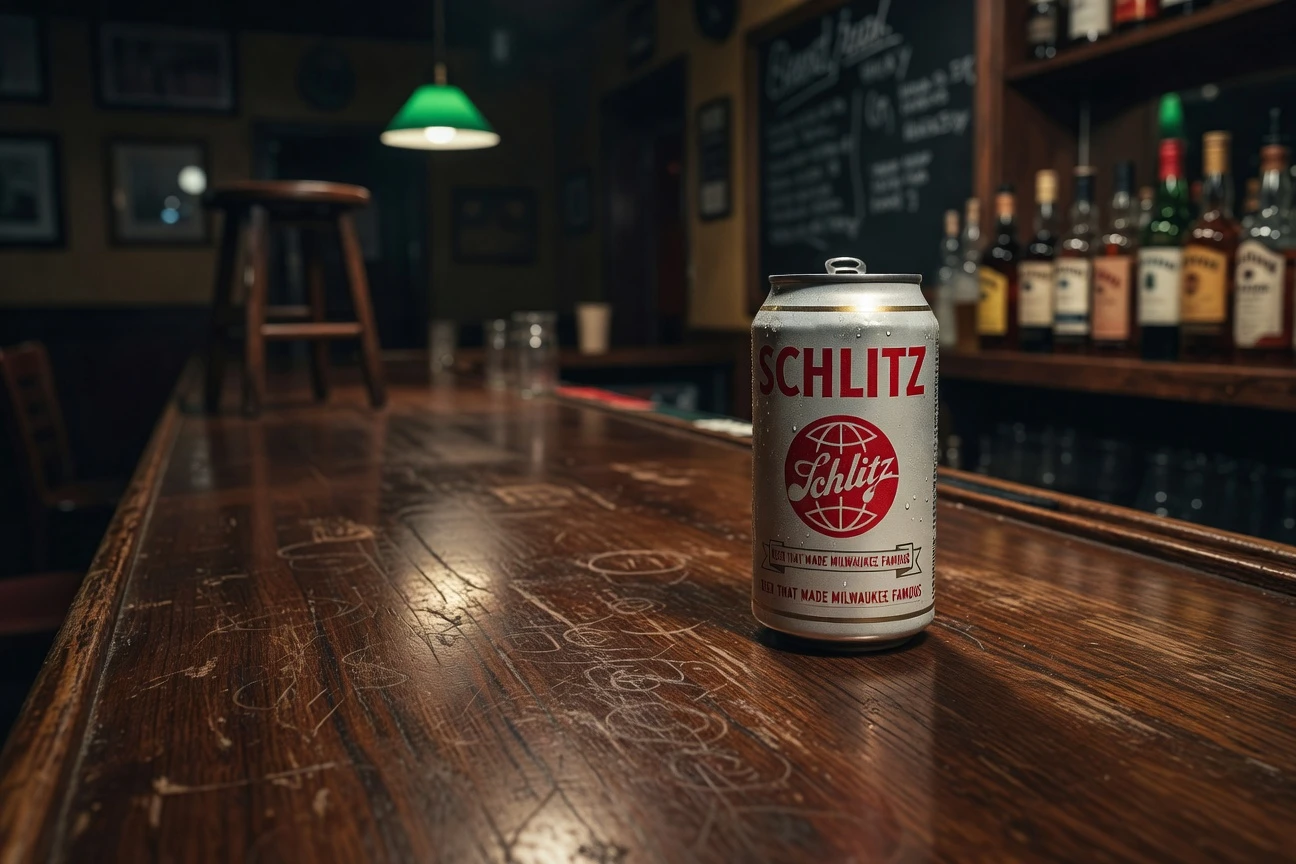
Schlitz, the lager that built its reputation on the slogan “the beer that made Milwaukee famous,” will be brewed one final time on Saturday, May 23, when Wisconsin Brewing Company runs an 80-barrel ceremonial batch at its Verona, Wisconsin facility. Pabst Brewing Company, which has owned the trademark since 1999, confirmed on May 15 that the 177-year-old brand is being placed “on hiatus” after annual sales reportedly dropped to roughly $900,000, a rounding error inside the Pabst portfolio.
Pre-orders for the last cans open this Saturday on Wisconsin Brewing’s website. Pickup is restricted to the brewery itself, starting June 27, the same day brewmaster Kirby Nelson will fire the kettle on the very last batch in front of an audience.
How to Order the Final Batch of Schlitz
Wisconsin Brewing Company opens online ordering on Saturday, May 23. Customers in the taproom can also use a QR code at the bar. The beer comes packaged in 16-ounce four-packs, and per the brewery’s terms, every order must be collected in person at the Verona brewhouse at 1079 American Way on or after Saturday, June 27. No shipping. No third-party distribution. If you cannot stand at the brewery counter, you do not get the beer.
Pre-Order Window and Pickup Window
Pre-order opens at 12:01 a.m. Central on May 23. Pickup begins June 27 and runs while supplies last. Wisconsin Brewing has signaled the run will be capped at one final 80-barrel brew, which converts to roughly 2,480 gallons. That math leaves room for a few thousand four-packs, no more.
The June 27 Event Schedule
At 12:30 p.m. on June 27, Nelson will start the brewing day in the taproom, narrating each step. At 1 p.m. he gives a short talk on the brand’s history and the 1948 specification sheet he used. At 5 p.m. the finished beer is poured for the public for the first and last time. The brewery is treating the day as a wake disguised as a tasting.
The Brewer Behind the Last Pour
Kirby Nelson is not a Pabst employee. He is a Wisconsin craft-beer veteran who built his career at Capital Brewery before co-founding Wisconsin Brewing Company in 2013. Nelson approached Pabst directly for the right to brew one ceremonial batch, and Pabst granted it. The brewery says the recipe was reverse-engineered from Schlitz’s own brewhouse operations logs from 1948, when the company sat at the top of American brewing.
Wisconsin Brewing Company’s love letter to our state.
That is how Nelson described the project to the Milwaukee Journal Sentinel. The choice of 1948 is deliberate. It predates the cost-cutting decisions that began two decades later and ended the brand’s place at the center of American beer drinking.
From World’s Largest Brewer to $900,000 in Annual Sales
Schlitz at its peak was not just a Milwaukee story. It was the global benchmark.
- 1902: Schlitz passed Pabst to become the largest brewery in the world.
- 1934: A year after Prohibition lifted, Schlitz reclaimed the global top-seller crown.
- Mid-1970s: Annual production exceeded 24 million barrels.
- 2025 fiscal estimate: Roughly $900,000 in U.S. retail sales, per Pabst-sourced figures cited by industry trade press.
That collapse covers six decades. The first crack opened in 1967, and the brand never fully closed it.
Pabst’s head of brand strategy, Zac Nadile, framed the May 2026 decision as a logistics problem. “Unfortunately, we have seen continued increases in our costs to store and ship certain products and have had to make the tough choice to place Schlitz Premium on hiatus,” Nadile said in a statement released on May 15. That language sits awkwardly next to the brand’s history. Pabst is one of the largest contract-brewing customers in the United States. When a label fails to clear minimum production thresholds, it gets shelved. The shipping line is real. It is also the smaller half of the story.
The 1976 Recall That Quietly Killed a Beer Empire
The 1970s ought to have been Schlitz’s strongest decade. Volume kept climbing. Then Robert Uihlein, the chief executive who had inherited the family-controlled brewery, pushed a sequence of process changes that turned a 24-million-barrel brand into a punchline within ten years.
Accelerated Batch Fermentation
In 1967, Schlitz introduced what it called Accelerated Batch Fermentation (ABF, a high-temperature shortcut). The traditional fermentation period for the brand had been twelve days. ABF cut it to four, then to two. The plant could run more beer through the same kettles. Margins jumped. Drinkers noticed the body of the beer thinning, then noticed faster.
Corn Syrup and the Substitution Era
Through the early 1970s, the brewery quietly replaced portions of malted barley with corn syrup adjuncts. Hop extracts displaced whole-cone hops in several lines. The label said Schlitz. The mash did not.
The Chill-Garde Disaster
In 1976, fearing an FDA (Food and Drug Administration, the U.S. federal food regulator) rule that would have forced full ingredient disclosure on cans, Schlitz swapped a stabilizing agent for a new one called Chill-garde, intended to filter out before final packaging. Chill-garde reacted with the foam stabilizer Kelcoloid already in the beer. Bottles came off the line and, within weeks of distribution, began producing visible white flakes. The product was safe. It looked spoiled. Schlitz recalled an estimated 10 million bottles at a cost of about $1.4 million. The damage to the brand was orders of magnitude worse.
A 1981 labor strike at the Milwaukee headquarters brewery sealed the run. By 1982, Schlitz had been sold to Stroh’s. The brand passed to Pabst in 1999. None of the new owners brewed it back to life.
Schlitz at Peak vs. Schlitz at the End
The contrast between the brand’s mid-century shape and its 2026 footprint is severe.
| Metric | Schlitz, 1948 to 1976 | Schlitz, May 2026 |
|---|---|---|
| Owner | Joseph Schlitz Brewing Company (Uihlein family) | Pabst Brewing Company |
| Production model | Owned breweries in Milwaukee, Brooklyn, Tampa | Contract brewing only |
| Annual volume | 24 million barrels at peak | One 80-barrel ceremonial batch |
| Annual U.S. sales | Top global seller through 1976 | Approximately $900,000 |
| Recipe | Long-fermentation, all-malt traditional lager | “Classic ’60s Formula” can-label callout |
| Distribution | National plus international | Brewery pickup, Verona, Wisconsin |
The decline was not a market accident. It was a sequence of deliberate cost decisions whose downside arrived on a delay.
What the 1948 Recipe Brings Back
Nelson’s batch will run on the specifications Schlitz used the year it was still leaning on a six-row barley malt bill, whole-cone Cluster hops from the Yakima Valley, and a true cold-conditioning lager program. The fermentation timeline returns to roughly two weeks. The beer being poured on June 27 will be closer in flavor to what a Milwaukee tavern would have served Harry Truman than to anything brewed under the Pabst contract since the 1990s.
That is the bittersweet center of the project. The version of Schlitz that drinkers say they want back is not the version Pabst is shelving. It is the version that already disappeared in the late 1960s.
Where the Brand Goes After the Last Pour
Pabst has not used the word “discontinued” anywhere in the May 15 announcement. The official language is “hiatus,” and Nadile left a door propped open in a follow-up line: “Any brand or packaging configuration that is put on hiatus is still a cherished part of our history and hopefully our future. We continually look for opportunities to bring back beloved brands.”
That phrasing matters. Pabst still owns the trademark. The company has revived dormant labels before, including its own Pabst Blue Ribbon revival arc during the 2000s and the limited Olde English HG800 reissue in 2018. Schlitz could come back, in a barbershop revival the way Stroh’s briefly did under Pabst itself in 2016. It could also sit in the vault for a decade. The historical pattern across discontinued American lagers is that the trademark survives longer than the recipe.
For drinkers, the practical horizon is shorter. Existing Schlitz inventory at retail will sell through the summer. Reports from regional distributors suggest most accounts ran their last cases in April. The Wisconsin Brewing project is the only confirmed new production scheduled anywhere in the country.
Frequently Asked Questions
Is Schlitz beer being discontinued completely?
Pabst Brewing Company has placed Schlitz Premium “on hiatus” effective immediately, which means active production has ended. Pabst retains the trademark and has signaled the brand could return at some future date, but no relaunch has been announced.
How can I pre-order the final Schlitz batch?
Pre-orders open Saturday, May 23, on the Wisconsin Brewing Company website and via QR code in the brewery’s Verona taproom. The beer is packaged in 16-ounce four-packs and must be picked up in person at 1079 American Way, Verona, Wisconsin, on or after Saturday, June 27.
When will the last Schlitz be brewed?
Wisconsin Brewing Company will brew its 80-barrel final batch on Saturday, May 23, with brewmaster Kirby Nelson leading the production. A second ceremonial public brew day takes place on June 27, beginning at 12:30 p.m., when the bottled batch is also released for pickup.
Why is Pabst stopping Schlitz production?
Pabst cites rising storage and shipping costs and falling demand, with annual U.S. sales reportedly down to about $900,000. Industry analysts point to a longer decline that began with 1960s recipe changes and the 1976 product recall, which permanently damaged the brand’s quality reputation.
What does the 1948 Schlitz recipe taste like?
Brewmaster Kirby Nelson built the final recipe from Schlitz’s original 1948 brewhouse logs. The beer is an all-malt lager with longer cold conditioning than the post-1967 versions, closer in flavor profile to a traditional pre-Prohibition-style Milwaukee lager than to anything sold under the Schlitz name in the past several decades.
At 5 p.m. on June 27, the first glass of the last batch will be poured at the Verona taproom counter. Whatever is in the cooler when the doors close that evening is what remains of the beer that made Milwaukee famous.


Xbox Game Pass Adds Five Games on May 20, and Premium Catches Them All

Sony Sets 60-Minute State of Play for June 2 With Wolverine and Big Stakes

Discord Turns On Default Encryption for Calls, Leaves Text Behind

LEGO Batman: Legacy Of The Dark Knight Hits 86 As Rocksteady’s Quiet Return Lands

Subnautica 2 Studio Apologises, Holds Line on No-Kill Combat

Schlitz Beer Final Batch Set for May 23 After 177-Year Run

SpaceX Starship V3 Flight 12 Faces May 21 Launch From Starbase

Target Q1 Sales Beat Hides a Faster Story in Roundel Ads

Pending Home Sales Climb 1.4% in April as Supply Crunch Eats the Win

Meta Begins 8,000 Layoffs While Routing 7,000 Into AI Pods

Mitchell Matches Kobe in Game 7 Rout, Cavaliers Reach East Finals

Colt Emerson Debuts, Mariners Get Swept by Padres in Vedder Cup

Brent at $111 Hides the Hormuz Damage Hitting Fed and Asia

Samsung Strike Looms May 21 as Union Eyes SK Hynix Bonus Formula

Rousey Finishes Carano in 17 Seconds and Hands Netflix Its MMA Opening

Shai Gilgeous-Alexander Wins Second Straight MVP With 83 of 100 First-Place Votes

Santa Marta’s Fossil Fuel Exit Plan Puts Scotland’s Drilling U-Turn on the Clock

Xperia 1 VIII Holds Price, Xiaomi 17 Max Loads Up: Week 20 Phone News

LIRR Strike Hits Third Day as 250,000 Commuters Face a Tougher Manhattan Run

Googlebook Repeats Google’s Decade-Long Laptop Pattern
-

 TECHNOLOGY3 years ago
How to Adjust a Bulova Watch Band – An Easy Guide
-

 FINANCE3 years ago
Tax Planning for Every Season: Guide to Maximizing Your Tax Benefits
-

 Education3 years ago
African Ministers New Education Plan
-

 News3 years ago
Fred Pentland: Athletic Bilbao’s English mentor who changed the essence of Spanish football
-

 BUSINESS3 years ago
What is Entrepreneurial Operating System? A Comprehensive Guide to EOS
-

 Education3 years ago
Innovate Your Learning Journey with Technology and Enhance Education
-

 News3 years ago
Russians formally out of World Athletics Championships
-

 BUSINESS3 years ago
Top 9 Most Expensive American Cities to Rent an Apartment