
FINANCE
Iran Clashes Lift Oil to $97 and Push Bond Yields to 4.51%

Oil prices and U.S. bond yields both jumped on Monday after Iran said it would cut contact with American negotiators and pursue a “complete closure” of the Strait of Hormuz, the response Tehran chose after Israel’s latest offensive against Hezbollah, the Lebanese armed group and political movement, in Lebanon. Brent crude closed up 4.24% at $97.79 a barrel, after spiking more than 7% intraday, while the 10-year Treasury yield climbed to 4.51%, its firmest reading in weeks.
Traders had spent May pricing in a wind-down of the conflict. That bet, the rally back toward record highs, is now on hold, and the strain is showing up first in the price of money rather than the price of stocks.
Yields Climb to 4.51% as the Oil Spike Hits Bonds
The barrel got the attention. The bond market did the more important talking. When crude lurches higher on a supply scare, the immediate worry is not the pump price next week; it is what sustained energy inflation does to the path of interest rates. Higher oil feeds straight into headline inflation, and that pushes back the moment central banks feel safe cutting.
That is why the 10-year yield matters more than the intraday Brent print. It had drifted near three-week lows around 4.45% on Friday, then turned back up as the Hormuz headline crossed. For most of the past year the benchmark has traded in a 4.0% to 4.5% band, so a close above the top of that range is the bond market saying the inflation risk just got heavier. You can track the daily series on the 10-year Treasury constant-maturity yield data published by the St. Louis Fed.
- $97.79 Brent crude close on June 1, up 4.24% on the day after an intraday spike past 7%.
- 4.51% on the 10-year Treasury note, back above its year-long trading band.
- 46% market-implied odds of a Federal Reserve rate hike by December, a near-reversal of the cuts priced in earlier this year.
- 3.8% annual headline inflation on the Fed’s preferred PCE gauge, with core at 3.3%, both still above the 2% target.
What Tehran Signaled This Week
The trigger was a report from Iran’s Tasnim news agency, a semi-official outlet close to the Revolutionary Guard. It said Iranian negotiators would stop communicating with Washington in response to Israeli strikes in Lebanon, and that Tehran intended to move toward a full shutdown of the Strait of Hormuz.
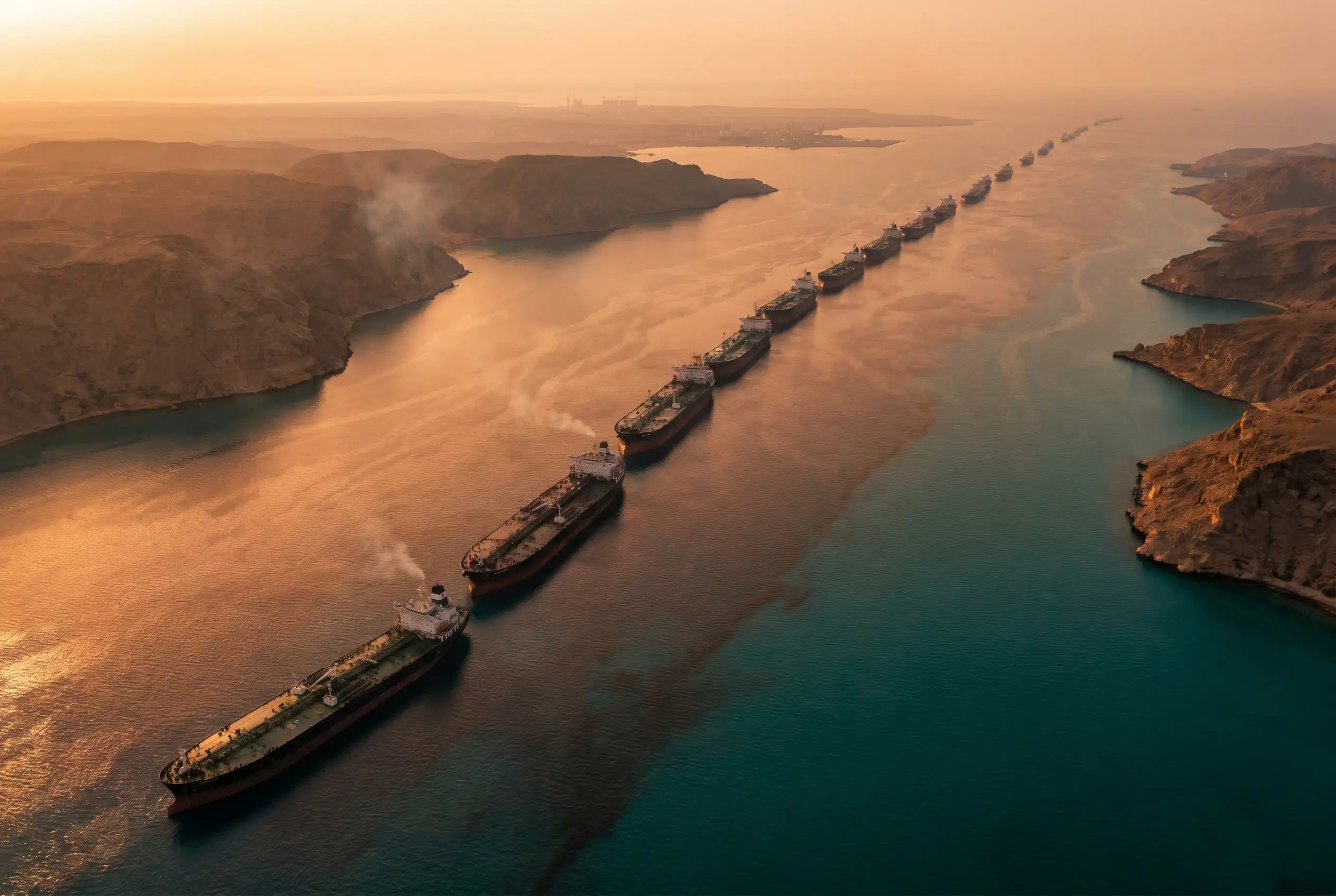
That is a sharper posture than the partial measures already in place. Since the spring, Iran’s forces have throttled traffic, charged tolls and closed the channel to vessels linked to the United States, Israel and their allies. A “complete closure” raises the prospect that even neutral tankers stop moving.
President Donald Trump has said negotiations remain open and floated the idea of a memorandum of understanding to reopen the strait within a week. Markets are no longer taking the optimistic read at face value. Each time talks have appeared close this year, a fresh flashpoint has pulled them apart again.
The latest break did not come from the Gulf at all. It came from Lebanon, a reminder that the conflict has multiple fronts and that any one of them can reset the energy and rates picture overnight.
Why One Channel Carries a Fifth of the World’s Oil
The reason a statement from a news agency can move global yields sits in the geography. Before the crisis, the Strait of Hormuz carried about 20 million barrels of oil a day, roughly 20% of the world’s seaborne oil trade, plus a comparable share of the liquefied natural gas (LNG, the supercooled gas shipped by sea) that powers much of Asia and Europe. Qatar routes nearly all its LNG through the same narrow water.
There is no easy detour. Pipelines that bypass the strait can absorb only a fraction of that volume, so when the channel chokes, the barrels do not simply reroute; they vanish from the market. That scarcity is also why prices have stayed elevated rather than spiking to extremes, with demand destruction and discreet buyers cushioning the blow, a dynamic explored in our look at how China has kept oil prices below $200 despite the disruption.
The physical evidence is stark. By mid-May, more than 600 tankers were stuck inside the Persian Gulf and another 240 were waiting outside, unwilling to risk the passage. Every one of those idled ships is supply that the rest of the world is not getting.
The Peace Trade Gets Repriced
For weeks the working assumption on trading desks was de-escalation. Equities had climbed back toward records on the view that a deal would cap oil and let the Fed resume easing. Monday cut into that thesis from two directions at once.
Equities Lose the De-escalation Bid
Stock futures had opened the week higher on exactly that hopeful read, as we noted when Wall Street pushed toward fresh record highs in early June. The Hormuz headline pulled the optimism back. Asian markets had already shown how fast sentiment can flip, with a brutal session earlier in the conflict captured in our report on Asia-Pacific markets tumbling on fresh strikes in Iran.
Rate-Cut Bets Flip to Hike Odds
The bigger repricing is in rates. Investors now broadly expect the Fed to hold the funds rate steady through year-end, and futures assign close to a 46% chance of a hike in December, a scenario that looked far-fetched a few months ago. You can watch those probabilities shift on the CME interest-rate probability tracker. With PCE inflation running at 3.8% and energy threatening to push it higher, the central bank has little room to cut into an oil shock.
From $126 Peaks to a Fragile Truce: How 2026 Got Here
Monday’s move did not arrive from calm. It is the latest jolt in a crisis that has already produced the most violent oil-price swings in modern records.
The Spring Shock
The sequence ran fast once it started. The key dates frame how quickly a regional flashpoint became a global price event:
- February 28: Coordinated U.S. and Israeli airstrikes begin; Iran answers with missile barrages.
- March 4: Tehran declares the strait closed and warns it will target passing vessels.
- March 8: Brent tops $100 a barrel for the first time in four years; Dubai crude later hits a record $166 on March 19.
- March 11: The International Energy Agency (IEA, the Paris-based watchdog for industrialized oil consumers) agrees to release 400 million barrels from reserves.
Brent peaked near $126 a barrel during the worst of it. The World Bank documented the scale in its analysis of how the Strait of Hormuz disruption sent crude prices surging, noting a March jump of about 65%, or $46 a barrel, the largest monthly rise on record.
An Expensive, Unstable Calm
A temporary ceasefire in April brought a measure of order, but not relief. Iran began charging tolls exceeding $1 million per ship, the U.S. Navy mounted its own blockade of Iranian ports, and a coalition escort operation launched in May to shepherd merchant vessels through. The IEA’s latest monthly assessment put total supply losses since February at 12.8 million barrels a day, with effective OPEC+ spare capacity, the oil producers’ alliance, down to a razor-thin 0.17 million barrels a day.
Higher prices, a weaker economic environment and demand-saving measures will increasingly impact fuel use.
That warning, from the IEA’s May 2026 oil market report, captures the trap. The agency expects world oil demand to contract by 420,000 barrels a day this year, the kind of demand destruction that normally signals a slowing economy, not a healthy one.
The Bill Reaches Households, Not Only Traders
A move in the 10-year yield is not an abstraction for people who never touch a Bloomberg terminal. That benchmark anchors mortgage rates, car loans and the cost of carrying credit-card balances. When it pushes back above 4.5% because oil is stoking inflation, the squeeze lands on household budgets within weeks.
So the reason this story matters runs through two channels at once. The obvious one is the gas pump and the heating bill. The quieter one, and the more expensive over time, is the higher cost of every loan that gets repriced while the Fed sits on its hands.
For now the market is caught between Trump’s promise of a deal within a week and Tehran’s threat to seal the channel completely. If a memorandum to reopen the strait actually lands, oil eases, yields drift back into their band, and the peace trade gets a second life. If the “complete closure” becomes real, the next leg is not a 4% day in crude; it is a sustained move that forces the Fed to choose between fighting inflation and protecting growth, with borrowers paying for the standoff either way.













Halo Campaign Evolved Skulls Meet Death Barriers That Kill the Hunt

Spotify Running Mode Returns After the 2015 Experiment Failed

Amazon AWS Hits Fastest Growth in Years as AI Spend Pays Off

Amazon Bets Platform Beats Models in the AI Race

Apple C2 Modem Edges Into iPhone 18 Pro After Qualcomm Drop

Google Earth Adds Nano Banana 2 to Reimagine Real Places

Apple Upgrade Turns Phones Into Monthly Utility Bills

Asha Sharma Bets Xbox Growth on Console and Four C’s

MacBook Ultra Design Follows Apple’s Familiar Cascade Path

TAG Heuer Carrera x Team Ikuzawa Revives 1970s Roadmaster Stopwatch DNA

Pokémon GO Developer Niantic Rebrands as Scopely Explore

Jaylen Brown Traded to 76ers for Paul George and Four Draft Picks

Persona 4 Revival Hands All Anime Cutscenes to Studio MAPPA

Doom Studio id Software Cuts Half Its Staff in Xbox Layoffs

Nintendo Switch Online Adds Four Classics and One Japan-Only Title

Jordan Henderson Hospitalized After Wrist Injury at the Azteca

Mexico’s World Cup Run Ends at Azteca as England Hold On 3-2

Meta’s Muse Image Lets Anyone Use Your Instagram Photos in AI

Louis Vuitton Beats Molly Tea in China, Triggers Cultural Backlash

Pink Bearista Cup Returns July 13 as Starbucks Pink Vibes Drops
-

 TECHNOLOGY3 years ago
How to Adjust a Bulova Watch Band – An Easy Guide
-

 News3 years ago
Fred Pentland: Athletic Bilbao’s English mentor who changed the essence of Spanish football
-

 FINANCE3 years ago
Tax Planning for Every Season: Guide to Maximizing Your Tax Benefits
-

 Education3 years ago
African Ministers New Education Plan
-

 BUSINESS3 years ago
What is Entrepreneurial Operating System? A Comprehensive Guide to EOS
-

 Education3 years ago
Innovate Your Learning Journey with Technology and Enhance Education
-

 News3 years ago
Russians formally out of World Athletics Championships
-

 BUSINESS3 years ago
Top 9 Most Expensive American Cities to Rent an Apartment