
News
Boston Logan’s 300-Foot Close Call Lands at Tuesday’s Senate Hearing
A Delta A319 was roughly 300 feet from an American 737 at Boston Logan on Saturday, forcing Delta 2351 to abort landing. The FAA and NTSB are investigating.

A Delta Air Lines Airbus A319 was roughly 300 feet from an American Airlines Boeing 737 at Boston Logan International Airport on Saturday in a close call that forced Delta flight 2351 to abort its landing, an aviation expert estimated. The Federal Aviation Administration is now investigating the close call, and the National Transportation Safety Board said Monday it is investigating as well. The runway incursion lands ahead of a Senate subcommittee hearing on near-misses and runway incursions.
Tuesday’s hearing was already on the calendar, called in response to a string of near-collisions across the national airspace system. Sen. Jerry Moran of Kansas, the subcommittee’s Republican chair, said in announcing it that the system is showing how fragile it has become. Boston added the freshest data point. The hearing is titled ‘Close Calls: Improving Safety Across the National Airspace System.’ Witnesses include airline, airport, and pilot-union leaders.
The 300 Feet Between Two Jets at Boston Logan
The incident happened around 11:30 a.m. local time on Saturday at Boston Logan. The Federal Aviation Administration and flight logs show that an American Airlines Boeing 737 was departing from an intersecting runway when Delta flight 2351, inbound from Dallas, was cleared to land. Aviation expert Todd Curtis, a former safety engineer at Boeing, estimated the two aircraft came within roughly 300 feet of each other based on Flightradar24 ADS-B data.
Curtis, who now co-produces a podcast about flight safety, called the close call the kind of event federal aviation officials have grown increasingly concerned about. He said the investigation will try to identify which procedures broke down, and on which end of the runway. The first public read on what failed will likely come from the FAA’s runway incursion analysis. The NTSB said Monday it is investigating the incident as well.
The two aircraft and the sequences that put them on intersecting runways are at the heart of what investigators will examine. Delta flight 2351 is an Airbus A319 with 129 passengers and six crew on board. The American Airlines jet is a Boeing 737-800 that continued its takeoff. The two aircraft had been cleared into a configuration that put them on converging paths, and only the Delta crew’s go-around prevented a collision. The American jet began its takeoff roll while the Delta crew was on short final approach.
| Flight | Aircraft type | Cleared to | Action taken |
|---|---|---|---|
| Delta flight 2351 | Airbus A319 | Land on its runway | Go-around initiated |
| American Airlines flight | Boeing 737-800 | Take off from intersecting runway | Continued takeoff |
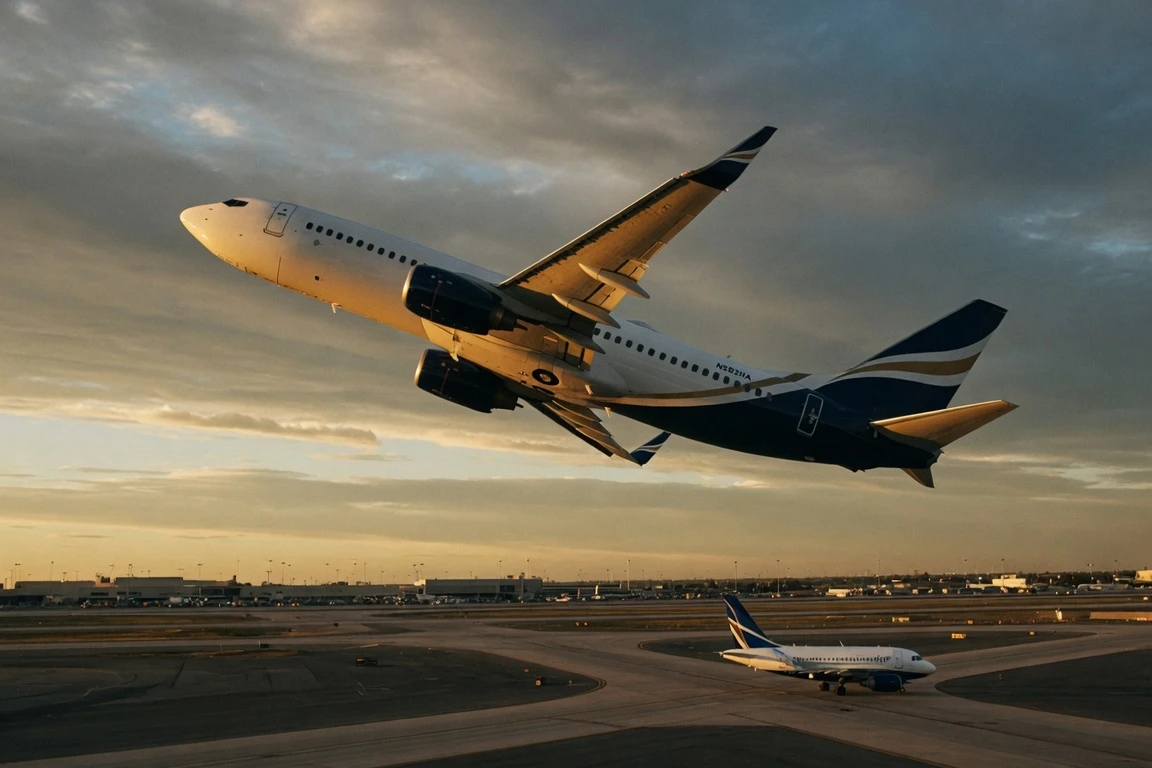
The Last-Second Go-Around That Saved the Flight
Go-arounds are safe, routine procedures performed at the discretion of the pilot or air traffic controllers, according to the FAA. Delta said the crew of flight 2351 coordinated with air traffic control to perform the maneuver. The plane, with 129 passengers and six crew on board, landed safely and deplaned normally after the go-around. No injuries were reported in the incident, the WCVB affiliate in Boston reported.
What unfolded on the runway Saturday played out in a matter of seconds. The investigation will reconstruct every step, from the first clearance to the Delta pilot’s recognition that another aircraft was on an intersecting runway. Air traffic control audio reviewed by local media captured the moment the Delta pilot aborted the landing. The crew then coordinated a new approach with the tower. The sequence below is drawn from FAA and flight log records, plus the air traffic control audio.
- Around 11:30 a.m. local time Saturday, an American Airlines Boeing 737 is cleared for takeoff on an intersecting runway at Boston Logan.
- Delta flight 2351, an Airbus A319 inbound from Dallas, is cleared to land on its own runway.
- The American jet begins its takeoff roll.
- The pilot of Delta flight 2351 sees the American aircraft and initiates a go-around.
- Delta flight 2351 coordinates with air traffic control, climbs away, and returns for a safe landing.
Tuesday’s Hearing Was Already Set, Then Boston Happened
The hearing Moran will convene on Tuesday was already scheduled before Saturday’s incident. It was called in response to a string of near-collisions across the national airspace system, per the Senate Commerce subcommittee’s hearing announcement. The hearing begins at 10 a.m. in Russell 253.
Moran said in announcing the hearing that 15,000 close calls occurred in the airspace near Reagan Washington National Airport over a three-year period. ‘That demonstrates how fragile our aviation system is,’ Moran said in the release. Sen. Ted Cruz, the Texas Republican who chairs the full Commerce Committee, said three million people fly in U.S. airspace each day. The two statistics frame what the hearing is built to address: how many of those flights are getting too close to each other, and why.
The witnesses include Governor Chris Sununu, president and CEO of Airlines for America. Todd Hauptli leads the American Association of Airport Executives. James Viola heads the General Aviation Manufacturers Association, and Jason Ambrosi is president of the Air Line Pilots Association.
The hearing will examine the implementation of safety technologies, runway safety programs, and FAA modernization efforts, according to Moran’s release. Witnesses are expected to discuss opportunities for improved safety coordination between aviation stakeholders and the federal government. Cruz, in the same release, said the panel would look at commonsense steps to reduce preventable near-misses and runway incursions. Aviation safety, Cruz added, requires both a competent and vigilant FAA and reforms that help pilots avoid collisions.
- 300 feet between the two jets, per Todd Curtis’s estimate from ADS-B data
- 129 passengers and six crew aboard Delta flight 2351
- 15,000 close calls near Reagan Washington National Airport in a three-year period
- 3 million people fly in U.S. airspace each day
- Saturday’s incident: around 11:30 a.m. local time at Boston Logan
What the Investigation Will Hunt For First
The FAA opened its probe of the close call on Sunday. The NTSB said Monday it is also investigating as a separate probe. Curtis told NBC10 Boston that he expects investigators to find at least one unfollowed procedure, and to spend the most time identifying which of the three actors, the American Airlines crew, the Delta crew, or the air traffic controller, was responsible.
This is a significant incident.
The speaker is Todd Curtis, a former Boeing safety engineer who spoke to NBC10 Boston on Monday. The close approach, Curtis said, is the kind of event that should not happen between two professional airline crews. Investigators will look at three layers: the American Airlines crew’s compliance with its takeoff clearance, the Delta crew’s situational awareness, and the air traffic control sequence. The first public read on what failed will likely come from the FAA’s runway incursion analysis. The hearing Tuesday will also take up the broader question of runway safety across the national airspace system.
The Families of Flight 5342 Are Still Texting
Every time there is a scare in the air, the families of Flight 5342 start texting each other. They lost loved ones when a military helicopter and an American Airlines flight collided over the Potomac River outside Reagan Airport in Washington in January 2025. The Boston close call set off the chain of text messages again. For these families, every runway incursion is a reminder of what the system failed to prevent.
Matt Collins, who lost his brother in the January 2025 midair collision, told NBC10 Boston the Boston close call was the kind of moment that brings the families of Flight 5342 back into a group chat. Collins said the families want a solution in place to prevent future collisions. The Boston incident, he said, makes clear that runway and airspace safety has not been solved by the hearings and reforms that followed the Potomac crash. The Senate subcommittee will hear from witnesses Tuesday, but Collins’s message to the panel is that patience has run out. The freshest data point arrived before the hearing, and the families want it taken seriously.
It is frightening that this stuff is still happening.
Collins is the brother of a passenger killed in the January 2025 midair collision, and spoke to NBC10 Boston. The collision is the proximate reason the Senate subcommittee convened Tuesday’s hearing on runway incursions. Boston added another data point to a docket the panel is supposed to address. Tuesday’s hearing will hear testimony from witnesses on what reforms are needed to prevent the next one.
What Tuesday’s Hearing Is Built to Examine
The hearing Tuesday will examine three specific areas, per Moran’s release: the implementation of safety technologies, runway safety programs, and FAA modernization efforts. Witnesses are expected to discuss opportunities for improved safety coordination between aviation stakeholders and the federal government. The FAA is separately working on a Strategic Management of Airspace Routing Trajectories, or SMART, platform, with $12.5 billion in previously approved air traffic control modernization funding, per the FAA’s SMART air traffic modernization program.
Sununu leads Airlines for America, the trade group representing major U.S. carriers. Hauptli heads the American Association of Airport Executives, representing the airports themselves. Viola, of the General Aviation Manufacturers Association, covers the smaller aircraft segment of the airspace. Ambrosi, of the Air Line Pilots Association, brings the working pilot’s view to a hearing scheduled for Tuesday at 10 a.m. in Russell 253.






Spotify Running Mode hits Android and revives its old tempo experiment

Galaxy Tab S12 Ultra Renders Keep the Notch Fans Hate

Novato Spinning Round House Sells With Six Neighbors for $3.3 Million

Crop Tour Finds Indiana and Nebraska Corn Yields Lagging 2025

Best Buy 60th sale brings Android deals back to its roots

American Airlines reverses seatback screen bet years too late

Iran Hormuz Strikes Force Gulf Oil Onto Costlier Paths

Plague Tale Prequel Day One Joins Game Pass Wave 2 as Witcher Exits

NBA 2K27 opens The City to everyone and rewrites career eras

iOS 26.6.1 Patches 29 Flaws as AI Forces Faster Apple Updates

Double Fine Cuts 23 Jobs Weeks After Xbox Independence

Day-One Big Walk Lifts PS Plus August Beyond Recycled AAA

John Hight Exits Wizards After Digital Reckoning Hits

Curtis Mead’s Red Sox Debut Ends With Fractured Wrist

Red Sox Squander Hot Streak Chance in 4-3 Loss to Athletics

Moesch and Dressel Rewrite Night One at 2026 U.S. Nationals

Boutte’s Quiet Camp Takeover Forces Patriots Receiver Choices

Take-Two CEO Pushes Netflix Subs for GTA 6 Extended Look

Halo Campaign Evolved Skulls Meet Death Barriers That Kill the Hunt

Wildlands Free Update Hands Players the Tools They Already Invented
-

 TECHNOLOGY3 years ago
How to Adjust a Bulova Watch Band – An Easy Guide
-

 News3 years ago
Fred Pentland: Athletic Bilbao’s English mentor who changed the essence of Spanish football
-

 FINANCE3 years ago
Tax Planning for Every Season: Guide to Maximizing Your Tax Benefits
-

 Education3 years ago
African Ministers New Education Plan
-

 BUSINESS3 years ago
What is Entrepreneurial Operating System? A Comprehensive Guide to EOS
-

 Education3 years ago
Innovate Your Learning Journey with Technology and Enhance Education
-

 News3 years ago
Russians formally out of World Athletics Championships
-

 BUSINESS3 years ago
Top 9 Most Expensive American Cities to Rent an Apartment