
Health
Texas THC Ban Leaves Delta-9 Alone and Creates Felony Risk
Texas reclassifies delta-8 and other hemp THC as Schedule I today, stripping most products while low-dose delta-9 stays legal and possession becomes a felony.

Texas on Friday reclassified most hemp-derived THC products as Schedule I controlled substances, stripping delta-8, delta-10, THCP and THCA flower from store shelves while leaving low-dose delta-9 products legal. Possession of the banned forms now carries state-jail-felony penalties of 180 days to two years and fines up to $10,000.
The change ends a five-year injunction and hits an industry that expanded around the loophole. Cannabis experts say more than half the THC inventory at many shops will vanish overnight.
The Products That Left the Shelves Today
The ban covers all synthetically created or converted THC forms. Delta-8 and delta-10, which produce a milder high, are gone. So are THCP and THCA flower. The sole exception is delta-9 THC at less than 0.3 percent by dry weight, the threshold set by federal and state hemp definitions.
| Product type | Status after July 31 | Notes |
|---|---|---|
| Delta-8 THC (any concentration) | Banned | Schedule I |
| Delta-10, THCP, HHC, similar isomers | Banned | Schedule I |
| THCA flower | Banned | Schedule I |
| Delta-9 edibles, drinks, tinctures ≤0.3% | Legal | Hemp definition carve-out |
| Delta-9 smokeable hemp flower | Still available | Separate smokeable ban paused by court |
| THC vape pens | Already banned | Prior legislative session |
Joao Mitchell, manager of ATX Organics and legislative director of Texas Cannabis Collective, noted that many shoppers chose the weaker synthetics precisely because the high felt lighter. Those options are now criminal.
How a 2021 Rule Finally Stuck
The Texas Department of State Health Services first expanded the Schedule I definitions of tetrahydrocannabinols and marihuana extract in 2021. Hometown Hero and other hemp firms won a temporary injunction that kept the products on shelves for nearly five years.
- 2018-2019: Federal Farm Bill and Texas HB 1325 legalize hemp with ≤0.3% delta-9 THC and remove “the THC in hemp” from controlled substances.
- 2020-2021: DSHS objects to DEA’s conforming rule and adopts broader definitions that control manufactured delta-8 and similar isomers.
- November 2021: Travis County court issues injunction blocking enforcement.
- May 1, 2026: Texas Supreme Court May opinion reverses the injunction, holding the commissioner had broad statutory authority and lower courts overstepped separation of powers.
- July 10, 2026: DSHS publishes notice in the Texas Register reinstating the 2021 definitions.
- July 31, 2026: Definitions take effect after the statutory 21-day period.
Justice Young’s opinion stressed that manufactured delta-8 at commercial potencies never occurs naturally in the plant. Trace natural amounts remain outside the schedules; commercial products do not.
Poison Calls and the Case for the Crackdown
Advocates for the ban point to a sharp rise in cannabis-related poison-center calls after hemp THC flooded the market. Data from the Texas Poison Center Network shows calls climbing from 923 in 2019 to 2,669 last year. Most involve children under five or teenagers.
- 923 calls in 2019, the first full year after federal hemp legalization.
- 2,669 calls in the most recent full year reported.
- Majority of exposures involve young children and teens despite a 21-and-over purchase age.
- Cumulative marijuana-related calls from earlier years already showed under-5s as the largest single group.
Aubree Adams, director of Citizens for a Safe and Healthy Texas, called the change “a major development for Texas families” and said the industry does not sell safe products. She wants delta-9 banned next. The Texas Poison Center Network dashboard tracks the exposures by year and product type.
Stores Face 50 to 90 Percent Cuts
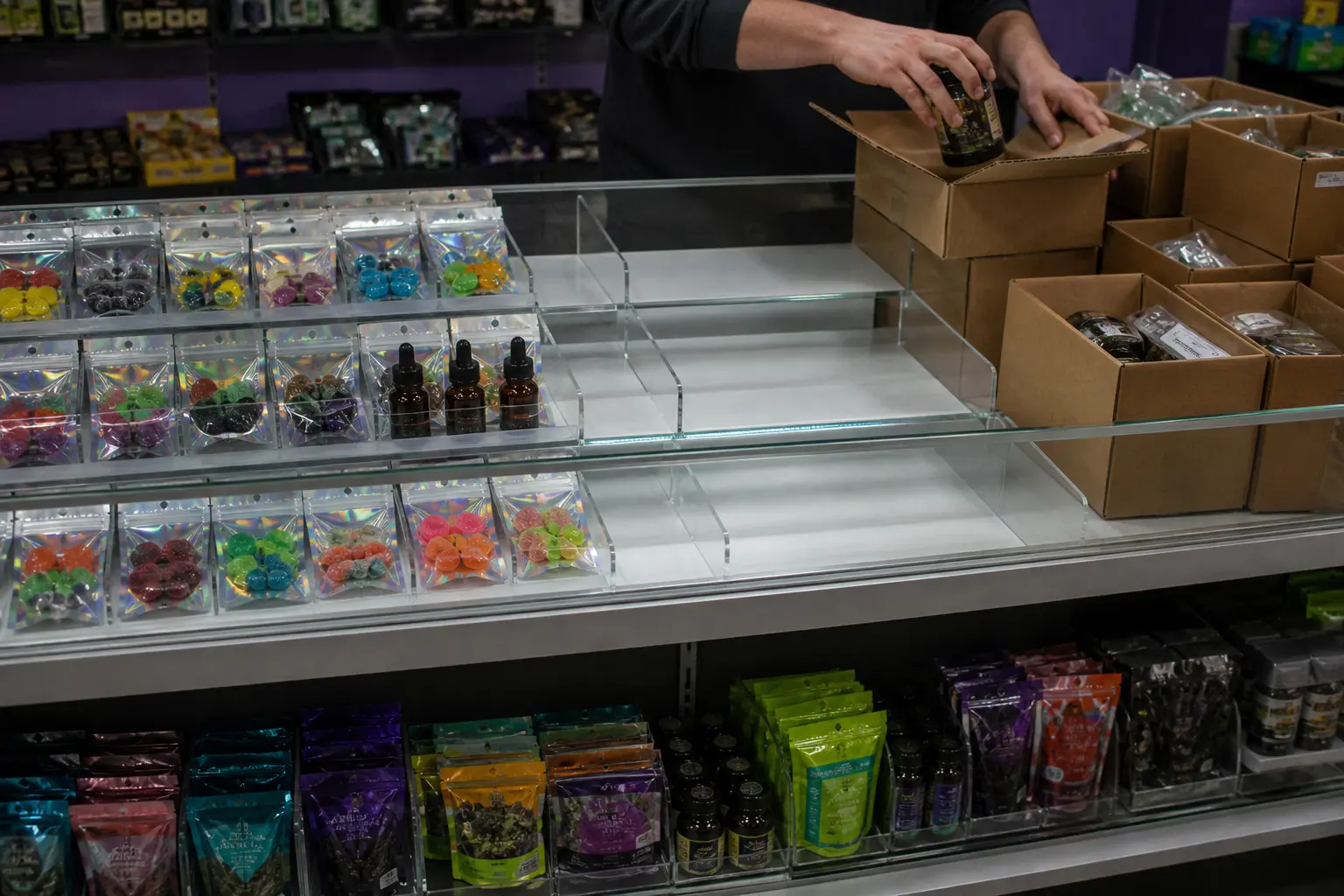
There are about 14,000 retail hemp licensees statewide. Experts estimate 60 to 90 percent of THC products could leave circulation. Mitchell said his own store will pull roughly half its inventory; shops that leaned hard into synthetics may lose 75 to 90 percent.
- Businesses caught selling banned substances risk losing consumable hemp licenses.
- Civil fines reach $10,000 per violation.
- Criminal charges for manufacturing or distributing a Schedule I substance are possible.
- AJ Vazquez of Dooby’s Smoking Depot in Austin already shifted away from delta-8 and THCA yet still expects a 25 percent sales drop.
- Mark Bordas of the Texas Hemp Business Council called the harm “irreparable.”
Sarah Todd of the Texas Cannabis Policy Center said some shops will simply shut down. Cynthia Cabrera, chief strategy officer at Hometown Hero, called the rule difficult to understand and lacking clarity; two other businesses are preparing lawsuits even though Hometown Hero itself is not.
Possession Now Carries Felony Time
Once the products sit on Schedule I, simple possession becomes a state jail felony. That is 180 days to two years in a state jail facility and up to $10,000 in fines. Austin police have said they will treat delta-8 possession as a felony, even though small amounts of traditional marijuana often draw lighter treatment in the city.
Now that we’re criminalizing these substances that have been federally legal for the past five or six years, we’re now creating a new pipeline for people to go to prison and spend millions of dollars within the legal system, and just further disenfranchise a lot of people.
Mitchell made that point to the Texas Tribune. The practical test for officers will be lab confirmation of which isomer is present; prosecutors will decide charging.
State Rep. Vikki Goodwin stopped by a closed THC shop the day before the ban and met a customer with rheumatoid arthritis who relied on the products. “Where will these people go instead?” she asked on X. “We should legalize and regulate these products in Texas.” Her post drew more than 44,000 views.
Demand Does Not Disappear
Industry voices warn the ban does not erase demand. It simply moves it. Todd said recriminalizing products “only empowers the illicit market and puts these licensed and regulated companies out of business.” Unregulated sellers face no licensing, testing or age checks. Prices usually rise and quality drops.
Similar shutdown patterns have played out elsewhere. A recent Colorado cannabis shop shutdown case showed how aggressive enforcement can empty storefronts while consumers still seek the same compounds. Texas stores that survive will lean harder into compliant delta-9 edibles, drinks and tinctures, plus non-intoxicating CBD. Some had already begun the pivot.
Crowd conversation on X in the final days mixed stock-up urgency with resignation that black-market channels would fill the gap within weeks. Veterans and chronic-pain users appeared frequently in the replies as groups that lose a lower-cost option.
Delta-9 Holds the Only Legal Lane
Intoxicating products remain available if they stay under the 0.3 percent delta-9 dry-weight limit. Edibles, beverages and tinctures that meet the test are still legal. A separate statewide ban on smokeable hemp flower and joints has been paused by court order, so compliant delta-9 flower can still be sold for now. Vape pens containing THC were already barred in the last legislative session.
The 2018 Farm Bill hemp definition created the original carve-out by focusing solely on delta-9 concentration. Texas mirrored it. Manufactured isomers that deliver a high without exceeding the delta-9 number fell into the gray zone the 2021 DSHS rule and the Supreme Court have now closed.
Adams and other critics will keep pushing to eliminate even the remaining delta-9 market. Industry groups will try to defend what is left and may seek legislative fixes in 2027. For today the shelves are thinner, the legal risk is higher, and the only THC product still openly sold under state license is the one the federal definition always protected.
Frequently Asked Questions
What exact THC products does the Texas ban prohibit?
All synthetically created or converted forms including delta-8, delta-10, THCP, THCA flower and similar isomers at any concentration above natural trace levels. Only hemp-derived products containing no more than 0.3 percent delta-9 THC by dry weight remain outside Schedule I.
What are the criminal penalties for possessing banned THC in Texas?
Possession is a state jail felony punishable by 180 days to two years in a state jail facility and a fine of up to $10,000. Selling or manufacturing can bring additional license loss and further criminal charges.
Why does low-dose delta-9 THC stay legal when other forms do not?
Both the 2018 federal Farm Bill and the 2019 Texas Farm Bill define hemp solely by delta-9 concentration of 0.3 percent or less. Other cannabinoids were never expressly decontrolled once manufactured at intoxicating levels, which is the distinction the Texas Supreme Court upheld.
How many Texas stores are licensed to sell consumable hemp?
Approximately 14,000 retail stores hold consumable hemp licenses or registrations according to the Department of State Health Services list current as of mid-July 2026.
Does the ban affect CBD products that contain no THC?
Non-intoxicating CBD products that meet hemp standards and contain no banned THC isomers remain legal. The Schedule I reclassification targets tetrahydrocannabinols other than the narrow delta-9 hemp exception.


Halo Campaign Evolved Skulls Meet Death Barriers That Kill the Hunt

Spotify Running Mode Returns After the 2015 Experiment Failed

Amazon AWS Hits Fastest Growth in Years as AI Spend Pays Off

Amazon Bets Platform Beats Models in the AI Race

Apple C2 Modem Edges Into iPhone 18 Pro After Qualcomm Drop

Google Earth Adds Nano Banana 2 to Reimagine Real Places

Apple Upgrade Turns Phones Into Monthly Utility Bills

Asha Sharma Bets Xbox Growth on Console and Four C’s

MacBook Ultra Design Follows Apple’s Familiar Cascade Path

TAG Heuer Carrera x Team Ikuzawa Revives 1970s Roadmaster Stopwatch DNA

Pokémon GO Developer Niantic Rebrands as Scopely Explore

Persona 4 Revival Hands All Anime Cutscenes to Studio MAPPA

Jaylen Brown Traded to 76ers for Paul George and Four Draft Picks

Doom Studio id Software Cuts Half Its Staff in Xbox Layoffs

Nintendo Switch Online Adds Four Classics and One Japan-Only Title

Jordan Henderson Hospitalized After Wrist Injury at the Azteca

Mexico’s World Cup Run Ends at Azteca as England Hold On 3-2

Meta’s Muse Image Lets Anyone Use Your Instagram Photos in AI

Louis Vuitton Beats Molly Tea in China, Triggers Cultural Backlash

Pink Bearista Cup Returns July 13 as Starbucks Pink Vibes Drops
-

 TECHNOLOGY3 years ago
How to Adjust a Bulova Watch Band – An Easy Guide
-

 News3 years ago
Fred Pentland: Athletic Bilbao’s English mentor who changed the essence of Spanish football
-

 FINANCE3 years ago
Tax Planning for Every Season: Guide to Maximizing Your Tax Benefits
-

 Education3 years ago
African Ministers New Education Plan
-

 BUSINESS3 years ago
What is Entrepreneurial Operating System? A Comprehensive Guide to EOS
-

 Education3 years ago
Innovate Your Learning Journey with Technology and Enhance Education
-

 News3 years ago
Russians formally out of World Athletics Championships
-

 BUSINESS3 years ago
Top 9 Most Expensive American Cities to Rent an Apartment