
AUTOMOBILE
Tesla China Plant That Builds Half Its Cars Blocks SpaceX Path
Musk calls China separation fake news, yet the laser-walled Shanghai plant that makes most Teslas sits at the center of any SpaceX merger hurdle.

Elon Musk called a Wall Street Journal report of Tesla preparing to separate its China business “absurdly fake news” hours after it surfaced. The same China plant still accounts for more than half of Tesla’s global output and keeps Model 3 and Model Y costs lowest.
Advisers have discussed spin-off, sale or closure options, people familiar with the talks told the Journal, to clear a path for any merger with SpaceX. Musk said the idea has never even come up. The tension remains: SpaceX’s U.S. defense work collides with Tesla’s wholly owned Shanghai factory.
Musk Shuts It Down on X
The Journal reported Thursday that Tesla executives were told to prepare for separation of the China business ahead of a potential SpaceX combination. Options on the table included a spin-off, sale or full closure. Plans could still change and timing was unclear.
Musk answered on X within hours.
This has never even come up in a discussion ever. Absurdly fake news. People should assume news is fake until proven otherwise.
He had already posted a shorter “This is fake news.” Tesla China told a local reporter the claims were false information. Reuters could not independently verify the original report. Tesla and SpaceX did not respond outside business hours.
Investors have speculated about combining the firms for years. The talk heated up after SpaceX’s record IPO. SpaceX President Gwynne Shotwell said in June that folding the companies together “might make Elon’s life a little easier.”
Shanghai Still Runs the Numbers
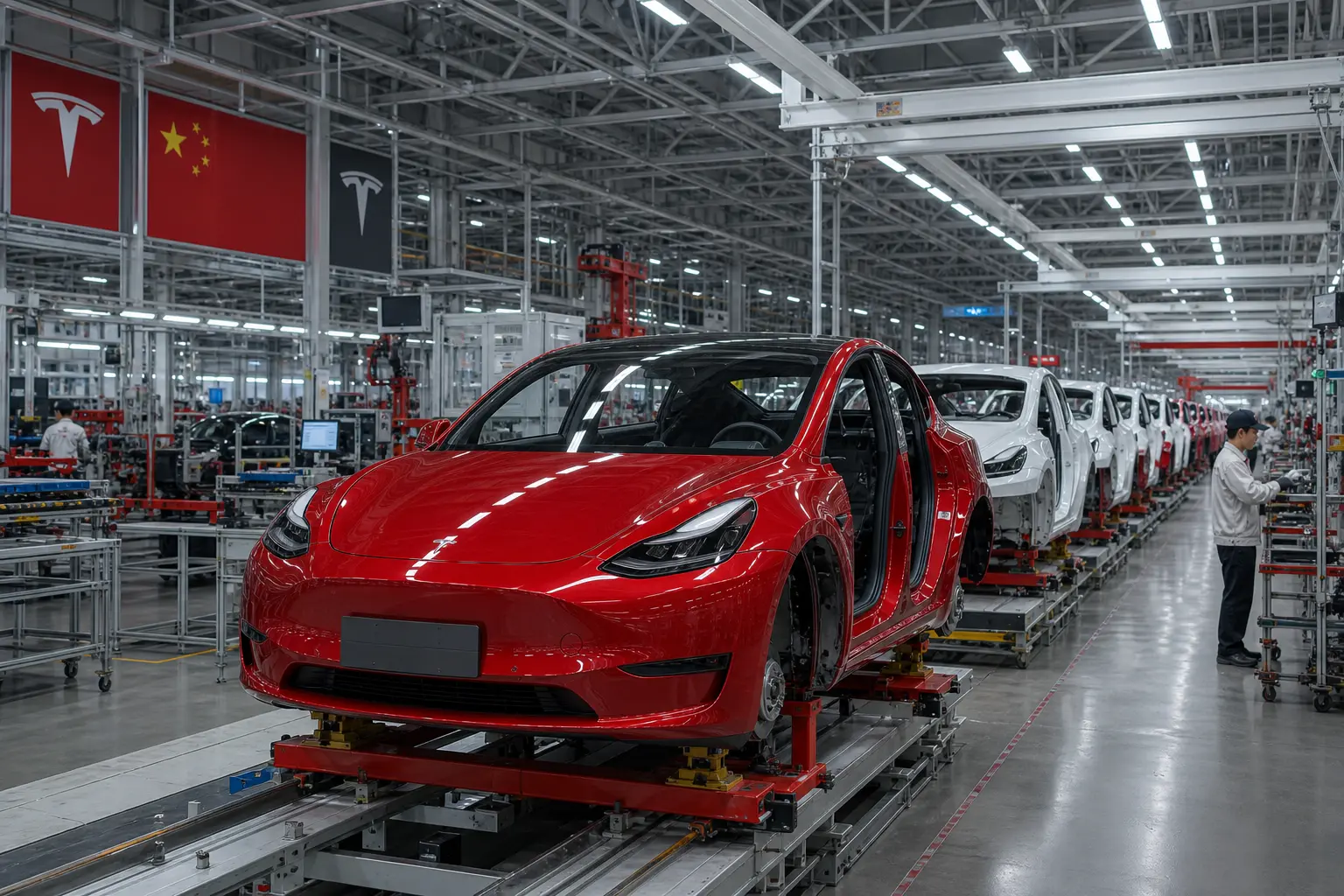
Gigafactory Shanghai began production in October 2019 as China’s first wholly foreign-owned car plant. It is Tesla’s largest and most productive site. It serves as the main export hub for Europe, Canada and Asia-Pacific.
Company data show Shanghai capacity above 950,000 vehicles a year for Model 3 and Model Y. Grace Tao, Tesla vice president for external relations in China, has said the plant accounted for more than half of global vehicle deliveries in 2025. In early 2026 it was still producing well over half of Tesla’s output in some quarters.
| Plant | Models | Annual Capacity |
|---|---|---|
| Shanghai | Model 3 / Model Y | >950,000 |
| California (Fremont) | Model 3 / Model Y | >550,000 |
| Berlin | Model Y | >375,000 |
| Texas | Model Y / Cybertruck / Cybercab | >250k / >125k / >125k |
Tesla Q2 2026 delivered a record 480,126 vehicles globally, up 25 percent year over year. Production hit 451,758. China-made Model 3 and Model Y deliveries rose 24.4 percent in June alone. Second-quarter sales and exports from Shanghai climbed 32.8 percent.
- Local content: more than 95 percent of components for China-made Model 3 and refreshed Model Y come from domestic suppliers.
- Supplier base: more than 400 Chinese suppliers; over 60 also feed Tesla’s global plants.
- Market rank: China remains Tesla’s second-largest market by revenue after the United States.
Those numbers make any separation painful. The plant is the volume and cost engine.
The Laser Was Built for Geopolitics
Musk instructed executives in recent years to organize Tesla with a “laser” between its U.S. and China businesses. The goal was simple. If geopolitical strife hit, the U.S. half would survive intact.
Unlike most foreign automakers in China, Tesla never formed a joint venture. The wholly owned structure made a clean cut easier on paper. Executives have also discussed a separate sales entity just for Shanghai exports and tighter office systems that would bar China-based staff from direct access to other units.
The laser was sold as insurance. Now the same design is being read as preparation for a larger corporate realignment.
SpaceX Defense Work Meets Chinese Manufacturing
SpaceX is a major U.S. defense contractor with national-security and satellite programs. A merger with Tesla would immediately raise regulatory and geopolitical hurdles in China. JPMorgan analysts have called China the “practical bottleneck,” citing SpaceX’s government ties, the lack of Starlink approval there, and Tesla’s large manufacturing footprint.
Key collision points include:
- SpaceX revenue from U.S. government contracts and defense work
- National security review risks for any combined entity operating a wholly owned plant in China
- Governance gaps: Musk holds roughly 85 percent of SpaceX voting power but far less of Tesla
- Market-cap imbalance after SpaceX’s IPO, which could frame any deal as a SpaceX acquisition of Tesla
SpaceX priced its IPO at $135 a share in June 2026, raising a record $75 billion and valuing the company around $1.77 trillion at the time, according to the SpaceX record IPO filing details. Later analyst notes put the market cap higher. Tesla’s market cap has traded lower. Shared AI work, Terafab chips, Megapacks and talent already overlap. The regulatory wall does not.
Who Feels the Cut First
China is Tesla’s second-largest market and its export pipeline. Domestic competition from BYD, Xiaomi, Xpeng and Li Auto has already narrowed Tesla’s early lead. Aggressive pricing and faster product cycles from local rivals keep pressure high.
A sale or spin would hand a high-volume, low-cost plant and a deep local supply chain to someone else. More than 400 domestic suppliers would face uncertainty. European and Asia-Pacific buyers who rely on Shanghai-built cars could see shifts in volume or cost. Tesla’s remaining plants in California, Texas and Berlin would need to absorb the volume gap or accept lower global scale.
Crowd reaction on X quickly landed on the same point: a Tesla-SpaceX combination without some form of China separation looks difficult, yet removing the production engine would hit valuation and margins hard. The laser that was meant to protect the U.S. half now highlights how much of Tesla’s current strength sits on the other side of the cut.
What a Real Separation Would Cost
Tesla sources more than 95 percent local components in Shanghai. That localization cut manufacturing costs and insulated the company from some global logistics shocks. Replicating that efficiency elsewhere would take years and capital.
Possible structures floated in the Journal reporting include a clean spin-off, an outright sale, or creating a separate export sales entity while keeping some manufacturing. Closure remains on the list of discussed options. None of them are simple. China regulators, local governments that supported the plant, and the supplier network would all have seats at the table.
Musk has left the door open to a Tesla-SpaceX combination in recent comments, citing growing overlap. Shotwell has not ruled it out. JPMorgan described a merger as strategically coherent on paper yet overly complex in practice. The China question is the largest single complexity.
Even a denied report forces the arithmetic into the open. The plant that delivered Tesla’s scale and cost advantage is the same asset that sits in the way of the next combination. The laser was designed to keep the U.S. half alive. Using it would leave Tesla smaller in the market where it still needs volume most.
Musk’s denial was blunt and immediate. The production numbers and the defense contracts have not moved.


Spotify Running Mode hits Android and revives its old tempo experiment

Galaxy Tab S12 Ultra Renders Keep the Notch Fans Hate

Novato Spinning Round House Sells With Six Neighbors for $3.3 Million

Crop Tour Finds Indiana and Nebraska Corn Yields Lagging 2025

Best Buy 60th sale brings Android deals back to its roots

American Airlines reverses seatback screen bet years too late

Iran Hormuz Strikes Force Gulf Oil Onto Costlier Paths

Plague Tale Prequel Day One Joins Game Pass Wave 2 as Witcher Exits

NBA 2K27 opens The City to everyone and rewrites career eras

iOS 26.6.1 Patches 29 Flaws as AI Forces Faster Apple Updates

Caitlin Clark Skips the WNBA 3-Point Contest for a Third Straight Year

Rainout Gives Red Sox Two Shots at a Franchise-Record Win Streak

Double Fine Cuts 23 Jobs Weeks After Xbox Independence

John Hight Exits Wizards After Digital Reckoning Hits

Day-One Big Walk Lifts PS Plus August Beyond Recycled AAA

Curtis Mead’s Red Sox Debut Ends With Fractured Wrist

Red Sox Squander Hot Streak Chance in 4-3 Loss to Athletics

Moesch and Dressel Rewrite Night One at 2026 U.S. Nationals

Boutte’s Quiet Camp Takeover Forces Patriots Receiver Choices

Take-Two CEO Pushes Netflix Subs for GTA 6 Extended Look
-

 TECHNOLOGY3 years ago
How to Adjust a Bulova Watch Band – An Easy Guide
-

 News3 years ago
Fred Pentland: Athletic Bilbao’s English mentor who changed the essence of Spanish football
-

 FINANCE3 years ago
Tax Planning for Every Season: Guide to Maximizing Your Tax Benefits
-

 Education3 years ago
African Ministers New Education Plan
-

 BUSINESS3 years ago
What is Entrepreneurial Operating System? A Comprehensive Guide to EOS
-

 Education3 years ago
Innovate Your Learning Journey with Technology and Enhance Education
-

 News3 years ago
Russians formally out of World Athletics Championships
-

 BUSINESS3 years ago
Top 9 Most Expensive American Cities to Rent an Apartment