
News
Play Points Platinum Quietly Cuts Pixel 11 Prices Again
Platinum and Diamond Play Points members can claim instant $150-plus discounts on Pixel 11 phones and Fold inside the Play app, stackable with trade-ins.

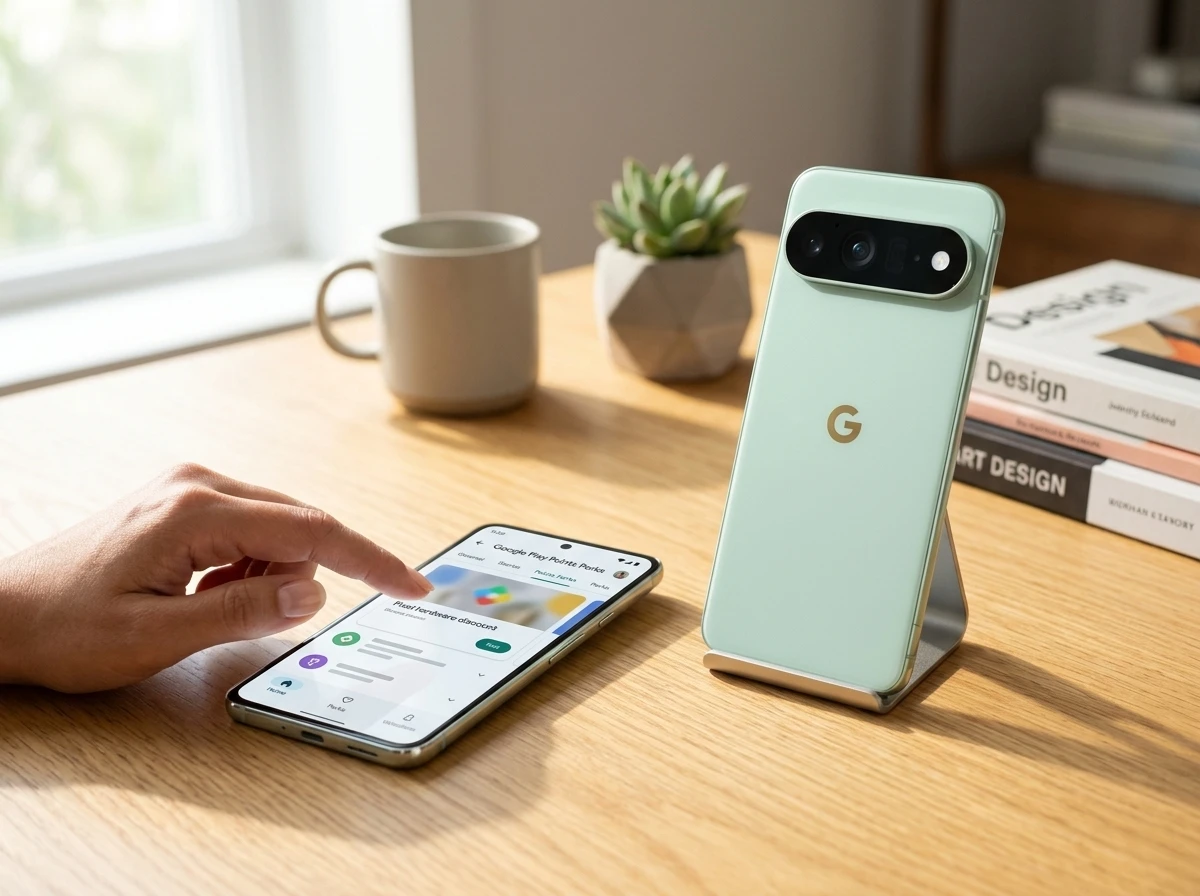
Google is offering Platinum Play Points members an instant $150 discount on the Pixel 11, Pixel 11 Pro and Pixel 11 Pro XL right now inside the Play Store app, with $175 off the Pixel 11 Pro Fold and $75 off the Pixel Watch 5. The cut sits in the Perks tab, not on the main Google Store page, and it stacks as an upfront reduction rather than a later credit.
That quietly hands the biggest early savings to people who already spend heavily in the Play ecosystem, a group the splashy carrier freebies and Store trade-in banners largely ignore.
The offer arrives in the opening preorder window, when most shoppers are still comparing public launch emails against carrier bill-credit ads. High-tier Play accounts get a private price before those other levers even enter the cart.
Platinum and Diamond Get the Quiet Cut
Droid Life first flagged the live offers after checking a Platinum account. Platinum status currently delivers $150 off the standard Pixel 11 series phones, $175 off the Pixel 11 Pro Fold and $75 off the Pixel Watch 5. Fan reports on Reddit put Diamond higher still: roughly $175 off the phones and $200 off the Fold.
- $150 off Pixel 11 / Pro / Pro XL for Platinum
- $175 off Pixel 11 Pro Fold for Platinum
- $75 off Pixel Watch 5 for Platinum
- Diamond reports show $25-$50 more on the same devices
It is not a trade-in bonus. It is an immediate price drop at checkout when the offer is claimed and applied. Users on X have noted the Perks coupons sometimes beat the mass $100-$150 email codes Google sent ahead of the launch event.
The gap between the two top tiers is modest in dollar terms yet consistent across the line. Diamond adds roughly another $25 on the standard phones and another $25 on the Fold, according to those same fan reports. Both tiers still clear the public email codes on pure discount size alone.
| Tier | Phones cut | Fold cut | Watch 5 cut |
|---|---|---|---|
| Platinum | $150 | $175 | $75 |
| Diamond (fan reports) | roughly $175 | roughly $200 | $25-$50 more than Platinum |
How the Perks Tab Works
Finding the offer takes three taps most people already know.
- Open the Google Play Store app on any Android phone
- Tap your profile icon or the Play Points badge at the top
- Switch to the Perks tab and look for the Pixel hardware tile if your account qualifies
Eligibility tracks your current Play Points level. The offer is account-specific, so one person may see $150 while a lower-tier friend sees nothing or a smaller amount. Once claimed it behaves like a promo that can combine with eligible trade-ins and some store credit, according to the early reports.
Google has used the same channel before. In March it pushed select customers as much as $400 off Pixel 10 Pro hardware through Play Points. The current wave is smaller but lands during the opening preorder window for the new generation.
Because the coupon lives inside an app most Android owners already open for apps and updates, discovery does not depend on opening a marketing email or hunting a Store banner. That is why the cut can feel invisible to anyone who never checks the Perks tab.
The Point Thresholds That Separate the Tiers
Play Points levels reset progress each calendar year based on points earned from purchases and activities. The official Play Points level thresholds and rates make the gap plain.
| Level | Points needed | Points per $1 spent | Key extras |
|---|---|---|---|
| Bronze | 0-149 | 1.0 | Basic events |
| Silver | 150-599 | 1.1 | Silver weekly prizes |
| Gold | 600-2,999 | 1.2 | Gold weekly prizes |
| Platinum | 3,000-9,999 | 1.4 | Platinum prizes, premium support |
| Diamond | 10,000+ | 1.6 | Diamond prizes, premium support |
Once you hit a tier you keep it through the end of the following calendar year even if you slow down. Reaching Platinum typically means roughly $3,000 in eligible Play spend in a year at the lower multipliers; Diamond sits near $10,000 before tax and bonuses. That is the real gate. Casual buyers stay Gold or lower and miss the hardware Perks.
Platinum and Diamond also get priority support queues. The hardware discount simply extends the same loyalty ladder into devices.
The multiplier climb itself rewards volume. Bronze earns 1.0 point per dollar. Diamond earns 1.6. Heavy spenders not only clear the point gates faster; they earn points at a higher rate once they arrive, which makes holding the tier slightly easier the next cycle.
Stacking Turns $150 Into Real Money
Base prices set the scale. The unlocked Pixel 11 starts at $899, the Pro at $1,099, the Pro XL at $1,299 and the Pro Fold at $1,899. A clean $150 Play Points cut drops the Pro to $949 before any other offer.
Google Store trade-in values can still run high. Recent reporting shows up to roughly $1,000-$1,250 off top configurations when trading a recent high-end Pixel, plus options for store credit or a discounted Pixel Watch 5. The Play Points amount is upfront, so it multiplies those credits rather than competing with them.
| Device | MSRP | Platinum Play cut | After cut only |
|---|---|---|---|
| Pixel 11 | $899 | $150 | $749 |
| Pixel 11 Pro | $1,099 | $150 | $949 |
| Pixel 11 Pro XL | $1,299 | $150 | $1,149 |
| Pixel 11 Pro Fold | $1,899 | $175 | $1,724 |
Add a solid trade-in through the Google Store trade-in upgrade process and the effective price can fall another several hundred dollars. Email promo codes of $100-$150 and Amazon’s similar instant discounts are alternatives, but they usually cannot stack with each other. The Play Points version is designed to sit on top of trade-in.
That math favors people who already own recent Pixels and keep high Play status. For them the unlocked path starts to look competitive with locked carrier “free” phones that lock you into multi-year bill credits.
Order of operations matters at checkout. Claim the Perks tile first, then apply the trade-in quote, then test any residual store credit. Early reports say the Play cut remains an upfront reduction rather than a trailing rebate, which keeps the stacked total visible before payment.
Carrier Free Phones Still Demand a Plan
AT&T is running one of the loudest counter-offers: the Pixel 11 Pro for $0 after 36 monthly credits when you trade in any previous Pixel, any year, any condition. The catch is an eligible unlimited plan (Extra 2.0 or higher, roughly $80 a month before discounts) plus a full installment agreement. Credits stop and the remaining balance becomes due if service is cancelled.
- Trade any Google Pixel, any condition, any year
- Requires AT&T Extra 2.0 plan or higher
- 36-month bill credits on the 256 GB model
- Well-qualified customers only; activation and other fees still apply
The AT&T any-condition Pixel trade for free Pro is genuine for customers already on or willing to join that plan. T-Mobile and Verizon are running their own large trade-in credits as well. Those deals win for users who want the phone free on a bill and do not mind the carrier lock and credit schedule.
Unlocked buyers who value freedom and already sit at Platinum or Diamond can often net a lower cash outlay by stacking Play Points + Store trade-in + any residual gift cards, especially if they dislike long-term plan commitments.
The carrier path front-loads convenience and back-loads obligation. The Play Points path front-loads cash and leaves the line unlocked. Which one wins depends on whether the shopper already pays for an eligible unlimited plan and wants to stay on it for the full credit window.
Google Has Run This Play Before
Play Points hardware discounts are a recurring soft lever, not a one-off stunt. The March Pixel 10 example reached $400 for select high-tier users. Earlier cycles have delivered 30 percent cuts or large fixed dollars on previous generations for Gold and above. The company rarely advertises these on the main Store homepage; they live inside the app most Android owners open daily.
- Earlier cycles delivered 30 percent cuts or large fixed dollars on prior generations for Gold and above
- March pushed as much as $400 off Pixel 10 Pro hardware through Play Points for select high-tier users
- Current preorder window delivers $150 off the Pixel 11 series phones, $175 off the Fold, and $75 off the Watch 5 for Platinum, with Diamond reports running higher
That pattern rewards retention inside Google’s software and content economy. Points come from app purchases, Play Pass, in-game spends and occasional events. Turning those points into a phone discount closes a loop: spend on services, get hardware cheaper, stay in the Pixel + Play orbit.
The new phones themselves carry other draws. Early coverage of the Tensor G6 efficiency claims for the new Pixels focuses on fixing past thermal and battery complaints. The Pixel 11 Pro Matte Midnight finish details target the fingerprint complaint that dogged glossy glass backs. Even the Watch side is moving; the Gemini overlay arriving on Pixel Watch aims to make the companion feel continuous with the phone.
That does not change the price gate. The Perks discount simply lowers it for the people who already feed the ecosystem.
How Unlocked Stacks Compare With Carrier Credits
Side by side, the two routes solve different problems with the same phone.
- Play Points cut: instant, account-tied, stacks on Store trade-in, leaves the device unlocked
- Public email codes: $100-$150, usually cannot stack with rival instant discounts
- AT&T path: $0 after 36 monthly credits on the Pro with any-condition Pixel trade-in, requires Extra 2.0 or higher at roughly $80 a month before discounts
- Other carriers: large trade-in credits of their own, still tied to service and installment terms
A Platinum buyer who already owns a recent high-end Pixel can combine the $150 (or $175 on the Fold) with a Store trade-in that recent reporting puts as high as roughly $1,000-$1,250 on top configurations. That stack is cash out the door, not a credit schedule.
A carrier free-phone deal can still win on monthly cash flow for someone who wants zero upfront device cost and already lives on an eligible unlimited plan. The trade is the lock and the multi-year credit calendar. Cancel early and the remaining balance comes due.
Shoppers who dislike plan commitments, already hold Platinum or Diamond, and have a strong trade-in tend to prefer the unlocked stack. Shoppers who want the bill to absorb the phone and do not mind the carrier terms tend to prefer the free-phone headlines.
The Loyalty Loop Pays Out At Launch
Points earned on apps, Play Pass, in-game spends and events do not only fund free credit or game items. At the top two tiers they convert into a hardware price that lower tiers never see.
Holding Platinum through the end of the following calendar year means a single heavy spend year can cover more than one device cycle. Diamond raises both the points rate and the reported hardware cut, so the same loop returns more when the next Pixel lands.
Google keeps the lever inside the Play Store rather than on the public Store homepage. That choice keeps the offer quiet, account-specific and aimed at people already inside the software economy. The March $400 Pixel 10 wave and the smaller current Pixel 11 wave follow the same channel.
For buyers who cleared the roughly $3,000 Platinum gate or the near $10,000 Diamond gate, the preorder window is when that earlier spend shows up as an instant checkout reduction.
Everyday Play Spend Now Buys Hardware Leverage
The practical step is simple: open Play Points and check Perks before you lock in any Pixel 11 order. If the tile is there, claim it and test the stack against your trade-in quote and any email code you received. Some users are already reporting better effective pricing through Perks than through the public launch emails.
For everyone else the offer is a reminder that Google’s loyalty ladder has real dollar outcomes beyond free Play credit or game items. Reaching Platinum is not free, but once there the next hardware cycle can return a chunk of that spend as an instant cut. Diamond multiplies the return further.
Carrier free-phone headlines will keep dominating ads. The quieter winners this cycle are the accounts that spent their way into the top two Play Points tiers and now see a personal discount tile waiting in an app they already use every day.


Judge Strips Google’s Last App Store Friction After Epic Demo

Fold 8 Success Makes Its Dusty Hinge Costlier Than Ever

Silver Lake Workday Talks Test PE Appetite for AI-Hit Software

Wholesale Prices Flat but Wage Lag Keeps Households Squeezed

Teen E-Motos Draw Hells Angels Label and Risk Legal Ebike Gains

Apple’s Siri Pay-Per-Use Plan Rewrites News Licensing Rules

Cramer Calls Cisco Plunge a Buy as AI Orders Surge

Play Points Platinum Quietly Cuts Pixel 11 Prices Again

Quincy Gas Station Sold the $1.04 Billion Powerball Ticket

Microsoft Scraps Failed Copilot Features in Forced App Merge

ZA/UM Lays Off 32 Staff as Zero Parades Wins Reviews, Not Players

EA’s New In-Game Ad Platform Skips the Games That Need It Most

Mortgage Rates Climb to 6.55%, the Highest Level in Nearly a Year

Colby Covington Stuns Tsarukyan as Askren Retires in Tears at RAF 11

Netflix Heads Into Earnings With Its 2022 Playbook Already Spent

Spain’s Diaspora-Rooted Squad Wins Over New York Ahead of the Final

NHL’s Monday Matinee Push Puts Capitals Fans on the Clock

DeChambeau’s Two-Shot Penalty Rewrites the Open’s Weekend Draw

Guardians Rout Twins With Seven Homers, Leave Joe Ryan One Shy of Record

England Beats France 6-4 to Claim World Cup Bronze Medal
-

 TECHNOLOGY3 years ago
How to Adjust a Bulova Watch Band – An Easy Guide
-

 News3 years ago
Fred Pentland: Athletic Bilbao’s English mentor who changed the essence of Spanish football
-

 FINANCE3 years ago
Tax Planning for Every Season: Guide to Maximizing Your Tax Benefits
-

 Education3 years ago
African Ministers New Education Plan
-

 BUSINESS3 years ago
What is Entrepreneurial Operating System? A Comprehensive Guide to EOS
-

 Education3 years ago
Innovate Your Learning Journey with Technology and Enhance Education
-

 News3 years ago
Russians formally out of World Athletics Championships
-

 BUSINESS3 years ago
Top 9 Most Expensive American Cities to Rent an Apartment