
News
US Ban Locks Out New Chinese Humanoid Robots and Hands Home Makers the Field
New FCC Covered List rules block foreign advanced robots and inverters, shielding US makers while cutting labs off cheap Chinese volume hardware that dominated.

The Federal Communications Commission on July 28 added foreign-produced advanced robotic devices and connected power inverters to its Covered List, blocking new models from receiving equipment authorization for import, marketing or sale in the United States. Existing authorized units remain legal to sell and use.
The move follows national-security determinations that the networked machines create supply-chain and cyber risks. China, which supplied more than 80 percent of global humanoid installations in 2025, faces the clearest commercial loss; US makers gain a protected runway.
What the New Rules Cover
Advanced robotic devices mean mechanical mobile units such as humanoids and quadrupeds that can locomote, avoid obstacles or navigate, operate at a distance on commands or sensors, weigh more than 4.4 pounds with any ground station, and carry sensors, network connectivity of at least 200 kbps, plus controlling software or AI models. Fixed industrial arms, medical devices, rail vehicles, drones and underwater vehicles sit outside the definition.
Power inverters covered are bi-directional units that convert DC to AC or AC to DC, including micro, string, central and hybrid types, when they include remote communication, control or monitoring links.
The ban is country-neutral on paper. It hits any article that fails the domestic-end-product test under federal acquisition rules. New foreign models cannot get FCC authorization. Previously authorized models can still be imported, sold and used. Federal government purchases stay exempt. Software and firmware updates that keep devices functional remain allowed under a temporary waiver through at least January 1, 2029.
- Covered: new foreign humanoids, quadrupeds and connected inverters without Conditional Approval
- Still allowed: existing FCC-authorized models already on the market
- Exempt path: Conditional Approval from the Department of War (robots) or DoW/DHS (inverters)
- Out of scope: consumer use of already-bought units and pure government buys
Producers can apply for Conditional Approval by emailing the required package; approved devices appear on the public list. The advanced robotic device definition and inverter rules appear in the agency FAQs and the underlying determinations.
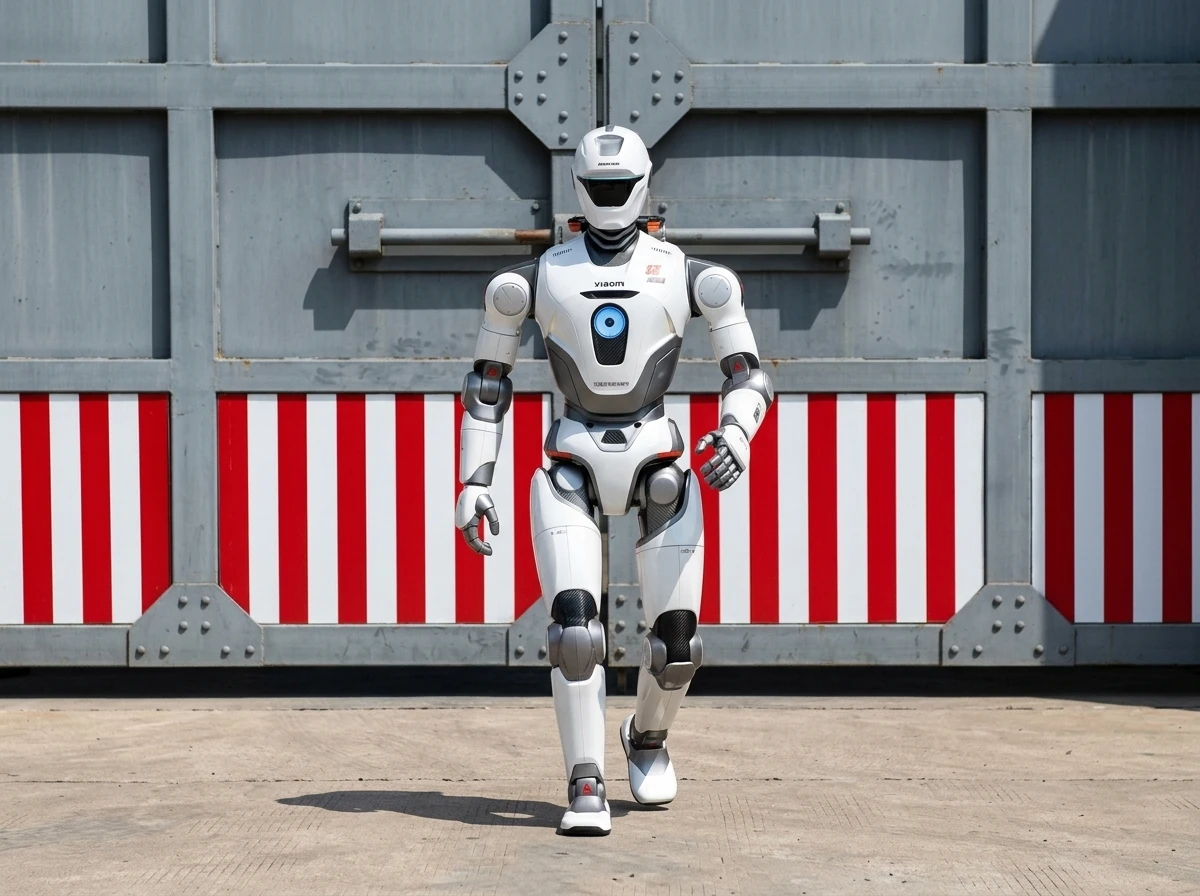
Chinese Volume Leaders Take the Immediate Hit
China dominated 2025 humanoid installations. Counterpoint Research data showed more than four out of five global units that year came from Chinese makers. AgiBot led with a 30.4 percent share of installations; Unitree followed at 26.4 percent. Total global installs reached about 16,000 units, mostly for data collection, research, logistics, manufacturing and automotive work. The market is projected to top 100,000 units by 2027.
| Maker | 2025 Install Share | Base |
|---|---|---|
| AgiBot | 30.4% | China |
| Unitree | 26.4% | China |
| Other Chinese | ~23%+ | China |
| Rest of world | under 20% | various |
Unitree has drawn particular attention. Analysts tracking its filings noted overseas revenue above 35 percent and US trade-risk language already present. Early reaction on X highlighted that many US buyers of these machines have been universities and research labs, not factories. The ban therefore lands first on the academic and R&D channel that supplied volume and training data to Chinese producers.
The Chinese embassy in Washington called the action politicization of trade on groundless pretexts and said Beijing will take all necessary measures against harm to its interests. It urged the US to drop a hegemonic mindset and stop smearing Chinese firms. Foreign Ministry spokesperson Mao Ning later restated firm opposition to overstretching national security against Chinese companies.
I welcome these Executive Branch national security determinations, and I am pleased that the FCC has now added foreign produced advanced robotics and power inverters to the FCC’s Covered List. Following President Trump’s leadership, the FCC will continue to do our part to secure America’s critical supply chains and, with today’s action, the FCC is acting in lock step with our national security agencies to do just that.
FCC Chairman Brendan Carr said in the agency fact sheet.
US Makers and the Conditional Path Gain Runway
Domestic and allied producers of humanoids and quadrupeds now face far less low-cost foreign competition for new US sales. Tesla’s Optimus program, Boston Dynamics, Figure, Agility Robotics and others operate in a market where new Chinese models cannot simply ship. That protection arrives while Chinese firms still undercut on price and volume in open markets elsewhere, a dynamic already familiar from cheaper Chinese AI models that shifted some US startup spend.
Conditional Approval offers a narrow door. The Department of War (and DHS for inverters) can clear specific devices or classes that do not pose the cited risks. Early applicants will test how fast and how broadly that process works. Firms that secure it keep FCC authorization access; those that do not must redesign for domestic content or abandon the US new-model channel.
The determinations themselves cite two core risks for robots: supply-chain vulnerability that could disrupt economic and national security, and cybersecurity exposure that lets malign actors surveil Americans, feed foreign intelligence or remotely commandeer machines. Inverters carry parallel warnings about remote shutoff, data exfiltration and grid attacks.
How the Covered List Grew Into This
The list began as a tool against specific high-risk telecom vendors. It has widened steadily under national-security direction the FCC must implement.
- March 2021, Huawei and ZTE telecommunications equipment added.
- Later expansions, additional named Chinese telecom and video-surveillance entities.
- December 2025 period, foreign-produced uncrewed aircraft systems and critical components.
- March 2026, foreign-produced consumer-grade routers.
- July 28, 2026, foreign-produced advanced robotic devices and power inverters.
Each step followed an Executive Branch interagency determination. The pattern treats networked hardware that can sense, move or control power as potential vectors once foreign-produced at scale. The same logic now reaches mobile robots whose sensors and connectivity the agencies view as too easy to exploit. The full FCC Covered List remains the public register.
Inverters Bring the Grid Risk Into the Same Frame
Connected power inverters sit at the center of solar and many data-center power paths. China dominates global supply; Huawei alone held roughly 29 percent of shipments in earlier Wood Mackenzie tallies, with Sungrow and others close behind. Prior US reviews already flagged unexplained communications modules inside some Chinese units and the theoretical ability to disable or monitor large fleets remotely.
Adding them to the Covered List extends the same new-model ban. Existing authorized inverters stay usable. New foreign models need Conditional Approval or domestic qualification. US and allied inverter makers with local capacity stand to pick up share if buyers shift, though price and availability gaps will appear in the short run.
Research Labs Feel It Before Factories Do
Crowd discussion and buyer mapping converge on one near-term effect: American universities and labs that purchased lower-cost Chinese humanoids and quadrupeds for data collection and algorithm work lose the easy import path for fresh models. Volume Chinese hardware helped generate the real-world interaction data that physical AI systems need. Cutting that supply raises the cost and slows the iteration cycle for US researchers even as it protects future commercial deployment by domestic firms.
Chinese exporters, already navigating tariffs and chip controls, lose a high-visibility market for next-generation units. They retain home demand, Europe and other open markets, and can still service older authorized US fleets. The parallel pressure on China’s broader tech stack, visible in recent China chip sector pressure, continues.
Conditional Approval applications will reveal which foreign designs the Department of War and DHS view as manageable. Software update waivers keep installed bases alive. New foreign models without clearance simply stay outside the US commercial channel. That split favors whoever can produce qualifying domestic or approved hardware at usable price and volume first.
The foreign-produced advanced robotic devices and inverter additions close one door on July 28 while leaving older stock and a narrow exemption process open. Chinese volume leaders lose the easiest route into new US sales; US makers and labs that can source or build compliant machines inherit the protected space.


Spotify Running Mode hits Android and revives its old tempo experiment

Galaxy Tab S12 Ultra Renders Keep the Notch Fans Hate

Novato Spinning Round House Sells With Six Neighbors for $3.3 Million

Crop Tour Finds Indiana and Nebraska Corn Yields Lagging 2025

Best Buy 60th sale brings Android deals back to its roots

American Airlines reverses seatback screen bet years too late

Iran Hormuz Strikes Force Gulf Oil Onto Costlier Paths

Plague Tale Prequel Day One Joins Game Pass Wave 2 as Witcher Exits

NBA 2K27 opens The City to everyone and rewrites career eras

iOS 26.6.1 Patches 29 Flaws as AI Forces Faster Apple Updates

Double Fine Cuts 23 Jobs Weeks After Xbox Independence

Day-One Big Walk Lifts PS Plus August Beyond Recycled AAA

John Hight Exits Wizards After Digital Reckoning Hits

Curtis Mead’s Red Sox Debut Ends With Fractured Wrist

Moesch and Dressel Rewrite Night One at 2026 U.S. Nationals

Red Sox Squander Hot Streak Chance in 4-3 Loss to Athletics

Boutte’s Quiet Camp Takeover Forces Patriots Receiver Choices

Take-Two CEO Pushes Netflix Subs for GTA 6 Extended Look

Halo Campaign Evolved Skulls Meet Death Barriers That Kill the Hunt

Wildlands Free Update Hands Players the Tools They Already Invented
-

 TECHNOLOGY3 years ago
How to Adjust a Bulova Watch Band – An Easy Guide
-

 News3 years ago
Fred Pentland: Athletic Bilbao’s English mentor who changed the essence of Spanish football
-

 FINANCE3 years ago
Tax Planning for Every Season: Guide to Maximizing Your Tax Benefits
-

 Education3 years ago
African Ministers New Education Plan
-

 BUSINESS3 years ago
What is Entrepreneurial Operating System? A Comprehensive Guide to EOS
-

 Education3 years ago
Innovate Your Learning Journey with Technology and Enhance Education
-

 News3 years ago
Russians formally out of World Athletics Championships
-

 BUSINESS3 years ago
Top 9 Most Expensive American Cities to Rent an Apartment