
BUSINESS
Mamdani’s 30% Grocery Discount Plan Alarms NYC’s Bodega Owners
Mamdani’s city-run NYC grocery stores will cut meat and produce prices 30%, but independent bodega owners warn the tax-free subsidy could undercut them.

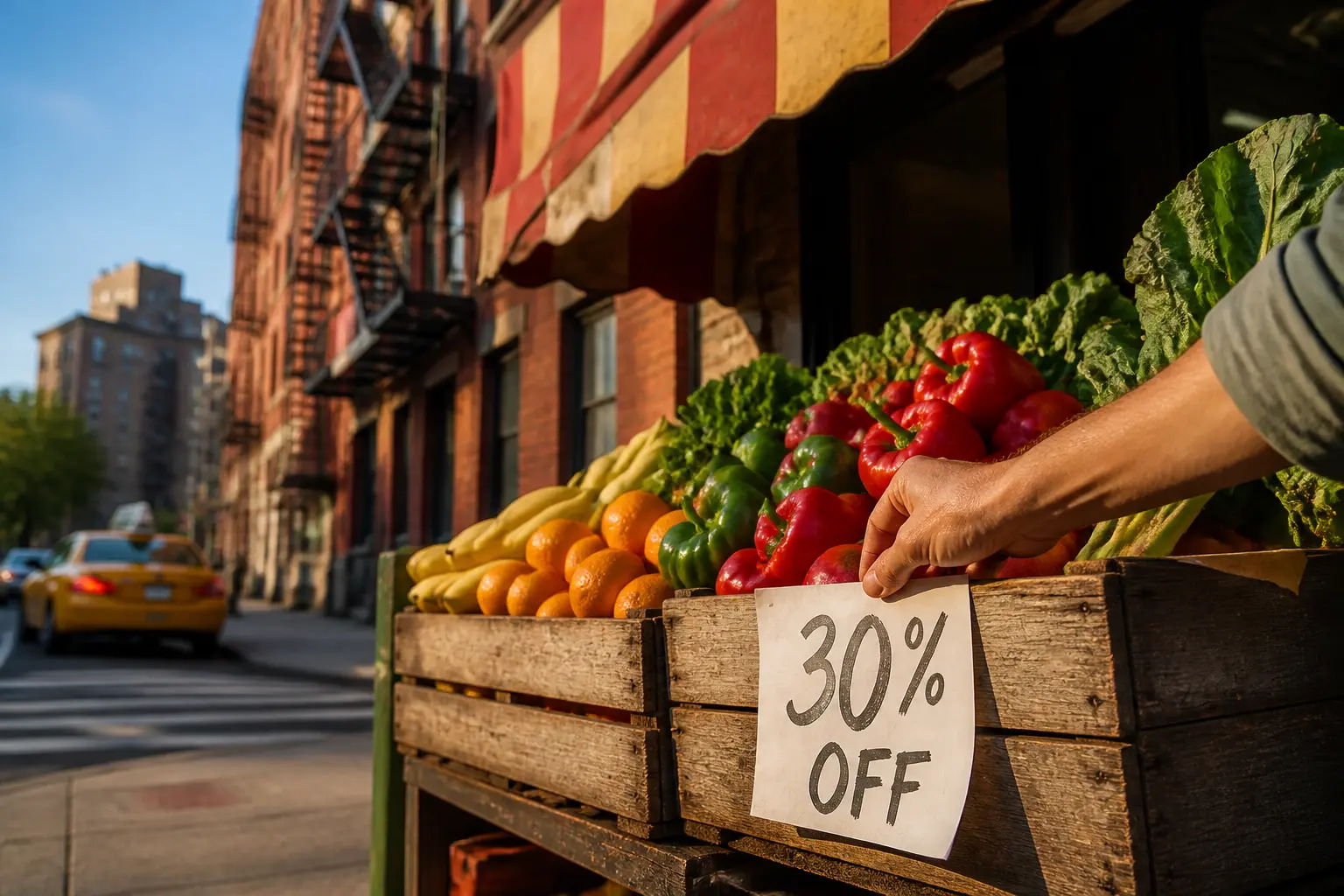
New York City will sell meat, seafood and fresh produce at a flat 30 percent discount inside the municipal grocery stores Mayor Zohran Mamdani wants running in every borough, he said Monday. The markdown, he said, is designed to save the average shopper roughly $1,000 a year, an amount he pegged directly to how much food prices have climbed since the pandemic.
The saving comes with a catch the mayor’s own paperwork spells out. The city will cover the stores’ rent, maintenance and property taxes, an advantage no bodega or supermarket down the block gets to claim, and the owners of those stores are already saying so, loudly.
A Grocery Bill Cut by 30 Percent
Mamdani announced the pricing structure for what the city is branding N.Y.C. Groceries, the municipal store network he campaigned on last year as a fix for New York’s affordability crisis. The discount applies broadly: produce, meat, seafood, bread, milk, eggs and other everyday staples.
- Fresh produce, including fruit and vegetables
- Meat and seafood
- Bread, milk and eggs
- Other pantry staples defined in the city’s request for proposals
Prices reset once a month and then hold steady, giving shoppers a predictable number instead of the sale-to-sale swings common at most supermarkets. “For many, that 30 percent discount is the difference between an evening spent around the dinner table with family or working another double shift to make ends meet,” Mamdani said Monday.
He added that the 30 percent figure was not picked at random. It roughly matches how much grocery prices have risen since the covid-19 pandemic began, meaning the discount is pitched less as a bonus than as a rollback to pre-pandemic affordability.
Why Mamdani Is Pricing Groceries to Match Inflation
The timing tracks a broader squeeze. Grocery prices have risen about 30 percent since the pandemic, and Americans have felt recent increases tied to President Trump’s tariffs and the war in Iran. A Washington Post-Ipsos poll found that roughly two-thirds of Americans now consider groceries unaffordable.
Industry forecasters see the picture as more mixed heading into the back half of the year. The Food Industry Association projected 2026 grocery inflation running below its 20-year average, even as tariff-driven cost increases work their way through supply chains over the following months. That forecast sits awkwardly next to how squeezed shoppers say they already feel, a gap between the topline number and the receipt in hand.
Mamdani’s framing skips past that tension. His pitch is simpler: whatever inflation has already done to the grocery bill, the discount undoes.
No Rent, No Property Taxes for the City’s Stores
The mechanics behind the markdown came out Monday in a formal request for proposals, in which the city unveiled the discount structure alongside a search for a private operator. The city, not a private landlord, will hold the leases on the store sites and waive rent and property taxes for whichever operator it selects. It will also cover maintenance.
That operator, picked through the RFP process, still has real work to do. It has to merchandise the stores, staff them and strike deals with food distributors to keep shelves stocked, all while following labor terms the city has attached to the deal. The mayor’s office requires family-sustaining wages and benefits for store workers as a condition of running an N.Y.C. Groceries location.
In plain terms, the city absorbs the fixed costs that make running a grocery store in New York expensive, and hands the operating risk to a private partner. It is a structure that looks generous from a shopper’s side of the register. From a competitor’s side, it looks like something else.
Why Are Bodega Owners Fighting the Plan?
Independent bodega and supermarket owners say a tax-free, rent-free competitor next door would make it nearly impossible for them to match prices, since they still have to pay the overhead the city is waiving for its own stores. Two of the city’s biggest trade voices for small grocers have said so directly, and one already has a foot in Mamdani’s camp politically.
Radhames Rodriguez, president of the United Bodegas of America, said stores like his cannot compete with prices set by a store that pays no rent and no property taxes. Rodriguez had criticized the grocery plan sharply in late June before appearing at a press conference with Mamdani at a Bronx bodega, where he endorsed the mayor’s broader agenda while keeping his objection to the grocery stores intact.
I’m not supporting to have competition, not for him, not for anybody.
Rodriguez said that at the same Bronx event, drawing a clear line between backing Mamdani politically and backing this specific plan.
Antonio Pena, president of the National Supermarket Association, went further, calling the plan a “slap in the face” to the 450 independent stores his trade group represents across New York City. Underneath the pricing fight sits a separate complaint about process: one bodega representative told the New York Post that city officials asked store owners to hand over proprietary business information without answering their own questions in return, which the representative said had bred distrust between grocers and City Hall.
Chicago Already Walked Away From This Idea
New York is not the first city to test whether government can run a grocery store better than the market does. Chicago got further along the planning process than most, then backed out.
Mayor Brandon Johnson’s administration announced it was exploring a city-owned grocery store in September 2023, aiming to fill gaps left by supermarket closures on the South and West Sides. A 200-page feasibility study from consultant HR&A Advisors concluded the idea was necessary, feasible and implementable. Then the city let a state funding deadline pass. Officials had said they would apply for money under the Illinois Grocery Initiative, then did not, missing the December application window entirely. The municipal grocery store plan was shelved soon after, and City Hall pivoted to floating a public market instead, a Milwaukee-style venue that would sell staples like milk and bread while renting cheap retail space to local farmers and food vendors.
| City | Status | Public Cost Coverage | Outcome So Far |
|---|---|---|---|
| New York (Mamdani plan) | RFP issued July 27, 2026, seeking a private operator | City covers rent, maintenance and property taxes | Two sites named; first store targeted for Hunts Point, Bronx |
| Chicago (Johnson plan) | Explored since September 2023, later shelved | Sought, then passed on, state grocery-initiative funding | Store plan dropped; city now pitching a public market instead |
The comparison matters because Chicago had the same feasibility study, the same political will at launch and the same funding pathway available. It walked away anyway once the bill came due. New York, so far, has not.
Hunts Point Gets New York’s First City-Run Store
Mamdani has named two locations so far: one in Hunts Point, in the South Bronx, and a second at La Marqueta in East Harlem. City data cited in the rollout materials found that 77 percent of households in the Hunts Point area struggle to afford basic necessities, the kind of number that explains why it is going first rather than a wealthier neighborhood.
The first N.Y.C. Groceries store is targeted to open by the end of 2027, more than a year from now, with the East Harlem location to follow. Mamdani’s stated goal is one store in every borough, five in total, open by the end of his first term.
Until an operator signs on, the rest of that promise is paperwork. The RFP released Monday is the mechanism the city is counting on to turn two named addresses and a discount formula into an actual place to buy groceries.


Spotify Running Mode hits Android and revives its old tempo experiment

Galaxy Tab S12 Ultra Renders Keep the Notch Fans Hate

Novato Spinning Round House Sells With Six Neighbors for $3.3 Million

Crop Tour Finds Indiana and Nebraska Corn Yields Lagging 2025

Best Buy 60th sale brings Android deals back to its roots

American Airlines reverses seatback screen bet years too late

Iran Hormuz Strikes Force Gulf Oil Onto Costlier Paths

Plague Tale Prequel Day One Joins Game Pass Wave 2 as Witcher Exits

NBA 2K27 opens The City to everyone and rewrites career eras

iOS 26.6.1 Patches 29 Flaws as AI Forces Faster Apple Updates

Double Fine Cuts 23 Jobs Weeks After Xbox Independence

Day-One Big Walk Lifts PS Plus August Beyond Recycled AAA

John Hight Exits Wizards After Digital Reckoning Hits

Curtis Mead’s Red Sox Debut Ends With Fractured Wrist

Moesch and Dressel Rewrite Night One at 2026 U.S. Nationals

Red Sox Squander Hot Streak Chance in 4-3 Loss to Athletics

Boutte’s Quiet Camp Takeover Forces Patriots Receiver Choices

Take-Two CEO Pushes Netflix Subs for GTA 6 Extended Look

Halo Campaign Evolved Skulls Meet Death Barriers That Kill the Hunt

Wildlands Free Update Hands Players the Tools They Already Invented
-

 TECHNOLOGY3 years ago
How to Adjust a Bulova Watch Band – An Easy Guide
-

 News3 years ago
Fred Pentland: Athletic Bilbao’s English mentor who changed the essence of Spanish football
-

 FINANCE3 years ago
Tax Planning for Every Season: Guide to Maximizing Your Tax Benefits
-

 Education3 years ago
African Ministers New Education Plan
-

 BUSINESS3 years ago
What is Entrepreneurial Operating System? A Comprehensive Guide to EOS
-

 Education3 years ago
Innovate Your Learning Journey with Technology and Enhance Education
-

 News3 years ago
Russians formally out of World Athletics Championships
-

 BUSINESS3 years ago
Top 9 Most Expensive American Cities to Rent an Apartment