
News
Grand Junction Pipe Bomber Could Walk Free After Murder Charges Dismissed

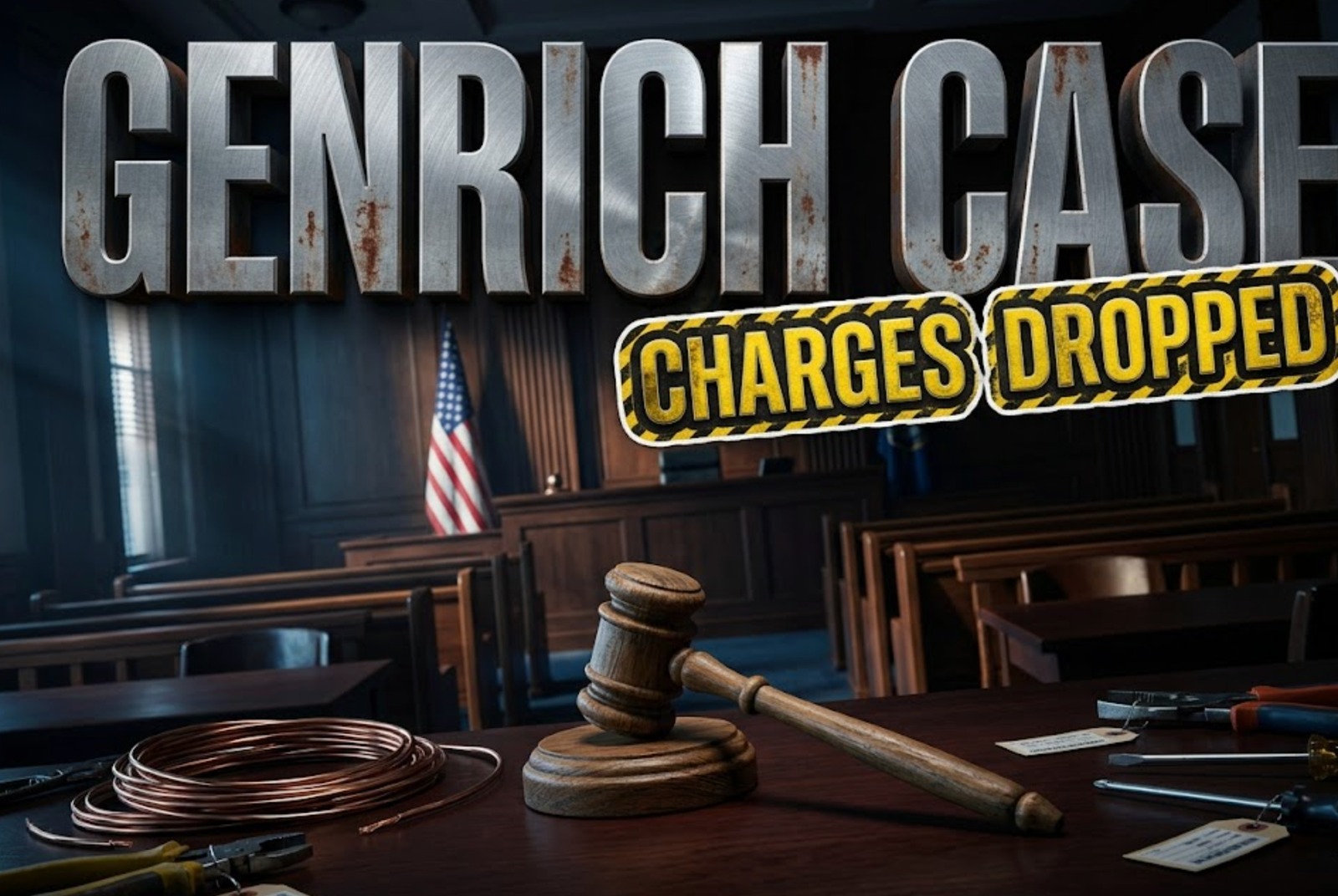
A notorious Colorado pipe bomber convicted over 30 years ago faces a stunning legal reversal as prosecutors move to dismiss his murder charges based on questionable forensic evidence. The case that terrorized Grand Junction in the early 1990s now hinges on whether outdated science put the wrong man behind bars.
Prosecutors Reverse Course on Decades-Old Conviction
The 21st Judicial District Attorney’s Office filed a motion Monday to dismiss murder charges against James Genrich, who has spent three decades in prison for a series of pipe bombings that killed two people between 1989 and 1991. The bombings claimed the lives of Henry Ruble and 12-year-old Maria Delores Gonzales, sending shockwaves through the Mesa County community.
The case against Genrich relied heavily on tool mark analysis, a forensic technique that prosecutors used to link tools found in his possession to marks left on wires from an unexploded bomb. This type of evidence, once considered cutting-edge forensic science, has come under intense scrutiny in recent years as experts question its reliability and scientific validity.
The motion marks a dramatic shift for law enforcement officials who originally pursued the case. Both the Grand Junction Police Department and the District Attorney’s Office now publicly support dismissing the murder charges, acknowledging concerns about the forensic evidence that formed the backbone of the 1993 conviction.
Innocence Project Challenges Forensic Science
Genrich’s legal battle gained momentum in 2022 when his attorneys, working alongside The Innocence Project, successfully argued that his conviction rested on shaky scientific ground. The Innocence Project, a national organization dedicated to exonerating wrongfully convicted individuals through DNA testing and reforming the criminal justice system, has increasingly targeted cases built on questionable forensic methods.
The court ordered a new trial following the 2022 hearing, setting the stage for Monday’s motion to dismiss. Legal experts say the case reflects a broader reckoning within the criminal justice system over forensic techniques that lack rigorous scientific validation.
Tool mark analysis involves examining microscopic marks left on materials to determine whether a specific tool created them. While firearms examiners have used similar methods for decades, critics argue the technique lacks the statistical foundation and standardized protocols necessary for reliable courtroom evidence.
What Happens Next for Genrich
A Mesa County court hearing scheduled for 9 a.m. Monday will determine whether Judge approves the prosecution’s motion to dismiss the murder charges. Legal observers expect the motion to be granted given the unusual joint support from both defense attorneys and prosecutors.
However, dismissal of the murder charges does not mean Genrich will walk free from prison.
He will continue serving a 72-year sentence for use of an explosive device and third-degree assault, charges that stemmed from the same bombing campaign but do not rely on the disputed tool mark evidence. This means Genrich faces significant time behind bars regardless of Monday’s outcome.
The distinction matters legally and emotionally. A murder conviction carries different weight than weapons charges, both in terms of sentencing guidelines and the permanent record of having caused someone’s death.
Community Grapples With Justice Questions
The potential dismissal reopens painful wounds for families who lost loved ones in the bombings more than 30 years ago. Maria Delores Gonzales was just 12 years old when she became a victim of the terror campaign that gripped Grand Junction.
For residents who lived through the bombing spree, the case raises difficult questions about justice, scientific certainty, and whether the legal system convicted the right person. The community experienced genuine fear during the attacks, with pipe bombs appearing unpredictably across Mesa County between 1989 and 1991.
Some criminal justice reform advocates point to the case as evidence that courts must scrutinize forensic techniques more carefully before allowing them as evidence. Others worry that dismissing charges based on evolving scientific standards could undermine confidence in the justice system and leave victims’ families without closure.
The Genrich case joins a growing list of convictions nationwide being challenged or overturned due to questions about forensic science once considered reliable, including bite mark analysis, hair comparison, and arson investigation techniques.
As the court prepares to hear arguments Monday morning, the Grand Junction community finds itself revisiting a dark chapter in its history while confronting uncomfortable questions about how science, justice, and truth intersect in the courtroom. Regardless of the legal outcome, two families will continue living with the permanent absence of loved ones lost to senseless violence three decades ago.
What do you think about cases being reconsidered based on evolving forensic science? Share your thoughts in the comments below.











Stock Futures Wobble as Trump’s Hormuz Blockade Meets Earnings Season

Chipotle Enters Mexico, the Market That Sank Taco Bell Twice

Samsung’s Galaxy Watch 9 and Watch Ultra 2 Bet on a Borrowed Chip

Pentagon Suspends CMMC Phase 2, Relieving Small Firms, Straining Assessors

PS5 Adds a Weekly Wrap-Up Widget While Recently Played Stays Broken

A Brazilian Gamer Sued Microsoft Over a Hacked Xbox Account, and Won

Volkswagen’s CEO Confirms 100,000 Jobs Are on the Table

Assassin’s Creed Black Flag Resynced Splits Handhelds by Price

Lorde Calls Smart Glasses ‘Not Sexy’ Right on Ray-Ban’s Own Stage

Nintendo Eyes a Switch 2 OLED Model as the Memory Crisis Bites

Halo Studios Reverses PS Plus for Halo: Campaign Evolved on PS5

Black Ops 1 and 2 PS5 Ports: $40 Price Tag Has Fans Uneasy

Matt Brown Dismisses Rousey and Paul’s MVP MMA Ratings Win Over UFC

Star Wars: Galactic Racer Is a Roguelite Racer With a Podracing Skin

Julius Randle Traded to Nets as Wolves Reclaim Cap Space for Dosunmu

Sega’s $49.99 Sonic Classic and Modern Bundles Hit Switch in October

Colombia Edge DR Congo as Muñoz Books World Cup Knockout Place

Douze Dixièmes Closes Five Months After MIO: Memories in Orbit

Warriors Take Yaxel Lendeborg, the Oldest Pick in the 2026 NBA Draft

Meta’s Muse Image Lets Anyone Use Your Instagram Photos in AI
-

 TECHNOLOGY3 years ago
How to Adjust a Bulova Watch Band – An Easy Guide
-

 News3 years ago
Fred Pentland: Athletic Bilbao’s English mentor who changed the essence of Spanish football
-

 FINANCE3 years ago
Tax Planning for Every Season: Guide to Maximizing Your Tax Benefits
-

 Education3 years ago
African Ministers New Education Plan
-

 BUSINESS3 years ago
What is Entrepreneurial Operating System? A Comprehensive Guide to EOS
-

 Education3 years ago
Innovate Your Learning Journey with Technology and Enhance Education
-

 News3 years ago
Russians formally out of World Athletics Championships
-

 BUSINESS3 years ago
Top 9 Most Expensive American Cities to Rent an Apartment