
News
Lower Basin States Step Up With Emergency Colorado River Plan

Three states are done waiting. With negotiations between all seven Colorado River basin states still locked in a painful stalemate, Arizona, California and Nevada have launched an emergency water-cutting proposal that could reshape how the American West manages its most critical water source. The plan arrives as reservoirs hit dangerous lows and snowpack breaks the worst records in modern history.
What the Three States Are Putting on the Table
Nevada, along with California and Arizona, has proposed taking a significant cut to its share of the Colorado River, with the three Lower Basin states committing to stabilize the river’s water supply. During the negotiation process, Lower Basin officials offered to take cuts of 1.25 million acre-feet annually. On top of that base commitment, the states say they will explore creating a plan to conserve an additional 700,000 acre-feet of water by August, with minimum contributions of 100,000 acre-feet from Nevada and 300,000 acre-feet each from California and Arizona. The numbers get very specific when you look at the state-by-state breakdown:
- Arizona will contribute 760,000 acre-feet of its 2.85 million acre-foot allocation in both 2027 and 2028
- California will commit 440,000 acre-feet from its 4.40 million acre-foot share
- Nevada is looking at a 50,000 acre-foot annual cut from its already smallest 300,000 acre-foot total
The plan has been advanced to the federal government for consideration as part of the ongoing post-2026 planning process and is intended to provide a near-term bridge through 2028 while long-term operating guidelines are finalized. Seeing it through would require federal funding, the states say. The proposal still needs approval from state water agencies, the Arizona legislature and federal partners.
Why Seven-State Talks Keep Breaking Down
This crisis did not arrive without warning. The seven U.S. states that make up the Colorado River basin have been struggling to agree on how best to manage the river’s water as its supply dwindles due to climate change and prolonged drought. Their negotiations missed a Feb. 14, 2026, deadline the federal government had established. One of the biggest disagreements between the Upper and Lower Basin states is over which faction should cut back on their water use, and by how much. The Lower Basin states want all seven Colorado River states to share mandatory water cuts during dry years under the new guidelines. Upper Basin states have argued they don’t have the legal authority to significantly reduce flows to water users on their own under the 1922 Colorado River Compact. Arizona’s lead negotiator said that after all the talks, the Lower Basin received one consistent message: “there will be no firm commitment to reduce uses in the Upper Basin, no matter how dire the conditions of the river may be.” **The failure to reach a deal puts $1.4 trillion in annual economic activity at risk, along with water supplies for the 40 million people and 30 tribal nations who depend on the river.** Failure to reach a seven-state consensus could lead to litigation that would likely take decades to resolve.
The River Is in Deeper Trouble Than Many Realize
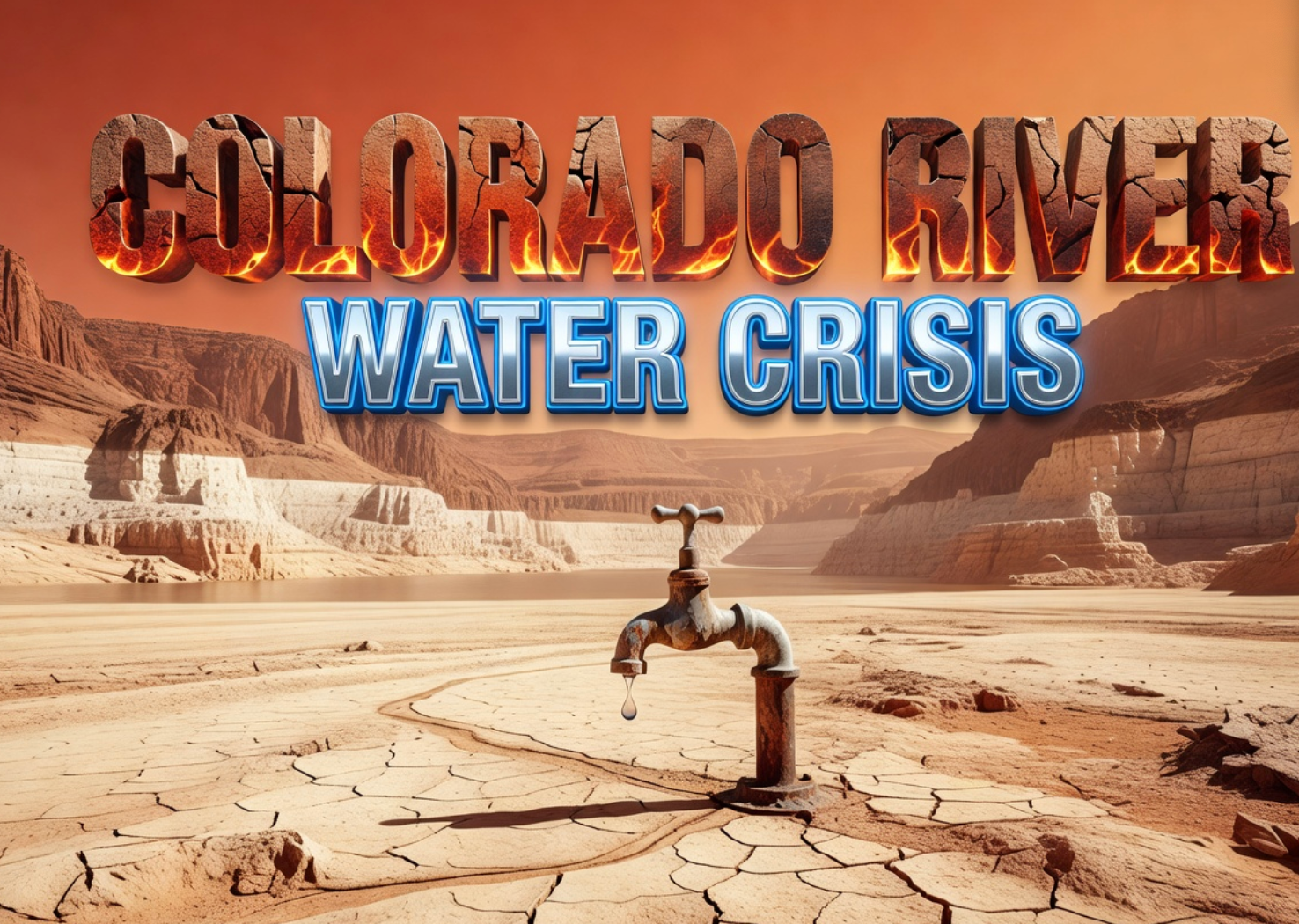
The raw numbers tell a story that is hard to ignore. Lake Mead is currently 32% full and Lake Powell is 24% full. Lake Mead’s water level fell almost 148 feet between the beginning of 2000 and 2025. Lake Powell’s level fell by 112 feet. The snowpack that feeds these reservoirs has collapsed to historic lows this year:
- Colorado’s snowpack was at 24% of its 30-year norm as of early April, and the roughly 250,000-square-mile Colorado River Basin was at about 25% of its norm.
- The Colorado Basin experienced its warmest March on record in 2026, with temperatures 13.7 degrees Fahrenheit above normal.
- Lake Powell’s lower probable inflow is forecast to be just 2.78 million acre-feet, 29% of the historical average and one of the lowest on record. Powell held about a quarter of its storage capacity.
Federal water managers ordered emergency actions to shore up Lake Powell, moving water from the upstream Flaming Gorge Reservoir and reducing releases to Lake Mead, amid record-low snowpack and deepening drought. The shrunken releases from Lake Powell will accelerate declining water levels in Lake Mead, potentially reducing Hoover Dam’s hydropower generating capacity by 40% as early as this fall. As of April 2026, Lake Powell is barely above 3,500 feet. Damage to Glen Canyon Dam’s lower outlets will impede water releases below that threshold. And Lake Mead will decline by 20 feet, which will reduce Hoover Dam hydropower production by 40 percent. Colorado and downstream states are heading into summer with severely poor water conditions. “If there’s anything in your memory about a dry year that you’ve seen, a warm year that you’ve seen, 2026 is beyond all of that,” said Raquel Flinker, the Colorado River District’s director of interstate and regional water resources.
What This Means for Upstream States and What Comes Next
The Lower Basin proposal does not let upstream states off the hook. The Lower Basin states called for the Upper Basin to “step forward now with verifiable water contributions to help stabilize the system and support a near-term, seven-state bridge,” maintaining it cannot solve the Colorado River crisis alone. Becky Mitchell, Colorado’s top Colorado River negotiator, has said that the Upper Basin states already use less water than the Lower Basin. Upper Basin governors maintain they are putting voluntary tools on the table, including upstream reservoir releases, but will not commit to hard-number cuts. The stress is already showing on the ground. Denver Water’s collection and service areas continue to face severe drought conditions with historically low snowpack. As a result, on March 25, 2026, the Denver Board of Water Commissioners declared a Stage 1 drought, seeking a 20% reduction in water use. The seven basin states have not reached consensus on a new operating framework. Without that agreement, the Interior Department “will be prepared to determine operations for post-2026 later this summer to provide certainty and stability for the Colorado River Basin,” the Bureau of Reclamation said. Scott Cameron, acting leader of the Bureau of Reclamation, has said the federal government expects a finalized plan in May or June 2026. This gives policymakers time to get the necessary approval from state legislators and implement changes before the new water year begins next fall. Should the states fail to produce a joint plan, the feds will step in. The Colorado River has sustained cities, farms and communities across the West for over a century, and the decisions made in the next few weeks will determine how that legacy continues for generations to come. The three Lower Basin states have made their move. Now all eyes turn to their upstream neighbors and the federal government to see who blinks first — because the river itself cannot afford to wait any longer. What do you think should happen with the Colorado River water crisis? Should all seven states face mandatory cuts, or should conservation remain voluntary? Drop your thoughts in the comments below.





Judge Strips Google’s Last App Store Friction After Epic Demo

Fold 8 Success Makes Its Dusty Hinge Costlier Than Ever

Silver Lake Workday Talks Test PE Appetite for AI-Hit Software

Wholesale Prices Flat but Wage Lag Keeps Households Squeezed

Teen E-Motos Draw Hells Angels Label and Risk Legal Ebike Gains

Apple’s Siri Pay-Per-Use Plan Rewrites News Licensing Rules

Cramer Calls Cisco Plunge a Buy as AI Orders Surge

Play Points Platinum Quietly Cuts Pixel 11 Prices Again

Quincy Gas Station Sold the $1.04 Billion Powerball Ticket

Microsoft Scraps Failed Copilot Features in Forced App Merge

ZA/UM Lays Off 32 Staff as Zero Parades Wins Reviews, Not Players

EA’s New In-Game Ad Platform Skips the Games That Need It Most

Mortgage Rates Climb to 6.55%, the Highest Level in Nearly a Year

Colby Covington Stuns Tsarukyan as Askren Retires in Tears at RAF 11

Netflix Heads Into Earnings With Its 2022 Playbook Already Spent

Spain’s Diaspora-Rooted Squad Wins Over New York Ahead of the Final

NHL’s Monday Matinee Push Puts Capitals Fans on the Clock

DeChambeau’s Two-Shot Penalty Rewrites the Open’s Weekend Draw

Guardians Rout Twins With Seven Homers, Leave Joe Ryan One Shy of Record

England Beats France 6-4 to Claim World Cup Bronze Medal
-

 TECHNOLOGY3 years ago
How to Adjust a Bulova Watch Band – An Easy Guide
-

 News3 years ago
Fred Pentland: Athletic Bilbao’s English mentor who changed the essence of Spanish football
-

 FINANCE3 years ago
Tax Planning for Every Season: Guide to Maximizing Your Tax Benefits
-

 Education3 years ago
African Ministers New Education Plan
-

 BUSINESS3 years ago
What is Entrepreneurial Operating System? A Comprehensive Guide to EOS
-

 Education3 years ago
Innovate Your Learning Journey with Technology and Enhance Education
-

 News3 years ago
Russians formally out of World Athletics Championships
-

 BUSINESS3 years ago
Top 9 Most Expensive American Cities to Rent an Apartment