
News
Nvidia’s N1X Chip Just Cracked Intel and AMD’s CPU Moat

At the Computex trade show in Taiwan, Nvidia chief executive Jensen Huang unveiled the N1X, an Arm-based PC processor built alongside Microsoft and chipmaker MediaTek that fuses a 20-core CPU with an RTX-class graphics engine on a single piece of silicon. The chip ships this fall inside Windows laptops from Microsoft, Dell, HP, ASUS, Lenovo and MSI, and it pushes Nvidia straight into the central processor market that Intel and Advanced Micro Devices have ruled for the better part of 40 years.
The crack in that wall is real. But it starts narrow. The first machines are 14-millimeter premium notebooks built for developers, creators and researchers, not the sub-$700 desktop that still keeps Intel’s volume engine humming.
Nvidia Fused a CPU and an RTX GPU Into One Chip
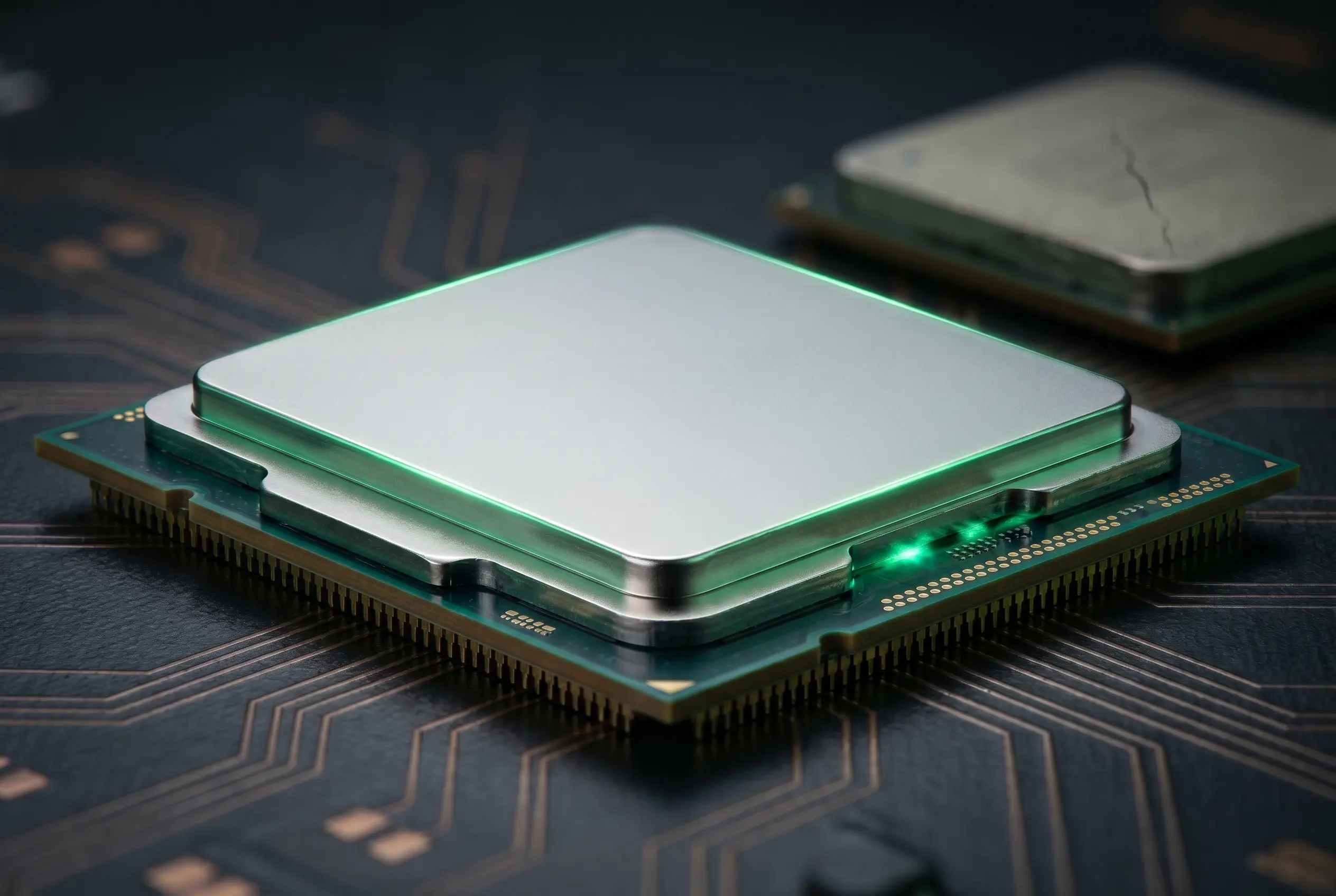
The N1X sits at the heart of what Nvidia is branding the RTX Spark superchip. It pairs 20 Arm-designed CPU cores with a Blackwell graphics processor carrying 6,144 CUDA cores, the same count Nvidia ships on its desktop RTX 5070 card. Both halves are manufactured on Taiwan Semiconductor Manufacturing Company’s 3-nanometer process and wired together with up to 128 gigabytes of unified memory, so the processor and graphics share one pool instead of copying data back and forth.
That design is aimed squarely at AI agents, the software that runs models locally rather than calling a cloud server for every task. Nvidia says the chip delivers roughly one petaflop of AI compute and can run a 120-billion-parameter language model on the device itself. The first wave is more than 30 laptops and 10 desktops, with Microsoft’s Surface Laptop Ultra among the headline machines and Acer and Gigabyte expected to follow.
The teaser campaign ran for days before the keynote, with Nvidia, Microsoft, Arm and MediaTek posting the same four words across their accounts. Our earlier look at the N1X Arm laptop chip ahead of its debut tracked the build-up to the June reveal.
- 20 Arm CPU cores fused with a Blackwell GPU on one TSMC 3-nanometer die
- 6,144 CUDA cores, matching the desktop RTX 5070, for on-device graphics and AI
- 128 GB of unified memory shared across the processor and graphics
- 1 petaflop of AI compute, enough to run a 120-billion-parameter model locally
Why Arm Is Pulling Ground From x86 Now
For decades the PC and server worlds ran on x86, the central processing unit (CPU, the general-purpose brain of a computer) architecture Intel introduced in the late 1970s and later shared with AMD. Nvidia’s chip uses an alternative blueprint licensed from Arm Holdings, the same low-power design family that powers nearly every smartphone. The pitch is efficiency: more performance per watt, which matters as much in a thin laptop as it does in a power-hungry data center.
The timing is not an accident. Hyperscalers have spent the past few years designing their own Arm chips to cut costs and trim electricity bills, and the momentum is now measurable.
- Amazon Web Services ships its Graviton processors across its cloud fleet
- Google deploys its self-designed Axion chip alongside its tensor processing units
- Microsoft is rolling out its Azure Cobalt CPU in full-scale deployment
Research firm Counterpoint projects that Arm-based CPUs will capture 90% of the AI server CPU market by 2029, up from roughly 25% in 2025. The firm’s analysis of Arm’s path to data center CPU dominance credits the shift to in-house silicon at the cloud giants and Arm’s newer high-performance platforms.
So when Huang walked on stage and said Microsoft and Nvidia were going to reinvent the PC, he was riding a structural current, not fighting it. The architecture that won the phone is now climbing into the laptop and the rack.
The Data Center Flank Is the Bigger Breach
The laptops grabbed the headlines, but Nvidia’s heavier blow lands in the server room. With its Vera Rubin platform, the company is selling a stand-alone CPU into data centers for the first time, a market it estimates is worth $200 billion. One analyst at TechInsights, Wayne Lam, pegs Nvidia’s CPU revenue visibility at around $20 billion for the current fiscal year, which would mean shipping roughly 4 million Vera units at about $5,000 each.
That money rides on a business already running hot. Nvidia generated more than $215 billion in revenue over its latest full year, and its data center engine posted first-quarter fiscal 2027 revenue of $81.6 billion, an 85% jump from a year earlier. Our coverage of how that record quarter rippled through chip-adjacent stocks showed just how much the market now leans on a single supplier.
Intel, AMD and Qualcomm Sit in the Blast Radius
Nvidia is wading into a pool already crowded with strong swimmers, and not all of them are in equal danger. The PC CPU business has long been an Intel and AMD duopoly, with Qualcomm pushing Arm-based Windows chips and Apple proving, with its own silicon, that an Arm laptop can outrun x86 on battery life.
The x86 Duopoly Takes the Direct Hit
Intel and AMD are the most exposed because Nvidia attacks both their PC and server franchises at once. The server threat is the sharper one: if Nvidia ships millions of Vera CPUs bundled with the GPUs cloud buyers already crave, it siphons sockets that Intel’s Xeon and AMD’s EPYC lines have counted on.
On the desktop and notebook side, the near-term sting is smaller, because the N1X targets a premium slice rather than the mainstream volume that fills retail shelves.
Qualcomm and Apple Face a Different Squeeze
Qualcomm has spent years marketing Arm-powered Windows laptops, and Nvidia just arrived with a louder graphics story and the CUDA software developers already know. Apple sells a closed system, so it loses no direct sockets, yet Nvidia’s pitch chips away at the one advantage Apple Silicon could claim against Windows machines: efficient, GPU-heavy performance in a thin chassis.
| Company | Architecture | PC CPU position | Exposure to N1X |
|---|---|---|---|
| Nvidia | Arm | New entrant | Attacker |
| Intel | x86 | Volume leader | High, PC and server |
| AMD | x86 | No. 2 challenger | High, PC and server |
| Qualcomm | Arm | Windows-on-Arm push | Medium, direct overlap |
| Apple | Arm | Closed Mac platform | Low, indirect |
What Still Shields the Incumbents
Disruption headlines are easy to write and slow to arrive. The thing that has protected x86 for 40 years is not raw speed; it is the mountain of Windows software compiled to run on it. Arm chips can emulate that software, but emulation costs performance and occasionally breaks, and corporate buyers do not gamble fleets of thousands of machines on a maybe.
Three forces still work in Intel and AMD’s favor, at least for now:
- Software compatibility: the x86 application library remains the default for most business and gaming workloads
- Price floor: the N1X launches premium, leaving the high-volume mainstream desktop and budget laptop tiers untouched
- Manufacturing scale: Intel and AMD ship CPUs in volumes Nvidia has never produced for the PC channel
That is why this story reads as mixed rather than triumphant. Nvidia has proven a credible Arm PC chip can exist with brand-name partners behind it, and it has a genuine lead in the server CPUs that hang off its GPUs. The win is real. The mainstream desktop, where Intel still moves the most units, is a fight Nvidia has not yet picked.
This reinvention of the computer is as big of a deal as the reinvention of the phone into what we now know as the smartphone.
That was Huang at the Computex keynote, framing the N1X as a once-in-a-generation reset. Whether buyers agree starts to show up in shipment data this fall.
Frequently Asked Questions
When does the Nvidia N1X chip launch?
Nvidia plans to ship the N1X inside Windows PCs in the fall of 2026. The first wave covers more than 30 laptops and 10 desktops from Microsoft, Dell, HP, ASUS, Lenovo and MSI, with Acer and Gigabyte expected to follow.
Is the N1X an Intel-style x86 chip?
No. The N1X uses the Arm architecture, the same low-power design family found in smartphones, rather than the x86 architecture Intel and AMD use. That difference is what lets Nvidia pitch better performance per watt, though it also means some x86 software runs through emulation.
What makes the N1X different from a normal laptop chip?
It fuses a 20-core Arm CPU with a Blackwell GPU carrying 6,144 CUDA cores, the same count as a desktop RTX 5070, plus up to 128 gigabytes of unified memory. That combination is built to run AI agents and large language models directly on the device.
How much will N1X laptops cost?
Nvidia has not confirmed pricing, but the first machines are positioned as premium products aimed at professionals, gamers and AI developers. The company has signaled it plans lower-memory configurations later to reach more price points.
Does this threaten Intel and AMD?
It threatens them more in data centers than on the desktop. Nvidia’s stand-alone Vera CPU targets server sockets the two have long dominated, while the N1X starts in a premium PC niche rather than the high-volume mainstream where x86 software compatibility still rules.
The hardware is set, the partners are named and the calendar points to fall. If the first N1X machines ship on time and the Windows-on-Arm software gap stays small, Nvidia walks into the second half with a foothold in a market it has never sold into directly. If emulation stumbles or the premium price scares buyers off, the laptops stay a developer curiosity while the real damage happens quietly, one server socket at a time.
Disclaimer: This article is for informational purposes only and is not investment advice. Semiconductor stocks and the broader technology sector carry significant risk, and readers should consult a qualified financial professional before making investment decisions. Figures are accurate as of publication.













Halo Campaign Evolved Skulls Meet Death Barriers That Kill the Hunt

Spotify Running Mode Returns After the 2015 Experiment Failed

Amazon AWS Hits Fastest Growth in Years as AI Spend Pays Off

Amazon Bets Platform Beats Models in the AI Race

Apple C2 Modem Edges Into iPhone 18 Pro After Qualcomm Drop

Google Earth Adds Nano Banana 2 to Reimagine Real Places

Apple Upgrade Turns Phones Into Monthly Utility Bills

Asha Sharma Bets Xbox Growth on Console and Four C’s

MacBook Ultra Design Follows Apple’s Familiar Cascade Path

TAG Heuer Carrera x Team Ikuzawa Revives 1970s Roadmaster Stopwatch DNA

Pokémon GO Developer Niantic Rebrands as Scopely Explore

Jaylen Brown Traded to 76ers for Paul George and Four Draft Picks

Persona 4 Revival Hands All Anime Cutscenes to Studio MAPPA

Doom Studio id Software Cuts Half Its Staff in Xbox Layoffs

Nintendo Switch Online Adds Four Classics and One Japan-Only Title

Jordan Henderson Hospitalized After Wrist Injury at the Azteca

Mexico’s World Cup Run Ends at Azteca as England Hold On 3-2

Meta’s Muse Image Lets Anyone Use Your Instagram Photos in AI

Louis Vuitton Beats Molly Tea in China, Triggers Cultural Backlash

Pink Bearista Cup Returns July 13 as Starbucks Pink Vibes Drops
-

 TECHNOLOGY3 years ago
How to Adjust a Bulova Watch Band – An Easy Guide
-

 News3 years ago
Fred Pentland: Athletic Bilbao’s English mentor who changed the essence of Spanish football
-

 FINANCE3 years ago
Tax Planning for Every Season: Guide to Maximizing Your Tax Benefits
-

 Education3 years ago
African Ministers New Education Plan
-

 BUSINESS3 years ago
What is Entrepreneurial Operating System? A Comprehensive Guide to EOS
-

 Education3 years ago
Innovate Your Learning Journey with Technology and Enhance Education
-

 News3 years ago
Russians formally out of World Athletics Championships
-

 BUSINESS3 years ago
Top 9 Most Expensive American Cities to Rent an Apartment