
BUSINESS
Seven States Sue Over Trump’s $928M Offshore Wind Payout
Seven states sued the Trump administration over a $928 million deal paying TotalEnergies to abandon offshore wind, citing misuse of the Treasury Judgment Fund.

Seven Northeastern states sued the Trump administration on June 2 over its $928 million deal that paid TotalEnergies to abandon two offshore wind projects, arguing the federal government tapped a Treasury account meant for court settlements to bankroll the cancellation. The coalition wants a federal judge to strike down the agreement and declare the lease cancellations unlawful.
At the core of the suit is a permanent Treasury appropriation called the Judgment Fund. The states say the Department of the Interior (DOI, the federal agency that manages offshore energy leases) used it to reimburse TotalEnergies $795 million for a lease no court had ordered canceled, stretching the fund well past what Congress authorized.
Why the Treasury’s Judgment Fund Sits at the Center
The Judgment Fund is a standing pool of money Congress set up so the government can pay what it legally owes without waiting for a fresh appropriation each time. It is not a slush account, and that is the whole of the states’ argument. By statute it can only be drawn down in three situations:
- final money judgments entered by federal courts against the United States
- administrative awards an agency is legally bound to pay
- settlements the Justice Department compromises in active or threatened litigation, when the responsible agency has no other money available to cover the bill
The complaint says none of those boxes was checked here. No company had sued the government. There was no judgment, no pending claim, no threatened lawsuit that the payment resolved. Interior decided to cancel the leases, then decided to pay TotalEnergies back, and routed the check through a fund built for losing in court. The states call that a contrived arrangement dressed up as a settlement to satisfy a White House that wants offshore wind gone.
“The Trump administration is once again trying to kill clean energy projects and destroy good-paying jobs for New Yorkers,” said Letitia James, New York’s attorney general, who is leading the coalition. That is the political frame. The legal frame is drier and, if a judge agrees, harder to wave away: an appropriation was spent on something it was never appropriated for.
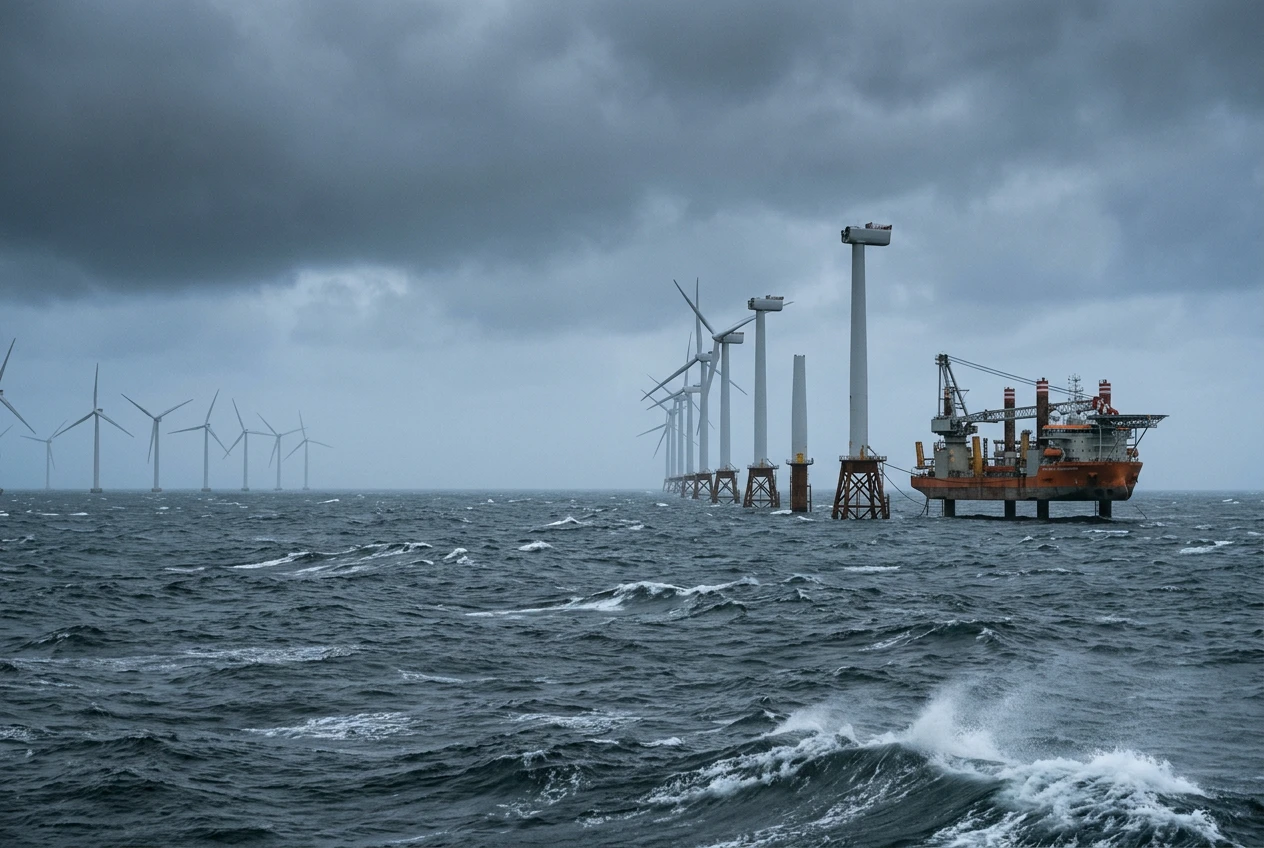
The Lease Cancellation the States Call Illegal
The second prong of the case targets how Interior killed the leases in the first place. Offshore wind sits in federal waters, so the government has more control over it than over turbines on private land, and the rules for pulling a lease are spelled out in the Outer Continental Shelf Lands Act and its leasing provisions. The Outer Continental Shelf Lands Act (OCSLA, the 1953 law governing energy development beyond state coastal waters) does not let an agency simply walk away from a signed lease.
Before canceling, the complaint says, Interior was required to:
- hold a public hearing on the proposed cancellation
- find that continued activity on the lease would likely cause serious harm to life, property, national security, or the environment
- determine that the benefits of canceling outweigh the benefits of letting the lease proceed
The states allege Interior did none of it. There was no public hearing and no written findings of serious harm, they say; the agency negotiated a buyout with the company and announced it as done. Skip the statutory steps, the argument goes, and the cancellation is void no matter how the money moved.
What the $928 Million Bought
The deal Interior signed in March covered two separate lease areas, and the payments split unevenly between them. The bulk went to the New York project; a smaller slice covered a tract off the Carolinas.
| Canceled project | Location | Reimbursement |
|---|---|---|
| Attentive Energy One | About 47 miles off the New York coast | $795 million |
| Carolina Long Bay | Off the North Carolina coast | $133.3 million |
TotalEnergies, the French energy major, had won the New York Bight tract in a 2022 competitive auction that drew the highest offshore wind bids in the country’s history. Its subsidiary Attentive Energy paid $795 million for more than 84,000 acres, the same figure the government has now handed back. Interior framed the buyout as a way to redirect private capital into domestic fossil fuel production and to lower energy costs.
The agreement was inked in public. Patrick Pouyanne, chief executive of TotalEnergies SE, and Interior Secretary Doug Burgum signed it on March 23 at CERAWeek by S&P Global, the energy industry’s marquee conference in Houston. Interior called it a landmark agreement worth nearly $1 billion and pitched it as a win for energy security. The states see a foreign company being paid to retreat from American waters with taxpayer money it never should have touched.
The States Counting on Attentive Energy’s Jobs
Connecticut, Maine, Massachusetts, New Jersey, New York, Rhode Island and Vermont joined the filing in the U.S. District Court for the District of Columbia. Most of the tangible loss falls on New York, which had built much of its clean energy planning around the Attentive Energy One project off Long Island. New York Governor Kathy Hochul and the state’s energy authority, NYSERDA (the New York State Energy Research and Development Authority), backed the suit alongside James.
The numbers the state attaches to the canceled project explain why it is fighting:
- $25.6 billion in projected economic benefits to New York over the project’s 25-year life
- 1,716 new jobs the buildout was expected to create
- More than 700,000 New York homes the turbines were slated to power
- Roughly $10 billion in projected savings on residents’ energy bills
Wind already does heavy lifting in the U.S. grid. About 10% of the nation’s electricity comes from wind, according to the Department of Energy’s wind energy program data, and the country runs more than 75,000 turbines, per the U.S. Geological Survey’s wind turbine database. Almost all of that is onshore. Offshore was supposed to be the next leg, and the Bight leases were the showpiece.
Interior’s Defense Rests on National Security
Interior is unapologetic about the deal and casts the lawsuit as an attempt to defend a flawed process it inherited. A department spokesperson pushed back hard on the states’ framing.
The only thing blatantly unlawful here was the process by which these offshore wind leases were negotiated and imposed under the Biden administration.
The spokesperson said billions of dollars had effectively been pulled from taxpayers and funneled into projects the department considers unreliable and unaffordable. Interior also argued there were serious national security risks tied to the leases that demanded immediate attention, risks it says critics ignore. And it leaned on procedure: the settlements were reviewed and approved by the Justice Department, the spokesperson said, which the department offered as proof they moved through proper channels.
That last point is where the two sides collide head-on. Interior treats Justice Department sign-off as validation. The states treat the same Justice Department role as part of the problem, because in their reading the agency helped paper over a payment that no live litigation justified.
The Case Lands in a D.C. Courtroom
The complaint names the Department of the Interior and Secretary Burgum; the Bureau of Ocean Energy Management (BOEM, the agency that runs offshore leasing) and its acting director, Matthew Giocona; and the Department of Justice and Acting Attorney General Todd Blanche. It also names TotalEnergies’ subsidiary Attentive Energy, the entity that held the New York lease and collected the larger payment.
Attentive Energy itself looks like a closed chapter. Its website is no longer operating, and an email to its press office bounced back, which leaves TotalEnergies and the federal defendants to argue the merits. The states are asking the court for two things: declare the lease cancellation unlawful for skipping the OCSLA steps, and void the $795 million transfer as an illegal use of the Judgment Fund.
If the court reaches the Judgment Fund question on its merits, the ruling will say something larger than whether two wind farms get built. It will say whether an administration can pay a company to tear up a federal lease using money Congress set aside for losing lawsuits. The filing sits in the District of Columbia court now, and until a judge rules, the $928 million stays spent and the turbines stay unbuilt.






Halo Campaign Evolved Skulls Meet Death Barriers That Kill the Hunt

Spotify Running Mode Returns After the 2015 Experiment Failed

Amazon AWS Hits Fastest Growth in Years as AI Spend Pays Off

Amazon Bets Platform Beats Models in the AI Race

Apple C2 Modem Edges Into iPhone 18 Pro After Qualcomm Drop

Google Earth Adds Nano Banana 2 to Reimagine Real Places

Apple Upgrade Turns Phones Into Monthly Utility Bills

Asha Sharma Bets Xbox Growth on Console and Four C’s

MacBook Ultra Design Follows Apple’s Familiar Cascade Path

TAG Heuer Carrera x Team Ikuzawa Revives 1970s Roadmaster Stopwatch DNA

Pokémon GO Developer Niantic Rebrands as Scopely Explore

Jaylen Brown Traded to 76ers for Paul George and Four Draft Picks

Persona 4 Revival Hands All Anime Cutscenes to Studio MAPPA

Doom Studio id Software Cuts Half Its Staff in Xbox Layoffs

Nintendo Switch Online Adds Four Classics and One Japan-Only Title

Jordan Henderson Hospitalized After Wrist Injury at the Azteca

Mexico’s World Cup Run Ends at Azteca as England Hold On 3-2

Meta’s Muse Image Lets Anyone Use Your Instagram Photos in AI

Louis Vuitton Beats Molly Tea in China, Triggers Cultural Backlash

Pink Bearista Cup Returns July 13 as Starbucks Pink Vibes Drops
-

 TECHNOLOGY3 years ago
How to Adjust a Bulova Watch Band – An Easy Guide
-

 News3 years ago
Fred Pentland: Athletic Bilbao’s English mentor who changed the essence of Spanish football
-

 FINANCE3 years ago
Tax Planning for Every Season: Guide to Maximizing Your Tax Benefits
-

 Education3 years ago
African Ministers New Education Plan
-

 BUSINESS3 years ago
What is Entrepreneurial Operating System? A Comprehensive Guide to EOS
-

 Education3 years ago
Innovate Your Learning Journey with Technology and Enhance Education
-

 News3 years ago
Russians formally out of World Athletics Championships
-

 BUSINESS3 years ago
Top 9 Most Expensive American Cities to Rent an Apartment