
FINANCE
Middle East Pipeline Boom Reshapes Oil Routes After Hormuz Crisis
Saudi Arabia, the UAE, and Iraq are racing to build bypass pipelines as the Iran war keeps Hormuz shut, splitting oil exporters into haves and have-nots.

A Middle East pipeline boom is under way. Saudi Arabia, the UAE, and Iraq are racing to expand overland routes that can keep crude flowing if the Strait of Hormuz never fully reopens.
The 28 February 2026 US and Israeli strikes on Iran triggered the closure of a waterway that handles about 20% of global oil and LNG. The industry’s response is to dig in rather than wait for the strait to reopen. New pipelines are the most concrete construction project in the Middle East right now. They are also the most concrete answer to the question of who has an exit and who does not.
The Pipeline That Predicted This War
Saudi Arabia’s East-West pipeline, the 1,200-kilometre Petroline that links the Abqaiq oilfield on the Persian Gulf to the Red Sea port of Yanbu, was built for this exact moment. The kingdom’s Ministry of Energy announced on 12 April 2026 that the line was back to pumping about 7 million barrels a day after attacks in April knocked roughly 700,000 bpd off its throughput. The ministry framed the recovery as a vote of confidence in Saudi Aramco’s “operational resilience and crisis management efficiency.”
The bigger point is that Riyadh built the pipe four decades ago because it foresaw the day Iran would try to weaponise the strait. Reuters energy columnist Ron Bousso noted that the original 1980s logic was straightforward: route Gulf crude to the Red Sea so it could reach global tankers without passing through Iranian waters, and the line’s return to full capacity after the April attack shows that bet is still paying off. That decision is the reason Saudi Arabia can still export at all during the present crisis, even as its Manifa and Khurais fields took separate hits that knocked out another 600,000 bpd combined. The choke point is now the loading terminals at Yanbu, the Red Sea export hub that has to absorb everything the strait can no longer carry.
Saudi Arabia priced in the risk 40 years ago and built for it. The rest of the region is now writing the same bet, country by country.
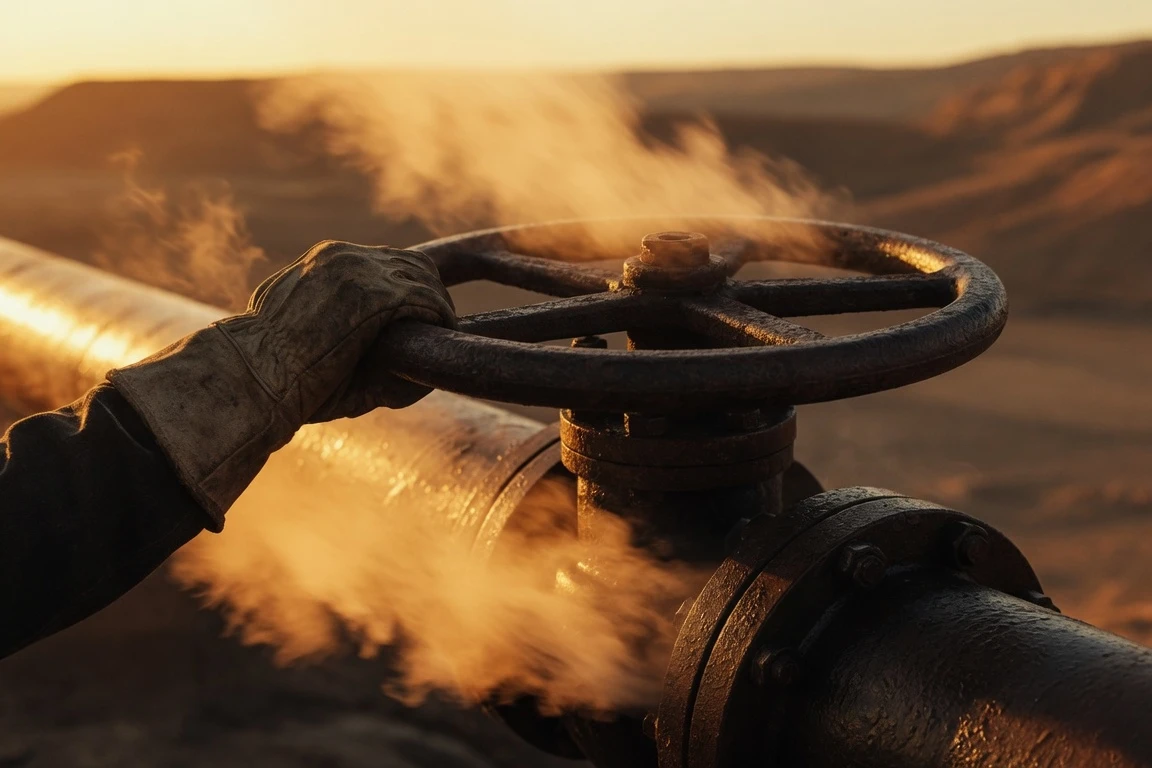
Abu Dhabi’s Fujairah Bet
The UAE is taking a different shortcut. The Habshan-Fujairah pipeline, also known as the Abu Dhabi Crude Oil Pipeline or ADCOP, already links the country’s inland fields to the Gulf of Oman port of Fujairah with a stated capacity of 1.5 to 1.8 million barrels a day, well clear of the strait. ADNOC is now building a second, parallel line that is roughly 50% complete and is being fast-tracked to come online by 2027, doubling Abu Dhabi’s export capacity via Fujairah to about 3.6 million bpd. Abu Dhabi Crown Prince Sheikh Khaled bin Mohamed bin Zayed Al Nahyan ordered the speed-up on 15 May 2026 to “meet rising global energy demand.”
The Fujairah terminal has been hit by Iranian drones in March and April, briefly disrupting oil loading, but the route remains the only meaningful land bridge that can move UAE crude and LNG to open ocean without sailing past Iran. The combined capacity of Habshan-Fujairah and East-West gives the region only 3.5 to 5.5 million bpd of credible bypass volume, per the IEA. The pipeline race detailed by Iraq and UAE fast-tracking bypass pipelines is what that gap looks like in practice.
Iraq Turns North Toward Ceyhan
Iraq has the worst of both worlds. More than 90% of its exports traditionally moved through the Persian Gulf, and the war cut its Hormuz-bound shipments from about 93 million barrels a month before the conflict to 10 million barrels in April, a collapse that took Iraqi production from above 4 million bpd to barely over 1 million bpd. Oil revenues account for roughly 90% of the Iraqi budget, and the World Bank says the sector contributed 53% of real GDP in 2025. That is why Baghdad’s response is to triple the one route it has. The Iraqi cabinet approved a plan on 20 May 2026 to push exports through the Kirkuk-Ceyhan pipeline from 220,000 bpd to 770,000 bpd within two and a half months, per the cabinet statement and Oil Ministry readout.
Even at full tilt, the expanded Ceyhan route would replace only about a quarter of Iraq’s normal southern export volumes. Iraq’s Oil Minister Basim Muhammad Khudhair has warned that export challenges will likely continue until the conflict is resolved. The country is also exploring a separate network of pipelines to Mediterranean ports in Syria and Jordan, a hedging strategy that ties Baghdad to a political corridor nobody has built yet.
Baghdad is not waiting for the Four Seas Initiative to move. The government also authorised a plan to truck crude to neighbouring countries at a rate of 420,000 bpd in three phases, and approved exports through the Syrian Mediterranean ports of Baniyas and Tartus under a contract that covers the transport, storage, and handling of Basra Light, Basra Medium, and Basra Heavy crude grades. State-owned oil marketer SOMO will handle the contract work. These are stopgaps, not long-term solutions, and Iraq’s own oil ministry says none of them gets the country back to pre-war production of more than 4 million bpd.
The strategic logic for Iraq is identical to Saudi Arabia’s 40 years ago: a sovereign pipeline beats a vulnerable strait. Iraq is buying the same insurance 40 years late and at a much higher per-barrel cost.
Pipeline Capacity in the Gulf, as of June 2026
| Pipeline | Country | Capacity | Status |
|---|---|---|---|
| East-West (Petroline) | Saudi Arabia | About 7 million bpd | Restored 12 April 2026 after April attack |
| Habshan-Fujairah (ADCOP) | UAE | 1.5 to 1.8 million bpd | Operating; new pipe under construction |
| New ADNOC West-East | UAE | 1.8 million bpd planned | ~50% complete; online 2027 target |
| Kirkuk-Ceyhan | Iraq | 220,000 bpd current; 770,000 bpd target | Cabinet approval 20 May 2026 |
A Gulf-to-Mediterranean Megaproject
The most ambitious pitch is one the Gulf states did not come up with. A Washington-based think tank called the New Lines Institute has published a policy framework known as the Four Seas Initiative that would link the Persian Gulf, the Caspian Sea, the Mediterranean, and the Black Sea through a new Syria-Turkey transit corridor. The plan envisions up to 4 million barrels of oil a day and 50 billion cubic metres of gas a year flowing to Mediterranean and European markets.
The price tag is up to $10 billion, with funding from Gulf sovereign wealth funds and US development finance, and the institute says Syria could collect $8 billion to $12 billion a year in transit and production revenues. The plan has begun to collect endorsements: U.S. Special Envoy for Syria Thomas Barrack formally revived the Four Seas concept at the Atlantic Council in March 2026, Chevron and ConocoPhillips have signed preliminary agreements, and Saudi Arabia has launched a $2 billion Syria investment fund. The full Four Seas policy framework was published by the institute on 8 June 2026.
The post-Assad stabilization of Syria opens a narrow but historically decisive window to transform the Levant from a theater of energy conflict into a continental energy corridor.
The institute argues the project would deliver European energy sovereignty from Russian and Iranian dependence, American commercial primacy in the Middle East’s most strategically positioned infrastructure, Syrian economic reconstruction underwritten by transit revenues, and a durable geopolitical settlement that rewards alignment with the West, all at once. The political fragility of the post-Assad government is the obvious counterweight, but the institute frames the alternative as a slow drift of Middle East hydrocarbons toward China.
Kuwait, Qatar, and Bahrain Are Stuck
For three Gulf states, none of this is enough. Kuwait, Qatar, and Bahrain have no domestic overland route that can bypass the strait, and Reuters’ Bousso notes they will have to negotiate with neighbours for access to someone else’s pipeline. The strategic damage is heaviest on Qatar, whose LNG exports depend almost entirely on the strait and whose political tensions with the UAE and Saudi Arabia make it a difficult partner in any joint bypass project. A June 2026 Reuters analysis estimated Qatar’s economy could contract by 8.6% this year, after growing 2.8% in 2025, if the closure persists.
The new ADNOC pipeline, ordered online by 2027, is exactly the kind of progress these countries can only watch. Even after ADNOC’s new West-East pipe comes online in 2027 and Kirkuk-Ceyhan hits its 770,000 bpd target, the strait will still be the only exit for most of the region’s crude. Kuwait, according to MEES, is now in talks with neighbours over bypass options, but it is negotiating from the same starting line as Qatar and Bahrain: a country with crude to sell and no land route of its own.
Why Bypasses Don’t Add Up to the Old Flows
The numbers tell a hard story. About 20 million barrels of oil and petroleum products transited the Strait of Hormuz every day in 2025, per the US Energy Information Administration, and even the most aggressive count of bypass capacity tops out at 5.5 million bpd once the East-West and Habshan-Fujairah lines are combined.
The $110 trillion global economy can be taken hostage by a couple of hundred men with guns across a 50-kilometer stretch of strait. It doesn’t make sense at all. We should make alternative routes, alternative options.
That is IEA Executive Director Fatih Birol, and his point is now the operational logic of every pipeline announcement in the Gulf. Iran has spent the spring showing that bypass routes are not safe either: its April attack on a Saudi pumping station cut the East-West line by about 700,000 bpd, and its drone strikes on the Fujairah terminal disrupted crude loading for days. Both attacks are repairable, but both expose the fact that the same country that can close the strait can also reach the pipes that go around it, a point made clear by the documented timeline of the war’s opening weeks.
That is why the IEA’s 3.5 to 5.5 million bpd combined bypass ceiling against a pre-war Hormuz flow of roughly 20 million bpd a day in 2025 is the supply arithmetic the market is working through. Brent crude is back above $100 a barrel even with a fragile ceasefire in place, and the pipeline race in Saudi Arabia, the UAE, and Iraq is the only medium-term answer to the gap. For more on the price side, see why Brent crude has rebounded above $100 a barrel and how China’s crude demand kept prices from spiking.
Frequently Asked Questions
Which Middle East countries have oil pipelines that bypass the Strait of Hormuz?
Saudi Arabia and the UAE are the only two with operating bypass capacity of their own. Saudi’s East-West pipeline, also called the Petroline, links the Abqaiq oilfield to the Red Sea port of Yanbu and was restored to about 7 million barrels a day on 12 April 2026. The UAE’s Habshan-Fujairah pipeline, also known as ADCOP, ships 1.5 to 1.8 million barrels a day from Abu Dhabi’s inland fields to the Gulf of Oman port of Fujairah, and a second line is under construction to bring total capacity to 3.6 million bpd by 2027.
What is the Four Seas Initiative?
The Four Seas Initiative is a policy framework from the Washington, DC-based New Lines Institute, published in full on 8 June 2026, that proposes a Syria-Turkey pipeline corridor linking the Persian Gulf, the Caspian Sea, the Mediterranean, and the Black Sea. The plan envisions transporting up to 4 million barrels of oil a day and 50 billion cubic metres of gas a year to Mediterranean and European markets, at a cost of up to $10 billion, and the institute says Syria could collect $8 billion to $12 billion a year in transit and production revenues.
Why does Iraq’s pipeline expansion matter for global oil supply?
Oil revenues account for roughly 90% of the Iraqi budget, and the World Bank says the sector contributed 53% of real GDP in 2025. Iraq’s exports through the strait collapsed from about 93 million barrels a month before the war to 10 million barrels in April 2026, and production fell from above 4 million barrels a day to barely over 1 million bpd. Tripling the Kirkuk-Ceyhan pipeline to 770,000 bpd would still cover only about a quarter of Iraq’s normal southern export volumes, but it is the only fast route Baghdad has.
Could Iran attack the new bypass pipelines?
It already has. Iran attacked a pumping station on Saudi Arabia’s East-West pipeline in April 2026, cutting throughput by roughly 700,000 barrels a day until repairs were completed, and its drones have hit Fujairah’s crude export terminal, disrupting oil loading. The bypass routes are land-based and theoretically easier to defend than the strait, but the same conflict that closed the waterway has shown it can reach the pipes that go around it.
Why are Kuwait, Qatar, and Bahrain more exposed than the UAE?
Kuwait, Qatar, and Bahrain have no domestic overland route that can bypass the strait, and Reuters energy columnist Ron Bousso notes they will have to negotiate with neighbours for access to someone else’s pipeline. The strategic damage is heaviest on Qatar, whose LNG exports depend almost entirely on the strait and whose political tensions with the UAE and Saudi Arabia make it a difficult partner in any joint bypass project. A June 2026 Reuters analysis estimated Qatar’s economy could contract by 8.6% this year, after growing 2.8% in 2025, if the closure persists.





Spotify Running Mode hits Android and revives its old tempo experiment

Galaxy Tab S12 Ultra Renders Keep the Notch Fans Hate

Novato Spinning Round House Sells With Six Neighbors for $3.3 Million

Crop Tour Finds Indiana and Nebraska Corn Yields Lagging 2025

Best Buy 60th sale brings Android deals back to its roots

American Airlines reverses seatback screen bet years too late

Iran Hormuz Strikes Force Gulf Oil Onto Costlier Paths

Plague Tale Prequel Day One Joins Game Pass Wave 2 as Witcher Exits

NBA 2K27 opens The City to everyone and rewrites career eras

iOS 26.6.1 Patches 29 Flaws as AI Forces Faster Apple Updates

Double Fine Cuts 23 Jobs Weeks After Xbox Independence

Day-One Big Walk Lifts PS Plus August Beyond Recycled AAA

John Hight Exits Wizards After Digital Reckoning Hits

Curtis Mead’s Red Sox Debut Ends With Fractured Wrist

Moesch and Dressel Rewrite Night One at 2026 U.S. Nationals

Red Sox Squander Hot Streak Chance in 4-3 Loss to Athletics

Boutte’s Quiet Camp Takeover Forces Patriots Receiver Choices

Take-Two CEO Pushes Netflix Subs for GTA 6 Extended Look

Halo Campaign Evolved Skulls Meet Death Barriers That Kill the Hunt

Wildlands Free Update Hands Players the Tools They Already Invented
-

 TECHNOLOGY3 years ago
How to Adjust a Bulova Watch Band – An Easy Guide
-

 News3 years ago
Fred Pentland: Athletic Bilbao’s English mentor who changed the essence of Spanish football
-

 FINANCE3 years ago
Tax Planning for Every Season: Guide to Maximizing Your Tax Benefits
-

 Education3 years ago
African Ministers New Education Plan
-

 BUSINESS3 years ago
What is Entrepreneurial Operating System? A Comprehensive Guide to EOS
-

 Education3 years ago
Innovate Your Learning Journey with Technology and Enhance Education
-

 News3 years ago
Russians formally out of World Athletics Championships
-

 BUSINESS3 years ago
Top 9 Most Expensive American Cities to Rent an Apartment