
FINANCE
Oil Bounces Back Above $100 as Hormuz Drain Outruns Deal Hopes

Brent crude closed back above $100 a barrel on Tuesday, after fresh US strikes on Iranian missile launch sites and mine-laying vessels gutted weekend hopes of a diplomatic thaw and dragged traders back to the harder question. Even if a deal lands, can the global energy system rebuild what the last three months of the Strait of Hormuz closure have already drained?
Research firms, central bankers and the world’s largest oil producer are converging on the same answer: probably not in time for summer. HFI Research’s May 18 note on a market past the point of no return and the International Energy Agency’s warning of a July “red zone” both rest on the same data set, and that data set keeps getting worse.
Tuesday’s Bounce, and Why $97 Was the Anomaly
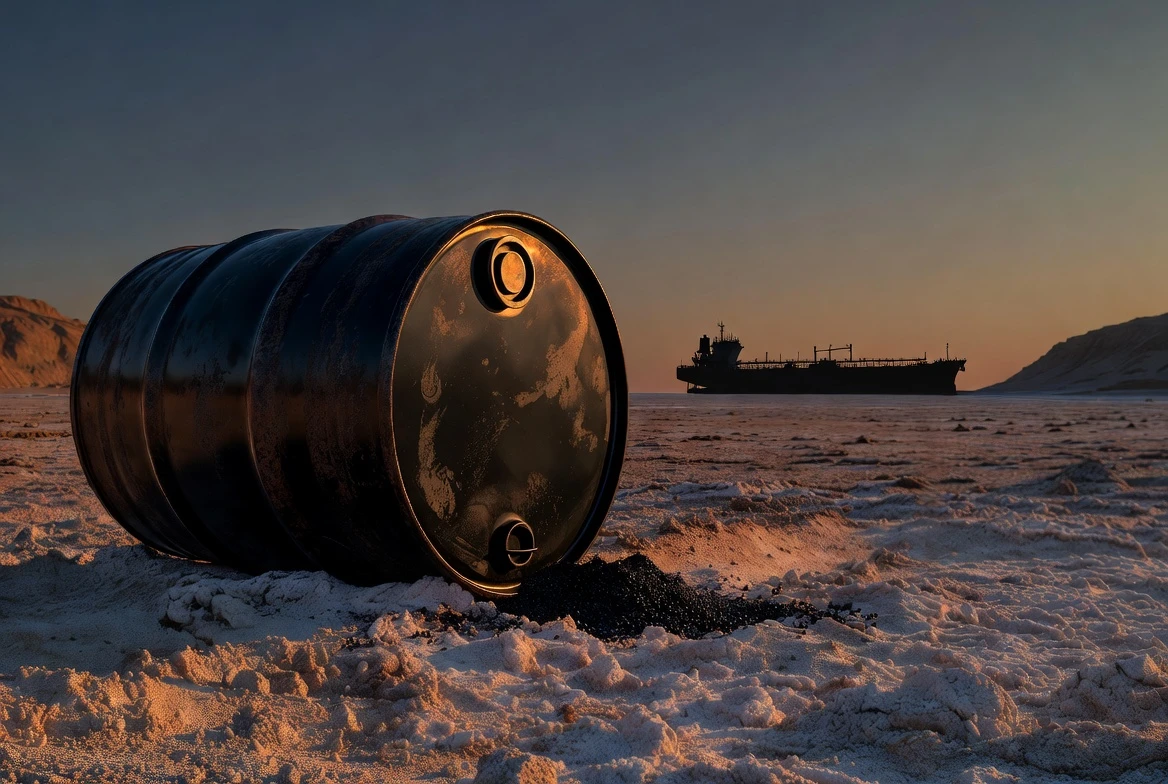
Brent had spent Monday at roughly $97 a barrel, briefly touching a one-month low of $95.95 as headlines suggested a framework deal to extend the ceasefire by two months in exchange for a partial reopening of the Strait of Hormuz. The reopening would have eased a blockade that, before February 28, carried about 20 million barrels of crude a day to global buyers.
That trade unwound overnight. US Central Command confirmed self-defence strikes against southern Iranian targets, Iran’s Revolutionary Guard claimed it had fired on an F-35 and several drones, and the headline framework was suddenly back in the freezer. By Tuesday’s London close, Brent had pushed past the psychological $100 mark again, a level the contract had last cleared in early May before the brief ceasefire compressed the geopolitical risk premium.
The wider arc still points up. Brent traded around $126 at the end of April, fell back as traders priced in a deal, then bounced. Each leg lower has come faster than each leg back up, which is what analysts mean when they talk about the market’s downside being capped by physical reality rather than sentiment.
The Inventory Math Behind the Floor
The reason oil cannot fall and stay low is simple. The world has been using stored barrels to plug a hole in production it cannot otherwise fill, and the storage is running out.
According to JP Morgan’s running supply and demand balances for 2026, the Hormuz disruption stripped 9.1 million barrels per day from global supply in March and 13.7 million in April. Even after record draws from commercial inventories and strategic petroleum reserves, the market still ran a deficit. Demand has cracked, but not fast enough to close the gap.
Three Months, One Direction
JP Morgan’s monthly tally of demand destruction tells the story bluntly. Global oil demand fell by an average of 2.8 million barrels a day in March. April deepened to 4.3 million. May is tracking 5.5 million below the pre-crisis baseline. That is the steepest three-month contraction outside the 2020 pandemic, and it still has not balanced the supply loss from the Gulf.
| Month (2026) | Supply lost vs baseline (m b/d) | Demand destruction (m b/d) | Implied deficit (m b/d) |
|---|---|---|---|
| March | 9.1 | 2.8 | ≈ 6.3 |
| April | 13.7 | 4.3 | ≈ 9.4 |
| May (tracking) | ~14.4 | 5.5 | ≈ 8.9 |
The deficit row is the load-bearing number. Stockpiles plugged about 2 million barrels a day of that gap in May, JP Morgan said, but those releases are scheduled to taper by July and the bank already describes commercial inventories as “critically low.”
The Buffer Has a Floor
HFI Research’s analysis goes further. Of roughly 800 million barrels in the global stockpile that can be physically drawn without pushing pipelines, tankers and refineries into operational stress, the market had already consumed about 35% by late April. The firm pegs the first week of June as the moment that buffer runs thin enough to force a behavioural shift, with nations potentially moving from drawing inventory to hoarding it.
Pump Prices and the Household Bill
The drawdown is invisible to most consumers. The price at the forecourt is not.
The RAC’s daily UK fuel watch tracker put the average price of a litre of unleaded petrol at 159.43p on Tuesday, a level last seen at the outbreak of the conflict in late February. That is 26.6p above the 28 February baseline, or close to £15 added to the cost of filling a 55-litre family car. Diesel has tracked even higher.
The squeeze is about to widen beyond the pump:
- Ofgem’s July dual-fuel cap is forecast to rise by close to 13%, lifting the typical annual household bill by roughly £209 to £1,850, according to Cornwall Insight’s final forecast ahead of Wednesday’s announcement.
- Wholesale gas for July delivery is trading well above the level Ofgem used in its current cap, meaning the regulator is effectively catching up to a market that has already moved.
- Heating oil and commercial diesel contracts for the autumn delivery window are already pricing winter scarcity, with brokers reporting a steepening forward curve.
UK drivers and bill-payers are absorbing the most visible second-order effect of a blockade 5,000 miles away. They are not alone.
Europe’s Gas Cushion Is Thinning Too
HSBC noted in a research client memo this week that European gas storage sits at about 37% of capacity, against a five-year seasonal average closer to 50% for late May. Injection rates, the daily volumes that operators add into salt caverns and depleted fields to prepare for winter, are running below normal.
The bank’s reading is that the wholesale market is not adequately pricing the tightness. “In our view, this seems to reflect market complacency to some degree,” HSBC told clients. “The consequence of this will likely result in accelerated storage injections during the back end of the summer months and with it heightened price volatility.”
Translation: the bill for being late to fill storage is going to land in August and September, exactly when the IEA expects oil to be in its tightest patch. The two cushions Europe relies on, the strategic petroleum drawdown and the underground gas buffer, are thinning at the same time.
Why a Deal No Longer Saves Summer
The dominant trade through April was that any US-Iran framework would collapse the risk premium and pull Brent back into the $80s. That trade still works on the day of an announcement. It does not work for the summer that follows.
It just seems to be this endless loop of Charlie Brown and Lucy with the football. Every single time, it’s, oh, this time is the breakthrough. This time, the energy will flow. And at any one given time, it could be right. But so far, repeatedly, it hasn’t been.
That assessment came from Michael Every, global strategist for economics and markets at Dutch lender Rabobank, in remarks to reporters on Tuesday. His point lines up with JP Morgan’s: even in a blue-sky scenario where flows through Hormuz normalise in coming weeks, the bank’s analysts wrote that the market “will remain tight with inventories critically low.” The reckoning is mechanical, not political. Refilling commercial stocks, restarting shut-in fields, reactivating the Strategic Petroleum Reserve refill schedule and rebuilding diesel and jet fuel inventories all take months, not days.
The contrast with the brief April ceasefire is instructive. Pump prices in the UK rose every single day for 40 consecutive days before the truce delivered the first small dip, then resumed climbing within a fortnight as the strait stayed effectively closed. Households felt the rebound long before the headline traders did.
The July Red Zone and What Aramco Says
The most explicit warning has come from the International Energy Agency’s news room via its executive director. In a Chatham House address last week, Fatih Birol, the agency’s executive director, said the world could hit a “red zone” in July and August by burning materially more oil than countries are producing, a phrase he reserved for periods of extreme market vulnerability with no spare capacity buffer.
The producer side echoes the warning. Saudi Aramco’s chief executive Amin Nasser told the company’s investor communications channel that the oil market will not normalise until 2027 if the disruption persists past mid-June, and that the global system loses roughly 100 million barrels of supply for every week the channel stays shut. Aramco has rerouted as much crude as it can through the East-West Pipeline, lifting Petroline throughput to 7 million barrels a day, but that is well short of the 14.4 million barrels of daily Gulf output the blockade has stranded.
Three Numbers That Frame July
- 1 billion barrels: cumulative supply the world has lost since 28 February, per Aramco’s tally.
- 800 million barrels: the upper bound of stockpile draws the physical system can absorb before refineries and pipelines hit operational stress, per HFI Research.
- 2.8 million barrels a day: the average summer travel demand uplift the IEA expects on top of an already short market.
Run those three together and the July arithmetic is uncomfortable. The buffer is smaller than the loss, demand is about to climb, and the only mechanical fix is the reopening of a strait that just absorbed another round of US strikes.
What the Tape Will Be Telling Us
Watch three signals over the next four weeks. The forward curve for August Brent contracts will show whether traders are pricing the IEA’s red zone or still betting on the breakthrough. The OPEC+ technical committee’s late-June review will reveal whether Saudi Arabia is willing to formally lift its symbolic April output increase into a real one. And the US Department of Energy’s weekly SPR balance will show whether emergency releases continue past their scheduled July taper.
If any one of those flips toward tightness, the $100 floor that just held on Tuesday becomes the new ceiling that breaks in July. If all three flip, the question is no longer whether oil retests $126. It is whether the system has the inventory left to find a top at all.
The peace talks will keep moving the price by the day. The inventory clock will keep moving in one direction.





Iowa Farmer Built Resilience for 16 Years Then Tariffs Hit Hard

HHS Adds FDA Tech and Drugs Deputies to Lock In AI and Review Power

Nvidia Earnings Carry a Built-In Sell-the-News Trap

HP Licenses Huawei Wi-Fi Patents Despite the Entity List

Poland Named in $131B F-15 Deal Echoes Apache Path

Sewer Scavengers Near Penn Station Repeat a Decades-Old NYC Pattern

Second Muni Fatigue Crash Exposes Surface Line Gaps

Chick-fil-A Chicken and Waffles Closes Its 80-Year Loop

Musk Data Centers Leave a Mississippi Family’s Historic Land Empty

OpenAI Data Center Chief Exits as Stargate Strategy Shifts

Double Fine Cuts 23 Jobs Weeks After Xbox Independence

Day-One Big Walk Lifts PS Plus August Beyond Recycled AAA

Curtis Mead’s Red Sox Debut Ends With Fractured Wrist

John Hight Exits Wizards After Digital Reckoning Hits

Red Sox Squander Hot Streak Chance in 4-3 Loss to Athletics

Moesch and Dressel Rewrite Night One at 2026 U.S. Nationals

Boutte’s Quiet Camp Takeover Forces Patriots Receiver Choices

Take-Two CEO Pushes Netflix Subs for GTA 6 Extended Look

Halo Campaign Evolved Skulls Meet Death Barriers That Kill the Hunt

Wildlands Free Update Hands Players the Tools They Already Invented
-

 TECHNOLOGY3 years ago
How to Adjust a Bulova Watch Band – An Easy Guide
-

 News3 years ago
Fred Pentland: Athletic Bilbao’s English mentor who changed the essence of Spanish football
-

 FINANCE3 years ago
Tax Planning for Every Season: Guide to Maximizing Your Tax Benefits
-

 Education3 years ago
African Ministers New Education Plan
-

 BUSINESS3 years ago
What is Entrepreneurial Operating System? A Comprehensive Guide to EOS
-

 Education3 years ago
Innovate Your Learning Journey with Technology and Enhance Education
-

 News3 years ago
Russians formally out of World Athletics Championships
-

 BUSINESS3 years ago
Top 9 Most Expensive American Cities to Rent an Apartment