
BUSINESS
Iran’s Grip on Hormuz Is Becoming a Blueprint for Other Straits
Iran’s hold on the Strait of Hormuz and Trump’s abandoned toll plan are testing legal protections that also cover Gibraltar, Malacca and Taiwan.

More than 500 of the roughly 600 ships stranded in the Strait of Hormuz since February are still stuck there, even after a United Nations evacuation got underway in late June. A container ship trying to leave through the safest available route was struck by a projectile days later. President Trump floated a 20 percent toll on cargo passing through the waterway, then dropped it inside a single day.
Iran and the United States are still fighting over who controls the strait and what ships must pay to use it. Maritime lawyers and shipping analysts say the outcome could set a template for other choke points, from the Strait of Gibraltar to the Taiwan Strait, that the world has always assumed were free to sail through.
A Rescue Mission Stalls Off the Coast of Oman
The International Maritime Organization (IMO), a United Nations agency, launched an evacuation plan in late June for the more than 600 vessels and roughly 11,000 seafarers stranded in the Gulf since the U.S. and Israel attacked Iran on February 28. Ships were routed along Oman’s coastline on the southern side of the strait rather than past Iran’s shore to the north.
“Over 100 ships out of the 600 plus that were in the area … managed to get out,” said John Canias, a former seafarer who now works as a maritime operations coordinator with the International Transport Workers Federation and took part in the evacuation talks. The week before, crossings had climbed to 125, up from 33 the week before that, according to Lloyd’s List Intelligence, a marine data and analysis firm.
Then a Singapore-flagged container ship called the Ever Lovely, operated by Evergreen Marine, was struck by a suspected drone roughly 7.5 nautical miles off Oman’s port of Dahit. The IMO paused the whole operation to demand fresh safety guarantees. Iran’s Revolutionary Guard did not claim the strike but insisted, through state broadcaster IRIB, that only Tehran could set the routes ships use. The Persian Gulf Strait Authority, a body Iran created on its own to administer the waterway, warned separately that any ship using a route it had not approved would lose its guarantee of safe passage.
This is almost like a Groundhog Day, right? There is a potential opening and there isn’t.
Canias said that after the attack. His frustration captured a pattern that has repeated since the ceasefire: a window opens, ships start moving, then a single strike slams it shut again. The IMO’s own running account of the Strait of Hormuz evacuation shows the agency has now had to pause and restart the operation multiple times since March, with roughly 20,000 seafarers, port workers and offshore crews across the wider region still affected.
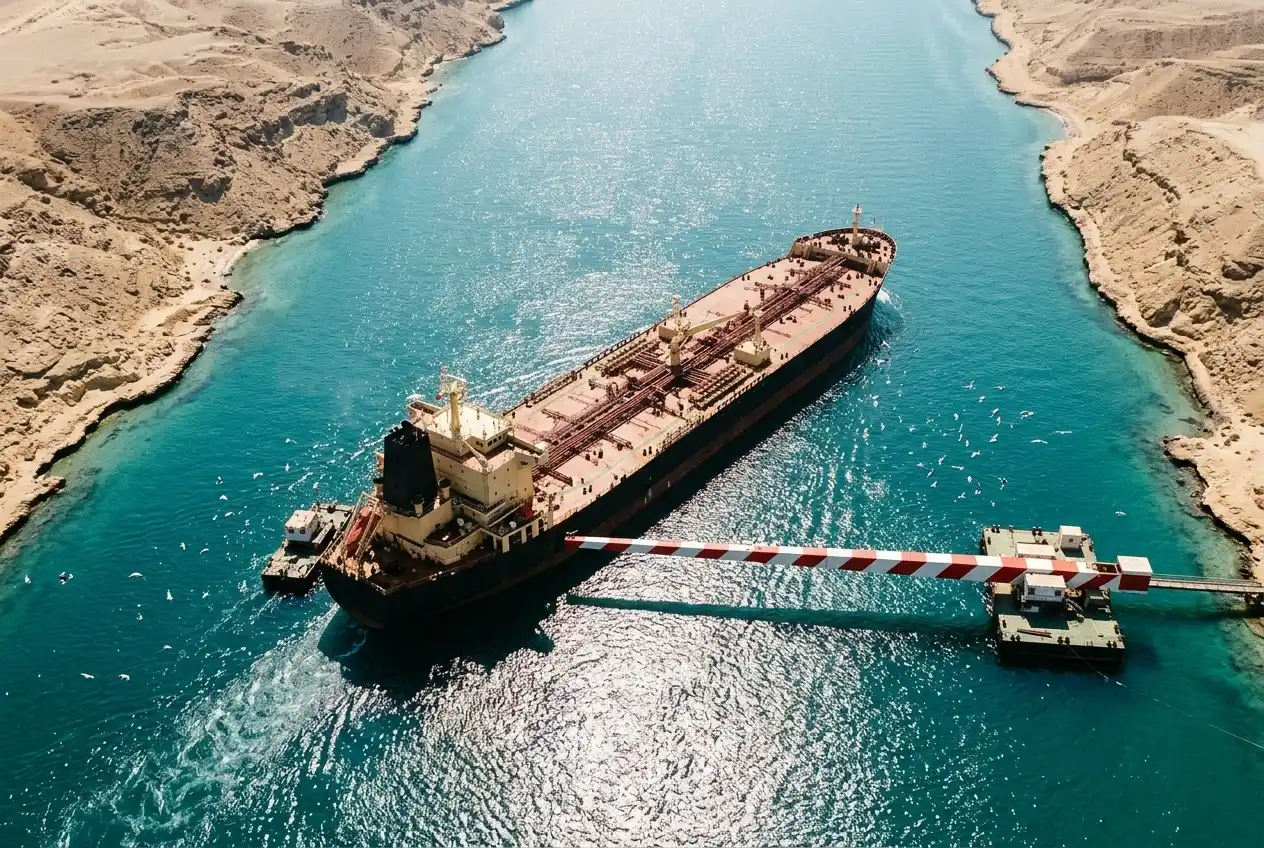
Washington’s Toll Plan Collapses in a Day
On July 13, with attacks between the two countries resuming for a third straight night, Trump announced the U.S. Navy would reinstate its blockade of Iranian ports and declared America the guardian of the strait. “The U.S.A. will be, from this point forward, known as ‘THE GUARDIAN OF THE HORMUZ STRAIT,’” he wrote on Truth Social, adding that the U.S. would be “reimbursed, at the rate of 20% on all cargo shipped.”
That directly contradicted his own administration’s position. Secretary of State Marco Rubio had said in June that “no country is allowed to charge tolls or fees on an international waterway,” calling it settled international law. The IMO’s governing Council made the same point days after Trump’s post, formally reaffirming that passage through the strait must stay free of tolls under the IMO Convention.
Iran’s foreign minister, Abbas Araghchi, seized on the opening. “POTUS is absolutely right,” he wrote online. “Whoever provides secure and safe passage of commercial vessels through the Strait of Hormuz should be compensated for this service.” He added that Trump’s 20 percent figure was too high but did not reject the idea itself. Brazilian President Luiz Inacio Lula da Silva was blunter, telling an event in Sao Paulo that charging ship owners for passage “used to be considered piracy.”
Trump reversed course the next day, saying he would replace the “20% United States Reimbursement Fee” with trade and investment pledges from Gulf states instead. Legal scholars had already lined up against the plan. Todd Huntley, director of the National Security Law Program at Georgetown University and a retired Navy lawyer, has noted that the U.S. Navy itself was built up in the years after the Revolution specifically to guarantee that American ships could sail without paying anyone for passage. Frederick C. Leiner, a historian who wrote a book on the wars the young U.S. fought against Barbary pirates demanding tribute from merchant ships, told PolitiFact he had never heard of a plan quite like Trump’s. “I’ve never heard of making what is essentially a charge of insurance for that protection,” he said. Rising gas prices tied to the standoff have also become a domestic political problem heading into the midterms, a dynamic bettors on prediction markets are already pricing into gas cost forecasts.
The last two months break down like this:
- February 28: The U.S. and Israel launch strikes on Iran; Tehran effectively closes the Strait of Hormuz.
- June 17: Trump and Iranian President Masoud Pezeshkian sign a 14-point memorandum of understanding to end the war and reopen the strait.
- June 18: U.S. Central Command lifts the naval blockade of Iranian ports; the first commercial transits resume.
- Late June: The IMO launches its evacuation plan for the roughly 600 stranded ships and 11,000 seafarers.
- June 25: The Ever Lovely is struck near Oman’s coast; the IMO pauses the evacuation.
- July 13: Trump announces a reinstated blockade and a 20 percent cargo toll, calling the U.S. the strait’s guardian.
- July 14: Trump drops the toll, offering Gulf investment deals instead, as the blockade takes effect.
Read as a sequence, the arc is less a diplomatic breakthrough than a series of near misses, each one collapsing before it could hold.
What Does a Transit Through Hormuz Cost Now?
Insurance now costs more than the risk of losing a ship outright would have before the war. War risk premiums for tankers using the strait have surged from about 0.25 percent of a vessel’s value before the war to between 3 and 10 percent today, according to Marcus Baker, global head of marine, cargo and logistics at the insurance broker Marsh. That turns a roughly $250,000 charge on a $100 million tanker into one running from $3 million to $10 million for a single crossing.
Baker described the market as being on “a roller coaster mirroring the development of the price of oil,” spiking with each round of fighting and easing only briefly when a ceasefire holds. The pricing mechanism itself runs through the Joint War Committee, a group of London underwriters who classify regions as high risk and trigger blanket repricing across the industry. Even at the height of Houthi attacks on Red Sea shipping in 2024, that committee’s war risk premiums rarely climbed past 1 percent of a vessel’s hull value, far below what Hormuz commands now.
Some of that cost is starting to fall on governments rather than private insurers, since Washington has begun backstopping coverage for ships willing to risk the crossing. A World Economic Forum analysis of the insurance market’s strain put the potential cost of this kind of state intervention, if it spreads to other flashpoints, at between $0.6 trillion and $5.7 trillion in lost global growth. Gulf oil producers are already routing around the risk where they can. The 1.5 million barrel per day Habshan to Fujairah pipeline lets Abu Dhabi crude bypass the strait entirely, part of a wider shift in regional infrastructure that a pipeline buildout skirting the Hormuz chokepoint is accelerating across the Gulf. Airlines are absorbing the cost differently. United Airlines still posted stronger than expected earnings this quarter despite what the carrier described as a six billion dollar hit from higher fuel costs, a sign of how far the strait’s troubles are reaching into unrelated balance sheets.
Straits That Have Rules, and the One That Doesn’t
Part of what makes Hormuz combustible is that it never had a rulebook built for exactly this situation. Nitya Labh, a fellow in the International Security Program at Chatham House, a London based think tank, said other contested waterways were designed with conflict in mind. “The Turkish Straits are managed by something called the Montreux Convention, which was specifically designed to protect those waterways during conflicts,” she said. The Strait of Malacca, she added, is kept stable through standing agreements among the Southeast Asian states that border it.
Hormuz has neither. The main legal backstop, the United Nations Convention on the Law of the Sea (UNCLOS), guarantees a general right of transit passage through international straits. Neither Iran nor the United States has ratified it. “The Strait of Hormuz is one of many that didn’t have as many insurance and diplomatic mechanisms built in,” Labh said.
| Waterway | Governing Mechanism | Current Exposure |
|---|---|---|
| Strait of Hormuz | General UNCLOS transit passage only; not ratified by Iran or the U.S. | Iran runs its own routing authority; two rival corridors in active use |
| Turkish Straits (Bosphorus/Dardanelles) | Montreux Convention, 1936, written specifically for wartime conditions | Holding, per Chatham House |
| Strait of Malacca | Cooperative agreements among Malaysia, Indonesia and Singapore | Stable, actively managed by littoral states |
| Strait of Gibraltar | General UNCLOS transit passage only | Flagged by legal experts as vulnerable to a Hormuz-style claim |
| Taiwan Strait | General UNCLOS transit passage only | Flagged by maritime intelligence analysts as a future flashpoint |
| Arctic Northern Sea Route | General UNCLOS transit passage only | Flagged as a potential Russian leverage point |
Labh pointed to Yemen’s Houthis, who attacked more than 190 commercial ships in the Red Sea a couple of years ago, as proof that treaties do not restrain determined non-state actors any more than they restrain a government like Iran’s. “I think the world is coming to terms with the fact that this international order, these trading rules, these maritime laws didn’t necessarily deliver more security the way that they were supposed to,” she said.
Four Waterways Watching Hormuz Closely
Gregory Brew, a senior analyst at Eurasia Group, a global political risk research and consulting firm, said Tehran believes it holds the upper hand and is trying to lock in a new status quo. “Any ships coming and going have to coordinate with them, have to get clearance from them,” he said. “And they’re pushing back against any effort by the United States to undermine that position.”
Huntley said recognizing that kind of control sets a template other governments could copy against their own chokepoints. Ami Daniel, chief executive of Windward, a maritime intelligence group, laid out how directly that could translate elsewhere.
- Strait of Gibraltar: Huntley said the U.K. or Morocco could try to claim control the way Iran has over Hormuz.
- Strait of Malacca: Huntley named Malaysia as a country that could assert similar authority over the main shipping channel between the Pacific and Indian Oceans.
- Arctic Northern Sea Route: Daniel said Russia could tell the U.S. it will not let American ships through the Northern Passage.
- Taiwan Strait: Daniel said China could bar American businesses from shipping through the strait entirely.
Countries with unilateral control could also use a waterway as a weapon in an unrelated dispute, Daniel said, turning a shipping lane into leverage that has nothing to do with the cargo passing through it.
The 14-point memorandum Trump and Pezeshkian signed in June gave negotiators 60 days to settle the strait’s long-term administration. That window runs out in mid-August, and the argument over who actually owns Hormuz is no closer to settled than it was the day the ceasefire was signed.
Frequently Asked Questions
Is the Strait of Hormuz open right now?
It is technically open but far from normal. Traffic through the strait has repeatedly slowed to a trickle each time fighting resumes, and insurers describe it as navigable but not stable enough to justify normal shipping volumes or pricing.
Why can’t a country legally charge a toll to use the strait?
The United Nations Convention on the Law of the Sea guarantees a right of transit passage through international straits, free of customs duties or fees, which the IMO’s governing Council has formally reaffirmed applies to Hormuz. Neither Iran nor the U.S. has ratified that treaty, which is part of why both have tested the boundaries of that rule anyway.
How much of the world’s oil moves through the Strait of Hormuz?
Before the war, roughly a fifth of the world’s oil and gas passed through the strait, including more than 40 percent of China’s crude oil imports, according to World Economic Forum analysis, making it the single most consequential chokepoint in global energy trade.
What is the Montreux Convention and why doesn’t Hormuz have something similar?
The Montreux Convention is a 1936 treaty that gives Turkey specific authority to manage naval and commercial passage through the Bosphorus and Dardanelles during wartime. Hormuz has no equivalent agreement among Iran, Oman and other regional states, which is why control of it has fallen to whoever can enforce it militarily.
Are seafarers still trapped in the Gulf?
Yes. Tens of thousands of seafarers, port workers and offshore crews remain affected across the region, and the IMO has repeatedly had to pause its own evacuation plan after new attacks on vessels, most recently the strike on the Ever Lovely.


Citizens Bank Exits Private Prisons Right Into a Debanking Fight

FAA Restores Boeing’s Power to Self-Certify 737 Max and 787 Jets

Fairlife’s Ransomware Shutdown Hits a Milk Brand With No Spare Capacity

Taylor Farms Lettuce Recall Exposes a Pattern of Repeat Outbreaks

NHL’s Monday Matinee Push Puts Capitals Fans on the Clock

Iran’s Grip on Hormuz Is Becoming a Blueprint for Other Straits

Apple Watch’s New Siri AI Finally Works, and Google Built Its Brain

Kid Safety Phones Turn Parental Fear Into a Subscription Business

ZA/UM Lays Off 32 Staff as Zero Parades Wins Reviews, Not Players

SpaceX Delays Starship Flight 13 to July 20 After Raptor Failures

Halo Studios Reverses PS Plus for Halo: Campaign Evolved on PS5

Black Ops 1 and 2 PS5 Ports: $40 Price Tag Has Fans Uneasy

Matt Brown Dismisses Rousey and Paul’s MVP MMA Ratings Win Over UFC

Star Wars: Galactic Racer Is a Roguelite Racer With a Podracing Skin

Julius Randle Traded to Nets as Wolves Reclaim Cap Space for Dosunmu

Sega’s $49.99 Sonic Classic and Modern Bundles Hit Switch in October

Colombia Edge DR Congo as Muñoz Books World Cup Knockout Place

Warriors Take Yaxel Lendeborg, the Oldest Pick in the 2026 NBA Draft

Douze Dixièmes Closes Five Months After MIO: Memories in Orbit

Warhammer Horus Heresy Super-Heavy Tanks Share a Plastic Chassis
-

 TECHNOLOGY3 years ago
How to Adjust a Bulova Watch Band – An Easy Guide
-

 News3 years ago
Fred Pentland: Athletic Bilbao’s English mentor who changed the essence of Spanish football
-

 FINANCE3 years ago
Tax Planning for Every Season: Guide to Maximizing Your Tax Benefits
-

 Education3 years ago
African Ministers New Education Plan
-

 BUSINESS3 years ago
What is Entrepreneurial Operating System? A Comprehensive Guide to EOS
-

 Education3 years ago
Innovate Your Learning Journey with Technology and Enhance Education
-

 News3 years ago
Russians formally out of World Athletics Championships
-

 BUSINESS3 years ago
Top 9 Most Expensive American Cities to Rent an Apartment