
BUSINESS
FAA Restores Boeing’s Power to Self-Certify 737 Max and 787 Jets
Boeing can certify its own 737 Max and 787 jets again from July 20, clearing a paperwork bottleneck as production climbs toward 47 planes a month.

Boeing will start certifying its own jets as airworthy again on Monday, the Federal Aviation Administration said Friday, ending a shared inspection system that lasted barely ten months. The decision covers every new 737 Max and 787 Dreamliner rolling off Boeing’s lines, restoring sign-off power the agency had been returning to the company in stages since last September.
Coverage on Friday leaned on the phrase Boeing has wanted attached to its name for years: a vote of confidence. The company’s own production numbers point to something more mechanical. The paperwork queue that gated how fast finished jets could leave the factory is gone, and it disappears just as Boeing pushes its assembly lines toward the fastest output rate in years.
FAA Hands Boeing Back the Pen on Its Own Jets
Starting Monday, July 20, 2026, Boeing’s own certification staff, not FAA inspectors, will sign the airworthiness certificate on every new Max and Dreamliner before it goes to a customer. That is the FAA’s own account of a decision effective Monday, and it closes out an arrangement in place since September in which Boeing and the agency alternated weeks on the job.
The mechanism behind it is called Organization Designation Authorization, or ODA. It lets an approved company perform certification work FAA staff would otherwise do, including the final airworthiness sign-off. Boeing’s ODA unit is, in the agency’s own description, an independent group inside the company that acts on the FAA’s behalf.
“Safety drives everything we do,” FAA Administrator Bryan Bedford said, adding that the step was possible only because regulators are confident it can be done without compromising oversight. He said the agency’s inspectors will keep watching Boeing’s factories closely, but will spend more of that time hunting for defects upstream, before a plane ever reaches the delivery line, rather than duplicating a check at the very end.
Boeing, for its part, kept its statement narrow. “Boeing will continue to work under the oversight of the FAA in building safe, high-quality commercial airplanes that comply with all airworthiness certification requirements,” the company said. The FAA’s own tally, in a statement carried by Reuters, said it had logged eight months of matching inspection findings between its inspectors and Boeing’s before making the call.
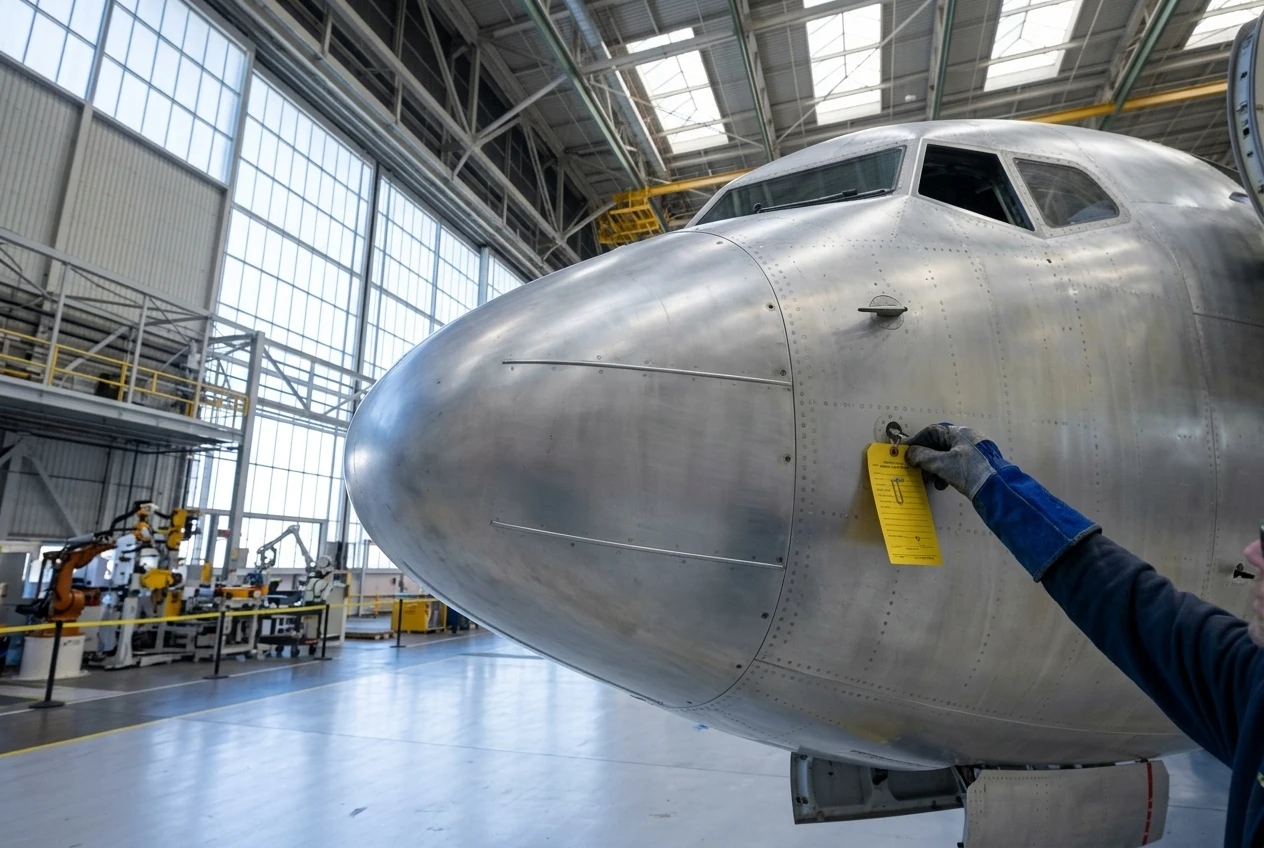
The Ramp to Rate 47 Needed This Signature
Boeing’s 737 line has been climbing for two years under a production ceiling the FAA imposed after a door plug blew off an Alaska Airlines Max 9 in midair in January 2024. That cap started at 38 jets a month, rose to 42 in October 2025, and has reached 47 this summer.
CEO Kelly Ortberg told investors at a Bernstein conference in May that Boeing had passed the capstone review for rate 47, the final regulatory checkpoint before running the line at that pace. He said the company still had stabilization work ahead, and separately laid out further ambitions: a rate of 52 a month next, and eventually 63. Boeing’s own quarterly filing backs up the trajectory, noting the company is about 35 undelivered Max 7 and Max 10 jets deep in inventory as of March, with a fourth 737 line due to open in Everett, Washington, later this year.
Two separate industry trackers describe a related shift most Friday coverage skipped: in March, the FAA is said to have quietly swapped its old hard production ceiling for a performance-based model built on tracking metrics like unfinished “traveled work” and “quality escapes,” the defects that slip past internal checks. The FAA’s own July statement backs the general shape of that account, saying its ongoing oversight will keep watching Boeing’s safety management system rather than a fixed number.
Put those two threads together and Friday’s decision looks less like a symbolic gesture and more like clearing a mechanical constraint. A production line running at 47 jets a month, heading toward 52 and then 63, cannot keep pace if every other week its finished aircraft sit waiting for a rotating FAA signature.
| Period | Who Signed the Certificate | What Triggered the Change |
|---|---|---|
| Before 2019 | Boeing’s ODA unit, broad delegation | Routine authority under the FAA’s 2005 delegation rule |
| 2019 to September 2025 | FAA inspectors only; 787 added in 2022 | Second fatal Max crash, then Dreamliner quality issues |
| September 2025 to July 2026 | Alternating weeks, Boeing and FAA | ODA renewed for three years from June 2025 |
| From July 20, 2026 | Boeing’s ODA unit, full authority again | Eight months of matching inspection findings |
The table shows a slow walk back toward the pre-2019 arrangement, not a single reversal. Each stage added a condition the earlier one didn’t have.
Southwest’s Grounded Jets Show What’s at Stake
The clearest picture of what a certification bottleneck costs sits on the tarmac at Moses Lake, Washington. Southwest Airlines has ordered 258 Max 7 jets and is still flying 737-700s with an average fleet age of about two decades while it waits.
Reporting this month found dozens of Max 7 jets stored at Moses Lake, built and waiting, because the variant itself still needs FAA type certification, a separate process from the ticketing authority returning to Boeing this week. That distinction matters. Friday’s decision does not touch type certification, which stays with the FAA alone. But it shows the same shape of problem playing out twice: finished airplanes, parked, waiting on federal paperwork before an airline can put them to work.
- Sign-off moves in-house – Boeing’s ODA staff, not FAA inspectors, issue the certificate on every new Max and Dreamliner.
- Inspectors move upstream – FAA staff shift toward assembly-stage audits instead of the final delivery check.
- The weekly rotation ends – the alternating arrangement that began last September stops automatically.
- The production ceiling stays flexible – output now moves with quality metrics rather than a fixed monthly number.
That does not change the math for Southwest, which still needs a separate FAA type certificate before the Max 7 can carry a single passenger.
How Boeing Lost the Pen in the First Place
The FAA has delegated some certification work to manufacturers for decades, but the modern version of that system, ODA, dates to a 2005 rule change. A 2015 report from the Department of Transportation’s inspector general found the delegation model had grown so wide that one manufacturer had approved about 90% of its own design decisions.
Boeing began developing the 737 Max in 2011 to answer a more fuel-efficient Airbus model, and marketed it as a minor update that would not require extra pilot training. A flight-control system called MCAS, added to compensate for the plane’s repositioned engines, was left out of manuals most pilots never saw. It drove both a Lion Air jet into the sea off Indonesia in October 2018 and an Ethiopian Airlines jet into the ground months later, killing 346 people combined.
The FAA stripped Boeing’s authority to certify Max jets after the second crash in 2019. It did the same for the 787 Dreamliner in 2022, citing separate production quality problems. From then until last September, every airworthiness certificate on either program carried an FAA signature alone. The agency’s own record shows it renewed Boeing’s delegation authority through 2028 in May 2025, the foundation the September restart and this week’s full return both rest on.
Is This the Same System That Missed MCAS?
Not exactly. The legal authority is the same ODA program that existed before 2019, but the FAA says it is watching differently this time, tracking Boeing’s safety management system and production data rather than taking a manufacturer’s word for it. Whether that oversight is enough is where regulators, watchdogs and Boeing’s own numbers pull in different directions.
One manufacturer approved about 90 percent of the design decisions for all of its own aircraft.
That finding, from the 2015 inspector general report, is the historical shadow hanging over every version of this story. Here is where the current disagreement actually sits.
- The FAA’s position: Bedford points to eight months of matching findings between Boeing and federal inspectors as evidence the company’s internal checks can be trusted again.
- The watchdog view: Project On Government Oversight, a nonprofit that has tracked the ODA program since before the Max crashes, has documented over a decade of warnings that delegation without adequate federal staffing let quality problems slide.
- The families’ view: attorneys for relatives of the crash victims argue operational trust and legal accountability are separate questions, and that Boeing has not answered for the underlying conduct regardless of what changes on the factory floor.
Both readings can be true at once. The FAA’s data-driven case for restoring authority does not resolve whether the same structural gap, thin agency staffing relative to what it is asked to oversee, has actually closed.
The Criminal Case Still Hasn’t Closed
Boeing’s operational rehabilitation has moved faster than its legal one. The Justice Department charged the company in 2021 with conspiring to defraud the FAA over the MCAS system, then struck a deferred prosecution deal. That fell apart in 2024 after the Alaska Airlines door-plug incident, and a federal judge’s rejection of Boeing’s plea deal in December of that year sent the case back to square one.
A 2025 non-prosecution agreement followed, requiring Boeing to pay $1.1 billion and submit to compliance monitoring. Families of the victims appealed, and in May 2026 the Fifth Circuit declined to rehear the 737 Max fraud case. Attorney Paul Cassell, who represents some of the families, called it, in his words, “this important case,” one he separately described as the deadliest corporate crime in US history that he believes warranted full Fifth Circuit review.
So Boeing enters the week with its manufacturing credibility restored on paper and its criminal case exhausted on appeal, two separate ledgers that happen to close in the same year. The 737 Max 7, the jet Southwest is still waiting on, is expected to clear its own FAA type certification before July is out.
Frequently Asked Questions
What Is the FAA’s ODA Program, Exactly?
Organization Designation Authorization lets the FAA delegate specific certification tasks, including airworthiness and production sign-offs, to qualified staff inside a company rather than performing every check itself. It covers far more of the industry than Boeing alone, though Boeing’s version has drawn the most scrutiny since 2019 because of how much authority it once held.
Does This Change Anything for Passengers Flying Today?
No. The decision affects how new jets are certified before delivery to airlines, not aircraft already in service. Existing 737 Max and 787 fleets fly under the same airworthiness directives and maintenance rules as before Friday’s announcement.
When Will the 737 Max 7 and Max 10 Actually Be Certified?
Industry reporting points to the Max 7 clearing FAA type certification before the end of July 2026, with the larger Max 10 expected by year’s end. Both processes are separate from the airworthiness ticketing authority restored this week and remain entirely in FAA hands.
Can the FAA Take This Authority Away Again?
Yes. It has happened twice, in 2019 for the Max and in 2022 for the 787. Boeing’s delegation runs through a renewal cycle, last extended for three years starting in mid-2025, and the FAA can narrow or revoke it if inspection findings stop matching or new quality problems surface.
Is the Criminal Case Against Boeing Over the Max Crashes Finished?
Legally, mostly yes. A 2025 non-prosecution agreement resolved the Justice Department’s fraud case, and the Fifth Circuit declined in May 2026 to let victims’ families reopen it. The families’ attorneys have said they intend to keep the record from the fight alive for future advocacy even though the case itself is closed.


Walmart’s $50 Million Opioid Settlement Closes Case Without Admission

California Sues Over $120 Million Morro Bay Wind Lease Buyout

Gilead Bixlenvo FDA Nod Opens Single Pill Path for Complex HIV Cases

Meta’s $18B Kids Deal Forever Shields Data Used to Spot Under-13s

Lettuce Outbreak Drove Record Cyclospora Spike Across 20 States

Amazon Shaves $20 Off M6 Mac Mini Before It Even Ships

SpaceX Louisiana Port Tests Debt Markets on Orbital AI Scale

Microsoft High Lifts Indexes as Small Caps Crack Support

Apple Replays 2015 Saturday Midnight Preorder for iPhone 18 Pro

Updated COVID Shots Clear FDA but Access Friction Hits High-Risk Groups

Take-Two CEO Pushes Netflix Subs for GTA 6 Extended Look

Halo Campaign Evolved Skulls Meet Death Barriers That Kill the Hunt

Wildlands Free Update Hands Players the Tools They Already Invented

Destiny 2 Fans Unlock Vaulted Maps After Live Service Ends

Quake Gets 19 Free Maps From MachineGames Quake Club

Quordle Monday Delivers Gavel Crush Speed Ethos Cleanly

Stripe Bid Shows PayPal Moat Cracked After Years of Slide

Tyson’s Five-Year Utah Plant Falls to Cattle Shortage Reckoning

Silver Lake Workday Talks Signal Private Floor for Software

Kennedy Lewis Takes Majority Control of The Greenbrier in $500M Deal
-

 TECHNOLOGY3 years ago
How to Adjust a Bulova Watch Band – An Easy Guide
-

 News3 years ago
Fred Pentland: Athletic Bilbao’s English mentor who changed the essence of Spanish football
-

 FINANCE3 years ago
Tax Planning for Every Season: Guide to Maximizing Your Tax Benefits
-

 Education3 years ago
African Ministers New Education Plan
-

 BUSINESS3 years ago
What is Entrepreneurial Operating System? A Comprehensive Guide to EOS
-

 Education3 years ago
Innovate Your Learning Journey with Technology and Enhance Education
-

 News3 years ago
Russians formally out of World Athletics Championships
-

 BUSINESS3 years ago
Top 9 Most Expensive American Cities to Rent an Apartment