
News
Kid Safety Phones Turn Parental Fear Into a Subscription Business
Bark, Gabb, Pinwheel and rivals sell kid phones bundled with required monthly plans, a subscription business booming as states ban phones in schools.

Pinwheel launched a $68 Wi-Fi landline for kids on July 14, betting that children raised on smartphones still want a phone that just rings. The device, called Pinwheel Home, joins a fast-growing lineup of subscription hardware built to give parents a phone they can approve, track and bill by the month.
Every major brand in that lineup pairs its hardware with a required monthly plan. That business is scaling up at the exact moment dozens of states are banning phones from classrooms altogether. Families now pay monthly to keep kids reachable during the very hours lawmakers are trying to make them unreachable.
A $68 Landline Bets Kids Still Want to Talk
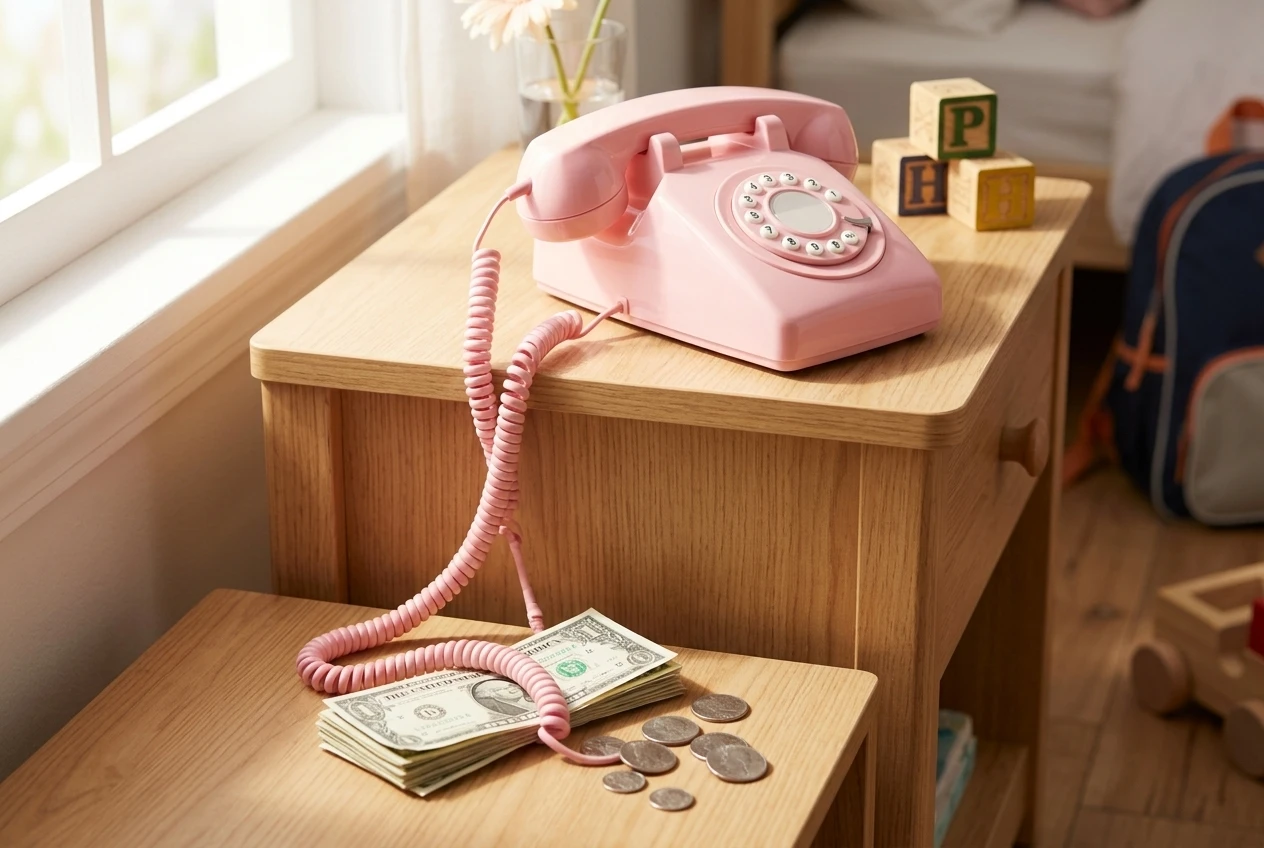
Pinwheel announced Pinwheel Home on Tuesday, positioning it for kids ages 5 to 10 who are not ready for a phone of their own yet. Pinwheel’s announcement gives kids a simple, safe way to call friends and family without a screen.
The device comes in two versions. The Spark costs $68 and comes in white, black, blue and purple. The Classic costs $79, with a retro-style handset and customizable stickers in pink, black and white. Both connect over Wi-Fi instead of a phone jack, and both run through Pinwheel’s existing Caregiver Portal, the same dashboard parents already use for the company’s watches and smartphones.
Calls between two Pinwheel Home units are free through a service called Pinwheel Circle. Reaching a regular phone number costs extra: $6.99 a month covers up to five approved contacts, and $9.99 a month covers unlimited calling. Every plan includes 911 access, and parents can block unknown callers, set calling schedules and cap call length from the portal.
As a dad with four young children myself, I’ve seen firsthand the way kids lack some of the verbal conversation skills our generation learned much earlier.
Dane Witbeck, Pinwheel’s founder and chief executive, said the goal was to get kids talking to each other without borrowing a parent’s phone.
The launch materials cite a federal advisory from the U.S. Department of Health and Human Services warning that by adolescence, children may spend more waking hours on screens than they do sleeping or attending school. Pinwheel also points to its own numbers: 1 in 4 children now own a smartphone by age 8, and 78% of U.S. households have gone cellphone only, with no landline at all.
States Are Emptying Backpacks of Phones
The timing lines up with a wave of state legislation. At least 26 states now enforce full bell-to-bell bans on personal devices for the entire school day, according to a map tracking 2026 school phone bans. Dozens more let districts set their own rules or restrict phones only during class time.
Public opinion has shifted alongside the laws. Newsweek reported that 75% of U.S. adults now support banning middle and high school students from using cellphones during class, up from 68% the previous fall, citing Pew Research Center survey data. Just 19% oppose the idea.
Governors from both parties pushed the bans through. Texas Governor Greg Abbott, a Republican, signed his state’s ban last August, saying, “One thing that we’re very concerned about with students is what’s happening to them by exposure, not only to use of a cellphone, but things like social media.” New York Governor Kathy Hochul, a Democrat, described touring the state and hearing similar concerns in a year-end review of phone-free classrooms: “I didn’t hear anything good.”
The rules are also forcing schools to rethink how they reach parents once phones disappear from pockets during the day. Some districts have leaned on dedicated communication platforms instead, like District 51’s ParentSquare rollout for family messaging, to keep parents looped in without routing everything through a student’s phone.
Some of the biggest state laws are only now taking hold. California’s Phone-Free Schools Act, signed by Governor Gavin Newsom, took effect July 1, and Georgia’s Distraction-Free Education Act followed the same month.
What Seven Kid Phones Actually Cost
Every device in the category asks for money twice: once for the hardware, then again every month it stays connected. Here is what that looks like across the market’s best-known names, plus Pinwheel’s new landline.
| Device | Upfront Price | Monthly Plan | Est. Year-One Cost | What’s Off-Limits |
|---|---|---|---|---|
| Bark Phone | $240 | From $29 | ~$588 | Open browser and social media until parents unlock them |
| Gabb | From $159.99 | From $24.99 | ~$460 | Browser, app store and social media, permanently |
| Pinwheel Phone | From $119 | From $14.99 (portal only) | ~$299 plus carrier cost | Browser and social media unless a parent approves an app |
| Pinwheel Home | $68 to $79 | $6.99 to $9.99 | ~$152 to $199 | Texting, apps and any screen at all |
| Teracube Thrive | $99 | From $35 | ~$519 | Unapproved apps and unfiltered browsing |
| Ooma MyPhone | $99.99 | From $7.99 | ~$196 | Apps, browsing, texting and social media entirely |
| Tin Can | $100 | Free or $9.99 | $100 to ~$220 | Everything except calls to approved numbers |
The spread runs wide, from Ooma’s roughly $196 first year to Bark’s nearly $600. Every figure in that table assumes the plan stays active for all 12 months, since none of these companies sell the hardware with lifetime service included.
The Upgrade Funnel Behind the Safety Pitch
Bark makes its reasoning explicit in its own buying guide for parents, arguing that an overly locked-down phone “can’t keep up with the ever changing needs of an average childhood.” The pitch is to sell one phone with plans that expand as a child ages, rather than a device a family outgrows and replaces.
Pinwheel builds a similar funnel with hardware instead of software tiers. Home, the smartwatch and the smartphone all run through the same Caregiver Portal, and the company has said future updates will let a child keep one phone number across all three as they age up. A family that starts with a $68 landline can move to a $160 smartwatch, then a phone, without ever leaving Pinwheel’s dashboard.
Gabb frames its lineup the same way. The company was founded in 2018 by Stephen Dalby, a father of eight and former teacher, and built what it calls a “tech in steps” model, layering optional add-ons like Gabb Music onto a kid-only phone aimed at families with children roughly five to fifteen.
The pattern repeats across the category once the branding is stripped away:
- Land the family young: a cheap, heavily restricted entry device such as a landline, watch or starter phone plan.
- Build the parent habit: a dashboard or portal parents check daily for location, contacts and alerts.
- Sell the upgrade, not a new brand: unlocking browsers, apps or social media inside the same account as a child ages.
- Keep the fee running: canceling typically disables calling and tracking, not just the extras.
Bark, Gabb, Pinwheel and Teracube each describe versions of this ladder in their own marketing, though only Bark and Pinwheel currently sell hardware spanning a child’s full path from first contact list to first unsupervised browser.
The Anxiety These Companies Are Selling To
The industry is scaling because the fear behind it is real and increasingly documented. A SafeWise survey of 1,000 parents conducted last year found nearly half had a child exposed to inappropriate content online, 29% had a child who was a victim of cyberbullying, and 17% had a child exposed to sexting.
That fear now supports a real market. The global parental control software business, which overlaps heavily with the kid-phone category, is projected to grow from $1.76 billion in 2026 to $4.12 billion by 2034, according to Fortune Business Insights, a market research firm. North America already accounts for roughly a third of that spending.
Phones are just one line item in a broader ledger of anxious-parent spending, one that also includes families paying $75,000 a year for an AI-driven private kindergarten. A $25 monthly bill for a locked-down phone sits at the cheaper end of the same instinct.
Does Taking the Phone Away Actually Work?
Early results are genuinely mixed. Teachers report calmer classrooms and fewer disciplinary interruptions within months of a ban taking hold, and public support keeps climbing, but researchers say there is not yet enough data to prove bans improve grades or test scores, and disagreement continues over whether kids lose a safety net during emergencies.
Nancy Bradley, an associate director in Virginia Tech’s Office of Academic Programs, told Newsweek that cellphones carry both costs and benefits for students, since digital literacy is part of what schools now have to teach. That nuance turns into open disagreement once emergencies enter the conversation.
Where Officials Disagree
- New York Governor Kathy Hochul and Washington, D.C. Public Schools Chancellor Lewis Ferebee argue bans keep students focused on adults, not phones, during an actual crisis.
- Critics cited in a state-by-state ban review warn that full bans can cut students off from family exactly when they might need to reach someone during an emergency.
- Kansas Commissioner Watson rejects that concern directly, saying conversations with law enforcement turned up “no evidence” that cellphones help during a school emergency.
Both sides agree that kids’ phone use keeps rising. They disagree only on what happens once the bell rings and a family goes back to paying for a device built to manage it.
The Ban Wave Still Has Room to Grow
More states are still joining. California, Ohio and Massachusetts added statewide phone rules in 2026, and Michigan’s ban, signed by Governor Gretchen Whitmer, takes effect for the 2026-27 school year with exceptions for emergencies and students with individualized education plans.
That growth does not shrink the private market built around the hours before and after class. If anything, it hands these companies a talking point: a phone that works only for approved contacts, on a plan a parent controls, is an easier sell to a district that just confiscated a smartphone at the door.
Pinwheel Home reaches Amazon this fall. By then, students in California’s phone-free classrooms will have finished a full semester without a smartphone in reach, and the landline built to replace it will already be ringing at home.
Frequently Asked Questions
Do Kids’ Smartwatches Count Under School Cellphone Bans?
Some state laws define restricted devices broadly. South Carolina’s budget provision names phones, smartwatches, tablets and gaming devices specifically, not just phones, so a Gabb or Pinwheel smartwatch may need to stay in a locker too, depending on a state’s exact wording.
Which Kid Phone Has the Lowest Ongoing Cost?
Ooma MyPhone has the lowest ongoing bill in this roundup, at $7.99 a month after a $99.99 hardware cost, though it is a home phone rather than a mobile device. Among phones kids actually carry, Pinwheel Home’s $6.99 tier for up to five contacts runs cheaper than any smartphone alternative in the category.
Is There a Kid Phone With No Required Monthly Fee?
Tin Can comes closest. It offers a free plan, but only for calls between other Tin Can owners. Reaching any other number needs its $9.99 monthly plan, and every other device in this roundup charges from the first call.
What Age Should a Kid Get Their First Phone?
Brands disagree by design. Pinwheel built Home for ages 5 to 10 and recommends its smartphone for kids roughly 8 to 14, Gabb targets families with kids from about 5 to 15, and Teracube’s Thrive OS phone is marketed toward older kids specifically because it behaves more like a standard Android device.
Can I Add Kid-Safety Monitoring Without Buying New Hardware?
Bark is the exception in this category. Its monitoring software loads onto a child’s existing iPhone in a few minutes, scanning texts, email and more than 30 apps for signs of trouble, and a small add-on called Bark Sync extends that scanning to photos. Every other brand here requires its own branded device.


Walmart’s $50 Million Opioid Settlement Closes Case Without Admission

California Sues Over $120 Million Morro Bay Wind Lease Buyout

Gilead Bixlenvo FDA Nod Opens Single Pill Path for Complex HIV Cases

Meta’s $18B Kids Deal Forever Shields Data Used to Spot Under-13s

Lettuce Outbreak Drove Record Cyclospora Spike Across 20 States

Amazon Shaves $20 Off M6 Mac Mini Before It Even Ships

SpaceX Louisiana Port Tests Debt Markets on Orbital AI Scale

Microsoft High Lifts Indexes as Small Caps Crack Support

Apple Replays 2015 Saturday Midnight Preorder for iPhone 18 Pro

Updated COVID Shots Clear FDA but Access Friction Hits High-Risk Groups

Take-Two CEO Pushes Netflix Subs for GTA 6 Extended Look

Wildlands Free Update Hands Players the Tools They Already Invented

Quake Gets 19 Free Maps From MachineGames Quake Club

Destiny 2 Fans Unlock Vaulted Maps After Live Service Ends

Quordle Monday Delivers Gavel Crush Speed Ethos Cleanly

Stripe Bid Shows PayPal Moat Cracked After Years of Slide

Tyson’s Five-Year Utah Plant Falls to Cattle Shortage Reckoning

Silver Lake Workday Talks Signal Private Floor for Software

Kennedy Lewis Takes Majority Control of The Greenbrier in $500M Deal

Best Buy Marks 60 Years With Sale That Echoes Its Audio Shop Roots
-

 TECHNOLOGY3 years ago
How to Adjust a Bulova Watch Band – An Easy Guide
-

 News3 years ago
Fred Pentland: Athletic Bilbao’s English mentor who changed the essence of Spanish football
-

 FINANCE3 years ago
Tax Planning for Every Season: Guide to Maximizing Your Tax Benefits
-

 Education3 years ago
African Ministers New Education Plan
-

 BUSINESS3 years ago
What is Entrepreneurial Operating System? A Comprehensive Guide to EOS
-

 Education3 years ago
Innovate Your Learning Journey with Technology and Enhance Education
-

 News3 years ago
Russians formally out of World Athletics Championships
-

 BUSINESS3 years ago
Top 9 Most Expensive American Cities to Rent an Apartment