
Health
Taylor Farms Lettuce Recall Exposes a Pattern of Repeat Outbreaks
Taylor Farms’ recalled Mexican lettuce is tied to the largest cyclospora outbreak on record, the company’s third major food safety scare in about a decade.

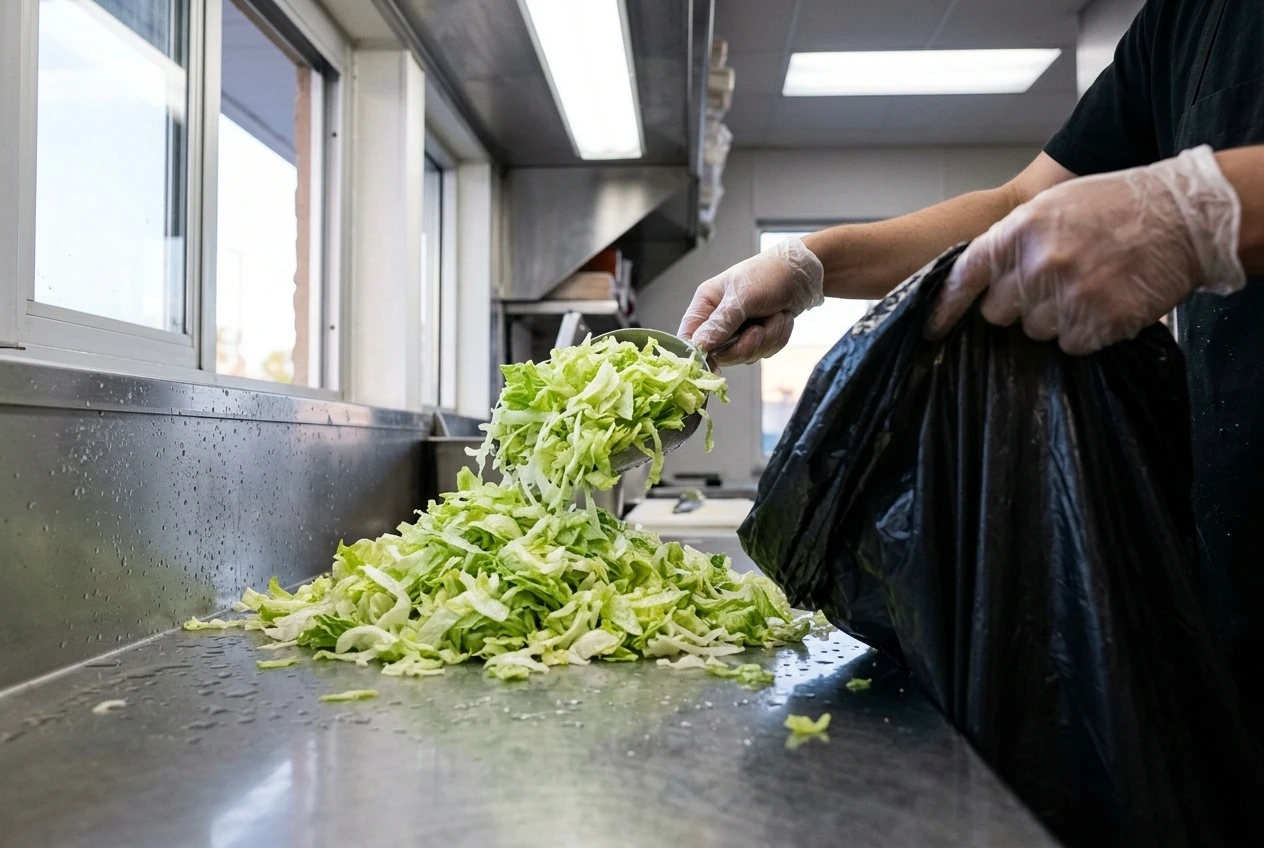
Taylor Farms is pulling every head of iceberg lettuce it sources from central Mexico off the American market after investigators traced a nationwide cyclosporiasis outbreak to a single farm that supplied shredded lettuce to Taco Bell. The Washington Post first reported the move Friday night, hours after Taylor Farms announced the removal and the Food and Drug Administration said the company had agreed to launch a formal recall.
It is the third time in roughly a decade that a Taylor Farms product has been tied to a multistate outbreak. This one is landing in the middle of the worst cyclospora season the country has ever recorded, just as federal food safety staffing has been cut to some of its thinnest levels in years.
One Farm in Mexico, a Nationwide Pull
Cyclosporiasis is an intestinal illness caused by a microscopic parasite, Cyclospora cayetanensis, spread through food or water contaminated with feces. The Centers for Disease Control and Prevention says the current outbreak is linked to shredded iceberg lettuce served at Taco Bell locations in Indiana, Kentucky, Michigan, Ohio and West Virginia.
Taylor Fresh Foods, the company’s formal name, said its Mexican subsidiary is voluntarily removing all iceberg lettuce sourced from that region, even though the implicated farm supplies a tiny sliver of the country’s lettuce.
While the FDA traceback is indicating a specific independent farm, which represents less than 1% of the U.S.’s iceberg lettuce supply, as the potential source of the outbreak, we have removed all iceberg lettuce from the region indefinitely.
Taylor Fresh Foods said this in a statement posted to its newsroom Friday, adding that no Taylor Farms branded salads or kits are associated with the outbreak because none of them contain iceberg lettuce. Bloomberg reported that company representatives met with FDA and White House officials Thursday to discuss the response before the announcement went public.
What We Know
- FDA’s traceback has converged on one independent farm in central Mexico as the likely source, and Taylor Farms has begun the recall process with the agency.
- Taco Bell has removed the implicated lettuce from its restaurants and its nationwide supply chain, according to CNN.
- Illness onset dates in the Taco Bell-linked cluster run from May 13 through July 13, 2026.
What’s Unconfirmed
- Whether Taylor Farms sent lettuce from the same farm to other restaurant chains or grocery retailers beyond Taco Bell.
- Whether every illness counted in Michigan’s outbreak investigation traces back to this one source, since parasitic infections are harder to link than bacterial ones.
Why Do the Case Counts Keep Shifting?
The short answer: state health departments and the CDC are counting different things on different timelines, and cyclospora’s biology makes it slow to confirm. That gap explains why headlines about this outbreak have cited wildly different totals within the same week.
| Tracking Source | Confirmed Cases | Hospitalizations | Geographic Scope |
|---|---|---|---|
| FDA and CDC, Taco Bell traceback | 1,644 | 94 | 5 states (IN, KY, MI, OH, WV) |
| CDC national surveillance, 2026 season | 1,645 confirmed; 5,100+ under review | 141 | 34 states |
| Michigan Dept. of Health and Human Services | 5,000+ | Not broken out | Michigan alone |
| 2019 season (prior full-year record) | About 4,700 | Not specified | Nationwide |
Look closely and the national and outbreak-specific numbers are nearly identical, 1,645 versus 1,644, meaning almost every lab-confirmed cyclospora case the CDC has logged so far this season traces to this one lettuce cluster. The 47-hospitalization gap between the national and Taco Bell-specific totals belongs to smaller, unrelated clusters the agency is investigating separately.
Michigan’s own count runs far higher because it includes probable cases the state has not yet confirmed to federal officials, a gap FDA’s own investigation update acknowledges can run six weeks behind illness onset. The Michigan health department said it cannot say with certainty that every illness is linked to the same source of exposure, but called the surge sharp enough that it strongly suggests the vast majority of cases share one outbreak. CTV News reported that this year’s national count has already surpassed the previous full-year record of about 4,700 infections set in 2019.
Taco Bell Acts as Other Buyers Remain Unnamed
Taco Bell has pulled the lettuce nationwide, but federal officials say the bigger supply chain question is still open. One official told The New York Times it remains unclear whether Taylor Farms sent lettuce from the same Mexican farm to other restaurant chains or grocery stores.
Michigan’s chief medical executive, Dr. Natasha Bagdasarian, said some people who got sick in her state never reported eating at Taco Bell at all. A supplier that sells to restaurants can also stock grocery store shelves, she said, which is part of why investigators have not closed the case.
Taylor Farms is not a company that can quietly absorb that kind of uncertainty. Founded in 1995 by Bruce Taylor, a third-generation Salinas Valley lettuce grower, the company has grown into a $7 billion enterprise with more than 25,000 employees across 30 processing facilities, turning out roughly 165 million servings of produce every week. “We’re over $7 billion today,” Taylor told Farm Progress of a business he once hoped might reach $100 million.
That scale is exactly why a single contaminated farm can ripple so far. Anyone worried about exposure has a short list of practical steps to take right now.
- Skip the specific product: shredded iceberg lettuce from Taylor Farms de Mexico served at Taco Bell in Indiana, Kentucky, Michigan, Ohio and West Virginia.
- Wash fresh produce thoroughly under running water before eating, cutting or cooking it, even though washing alone will not guarantee the parasite is gone.
- Cook produce to at least 158°F (70°C) if certainty matters, since cooking, unlike washing, reliably kills Cyclospora.
- Ask for a specific Cyclospora test if diarrhea lasts several days. Routine stool panels do not automatically screen for the parasite.
The Third Outbreak in a Decade
CNN reported that Taylor Farms products have been tied to two earlier outbreaks beyond this one: E. coli linked to slivered onions in 2024, traced to illnesses at McDonald’s restaurants, and cyclospora linked to lettuce back in 2013.
Federal investigators traced the 2024 cases to a Colorado Springs onion processing facility, an episode that left one Colorado family grieving a husband and father among those sickened nationwide. Two outbreaks in three years, on top of a decade-old cyclospora case, is an unusual run for one supplier of this size, even one that ships to roughly a third of the country’s restaurants and grocery chains every week.
Watchdogs Say the Safety Net Got Thinner
This outbreak is unfolding as the agencies meant to catch contamination faster have lost staff and money. The FDA workforce shrank by 3,859 positions in fiscal 2025 and another 473 in fiscal 2026, while the CDC lost 2,499 positions in fiscal 2025 and 390 more this year, according to an analysis published by Food Safety Magazine.
Carlota Medus, who supervises the foodborne diseases unit at the Minnesota Department of Health, said cuts to a key surveillance program will slow how fast her team can trace an outbreak to its source.
“Long term, the cuts will affect our ability to use surveillance data to better understand risks in the food supply, and which areas food producers and regulatory agencies should prioritize,” Medus told STAT News in an email.
Daniel Jernigan, who spent 30 years at the CDC before resigning as head of its emerging infectious disease center last year, compared the loss of support staff to running an app on an outdated phone. The tool might still work, he said, but without the infrastructure behind it, nobody can actually use it. STAT also reported that the FDA is now projected to record its lowest number of foreign food facility inspections since 2011, excluding the pandemic, even though fresh produce carries some of the highest foodborne illness risk of any food category.
Frequently Asked Questions
What are the symptoms of cyclosporiasis, and how long do they last?
Watery diarrhea is the hallmark symptom, often with loss of appetite, weight loss, cramping, bloating, nausea and fatigue, according to the CDC. Symptoms typically start about a week after infection, ranging from two days to two weeks, and without treatment they can last anywhere from a few days to a month or longer, sometimes relapsing after seeming to clear up.
Is cyclosporiasis treatable, or does it clear up on its own?
Some infections resolve without treatment, but Johns Hopkins Medicine says treatment is recommended for confirmed cases. The standard treatment is a combination antibiotic, trimethoprim-sulfamethoxazole, sold under brand names including Bactrim.
What other foods have been linked to cyclospora outbreaks besides lettuce?
Past U.S. outbreaks have been traced to bagged salad mixes and kits, fresh cilantro, fresh basil and raspberries, according to Johns Hopkins Medicine, so leafy greens are not the only risk category investigators watch each summer.
Why is it taking investigators so long to pin down the source?
Tracing cyclospora is a labor-intensive task, according to reporting from The New York Times, because health officials must interview thousands of sick people about everything they ate over several weeks, then trace ingredients back through suppliers. Parasitic infections are harder to link together than bacterial ones like E. coli or salmonella, which is part of why this investigation has stretched across months.
Could I be part of this outbreak even if I never ate at Taco Bell?
Possibly. Michigan’s chief medical executive said some people sickened in the state had not reported eating at a single restaurant, and a supplier that sells to restaurants can also stock grocery store shelves. Investigators have not ruled out that the same farm’s lettuce reached other buyers.
Has federal food safety oversight changed recently, and could that be slowing the response?
Yes. A Government Accountability Office review found that the FDA has not hit its full inspection target for high-risk food facilities since 2018, and by mid-2024 the agency had only 432 inspectors, nearly a quarter of them eligible to retire, according to reporting on FDA staffing losses. It takes about two years to train a new investigator, and a food traceability rule designed to speed up exactly this kind of outbreak investigation was pushed back 30 months after industry lobbying.


Walmart’s $50 Million Opioid Settlement Closes Case Without Admission

California Sues Over $120 Million Morro Bay Wind Lease Buyout

Gilead Bixlenvo FDA Nod Opens Single Pill Path for Complex HIV Cases

Meta’s $18B Kids Deal Forever Shields Data Used to Spot Under-13s

Lettuce Outbreak Drove Record Cyclospora Spike Across 20 States

Amazon Shaves $20 Off M6 Mac Mini Before It Even Ships

SpaceX Louisiana Port Tests Debt Markets on Orbital AI Scale

Microsoft High Lifts Indexes as Small Caps Crack Support

Apple Replays 2015 Saturday Midnight Preorder for iPhone 18 Pro

Updated COVID Shots Clear FDA but Access Friction Hits High-Risk Groups

Take-Two CEO Pushes Netflix Subs for GTA 6 Extended Look

Halo Campaign Evolved Skulls Meet Death Barriers That Kill the Hunt

Wildlands Free Update Hands Players the Tools They Already Invented

Destiny 2 Fans Unlock Vaulted Maps After Live Service Ends

Quake Gets 19 Free Maps From MachineGames Quake Club

Quordle Monday Delivers Gavel Crush Speed Ethos Cleanly

Stripe Bid Shows PayPal Moat Cracked After Years of Slide

Tyson’s Five-Year Utah Plant Falls to Cattle Shortage Reckoning

Silver Lake Workday Talks Signal Private Floor for Software

Kennedy Lewis Takes Majority Control of The Greenbrier in $500M Deal
-

 TECHNOLOGY3 years ago
How to Adjust a Bulova Watch Band – An Easy Guide
-

 News3 years ago
Fred Pentland: Athletic Bilbao’s English mentor who changed the essence of Spanish football
-

 FINANCE3 years ago
Tax Planning for Every Season: Guide to Maximizing Your Tax Benefits
-

 Education3 years ago
African Ministers New Education Plan
-

 BUSINESS3 years ago
What is Entrepreneurial Operating System? A Comprehensive Guide to EOS
-

 Education3 years ago
Innovate Your Learning Journey with Technology and Enhance Education
-

 News3 years ago
Russians formally out of World Athletics Championships
-

 BUSINESS3 years ago
Top 9 Most Expensive American Cities to Rent an Apartment