
News
FCC Robot Vacuum Rules Crown Domestic Makers Over China Supply
New FCC Covered List rules bar fresh foreign robot vacuums from US authorization, shielding scarce domestic makers while legacy models stay legal to sell and use.

Certain new foreign-made robotic vacuums can no longer receive the FCC equipment authorization required for US import, marketing or sale after the agency added advanced robotic devices to its Covered List on July 28. An FCC spokesperson confirmed to Fox Business that household robot cleaners fall inside the definition. Existing authorized models stay fully legal to sell, import and run in American homes.
The move splits the market. China-heavy volume brands that dominate shelves lose the new-model channel. The few US assemblers gain a protected runway. Price-sensitive buyers face a longer-term choice between legacy stock and costlier domestic units.
The Rule That Sweeps Up the Vacuum
Advanced robotic devices joined foreign-produced power inverters on the Covered List following an interagency national security determination. The FCC fact sheet on the Covered List update states new foreign models are generally barred from equipment authorization. Previously authorized models continue without interruption. Federal government purchases remain exempt.
Robot vacuums qualify because they meet the mechanical mobile criteria. The full advanced robotic device definition requires all of the following:
- Locomotion, obstacle avoidance, navigation or ground movement
- Operation at a distance from a human operator on commands or sensor data
- Combined weight of device plus docking station over 4.4 pounds
- A sensor that perceives the environment, network connectivity of at least 200 kbps, and software, firmware or AI models that control navigation, perception, data collection or remote command
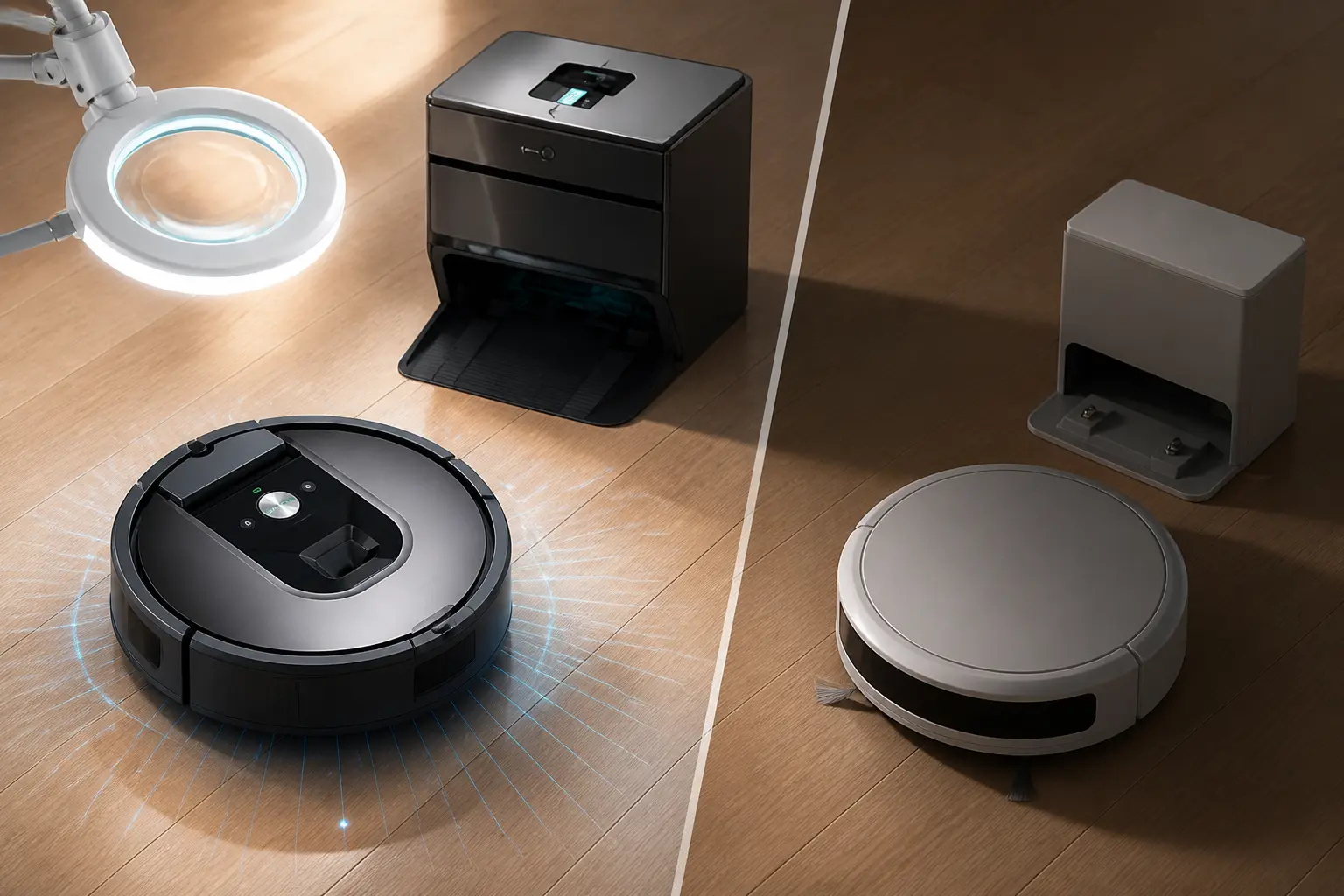
Fixed industrial arms, medical devices, drones, rail vehicles and underwater units sit outside the scope. Most Roomba-style, Shark, Dyson 360, Samsung Jet Bot and LG CordZero cleaners clear the weight and capability thresholds. Brands whose production fails the domestic end-product test under federal acquisition rules are covered.
Why Agencies Drew the Line on Home Robots
The July 27 national security determination on foreign robots cites two unacceptable risks. First, supply-chain concentration that could disrupt economic and national security if foreign sources cut off advanced robots used in manufacturing, infrastructure protection or defense. Second, cybersecurity exposure. Networked machines with cameras, LiDAR, microphones and maps can be leveraged for surveillance, intelligence collection or remote commandeering.
The determination references real incidents: a 2026 vulnerability that let one researcher access live feeds and floor plans from thousands of foreign robot units in homes across 24 countries; earlier takeovers of Ecovacs units that allowed audio abuse; and a backdoor found in certain quadrupeds. High-fidelity sensors that build detailed home maps raise the stakes once the devices sit inside critical infrastructure or large private fleets.
The action is country-neutral on paper. It tracks whether an article qualifies as a domestic end product. In practice it lands hardest on production concentrated in China, Vietnam, Malaysia and Indonesia, the sources for most US robot vacuum volume.
Who Loses the New-Model Channel
Major sellers in the US market now face a hard stop on fresh foreign designs. iRobot’s Roomba line, once an American pioneer launched in 2002, is owned by Shenzhen Picea Robotics and Santrum Hong Kong after a pre-packaged Chapter 11 process completed in January 2026. Picea manufactures in China and Vietnam and lists models from about $200. SharkNinja, Dyson, Samsung and LG also rely heavily on Asian production for their robotic cleaners.
| Brand / Line | Ownership / Base | Typical Production | US Price Entry |
|---|---|---|---|
| iRobot Roomba | Picea (China/HK) | China, Vietnam | From ~$200 |
| Shark robotic | SharkNinja | Asia (majority) | Mid-range |
| Dyson 360 | Dyson | Asia | Premium |
| Samsung Jet Bot | Samsung | Asia | Mid-premium |
| LG CordZero robot | LG | Asia | Mid-premium |
| Matic | US startup | California assembly | ~$1,245 |
iRobot said it is aware of the action and is working with the FCC to understand implementation and impact. It remains committed to customers and will share updates. Fox Business sought comment from SharkNinja, Dyson, Samsung and LG. Chinese volume leaders such as Roborock, Ecovacs, Dreame and Eufy face the same new-model barrier for any units that meet the weight and connectivity tests.
Global robotic vacuum market estimates for 2026 cluster around $7 billion to $14 billion depending on the research house, with Asia-Pacific production capacity dominant and Chinese brands holding the majority of the top-ten slots. Losing the US new-product lane removes a high-visibility, high-margin channel even if older authorized stock continues.
The Thin Domestic Bench That Gains
American robotics startup Matic designs and assembles in California and sells at roughly $1,245. It is one of the few US-based competitors with domestic production. The Covered List rules create a protected market for any maker that can certify domestic end-product status or win Conditional Approval from the Department of War.
That protection arrives after years of cost pressure that hollowed out US consumer robotics manufacturing. The same July 28 action that hit robot vacuums also locked out new foreign humanoids and quadrupeds. The parallel ban on new foreign humanoid robots hands a similar runway to Tesla Optimus, Boston Dynamics, Figure, Agility and other domestic or allied programs. Volume Chinese hardware that fed research labs and early commercial pilots loses easy entry.
Conditional Approval offers a narrow door. Producers email required materials; DoW (or DHS for inverters) can clear specific devices or classes that do not pose the cited risks. Approved units appear on a public FCC list and regain authorization eligibility. Early applications will show how fast and how broad that path runs. Firms that redesign for higher US content or secure approval keep access. Others must abandon new US models or serve only the grandfathered inventory.
What Stays on Shelves and What Shifts
What We Know
- Previously FCC-authorized robot vacuum models may still be imported, marketed, sold and used without limit.
- Consumers keep every unit already in their homes; no recall or disablement applies.
- Basic software and firmware updates that maintain usability remain allowed under a temporary waiver.
- Small batches for product development or testing can still enter under existing import rules if not marketed.
What’s Unconfirmed
- Exact list of which current SKUs will be treated as new models needing fresh authorization versus continuations of prior grants.
- How quickly Conditional Approval decisions will issue and which foreign designs will clear.
- Near-term retail pricing response once legacy inventory thins.
Retailers can clear existing stock. New foreign designs that require a fresh equipment authorization cannot receive it. Over time the shelves will tilt toward remaining authorized foreign units, any Conditional Approval winners, and domestic or higher-content products. iRobot has also expanded beyond pure robots; its iRobot’s non-robot floor cleaner launch sits outside the advanced robotic device definition and faces no comparable restriction.
Market research houses project continued double-digit growth for robotic cleaners through 2031, driven by smart-home penetration and falling sensor costs. The US portion of that growth will now flow through a narrower set of production bases. Short-run price spikes are possible once popular new foreign models stop arriving. Longer run, domestic capacity or approved foreign supply will set the ceiling.
Home Mapping Fear Meets Real Incidents
On X, users immediately side-eyed the machines already roaming their floors. One widely shared reaction asked whether China had been spying via home vacuums and admitted half-joking concern. The security case is not abstract. Crowd discussion repeatedly returned to the February 2026 incident in which a researcher reverse-engineered his own unit and gained camera feeds, microphones and floor plans from roughly 7,000 devices across 24 countries because authentication rested on serial numbers with no ownership check. Earlier Ecovacs compromises let attackers speak through speakers and chase pets. Those failures sit inside the same category the determination now treats as an unacceptable risk vector once foreign-produced at scale.
Advanced robotic devices collect data that could be leveraged by malign actors to surveil Americans, enhance the capabilities of foreign intelligence services, or to remotely commandeer the robots.
The national security determination uses that language. The crowd layer adds the practical memory: many households already handed detailed maps of their living rooms to servers whose security practices failed basic tests. The ban does not disable those existing maps or cameras. It stops the next generation of foreign units from adding more of them under the current authorization path.
iRobot’s ownership transfer itself drew earlier criticism. After the Amazon acquisition was blocked on antitrust grounds, the Chinese manufacturer that already supplied the hardware took full equity through bankruptcy. Home-mapping data and brand equity moved with it. The Covered List update now limits how freely that ownership structure can refresh the US product line.
Frequently Asked Questions
Which robot vacuums are covered by the new FCC rules?
Any foreign-produced mechanical mobile cleaner that can navigate or avoid obstacles, operates away from a human operator, weighs more than 4.4 pounds with its dock, and carries environment sensors plus network connectivity of at least 200 kbps plus controlling software or AI. Most modern Roomba-style, Shark, Dyson, Samsung and LG robotic models meet every prong. Fixed or purely manual machines do not.
Can I still use the robot vacuum I already own?
Yes. The Covered List update places no restriction on continued consumer use of any previously purchased device. Retailers may also keep selling, importing and marketing models that already hold FCC equipment authorization.
What is Conditional Approval and who can get it?
The Department of War can issue a specific determination that a given foreign advanced robotic device or class does not pose the unacceptable risks. Applicants email the required package to the FCC address listed in the guidance; cleared devices regain eligibility for equipment authorization and appear on a public list. Any entity involved in production may apply, including for classes of devices.
How does the FCC define “foreign-produced”?
It tracks the domestic end-product test in the Federal Acquisition Regulation (48 CFR § 25.101(a)). Nationality of the company that owns the brand is irrelevant. An article that fails the domestic content and manufacturing test is foreign-produced for Covered List purposes, regardless of corporate headquarters.
Will firmware or app updates stop working?
No. A temporary FCC waiver allows basic software and firmware updates that keep covered devices usable. The waiver supports continued operation of the installed base through at least early 2029 under current terms.


Halo Campaign Evolved Skulls Meet Death Barriers That Kill the Hunt

Spotify Running Mode Returns After the 2015 Experiment Failed

Amazon AWS Hits Fastest Growth in Years as AI Spend Pays Off

Amazon Bets Platform Beats Models in the AI Race

Apple C2 Modem Edges Into iPhone 18 Pro After Qualcomm Drop

Google Earth Adds Nano Banana 2 to Reimagine Real Places

Apple Upgrade Turns Phones Into Monthly Utility Bills

Asha Sharma Bets Xbox Growth on Console and Four C’s

MacBook Ultra Design Follows Apple’s Familiar Cascade Path

TAG Heuer Carrera x Team Ikuzawa Revives 1970s Roadmaster Stopwatch DNA

Pokémon GO Developer Niantic Rebrands as Scopely Explore

Persona 4 Revival Hands All Anime Cutscenes to Studio MAPPA

Jaylen Brown Traded to 76ers for Paul George and Four Draft Picks

Doom Studio id Software Cuts Half Its Staff in Xbox Layoffs

Nintendo Switch Online Adds Four Classics and One Japan-Only Title

Jordan Henderson Hospitalized After Wrist Injury at the Azteca

Mexico’s World Cup Run Ends at Azteca as England Hold On 3-2

Meta’s Muse Image Lets Anyone Use Your Instagram Photos in AI

Louis Vuitton Beats Molly Tea in China, Triggers Cultural Backlash

Pink Bearista Cup Returns July 13 as Starbucks Pink Vibes Drops
-

 TECHNOLOGY3 years ago
How to Adjust a Bulova Watch Band – An Easy Guide
-

 News3 years ago
Fred Pentland: Athletic Bilbao’s English mentor who changed the essence of Spanish football
-

 FINANCE3 years ago
Tax Planning for Every Season: Guide to Maximizing Your Tax Benefits
-

 Education3 years ago
African Ministers New Education Plan
-

 BUSINESS3 years ago
What is Entrepreneurial Operating System? A Comprehensive Guide to EOS
-

 Education3 years ago
Innovate Your Learning Journey with Technology and Enhance Education
-

 News3 years ago
Russians formally out of World Athletics Championships
-

 BUSINESS3 years ago
Top 9 Most Expensive American Cities to Rent an Apartment