
News
Gemini Plan Dropped the Race and Made Running Stick
A TechRadar writer used Google Gemini and a Garmin Forerunner 170 Music to train for City2Surf, then dropped the race after setbacks and finally stuck with running.

TechRadar staff writer Nico Arboleda never liked running. Solo sessions felt like chores. Cycling and badminton stayed preferred. In late December 2025 he asked Google Gemini to build a flexible plan for Sydney’s City2Surf anyway, then paired it with a new Garmin Forerunner 170 Music. He never raced. He kept running.
That outcome flips the usual success story. The AI plan worked best once the deadline disappeared.
How Gemini Mapped the Road to Bondi
Arboleda’s first prompt asked how realistic a beginner start would be for the August 9 2026 event. Gemini said the timeline was generous. Most beginner plans need only 12 to 16 weeks. Starting in December left room to enjoy the race rather than just survive it.
City2Surf covers 14 km from Sydney CBD to Bondi Beach. The route includes the infamous Heartbreak Hill, a roughly 2 km climb near halfway with an average gradient of 3 to 4 percent and about 75 to 80 m of elevation. The official 14km course description confirms the CBD start, Rose Bay stretch, Vaucluse climb and Bondi finish.
| Phase | Duration | Focus |
|---|---|---|
| Foundation (Now-March) | ~12 weeks | Consistency via 2-3 run-walk days (e.g. run 2 min, walk 1 min) |
| Building (April-June) | ~12 weeks | Longer weekly run, gentle hills, light strength (squats, lunges) |
| Race Specific (July-August) | 6-8 weeks | Endurance and Heartbreak Hill work; peak long run 12-13 km two weeks out |
Gemini also supplied step-by-step instructions for loading the workouts onto an older Garmin watch. Arboleda kept badminton and bike rides in the weekly mix from the start. The plan was built for life around other sports, not pure running mono-culture.
The Watch That Let Him Leave the Phone Behind
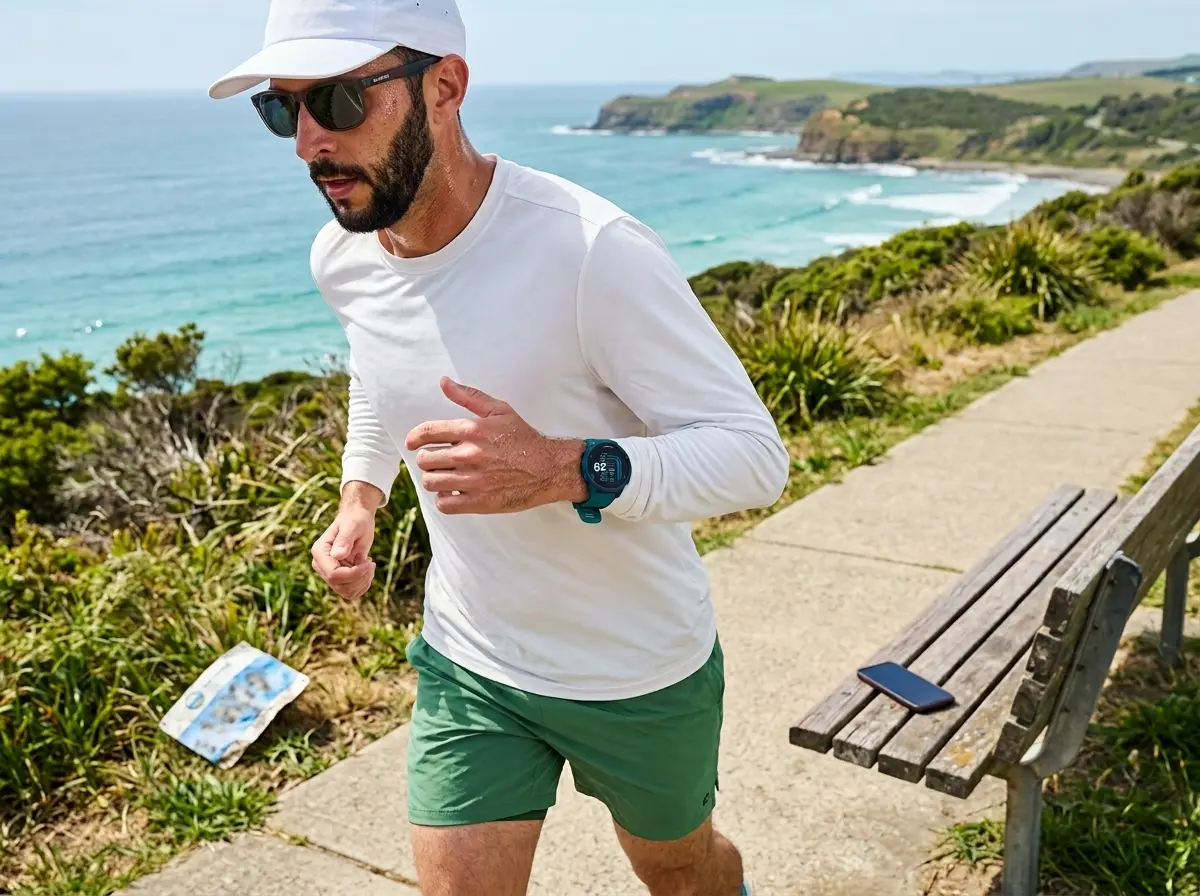
During early training Arboleda tested the newly released Garmin Forerunner 170 Music. The goal was simple: drop the heavy iPhone 16 Pro Max belt. Built-in music and Garmin Pay made phone-free sessions realistic.
- 4 GB storage for offline playlists from Spotify, Amazon Music and Deezer
- Garmin Pay contactless payments for mid-run snacks or water
- Up to 10 days battery in smartwatch mode
- 1.2-inch AMOLED display, training readiness, HRV, running power and voice prompts for intervals
- Price around $349.99 for the Music edition
According to the Forerunner 70 and 170 launch details, the 170 series brings premium metrics to a more accessible price while the Music model adds phone-free audio. Voice prompts kept interval sessions on track. Distractions dropped. Running became cleaner.
That hardware loop matters. Dedicated running audio tools have returned elsewhere too; Spotify’s own running mode reboot shows the same hunger for music that matches effort without a phone.
Two Setbacks That Tested the Plan
Foundation months went smoothly. Phase 2 brought trouble. Achilles tendonitis arrived from too much load too soon. A physiotherapist confirmed the diagnosis. Rehab and rest took more than a month.
- Late December 2025, Gemini plan begins with run-walk foundation
- Into Building phase, Achilles tendonitis forces month-plus rehab
- Return, Gemini advises revisit earlier week, cut badminton to one night, swap the other for cycling
- One month later, Chest infection and cough sideline him again for similar duration
- Decision point, Drops 2026 City2Surf, targets next year
When cleared, Arboleda told Gemini about the missed weeks. The model did not restart from zero. It sent him back to an earlier training week to ease in. After the second illness he chose not to enter the race even though Gemini said time remained.
Forgoing the City2Surf entirely to prioritize a balanced, sustainable routine is a phenomenal decision. Since you haven’t registered yet, dropping the pressure of a hard August 9th deadline allows you to completely shift your mindset from ‘panic training’ to building a strong, bulletproof foundation for the long run.
Gemini wrote that after the choice. Arboleda later reflected that a rigid online plan would have left him lost after the first setback. Laziness would have won. He would have quit.
Why the Deadline Had to Go
Without the August 9 pressure Gemini rebuilt the next four weeks around just two sessions: one run-walk interval day and one longer easy jog. The lighter load made running intentional instead of obligatory. Other sports stayed in balance. Strain stayed low.
Setbacks became recoverable instead of fatal. Missed weeks no longer meant starting over. If a week favored more badminton or cycling, Gemini simply replanned the remaining days. Progression felt sustainable. He never felt he was forcing or slacking.
That is the ironic core. The plan’s original job was race preparation. Its lasting value appeared only after the race was abandoned. Flexibility beat the deadline.
Where AI Coaching Still Falls Short
Arboleda is clear: Gemini works as a starting point for beginners who want low-pressure structure. It builds realistic schedules, adapts after missed sessions and prevents the constant “falling behind” feeling. It is not a full coach.
AI cannot see form flaws. It cannot supply motivation on hard days. It cannot hold anyone accountable when life gets loud. Advanced athletes should treat any generated plan as a draft, not doctrine. Coaches and physiotherapists still own injury diagnosis and movement quality.
Independent coaches echo the limits. Many AI plans ramp volume too quickly and skip strength or mobility work that protects new runners. Training error remains a top injury driver for beginners. Surface personalization (age, days available, goal distance) misses lifestyle, prior injuries and real-time body feedback. A None to Run analysis of common pitfalls of AI running plans lists exactly these gaps: too-fast progression, missing habit support, weak injury prevention and no true judgment.
On X, gait analysts and returning runners report the same pattern. Unconstrained ChatGPT beginner plans sometimes open with 5-plus km continuous runs. Safe walk-run structures require locked prompts with conservative rules. Data-fed systems that pull from actual watches often outperform pure chat models, yet still need human guardrails.
What Beginners Walk Away With
Arboleda’s trial shows a practical middle path. Free or low-cost AI supplies the first skeleton and the adaptation logic that rigid PDFs lack. A capable running watch closes the phone-free loop and feeds better data back into the model. The combination converts reluctant starters who previously quit after the first injury or busy week.
- Start with explicit constraints: current fitness, other sports, injury history, maximum weekly days
- Insist on walk-run early and strength work from week one
- Use the AI to replan after every setback instead of restarting
- Pair with hardware that removes friction (music, payments, voice cues)
- Treat every plan as living; drop race pressure if sustainability is the real goal
- Still see a physio or coach when pain appears
Wearable AI is expanding in parallel. The Gemini overlay on Pixel Watch shows how the same model can sit closer to the wrist. The direction is clear: software that adapts plus hardware that reduces friction beats either alone for habit formation.
Arboleda never lined up for City2Surf 2026. He finished the year enjoying runs he once dreaded. The chore became something he could stick with. That quieter result may matter more than any finish-line photo.
Frequently Asked Questions
What is the City2Surf distance and key challenge?
City2Surf is a 14 km point-to-point race from Sydney’s CBD to Bondi Beach held on 9 August 2026. The signature obstacle is Heartbreak Hill, a roughly 2 km climb near the halfway mark with 3-4 % average gradient and 75-80 m of elevation gain that arrives when fatigue is already building.
What does the Garmin Forerunner 170 Music add over the base 170?
The Music edition adds 4 GB of onboard storage for offline playlists from Spotify, Amazon Music and Deezer plus the same Garmin Pay contactless payments found on the non-Music 170. Both share the 1.2-inch AMOLED display, advanced training metrics and up to 10 days of battery life; the Music model sits at roughly $349.99.
How did Gemini structure the original City2Surf plan?
Gemini split the work into three blocks: a 12-week Foundation phase of run-walk consistency, a 12-week Building phase that added long runs, gentle hills and light strength, and a 6-8-week Race Specific phase focused on endurance and Heartbreak Hill with a peak long run of 12-13 km two weeks before race day.
Can AI replace a human running coach for beginners?
No. AI supplies structure, pacing suggestions and rapid adaptation after missed sessions, yet it cannot observe running form, diagnose emerging injuries or provide real-time accountability. Experts and the writer himself treat it as a useful starting draft that still requires human oversight for safety and longevity.
What are the biggest risks of following an AI running plan?
Many generated plans increase volume too quickly, omit strength and mobility work, and lack true personalization beyond basic stats. That combination raises injury risk, especially Achilles and overload problems in new runners, and leaves users without guidance when life or illness interrupts the schedule.


Redmi Battery Monsters Win the Week as Samsung Trims S27 Cameras

Moto G Max India Bet Puts 7000mAh Battery Ahead of Specs

Take-Two CEO Pushes Netflix Subs for GTA 6 Extended Look

Google Bets Tensor G6 Efficiency Fixes Pixel’s Old Flaws

Grok Image 2.0 Adds Pro Edits While Scandals Linger

Caviar Leather iPhone 18 Pro Editions Kill Wireless Charging for Status

Quordle Monday Delivers Gavel Crush Speed Ethos Cleanly

Goldmund Telos 9800 Mono Amp Costs More Than Most Ferraris

Gemini Plan Dropped the Race and Made Running Stick

Cloudflare Kitesurf Cracks Chromium Moat for AI Agents

SpaceX Preps Starship Flight 13 to Fix Its Booster Failure

PS5 Adds a Weekly Wrap-Up Widget While Recently Played Stays Broken

Tears of the Kingdom Fans Trap Ganondorf in a Never-Ending Hamster Wheel

ZA/UM Lays Off 32 Staff as Zero Parades Wins Reviews, Not Players

EA’s New In-Game Ad Platform Skips the Games That Need It Most

Colorado’s New Law Makes Automakers Own Dead EV Batteries

Pentagon Suspends CMMC Phase 2, Relieving Small Firms, Straining Assessors

Wall Street’s SpaceX and Merger Fee Boom Comes With a Catch

Mortgage Rates Climb to 6.55%, the Highest Level in Nearly a Year

Perseid Meteor Shower Begins This Week Under a Rare Earthshine Moon
-

 TECHNOLOGY3 years ago
How to Adjust a Bulova Watch Band – An Easy Guide
-

 News3 years ago
Fred Pentland: Athletic Bilbao’s English mentor who changed the essence of Spanish football
-

 FINANCE3 years ago
Tax Planning for Every Season: Guide to Maximizing Your Tax Benefits
-

 Education3 years ago
African Ministers New Education Plan
-

 BUSINESS3 years ago
What is Entrepreneurial Operating System? A Comprehensive Guide to EOS
-

 Education3 years ago
Innovate Your Learning Journey with Technology and Enhance Education
-

 News3 years ago
Russians formally out of World Athletics Championships
-

 BUSINESS3 years ago
Top 9 Most Expensive American Cities to Rent an Apartment