
News
Google Bets Tensor G6 Efficiency Fixes Pixel’s Old Flaws
Google’s August 12 Made by Google event puts the 2nm Tensor G6 and first Pixel Tag on the line to fix heating complaints and finish its Find network against Apple.

Google will stage its Made by Google event in New York on August 12 at 6:00 p.m. ET, with the Pixel 11 series, Pixel Watch 5 and a likely first-party Pixel Tag set to take the stage. Pre-orders open the same day.
The company is placing a clear bet: a Tensor G6 built on TSMC’s 2-nanometre process plus a complete Find network will finally quiet years of complaints about heat, battery life and missing accessories, enough to support higher prices and deeper Gemini lock-in.
That wager ties silicon, software and accessories into one pitch. Buyers will hear about cameras and Gemini features on stage. The quieter test is whether the new process node, modem and tracker remove the friction that kept earlier Pixels from feeling complete.
Four Phones, One Foldable and a Watch
The expected lineup covers the full range. The standard Pixel 11 keeps a compact 6.3-inch form. The Pixel 11 Pro and larger Pro XL move to LTPO OLED panels that can vary refresh rate. The Pixel 11 Pro Fold returns as the premium foldable with roughly an 8-inch inner screen and 6.4-inch cover display. All are expected to ship with Android 17 and the new Tensor G6.
| Model | Display (leaked) | Key camera claim | Battery range (leaked) |
|---|---|---|---|
| Pixel 11 | 6.3-inch OLED | 48 MP main triple | ~4,840-5,000 mAh |
| Pixel 11 Pro | 6.3-inch LTPO OLED | 50 MP main + 48 MP UW + 48 MP tele | ~4,700 mAh |
| Pixel 11 Pro XL | 6.8-inch LTPO 120 Hz | Same Pro triple | ~5,000 mAh+ |
| Pixel 11 Pro Fold | ~8-inch inner / 6.4-inch cover, 120 Hz | 48 MP main triple with 5x tele | ~4,650-4,800 mAh |
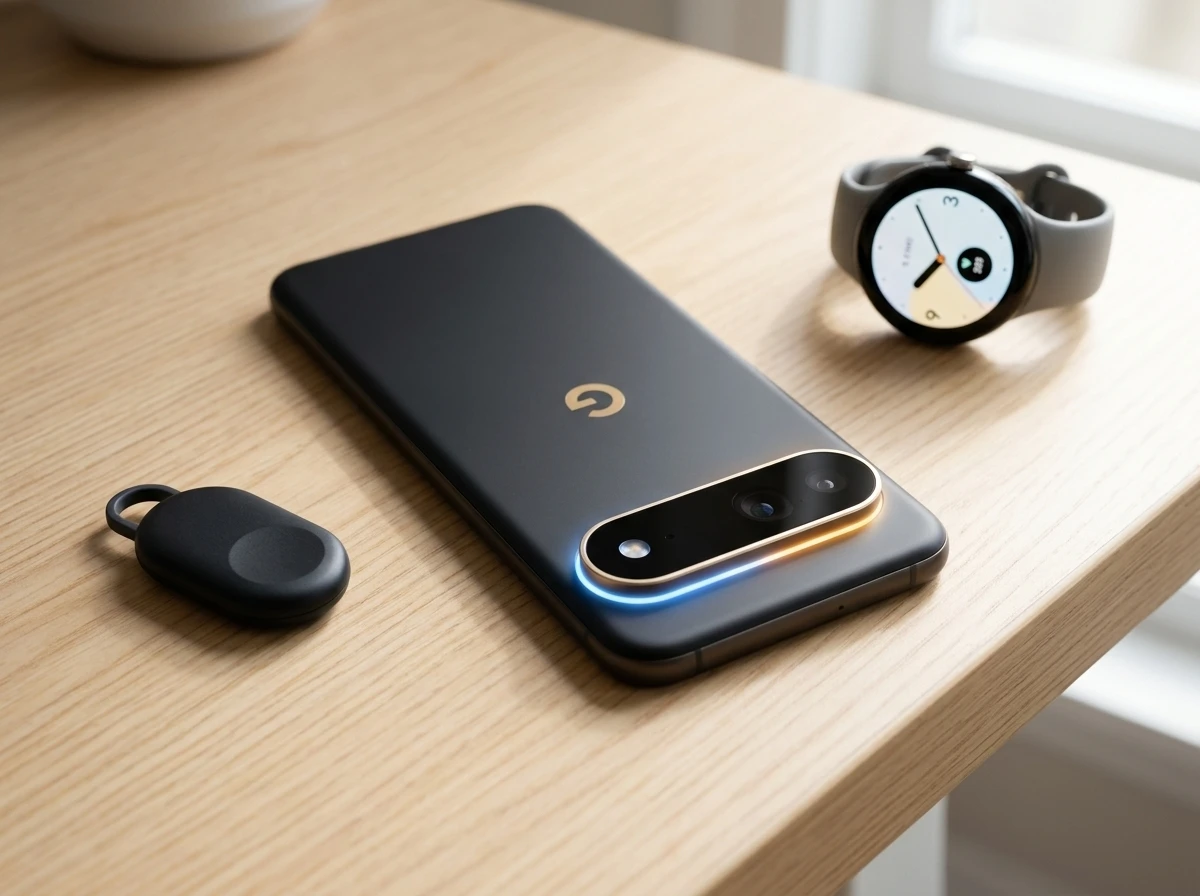
Camera upgrades concentrate on the Pro models. Leaks describe a 50-megapixel primary, 48-megapixel ultra-wide and 48-megapixel periscope telephoto with longer optical reach. The base model stays closer to last year’s triple setup. The Fold keeps a more modest sensor stack but is said to improve the hinge and overall durability. matte Midnight Pro color renders already circulating show a refined camera bar and new finishes.
LTPO on the Pro and Pro XL matters for more than smoothness. Variable refresh lets the panel drop when the screen is static, which pairs with the efficiency goals of the G6. The Fold’s dual 120 Hz surfaces raise the same power question on a device that already carries a mid-4,600 mAh cell.
The base phone remains the compact entry point. Its 48 MP triple and non-LTPO OLED keep cost and complexity down while still landing on the same chip and Android 17 software stack as the rest of the family.
The 2nm Tensor G6 Carries the Wager
Every model is expected to use the Tensor G6. Multiple leaks place it on TSMC’s 2 nm process, Google’s second consecutive TSMC node after the G5 left Samsung Foundry. A MediaTek M90 modem is widely reported to replace the Samsung Exynos modem that has followed Tensor chips for years.
- CPU layout: unusual 1+4+2 configuration with one high-performance Arm C1-Ultra core near 4.1 GHz and supporting Pro cores.
- GPU: PowerVR C-Series CXTP-48-1536 unit.
- Modem shift: MediaTek M90 aimed at better efficiency and connectivity than prior Exynos parts.
- Efficiency goal: lower heat and longer sustained AI workloads on-device.
Prior Tensors drew consistent criticism for thermal throttling and battery drain under load. The node shrink and modem change are the concrete answer Google is offering. Real-world gains remain unproven until devices ship. Some leaks also show base RAM on Pro models dropping to 12 GB on lower storage tiers while higher configs keep 16 GB.
The foundry path itself tells the story of the reset:
- Early Tensor era: Samsung Foundry silicon paired with Exynos modems that drew heat and power complaints.
- Tensor G5: first move off Samsung Foundry onto TSMC.
- Tensor G6: second straight TSMC node, now at 2 nm, with the MediaTek M90 modem replacing Exynos.
That sequence is the largest hardware course correction since Tensor launched. The 1+4+2 CPU layout and PowerVR GPU are secondary details next to process and modem. Those two changes are what Google needs to make on-device Gemini workloads feel sustainable rather than punishing.
Pixel Glow Turns the Camera Bar Into a Signal
Leaked strings and renders point to Pixel Glow, an RGB LED notification system built into the rear camera bar. When the phone sits face-down the light can pulse in different colours or patterns for calls, messages, charging or Gemini activity. Android 17 beta references already describe the behaviour.
Crowd reaction on X has been split. Some posts treat the light as a distinctive visual signature. Others call it a tiny, low-utility dot that replaces a more useful temperature sensor and ask what practical problem it solves. Google’s design choice trades a niche health sensor for ambient awareness that works without picking the phone up. Execution will decide whether it becomes a Pixel hallmark or a short-lived gimmick.
The feature only works if the patterns stay readable at a glance. Too many colours or modes and the bar becomes noise. Kept simple, it gives face-down phones a presence that vibration alone cannot match, especially for Gemini status cues that would otherwise demand a screen wake.
Watch 5 and the First Pixel Tag Finish the Loop
The Pixel Watch 5 arrives in 41 mm and 45 mm sizes with an LTPO AMOLED display that supports variable refresh and higher peak brightness. Play Console listings and later leaks point to a Qualcomm Snapdragon W5 Gen 2 Accelerated platform (or SW5100 family) rather than a full custom Tensor, paired with 3 GB of RAM, up from 2 GB. That memory bump is aimed at smoother Gemini Intelligence features on the wrist. Health and sleep tracking continue to expand. A Gemini overlay on Pixel Watch already makes the assistant feel continuous; the Watch 5 hardware is meant to keep pace.
The quieter but strategically larger piece is the Pixel Tag. 9to5Google obtained images and retailer listings for an oblong Bluetooth tracker in a “Fog Light” colour, model GA12506. European pricing leaks put it near €34.90, matching AirTag territory. Marketing copy describes a loud speaker, secure Find My Device network support and privacy focus. Google has spent two years building the crowdsourced Find Hub network with third-party tags from Chipolo, Pebblebee and others. A first-party tag lets the company own the experience end-to-end.
Users can already locate phones, earbuds and compatible accessories through the Find Hub app for lost devices. Adding a Google-branded tag closes the last obvious gap versus Apple’s Find My ecosystem. Lists of Find Hub compatible tags and devices will grow once the Pixel Tag ships.
Keeping Qualcomm silicon on the watch while phones move deeper into custom Tensor design is a deliberate split. Wrist hardware stays on a known modem and power profile. The RAM increase does the work of making Gemini feel local rather than laggy.
Higher Prices Meet Smaller Batteries
Leaked Amazon and European listings suggest starting prices rise across the board. The base Pixel 11 is expected near or above the prior $799-$899 range, Pro models higher still, and the Pro Fold near $1,899 for 256 GB. Storage tiers carry further premiums. At the same time several leaks show battery capacities that are flat or slightly smaller than the Pixel 10 generation: base around 4,840 mAh, Pro near 4,700 mAh, Fold in the mid-4,600s. Efficiency gains from the 2 nm chip and new modem are supposed to offset the smaller cells.
A separate UK price and battery storage leak already tied storage bumps to battery figures, signalling Google is carefully managing cost. Component inflation and the 2 nm premium give the company cover for higher tags, yet buyers who remember earlier Tensor battery complaints will watch endurance numbers closely.
The tension is easy to map side by side:
| Model | Price signal | Battery signal |
|---|---|---|
| Pixel 11 | Near or above prior $799-$899 | ~4,840-5,000 mAh, flat to prior |
| Pixel 11 Pro | Higher than base | ~4,700 mAh, slightly smaller |
| Pixel 11 Pro XL | Higher still | ~5,000 mAh+ |
| Pixel 11 Pro Fold | Near $1,899 for 256 GB | ~4,650-4,800 mAh |
Higher storage tiers and the 2 nm bill of materials explain the upward price pressure. They do not automatically excuse a smaller cell unless sustained efficiency lands where leaks promise.
Years of Tensor Complaints Set the Stakes
Pixel phones have long led on computational photography and clean software. They have also trailed on sustained performance and all-day battery under heavy use. The Exynos modem generation became a recurring talking point for heat and power draw. Moving to TSMC and MediaTek is the largest hardware reset Google has attempted since Tensor began. The Fold’s earlier generations improved hinge reliability but still sat behind Samsung and others on raw battery and brightness. Watch iterations kept Qualcomm silicon while software matured. The Tag arrives after the network itself has had time to densify.
Google is therefore not launching incremental hardware. It is asking buyers to accept that the old excuses no longer apply and that the software and AI advantages finally rest on a competitive silicon and accessory base.
Photography and pure software polish bought goodwill for years. They could not fully cancel thermal throttling stories or the missing first-party tracker. This cycle tries to retire both complaints at once.
The Find Network Gains Its Own Tracker
Two years of crowdsourced Find Hub work with Chipolo, Pebblebee and other partners built density before Google put its own name on a tag. That order matters. A first-party tracker without a live network would have been a hollow launch. Shipping the Pixel Tag after the network matured lets Google sell continuity rather than a cold start.
What the system already covers is broad:
- Phones and earbuds through the Find Hub app
- Third-party tags already on the compatible-device lists
- Secure Find My Device network support called out in Pixel Tag marketing
- A loud speaker and privacy focus on the GA12506 itself
European pricing near €34.90 puts the oblong Fog Light model in familiar tracker territory. The strategic point is ownership. Google can tune alerts, pairing and Gemini-related loss flows without waiting on a partner roadmap. Closing that gap versus Apple’s Find My ecosystem was the accessory hole left after phones, buds and watches were already in the catalog.
Efficiency Has to Justify Price and Cell Size
The commercial pitch only holds if 2 nm and the MediaTek M90 deliver measurable endurance under the workloads buyers actually run. Smaller or flat cells on the base, Pro and Fold models leave little margin for another generation of thermal complaints. Higher starting prices tighten that margin further.
On-device Gemini is the stress case. Sustained AI features push CPU, GPU and modem together. Prior Tensors drew criticism precisely when load stayed high. The G6’s efficiency goal is written for that pattern: lower heat, longer sustained AI, fewer throttle events that make the assistant feel expensive to leave on.
RAM choices add another variable. Pro models that drop to 12 GB on lower storage tiers while higher configs keep 16 GB force a split in expected multitasking headroom. Buyers paying the raised Pro price will notice if the lower tier stutters first under Gemini overlays and camera processing.
None of this is proven on stage. It is proven in the weeks after pre-orders convert to devices in hand, when battery graphs and thermal behaviour either back the wager or reopen the old cycle.
What Still Has to Be Proven After the Lights Come Up
What we know
- Event date, time and New York location are official; pre-orders open August 12.
- Pixel 11 series, Watch 5 and Pixel Tag are the expected headliners.
- Multiple independent leaks converge on Tensor G6 at 2 nm, MediaTek modem and Pixel Glow.
What’s unconfirmed
- Final battery capacities, charging speeds and exact RAM/storage matrices.
- Official US and global pricing and any regional storage base changes.
- Whether Pixel Glow is fully customisable or locked to system patterns, and real-world thermal behaviour under Gemini workloads.
Google has invited the public to pre-order the new Google Pixel 11 the moment the stream ends. The devices that ship in the following weeks will decide if the 2 nm bet and the new tracker actually change the daily experience or merely reset the complaint cycle for another year. Trevor Noah hosts; the hardware has to carry the punchline.


Redmi Battery Monsters Win the Week as Samsung Trims S27 Cameras

Moto G Max India Bet Puts 7000mAh Battery Ahead of Specs

Take-Two CEO Pushes Netflix Subs for GTA 6 Extended Look

Google Bets Tensor G6 Efficiency Fixes Pixel’s Old Flaws

Grok Image 2.0 Adds Pro Edits While Scandals Linger

Caviar Leather iPhone 18 Pro Editions Kill Wireless Charging for Status

Quordle Monday Delivers Gavel Crush Speed Ethos Cleanly

Goldmund Telos 9800 Mono Amp Costs More Than Most Ferraris

Gemini Plan Dropped the Race and Made Running Stick

Cloudflare Kitesurf Cracks Chromium Moat for AI Agents

SpaceX Preps Starship Flight 13 to Fix Its Booster Failure

PS5 Adds a Weekly Wrap-Up Widget While Recently Played Stays Broken

Tears of the Kingdom Fans Trap Ganondorf in a Never-Ending Hamster Wheel

ZA/UM Lays Off 32 Staff as Zero Parades Wins Reviews, Not Players

EA’s New In-Game Ad Platform Skips the Games That Need It Most

Wall Street’s SpaceX and Merger Fee Boom Comes With a Catch

Colorado’s New Law Makes Automakers Own Dead EV Batteries

Pentagon Suspends CMMC Phase 2, Relieving Small Firms, Straining Assessors

Mortgage Rates Climb to 6.55%, the Highest Level in Nearly a Year

Perseid Meteor Shower Begins This Week Under a Rare Earthshine Moon
-

 TECHNOLOGY3 years ago
How to Adjust a Bulova Watch Band – An Easy Guide
-

 News3 years ago
Fred Pentland: Athletic Bilbao’s English mentor who changed the essence of Spanish football
-

 FINANCE3 years ago
Tax Planning for Every Season: Guide to Maximizing Your Tax Benefits
-

 Education3 years ago
African Ministers New Education Plan
-

 BUSINESS3 years ago
What is Entrepreneurial Operating System? A Comprehensive Guide to EOS
-

 Education3 years ago
Innovate Your Learning Journey with Technology and Enhance Education
-

 News3 years ago
Russians formally out of World Athletics Championships
-

 BUSINESS3 years ago
Top 9 Most Expensive American Cities to Rent an Apartment