
News
Sony and Warner Sue Anthropic Over Torrented Song Lyrics
Sony and Warner sued Anthropic over Claude lyrics, converting the $1.5 billion book piracy record into a claim against Dario Amodei.

Sony Music Publishing and Warner Chappell sued Anthropic last Friday in San Jose federal court, naming CEO Dario Amodei and co-founder Benjamin Mann over song lyrics they say were torrented, scraped, and fed to Claude. The publishers want a jury and up to $150,000 per work.
The complaint calls the authors’ $1.5 billion payout too small to deter a company whose bankers have discussed a $2 trillion listing. Song rights were never in that bargain.
Sony and Warner Convert a Book Piracy Record Into a Music Case
The case is Sony Music Publishing (US) LLC v. Anthropic PBC, No. 5:26-cv-09217, filed at 5:04 p.m. PDT on August 28. Hipgnosis catalog vehicles sit on the Sony side of the caption. Warner-Tamerlane and a string of Chappell entities sit on the other. Anthropic PBC, Amodei, and Mann are the named defendants.
The 48-page complaint filed last Friday lists songs anyone can hum: “Ain’t No Mountain High Enough,” “All I Want for Christmas Is You,” “Eye of the Tiger,” “Here Comes Santa Claus,” and Taylor Swift’s “Paper Rings.” Later pages add “Livin’ on a Prayer,” “September,” “Hallelujah,” “Uptown Funk,” and “Great Balls of Fire.”
Plaintiff Music Publishers, a group of the world’s leading music publishers, bring this action to hold accountable the culprits behind one of the largest and most blatant ongoing thefts of intellectual property in history.
Sony Music Publishing and Warner Chappell Music, complaint, N.D. Cal.
That language is a pleading, not a verdict. What the filing actually does is take the book case’s public record, the BitTorrent downloads, the staff chats, the “forever” library, and recast those facts as copying of musical compositions, including lyrics and sheet music bound inside pirated books.
The publishers say they already license their songs for AI work when the terms are right. They say Anthropic chose unpaid copies so it would not have to pay that fee. They also say Claude still recites lyrics and that filters added after earlier music litigation are “easily circumventable by simply ‘re-prompting’” the model.
Five Million Torrented Copies and a Forever Library
In June 2021, the complaint says, Mann used BitTorrent for Anthropic, at Amodei’s direction, and took at least five million pirated books from Library Genesis. In July 2022, employees took at least another two million from Pirate Library Mirror. That is seven million copies in the pleading’s own arithmetic, the same haul the book case turned into a settlement.
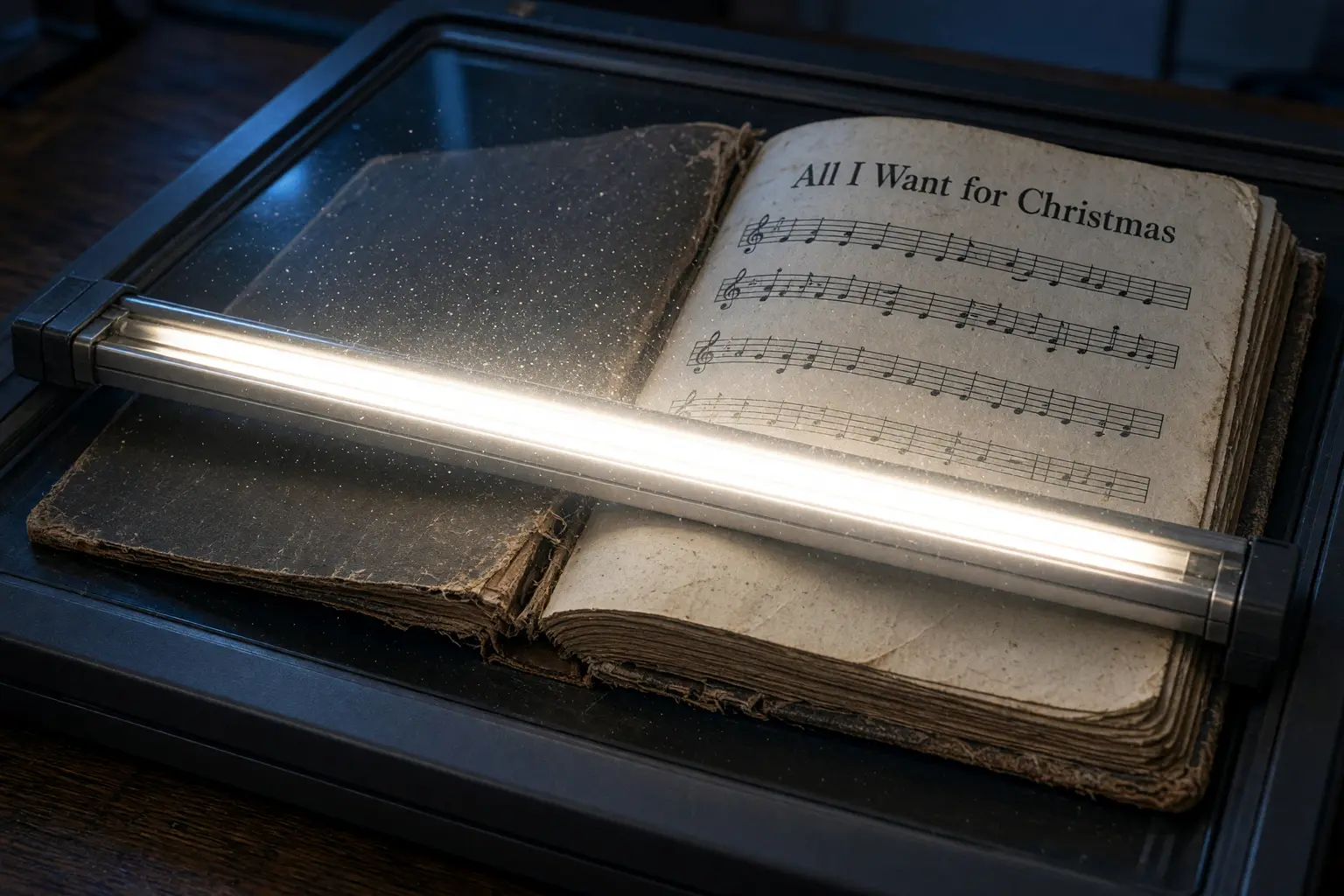
Among those files, the publishers say, were books that carried their lyrics and sheet music. Exhibit A is the list they say they can already prove. They argue BitTorrent copies on the way down and shares on the way up, so each grab hit both the reproduction right and the distribution right. They also say Anthropic built a central text library it planned to keep “forever.”
A court in the same district has already put a label on that collecting. In Bartz v. Anthropic, the complaint quotes the court calling the conduct “straightforward piracy but at massive scale.” Anthropic later paid authors and book publishers $1.5 billion and agreed to destroy the original LibGen and PiLiMi files. It also told that court the pirate sets were not in the training corpus of its commercially released models.
Sony and Warner are not bound by that deal. The book class released past acquisition claims through August 25, 2025, for works on a closed list. It did not release output claims. It did not release songs. It did not release Amodei or Mann from a new caption.
FROM LIBGEN TO SAN JOSE
- June 2021: Mann uses BitTorrent to take at least five million copies from LibGen, the complaint says.
- July 2022: Anthropic employees take at least two million more copies from PiLiMi.
- October 18, 2023: Concord, Universal, and ABKCO file the first lyrics case, covering 499 songs.
- June 2025: The Bartz court treats lawful training copies as fair use and treats a pirated library as something else.
- September 2025: Anthropic agrees to pay at least $1.5 billion to the book class.
- January 28, 2026: The same publishers file Concord II over more than 20,000 songs.
- July 20, 2026: A judge grants final approval of the book deal.
- August 28, 2026: Sony and Warner file this case and name the founders.
The complaint also accuses Anthropic of scraping licensed lyric pages at Musixmatch and LyricFind, pulling text from Common Crawl, The Pile, and Books3, and running a “destructive scanning” operation on second-hand physical books. In the publishers’ telling, the company then stripped copyright-management information so the songs would travel without a name attached.
Why Anthropic’s Fair Use Win May Not Cover Lyrics
Anthropic’s public answer is short. A spokesperson called the new case “the third lawsuit from the same lawyers, recycling allegations from cases already before the courts.” The same statement said training generative AI models is “a transformative fair use” as the Bartz court held, and that the company will “defend ourselves robustly.”
That fair-use win is real, and it is narrower than the quote. The U.S. Copyright Office’s index of the decision records a mixed result: the court treated training copies as fair use when the authors had not shown infringing outputs, and it treated downloading pirated books for a permanent library as not fair use, even if some of those books later went into training or were replaced with paid copies.
Sony and Warner plead both halves. They say the torrenting is its own wrong, full stop. They also say Claude’s outputs still copy lyrics and that the model is being used to mint “new” AI songs that compete with the catalog. Bartz never tried a lyrics-output case. The authors did not allege that Claude handed their prose back to users.
WHERE EXPERTS DISAGREE
- Anthropic: Training on text is transformative under Bartz, and this complaint recycles claims already pending in other music suits.
- The publishers: Torrenting pirate libraries is standalone copying, outputs still reproduce lyrics, and stripping credits hides the taking.
- The Bartz court: Learning from lawful copies can be fair use; stocking a library with pirated files is not.
The legal hole that actually matters is how the copies were obtained. A model that learns English from paid books is one story. A model whose builders seeded LibGen is another, and that second story already cost $1.5 billion without touching Sony’s or Warner’s songs.
Universal, Concord and the Cases Already Filed
Sony and Warner are late to a docket that already had the third major’s publisher on it. Concord Music Group, Universal Music Publishing Group, and ABKCO sued in October 2023 over 499 songs, later transferred to Northern California. In January they filed a second case after the book discovery showed the torrenting, seeking more than $3 billion over more than 20,000 songs. Amodei is already asking that court to drop the direct-infringement claim against him personally.
BMG sued in March over 493 compositions. Round Hill Music filed on August 17. With Sony and Warner in, the publishing arms of all three major music companies are now in court against the same lab, plus independent catalogs.
During nine days in September 2023, the month before Concord sued, the word “lyric” showed up in more than 170,000 Claude prompt and output records, nearly 20,000 a day, according to that earlier pleading. Investigators there say they pulled full verses for songs such as “A Change Is Gonna Come” and “Gimme Shelter.” This new complaint says the later guardrails still give way if a user asks twice.
THE PUBLISHER DOCKET AGAINST ANTHROPIC
| Plaintiffs | Filed | What they put in issue |
|---|---|---|
| Concord, Universal, ABKCO (Concord I) | October 18, 2023 | 499 songs, inputs and outputs |
| Concord, Universal, ABKCO (Concord II) | January 28, 2026 | More than 20,000 songs; more than $3 billion sought |
| BMG | March 2026 | 493 compositions |
| Round Hill Music | August 17, 2026 | Separate catalog claim |
| Sony Music Publishing, Warner Chappell | August 28, 2026 | Tens of thousands of compositions; Amodei and Mann named |
Ed Newton-Rex, a UK composer who campaigns on artists’ copyright, said he was “not surprised” that rightsholders were moving against a company with a “history of downloading and training their AI models on huge libraries.” The $1.5 billion went to book rightsholders, not to these publishers, and it closed only past copying of listed books. Music is a separate file.
Statutory Damages Reach $150,000 a Work
Federal law lets a copyright owner skip proof of lost sales and pick a number the court sets per work. Ordinary awards run from $750 to $30,000. If the owner proves the copying was willful, the willful maximum of $150,000 a work is on the table. The complaint also seeks up to $25,000 for each alleged removal or alteration of copyright-management information.
The publishers describe tens of thousands of musical compositions. They do not print a single damages total, and no court has awarded the willful cap here. A ceiling that high, applied work by work, is how the filing gets talked about in billions. Concord II already asks for more than $3 billion on a counted list of more than 20,000 songs. This case is built the same way, on a larger catalog, with two humans on the caption.
FOUR CLAIMS IN THE COMPLAINT
- Direct torrenting: Reproduction and distribution of pirate copies, pleaded against Anthropic, Amodei, and Mann.
- Contributory torrenting: Amodei and Mann accused of directing and approving the downloads.
- Broader copying: Training inputs, stored copies, and alleged verbatim outputs, pleaded against the company.
- Stripped credits: Removal or alteration of copyright-management information, pleaded against the company.
THE STATUTORY BANDS
| Finding | Per work, if awarded |
|---|---|
| Ordinary statutory damages | $750 to $30,000 |
| Willful infringement | Up to $150,000 |
| Copyright-management information stripped | Up to $25,000 |
They also want an injunction, destruction of infringing copies, and an accounting of Claude’s training data. Anthropic has not yet answered this complaint in court. Its spokesperson’s line is the record so far.
Six Songs and a German Injunction
U.S. fair-use talk is not the only law in the room. On July 31, Munich Regional Court I largely backed GEMA against Suno, the U.S. music generator, in a first-instance judgment that is not final. The chamber found that six works had been reproduced in training in the United States, memorized in model weights stored in Germany, and played back in outputs.
The songs were Kristina Bach’s “Atemlos durch die Nacht,” Boney M.’s “Daddy Cool” and “Rasputin,” Alphaville’s “Forever Young” and “Big in Japan,” and the refrain of “Mambo No. 5.” Lyrics were not in issue. The court said Germany’s text-and-data-mining exception did not cover storing the pieces in the model, and that U.S. fair use did not cover outputs that came back substantially similar after simple prompts.
The Munich court’s ruling against Suno drew a line the Bartz authors never had to draw. In Bartz, users were not shown the books. In Munich, the chamber said chance could not explain the playback of long, complex works. Sony and Warner are trying to put Claude on that second side of the line, with recited lyrics as the specimen instead of generated audio.
Suno can still appeal. The California jury Sony and Warner want has not been seated. The German judgment still matters because it is a court, looking at memorized music, saying the training-plus-output path is copying.
Founders Named Ahead of a $2 Trillion Listing
Personal defendants are the part of this caption that follows a company toward a listing. The complaint says Mann ran the LibGen torrent himself and directed the PiLiMi grabs, and that Amodei “expressly authorized and directed” both. “Without Dr. Amodei’s and Mr. Mann’s direction and approval, none of the foregoing torrenting activity would have occurred,” it says. That is still an allegation. Concord II is already testing whether those theories survive a motion to dismiss.
Anthropic filed confidentially in June to go public. Its last private round, a Series H in May, valued the company at $965 billion. Bankers have since discussed an autumn offering that would value it at $2 trillion, a figure the new complaint repeats in a footnote as the reason $1.5 billion does not sting. The company has not set that price. Investors have talked it up.
Judge Araceli Martínez-Olguín gave final approval of the $1.5 billion deal on July 20. By April 16, rightsholders had claimed 440,490 of the 482,460 works on the class list, 91.3 percent. Each listed work is slated for about $3,000 before fees. Anthropic still owes $450 million by September 25 and another $450 million by September 27, 2027, on that book case alone.
Those checks buy peace with the authors of listed books. They do not buy a license from Sony or Warner, and they do not take Amodei’s or Mann’s names off this new caption. Five days after the filing, the next Bartz installment is already on the calendar, and the lyrics case is only getting started.
Disclaimer: This article is news reporting and analysis of a filed lawsuit, related court records, and public statements about a possible share offering. It is informational only and does not constitute legal, investment, or financial advice. Readers should consult a qualified copyright lawyer before relying on any claim or damages theory discussed here, and a licensed financial adviser before making any decision tied to a private valuation or a future listing. Figures, case statuses, and valuation talk reflect the cited papers and statements as of September 2, 2026, and may change as the cases move.


Sony and Warner Sue Anthropic Over Torrented Song Lyrics

Microsoft 365 Auth Fault Took Down Exchange and Teams

Honor’s Robot Phone Works, Then Prices Itself Out

Florida Cities Top Retirement Rankings the Scores Cannot Explain

Walmart’s $50 Million Opioid Settlement Closes Case Without Admission

California Sues Over $120 Million Morro Bay Wind Lease Buyout

Gilead Bixlenvo FDA Nod Opens Single Pill Path for Complex HIV Cases

Meta’s $18B Kids Deal Forever Shields Data Used to Spot Under-13s

Lettuce Outbreak Drove Record Cyclospora Spike Across 20 States

Amazon Shaves $20 Off M6 Mac Mini Before It Even Ships

Take-Two CEO Pushes Netflix Subs for GTA 6 Extended Look

Quake Gets 19 Free Maps From MachineGames Quake Club

Destiny 2 Fans Unlock Vaulted Maps After Live Service Ends

Wildlands Free Update Hands Players the Tools They Already Invented

Stripe Bid Shows PayPal Moat Cracked After Years of Slide

Quordle Monday Delivers Gavel Crush Speed Ethos Cleanly

Tyson’s Five-Year Utah Plant Falls to Cattle Shortage Reckoning

Silver Lake Workday Talks Signal Private Floor for Software

Kennedy Lewis Takes Majority Control of The Greenbrier in $500M Deal

Best Buy Marks 60 Years With Sale That Echoes Its Audio Shop Roots
-

 TECHNOLOGY3 years ago
How to Adjust a Bulova Watch Band – An Easy Guide
-

 News3 years ago
Fred Pentland: Athletic Bilbao’s English mentor who changed the essence of Spanish football
-

 FINANCE3 years ago
Tax Planning for Every Season: Guide to Maximizing Your Tax Benefits
-

 Education3 years ago
African Ministers New Education Plan
-

 BUSINESS3 years ago
What is Entrepreneurial Operating System? A Comprehensive Guide to EOS
-

 Education3 years ago
Innovate Your Learning Journey with Technology and Enhance Education
-

 News3 years ago
Russians formally out of World Athletics Championships
-

 BUSINESS3 years ago
Top 9 Most Expensive American Cities to Rent an Apartment