
BUSINESS
Stripe Bid Shows PayPal Moat Cracked After Years of Slide
Talks heat for Stripe and Advent to buy PayPal above the rejected $60.50 share offer that valued it at $53 billion, as Lores turnaround meets a role-reversal deal.

Stripe and Advent International are negotiating a higher price for PayPal after the payments company rejected their July offer of $60.50 a share that valued it at roughly $53 billion, according to Wall Street Journal reporting on August 14. A deal could come together in the coming weeks.
PayPal declined to comment. A Stripe spokesperson said the company does not comment on rumors or speculation. Shares of PayPal rose about 1.7% Friday to around $61.66 after the fresh report, building on a 32.5% July surge driven by the initial bid news.
The July Offer and What Remains on the Table
Stripe and the buyout firm first approached in early April and submitted the formal $60.50 cash proposal earlier in July. Banks committed about $50 billion in financing. The price represented a roughly 28% premium to the prior close.
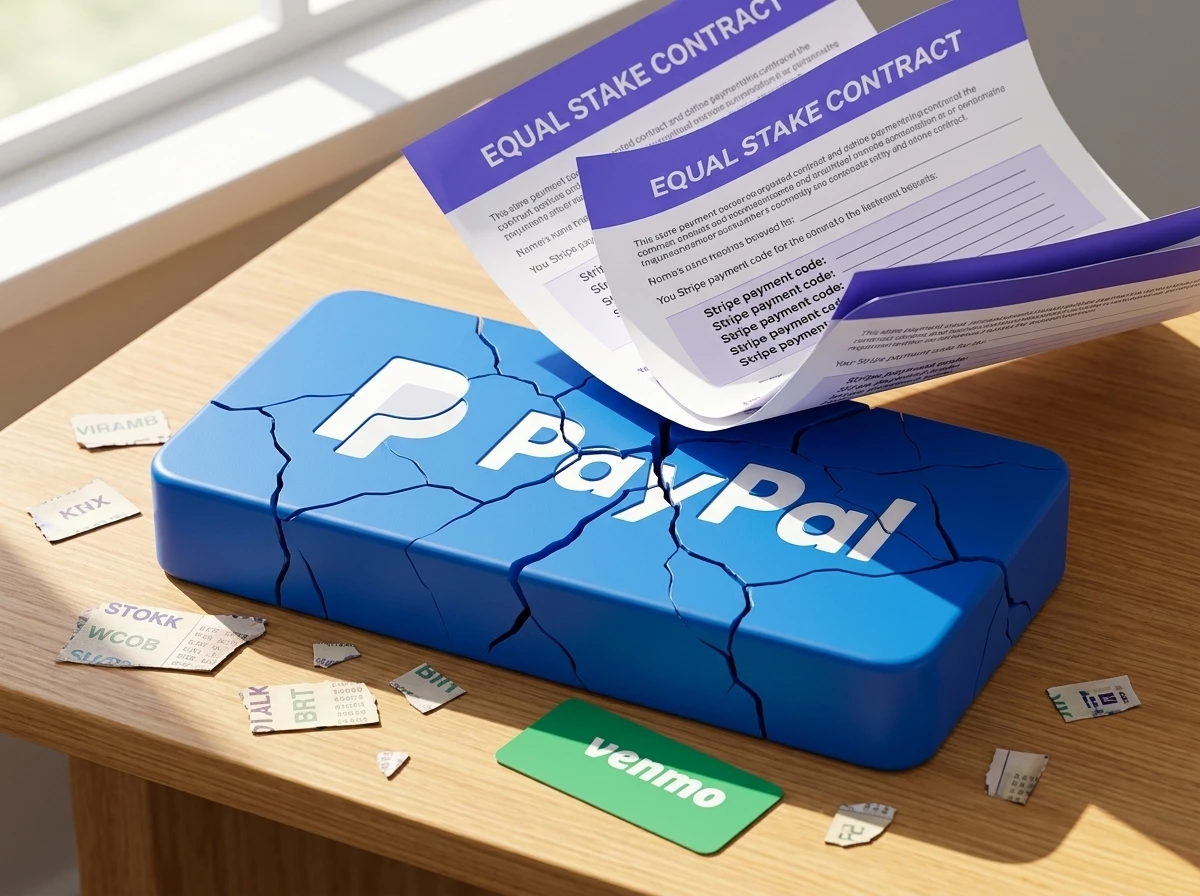
Under the structure, Stripe and Advent would each hold equal stakes and keep PayPal intact rather than break it up. Some reporting noted additional equity interest from other parties, but the core is the joint ownership.
| Metric | July Offer | Context |
|---|---|---|
| Price per share | $60.50 | Rejected as insufficient |
| Equity value | ~$53 billion | More than $53 billion in some tallies |
| Premium | ~28% | To Tuesday close before July news |
| Bank financing | ~$50 billion | Committed |
| Ownership | Equal Stripe + Advent | No breakup planned |
PayPal’s board viewed the bid as too low. Negotiations continued without a hard stop. Analysts at the time floated a possible move toward $70 if talks advanced. The same parties are now discussing terms above the original number.
Years of Share Loss Softened the Target
PayPal’s trajectory made it available. The company ballooned in the pandemic e-commerce boom then lost ground to Apple Pay, Google Pay, bank-backed Zelle and developer-focused Stripe itself.
- Peak market value: about $360 billion in July 2021
- Early 2026 low: roughly $40 billion, briefly below former parent eBay
- Recent level: near $52 billion ahead of the fresh talks
- Five-year drop: about 85% at the February trough
Active accounts still exceed 430 million, yet growth stalled and take rates compressed. Venmo’s peer-to-peer volumes lagged Zelle’s, which crossed $1 trillion annually while Venmo sat near $320 billion in recent full-year figures. The market cap history from 2013 shows the long arc from spin-off premium to multi-year grind lower.
Competition turned the checkout button from default to one option among many. That erosion is what puts the consumer network within reach of a buyer that already owns much of the merchant side.
Lores Arrives and Immediately Cuts Deep
The board appointed Enrique Lores president and CEO effective March 1, 2026, after concluding the pace of change under predecessor Alex Chriss fell short. Lores came from six-plus years running HP Inc., where he simplified costs and expanded beyond hardware.
His first moves arrived fast:
- Split the business into three operating models: checkout solutions and PayPal, consumer financial services including Venmo, and payment services plus crypto
- Executive reshuffle and recommitment to “becoming a technology company again”
- Cost program targeting roughly $1.5 billion in savings over two to three years, including a planned 20% workforce reduction
Lores told investors the focus was fundamentals and AI-driven efficiency. The same discipline that was meant to restore growth also made the company leaner and, in the eyes of buyers, more digestible. The turnaround plan and the sale process now run on parallel tracks.
What Stripe Gets That It Never Built
Stripe already powers more than 5 million businesses and processed $1.9 trillion in volume in 2025, up 34%. Its February $159 billion tender offer valuation underscored private-market strength; secondary indications later ran higher. The company has pushed hard into agentic commerce tools, stablecoins via Bridge, and programmable wallets.
What it has lacked is a massive direct consumer base and a ubiquitous checkout brand. PayPal supplies both, plus Venmo’s social payment graph. A combination would create a platform handling an estimated $3.7 trillion in annual payment volume and let more transactions stay inside one network, reducing card-network fees.
PayPal has assets that are incredibly valuable to Stripe but it won’t be an easy integration
Fintech investor Sheel Mohnot wrote that line in July after the first bid surfaced; the post drew hundreds of likes. The friction is real. Cultures differ, tech stacks differ, and regulators will examine concentration in online payments. Yet the strategic logic is clear: the merchant-side specialist absorbs the consumer-side incumbent it spent a decade outflanking.
Global private equity investor Advent brings the capital and buyout playbook. The firm has backed other payments names and would share ownership equally with Stripe. Similar PE interest has surfaced elsewhere, including PE appetite tests in software that also feature large take-private talks.
From eBay Spin to Role Reversal
PayPal was founded in 1998 by a group that included Peter Thiel, Elon Musk and Max Levchin. eBay bought it in 2002 and spun it out in 2015. At separation PayPal’s value sat near $49 billion against eBay’s roughly $35 billion. The payments unit looked like the growth engine.
- July 2015: Spin-off completed; PayPal trades independently larger than eBay
- July 2021: Market cap peaks near $360 billion on pandemic volumes
- 2022-2025: Growth slows, competition intensifies, stock grinds lower
- February 2026: Market value dips below eBay; Lores named CEO
- July 2026: Stripe-Advent $60.50 bid surfaces; shares jump nearly 17%
- August 2026: Talks continue at a potentially higher price
The arc is complete enough that the developer-first company now sits as potential acquirer of the brand that once defined digital wallets. An earlier $53 billion takeover approach already reset the valuation conversation; the current round tests how much more PayPal’s board can extract.
Price, Antitrust and the Weeks Ahead
What we know
- Original $60.50 offer rejected; higher price under discussion
- Equal Stripe-Advent ownership, company kept whole
- Roughly $50 billion bank financing attached to the first bid
- Deal possible within weeks per sources
What’s unconfirmed
- Exact revised price or final structure
- Whether other bidders remain active
- Full regulatory path and any required remedies
Antitrust review in the United States and Europe would be substantial. Combining two of the largest online payment networks invites scrutiny over merchant fees, consumer choice and data. Financing details for any raised bid have not been disclosed publicly. PayPal’s board must weigh a clean premium exit against Lores’ multi-year plan still in its first months.
If the sides close, Stripe gains the consumer distribution it has long needed and Advent locks in a large-scale payments platform. PayPal shareholders cash out of a stock that spent years under pressure. Employees face the integration and the already-announced cuts. The wider industry sees further consolidation after other large payments deals. The next few weeks will show whether the higher number is enough to finish what the July bid started.


Sony and Warner Sue Anthropic Over Torrented Song Lyrics

Microsoft 365 Auth Fault Took Down Exchange and Teams

Honor’s Robot Phone Works, Then Prices Itself Out

Florida Cities Top Retirement Rankings the Scores Cannot Explain

Walmart’s $50 Million Opioid Settlement Closes Case Without Admission

California Sues Over $120 Million Morro Bay Wind Lease Buyout

Gilead Bixlenvo FDA Nod Opens Single Pill Path for Complex HIV Cases

Meta’s $18B Kids Deal Forever Shields Data Used to Spot Under-13s

Lettuce Outbreak Drove Record Cyclospora Spike Across 20 States

Amazon Shaves $20 Off M6 Mac Mini Before It Even Ships

Take-Two CEO Pushes Netflix Subs for GTA 6 Extended Look

Quake Gets 19 Free Maps From MachineGames Quake Club

Destiny 2 Fans Unlock Vaulted Maps After Live Service Ends

Wildlands Free Update Hands Players the Tools They Already Invented

Stripe Bid Shows PayPal Moat Cracked After Years of Slide

Quordle Monday Delivers Gavel Crush Speed Ethos Cleanly

Tyson’s Five-Year Utah Plant Falls to Cattle Shortage Reckoning

Silver Lake Workday Talks Signal Private Floor for Software

Kennedy Lewis Takes Majority Control of The Greenbrier in $500M Deal

Best Buy Marks 60 Years With Sale That Echoes Its Audio Shop Roots
-

 TECHNOLOGY3 years ago
How to Adjust a Bulova Watch Band – An Easy Guide
-

 News3 years ago
Fred Pentland: Athletic Bilbao’s English mentor who changed the essence of Spanish football
-

 FINANCE3 years ago
Tax Planning for Every Season: Guide to Maximizing Your Tax Benefits
-

 Education3 years ago
African Ministers New Education Plan
-

 BUSINESS3 years ago
What is Entrepreneurial Operating System? A Comprehensive Guide to EOS
-

 Education3 years ago
Innovate Your Learning Journey with Technology and Enhance Education
-

 News3 years ago
Russians formally out of World Athletics Championships
-

 BUSINESS3 years ago
Top 9 Most Expensive American Cities to Rent an Apartment