
Health
Lettuce Outbreak Drove Record Cyclospora Spike Across 20 States
The iceberg lettuce cluster from Taylor Farms de Mexico accounts for most of a 15-fold national cyclosporiasis surge.

The Centers for Disease Control and Prevention now links 11,458 illnesses across 20 states to contaminated iceberg lettuce from Taylor Farms de Mexico, with 495 hospitalizations and two deaths. Georgia, Tennessee and Texas joined the list in the Aug. 27 update, pushing the multistate cluster higher by 528 cases since Aug. 20.
Most people fell ill before the July 17 recall. Best-by dates have passed, and the product is gone from stores and restaurants. Yet the national cyclosporiasis tally keeps climbing, driven largely by this outbreak while other sources remain unidentified.
The gap between a finished recall and a still-rising case curve is the central tension in the federal updates. Confirmed illnesses keep landing in the surveillance system long after the lettuce left the cold chain.
Case Counts Climbed Through Late August
Illness onsets in the lettuce-linked cluster ran from June 14 through Aug. 15. CDC and FDA report only laboratory-confirmed cases. The true total is higher because many recover without testing and recent onsets take up to six weeks to appear in federal data.
Updates show steady growth even after the product left the market:
| Update Date | Cases | Hospitalizations | States |
|---|---|---|---|
| July 24 | 1,947 | 98 | 9 |
| Aug. 5 | 6,358 | 278 | 15 |
| Aug. 13 | 9,481 | 398 | 17 |
| Aug. 20 | 10,930 | 454 | 17 |
| Aug. 27 | 11,458 | 495 | 20 |
The jump from 1,947 cases on July 24 to 6,358 by Aug. 5 marked the steepest climb in the published series. Later updates added thousands more even as the recall aged past a month. Hospitalizations tracked the same arc, rising from 98 to 495 across those five snapshots.
State count growth lagged case growth at first, then caught up when Georgia, Tennessee and Texas entered the Aug. 27 line. The pattern fits a wide food-service distribution footprint that seeded many jurisdictions before any single state list looked complete.
The two deaths occurred in Michigan. Both people had significant underlying conditions that dehydration and illness may have worsened. Onsets for those cases also predated the recall.
- 495 hospitalizations tied to the lettuce cluster
- 2 deaths, both in Michigan
- 20 states with confirmed linked cases after Georgia, Tennessee and Texas added
- Onsets continuing into mid-August despite July 17 removal
How Traceback Landed on Taylor Farms de Mexico
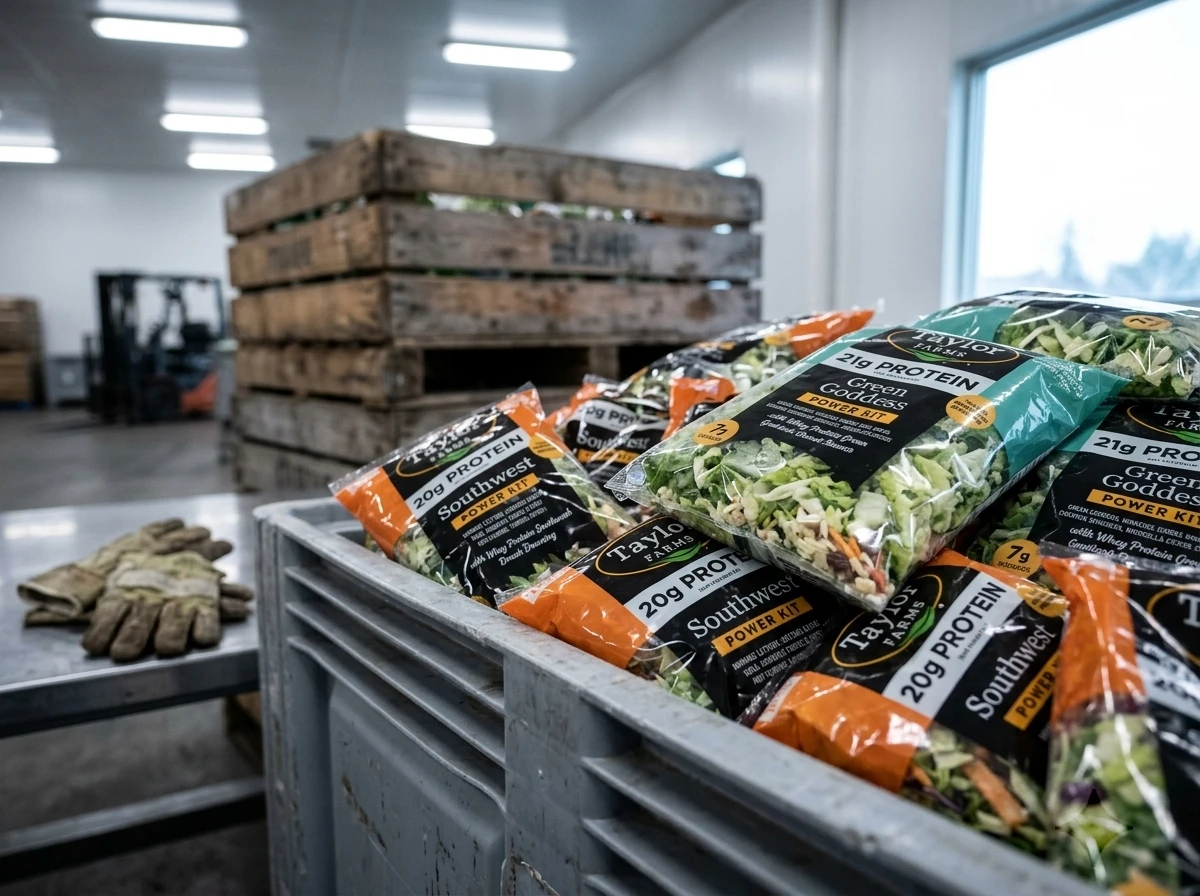
Early interviews pointed to shredded iceberg lettuce at Taco Bell locations. FDA traceback to central Mexico converged on a single processor, Taylor Farms de Mexico. The company initiated a voluntary recall of all iceberg lettuce sourced from the region on July 17.
Recalled items included Marketside Iceberg Salad and Shredded Lettuce sold at select Walmart stores, plus numerous food-service packs under codes such as CV, JB, MARK, SY and TF. Distribution reached more than 30 states for food service and a shorter list for retail. Taco Bell stopped using the product the same day.
That dual-channel footprint helps explain the scale. Food-service packs moved through broad distributor networks. Retail bags reached a narrower set of shoppers. Both streams traced back to the same regional source once investigators lined up invoices, shipment logs and illness dates.
Taylor Farms said it suspended all iceberg lettuce sourcing and production from central Mexico, notified customers, and brought independent experts in for a full review of its Guanajuato facility. The company noted that no Taylor Farms-branded retail bags were part of the recall and that best-by dates had expired.
On Aug. 28 the FDA classified the recall as Class I, the highest risk level, because of the strength of the epidemiology and the scale of serious outcomes. The agency stressed this was a routine post-recall classification, not a new expansion or upgrade of the original action. FDA remains confident none of the recalled lettuce stays on the market after audit checks.
Class I status does not reopen the recall or add new lot codes. It records the severity already visible in the case and hospitalization counts and locks in the public record of risk once the product is gone.
National Numbers Dwarf the Prior Season
Since May 1, CDC has logged 17,180 laboratory-confirmed cases of cyclosporiasis acquired inside the United States. That compares with 1,180 cases in the same window of 2025. An additional 11,844 cases await confirmation or further review. Hospitalizations national total 922; the two deaths sit inside the lettuce cluster.
| Metric | 2026 (May 1-Aug 24) | 2025 Same Window |
|---|---|---|
| Lab-confirmed domestic cases | 17,180 | 1,180 |
| Hospitalizations | 922 | n/a in comparison |
| Deaths | 2 | 0 reported in period |
| States + DC reporting | 48 + DC | lower volume |
Median age of domestic cases is 46. Fifty-six percent are female. Median symptom start was July 7. Michigan and Ohio have carried the heaviest state loads; Michigan alone has reported far higher totals on its own dashboards that include probable cases.
CDC calls the Taylor Farms multistate outbreak a major driver of the 2026 increase. At least six other clusters remain under investigation with no source confirmed. The 2019 season, previously the worst on record, produced about 4,700 cases for the full year.
Put beside those benchmarks, the lettuce cluster alone already exceeds the entire 2019 year-end figure. The 2026 domestic total through late August is more than fourteen times the same window in 2025. Pending reviews on the additional 11,844 reports mean the final season tally can still move higher.
- 11,458 cases tied to the Taylor Farms de Mexico lettuce cluster
- 17,180 lab-confirmed domestic cases since May 1
- About 4,700 cases in the full 2019 season, the prior record
- 1,180 cases in the same May-to-late-August window of 2025
Why Totals Rise Weeks After the Product Disappeared
Cyclospora does not spread person to person. Infection comes from food or water contaminated with the parasite. Symptoms typically start about a week after exposure, ranging from two days to two weeks or longer. Watery diarrhea, loss of appetite, weight loss, cramping, bloating, gas, nausea and fatigue are common. Untreated illness can last days to more than a month and may relapse.
Routine stool tests often miss Cyclospora. Patients must specifically request testing. That gap, plus the time from illness to doctor visit to lab confirmation to state reporting to CDC, produces the six-week lag. People who never seek care never enter the count.
- June 14 earliest linked onset
- June 29-July 16 distribution window for the recalled shredded product
- July 17 Taylor Farms de Mexico recall and Taco Bell switch
- Aug. 15 latest onset date in the Aug. 27 update
- Aug. 27-28 20-state expansion and Class I classification
Crowd discussion on X has repeatedly flagged the need to ask clinicians for Cyclospora-specific testing because standard panels skip it. That under-testing helps explain why official numbers trail the lived experience in high-burden states.
Onset dates that run into mid-August, weeks after the July 17 removal, fit the known incubation range and the reporting lag rather than ongoing sales. Distribution ended in the June 29-July 16 window. Illnesses that began near Aug. 15 still fall inside a long tail once exposure timing and lab delays stack together.
Who Faced the Heaviest Load
Food-service channels amplified exposure. Shredded iceberg traveled through distributors such as Sysco to restaurants, schools, hospitals and hotels. Early cases clustered around Taco Bell meals. Retail Marketside bags reached Walmart shoppers in a shorter list of states.
States with linked cases as of Aug. 27: Arkansas, Georgia, Iowa, Illinois, Indiana, Kansas, Kentucky, Maine, Massachusetts, Michigan, Missouri, Nebraska, New Hampshire, North Carolina, Ohio, Oklahoma, Pennsylvania, Tennessee, Texas and West Virginia. Product may have reached additional jurisdictions.
A single shredded ingredient used across many menu items multiplies servings per case of lettuce. Schools, hospitals and hotels add institutional volume on top of restaurant traffic. That is why food-service distribution into more than 30 states can outpace a shorter retail list in raw case production.
People with weakened immune systems face longer and more severe illness. Dehydration is the main immediate risk. Treatment is available once the parasite is identified; supportive care for fluid loss matters in the meantime.
The strength of the epidemiology connecting the outbreak to the recalled lettuce, along with the scope and severity of this multi-state outbreak, are significant and unprecedented compared to prior Cyclospora incidents.
U.S. Food and Drug Administration, Class I classification notice, Aug. 28, 2026
Other Clusters and the Import Supply Reality
CDC and FDA are still investigating at least six additional cyclosporiasis clusters. No food vehicle has been named for them. The agency says it is unlikely one common source explains every national case.
Taylor Farms stated it has invested more than $200 million a year in food-safety protocols, uses independently audited systems, and follows FDA-validated testing for Cyclospora. The company said it has temporarily suspended production at the central Mexico facility under review and will not resume sourcing iceberg from the region for the rest of the season. FDA inspections and sampling at growers and the processor continue in coordination with Mexican officials. No confirmed positive product samples have been publicly reported after an earlier false-positive result was corrected.
The suspension leaves the rest-of-season supply question hanging for buyers who relied on that regional iceberg. Investigators still have not pinned the exact contamination point on the farm or in processing, so the open clusters and the named outbreak remain separate threads.
What We Know
- Iceberg lettuce from Taylor Farms de Mexico is the confirmed vehicle for the 11,458-case multistate outbreak
- Product is off the market; best-by dates expired
- National domestic lab-confirmed cases stand at 17,180 since May 1
- Genotyping links the parasites in the lettuce cluster to one another
What’s Unconfirmed
- Exact contamination point on the farm or in processing
- Sources for the other six-plus open clusters
- Final total once all lagged reports clear
- Whether additional retail or restaurant channels will surface
Washing produce under running water remains standard advice, though it does not guarantee removal of Cyclospora. Cooking to 158°F kills the parasite. Consumers who ate shredded iceberg in the weeks before symptoms and still feel ill should contact a clinician and request specific testing.
The Class I Label Closed a Paper Trail
FDA’s Aug. 28 Class I notice arrived more than a month after the July 17 voluntary recall. By then best-by dates had expired and audit checks had found no recalled lettuce still on the market. The classification still mattered for the record.
Class I is reserved for products that could cause serious health consequences. The agency pointed to the strength of the epidemiology and to the scope of hospitalizations and deaths already counted. It framed the step as routine post-recall work, not a signal that new lots had entered commerce.
For states finishing interviews, the label freezes the risk ranking attached to the named vehicle. For the company, it coincides with the full review at the Guanajuato facility and the decision to keep central Mexico iceberg out of the supply stream for the rest of the season.
Open Questions Still Shape the Season Count
Genotyping already ties parasites inside the lettuce cluster to one another. That laboratory link underpins the 11,458-case total even while the precise contamination step stays unknown. The same clarity does not yet extend to the other six-plus clusters.
National surveillance still holds 11,844 reports awaiting confirmation or further review. Some share of those may join the domestic season total. Some may fall away. Either path moves the comparison with 2025 and with the 2019 record.
High-burden states such as Michigan and Ohio will keep updating dashboards that mix confirmed and probable cases. Federal tables will keep moving on the slower lab-confirmed track. Both views can be true at once while the investigation remains open.
| Layer | Current figure | What could still change |
|---|---|---|
| Lettuce multistate cluster | 11,458 cases | Lagged lab confirmations and state interviews |
| Domestic season total | 17,180 lab-confirmed | Reviews of 11,844 pending reports |
| Other clusters | At least six open | Food vehicle identification |
| Market status | Recalled product gone | No further retail recovery expected |
The investigation remains open. Case counts for both the lettuce cluster and the broader season will continue to shift as states finish interviews and labs finish work that began weeks earlier.


Walmart’s $50 Million Opioid Settlement Closes Case Without Admission

California Sues Over $120 Million Morro Bay Wind Lease Buyout

Gilead Bixlenvo FDA Nod Opens Single Pill Path for Complex HIV Cases

Meta’s $18B Kids Deal Forever Shields Data Used to Spot Under-13s

Lettuce Outbreak Drove Record Cyclospora Spike Across 20 States

Amazon Shaves $20 Off M6 Mac Mini Before It Even Ships

SpaceX Louisiana Port Tests Debt Markets on Orbital AI Scale

Microsoft High Lifts Indexes as Small Caps Crack Support

Apple Replays 2015 Saturday Midnight Preorder for iPhone 18 Pro

Updated COVID Shots Clear FDA but Access Friction Hits High-Risk Groups

Take-Two CEO Pushes Netflix Subs for GTA 6 Extended Look

Halo Campaign Evolved Skulls Meet Death Barriers That Kill the Hunt

Wildlands Free Update Hands Players the Tools They Already Invented

Destiny 2 Fans Unlock Vaulted Maps After Live Service Ends

Quake Gets 19 Free Maps From MachineGames Quake Club

Quordle Monday Delivers Gavel Crush Speed Ethos Cleanly

Stripe Bid Shows PayPal Moat Cracked After Years of Slide

Tyson’s Five-Year Utah Plant Falls to Cattle Shortage Reckoning

Silver Lake Workday Talks Signal Private Floor for Software

Kennedy Lewis Takes Majority Control of The Greenbrier in $500M Deal
-

 TECHNOLOGY3 years ago
How to Adjust a Bulova Watch Band – An Easy Guide
-

 News3 years ago
Fred Pentland: Athletic Bilbao’s English mentor who changed the essence of Spanish football
-

 FINANCE3 years ago
Tax Planning for Every Season: Guide to Maximizing Your Tax Benefits
-

 Education3 years ago
African Ministers New Education Plan
-

 BUSINESS3 years ago
What is Entrepreneurial Operating System? A Comprehensive Guide to EOS
-

 Education3 years ago
Innovate Your Learning Journey with Technology and Enhance Education
-

 News3 years ago
Russians formally out of World Athletics Championships
-

 BUSINESS3 years ago
Top 9 Most Expensive American Cities to Rent an Apartment