
News
Solar Zoning Sparks Heated Debate in Allen County as Residents Pack Public Hearing

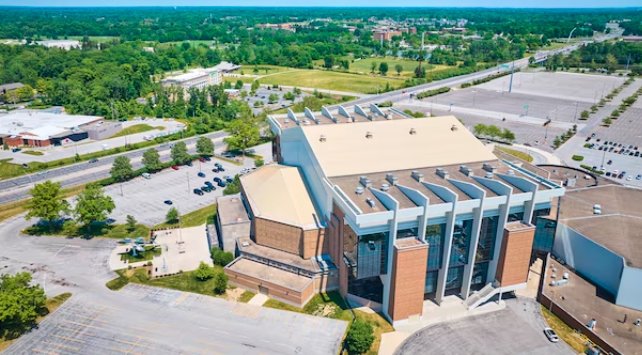
The Allen County Plan Commission’s public hearing on Thursday drew a passionate crowd and plenty of tension, as residents, advocacy groups, and officials met to discuss sweeping changes to the county’s solar zoning ordinance. The hearing, which took place at the Allen County War Memorial Coliseum, turned into more than just a routine policy meeting — it became a clash of values.
At the center of it all? A proposal to redefine commercial solar energy systems, update existing language, and set design standards that some argue could reshape the landscape of local energy development for years to come.
Packed Room, Packed Emotions
By 5:30 p.m., the conference center was already buzzing.
Groups for and against the amendment had lined up their speakers, presentations loaded and nerves showing. Each group was given 15 minutes. Individuals got 90 seconds. And yet, the crowd’s energy felt too big to fit inside any time limit.
A hush fell as the session opened, but it didn’t take long for emotions to rise.
One resident, Jennifer Morales, told commissioners, “This is our land. We want clean energy, but not at the cost of our farmland or our homes.”
On the flip side, supporters like Kyle Benson from Solar Future Indiana pushed back: “The updates bring clarity and opportunity. They give us a way to grow responsibly.”
At one point, a back-and-forth between two attendees nearly halted the proceedings, prompting moderators to remind everyone of decorum.
What’s Actually in the Amendment?
The meat of the proposed amendment is fairly technical — but its implications are anything but.
At its core, the draft includes:
-
A new definition for Commercial Solar Energy (CSE) Systems
-
Requirements for setbacks, fencing, and screening
-
Clarifications for decommissioning expectations
-
Language updates based on three years of ordinance usage
Here’s a snapshot of some of the core zoning considerations laid out in the proposed amendment:
| Topic | Current Ordinance | Proposed Amendment |
|---|---|---|
| System Definition | Not clearly defined | Explicit definition of CSE Systems |
| Setback Requirements | General setback guidelines | Minimum 150 ft from residential zoning |
| Fencing & Landscaping | Vague or unspecified | Mandatory visual screening, fencing |
| Decommissioning Plans | Case-by-case basis | Must include full cost estimate upfront |
| Community Input Process | Basic notice requirements | Expanded notification zones |
The proposal is slated to take effect on September 7, if adopted by the Commission.
How the Process Played Out
The structure of the hearing was tightly organized. It had to be, given the turnout.
Groups were required to sign up a full week in advance. Their 15-minute presentation slots were enforced with visible timers. Individual speakers — who had to register at least one day prior — were ushered in quickly, given just 90 seconds each.
A few last-minute sign-ups were permitted the day of, but they were the exception, not the rule.
Two speakers had to be reminded to wrap up mid-sentence. One walked away visibly frustrated. Still, the Commission stuck to its timeline.
One staff member told a reporter quietly, “It’s not perfect, but if we didn’t have rules tonight, we’d be here until sunrise.”
Solar Supporters Say the Future Depends on It
Not everyone saw the amendment as a threat.
Representatives from green energy firms and climate advocates argued it could provide much-needed structure to accelerate solar adoption, not slow it down.
Kendra Phelps from Fort Wayne Renewables said, “This amendment fixes gray areas that have held up responsible projects. We’ve waited years for this clarity.”
Others pointed out Indiana’s lag behind neighboring states like Illinois, where commercial solar installations are rising thanks to regulatory streamlining.
“You don’t get to have solar at scale without setting rules,” said Nathan Li, a renewable energy attorney present at the hearing. “It’s time Allen County gets this right.”
One young student even stood up to speak: “We’re going to live with the consequences of what you decide. Please make it count.”
Critics Worry About Loss of Rural Identity
Still, many residents — especially from the county’s rural outskirts — weren’t convinced.
Several farmers expressed concerns that the CSE definition and setbacks would allow solar farms to dominate wide areas of cropland. One farmer teared up while saying, “I don’t want to look out my window and see glass fields where corn used to be.”
Their arguments weren’t just emotional. Some pointed to declining property values near other solar installations, while others raised questions about battery storage safety and visual impacts.
“We are not anti-solar,” said Mary Taggert, a representative from Allen County Land Advocates. “We’re for smart solar. What’s being proposed doesn’t protect our homes or our way of life.”
At one point, Taggert held up a zoning map, showing clusters of solar permit applications surrounding her neighborhood.
“This isn’t balanced,” she said. “This is targeted.”
What Happens Next?
Now that the public hearing is over, the ball moves back to the Commission.
Commissioners will review all public feedback, both from the hearing and written submissions, before voting on the proposed changes. No date has been set for the vote yet, but some expect it could happen in late July or early August.
A Commission spokesperson emphasized that further tweaks to the draft are still possible. “This was a listening session. Nothing’s final yet.”
Still, both sides left the Coliseum Thursday night with a sense that what happens next will shape more than just a zoning document. It might shape Allen County’s energy future — and its identity.










Geekbench 7 Launches and Erases Three Years of Scores

Google’s Selfie Video Sign-In Arrives as Deepfake Fraud Surges

Samsung’s New Galaxy Z Fold 8 Undercuts Its Own Ultra

Kroger and Brookshire’s Recall Over 19 Million Eggs for Salmonella

Mortgage Rates Hit an 11-Month High as Oil Fears Bite

Oil’s Price Shock Collides With Wall Street’s AI Spending Boom

Parsley and Cilantro Emerge as Cyclospora Suspects in North Carolina

Walmart Dresser Recall Reveals a Wider Furniture Safety Sweep

Apple’s iOS 27 Speed Fixes Echo Its 2018 Playbook

Cheshire Medical Center Cyclospora Cluster Exposes a Wider Outbreak

Pokémon GO Developer Niantic Rebrands as Scopely Explore

Persona 4 Revival Hands All Anime Cutscenes to Studio MAPPA

Doom Studio id Software Cuts Half Its Staff in Xbox Layoffs

Jaylen Brown Traded to 76ers for Paul George and Four Draft Picks

Nintendo Switch Online Adds Four Classics and One Japan-Only Title

Jordan Henderson Hospitalized After Wrist Injury at the Azteca

Mexico’s World Cup Run Ends at Azteca as England Hold On 3-2

Meta’s Muse Image Lets Anyone Use Your Instagram Photos in AI

Louis Vuitton Beats Molly Tea in China, Triggers Cultural Backlash

Marine Cloud Brightening Could Weaken Super El Niños, Study Says
-

 TECHNOLOGY3 years ago
How to Adjust a Bulova Watch Band – An Easy Guide
-

 News3 years ago
Fred Pentland: Athletic Bilbao’s English mentor who changed the essence of Spanish football
-

 FINANCE3 years ago
Tax Planning for Every Season: Guide to Maximizing Your Tax Benefits
-

 Education3 years ago
African Ministers New Education Plan
-

 BUSINESS3 years ago
What is Entrepreneurial Operating System? A Comprehensive Guide to EOS
-

 Education3 years ago
Innovate Your Learning Journey with Technology and Enhance Education
-

 News3 years ago
Russians formally out of World Athletics Championships
-

 BUSINESS3 years ago
Top 9 Most Expensive American Cities to Rent an Apartment