
News
Apple Lifts Trade-In Credits Ahead of Costly iPhone 18 Cycle
Apple boosted iPhone, Mac and iPad trade-in estimates by as much as 28 percent, softening the path to higher-priced fall hardware driven by memory costs.

Apple raised its U.S. trade-in estimates on August 6, lifting most iPhone, iPad, Mac and Apple Watch values and adding several new Android models. The iPhone 16 Pro Max now tops the phone list at up to $720, while the Mac mini jumped roughly 28 percent to $480.
The update lands weeks before the expected iPhone 18 Pro launch and follows months of memory-chip cost pressure that has already pushed prices higher on many Apple products.
The change is broad rather than surgical. Phones, tablets and desktops all moved in the same direction, with only a handful of older or entry models left untouched. That pattern matters for anyone weighing a trade before the next product cycle arrives.
The Fresh Estimates Across Apple’s Lineup
According to MacRumors and 9to5Mac, which first flagged the change against the May figures, gains reached nearly 30 percent on some devices. Final credit still depends on condition and configuration, and Apple lists the figures as “up to” amounts on its current Apple Trade In estimates.
Key iPhone moves include:
| Model | Previous (May) | New (August) |
|---|---|---|
| iPhone 16 Pro Max | $695 | $720 |
| iPhone 16 Pro | $560 | $630 |
| iPhone 15 Pro Max | $490 | $530 |
| iPhone 14 Pro Max | $375 | $405 |
| iPhone 13 Pro | $260 | $285 |
| iPhone 12 | $125 | $135 |
Every current iPad also rose: iPad Pro to $720, iPad Air to $490, iPad mini to $300 and standard iPad to $260. Several older iPhones and the iPhone 16e stayed flat.
The iPad lifts put the top tablet credit in the same band as the top phone credit. Both the iPad Pro and the iPhone 16 Pro Max now reach $720. That parity is unusual and gives buyers more flexibility when they decide which device to hand in.
Flat lines on the older phones and the iPhone 16e show the update was selective. Apple concentrated the gains where demand for used units remains strongest and left the long tail of the catalog alone.
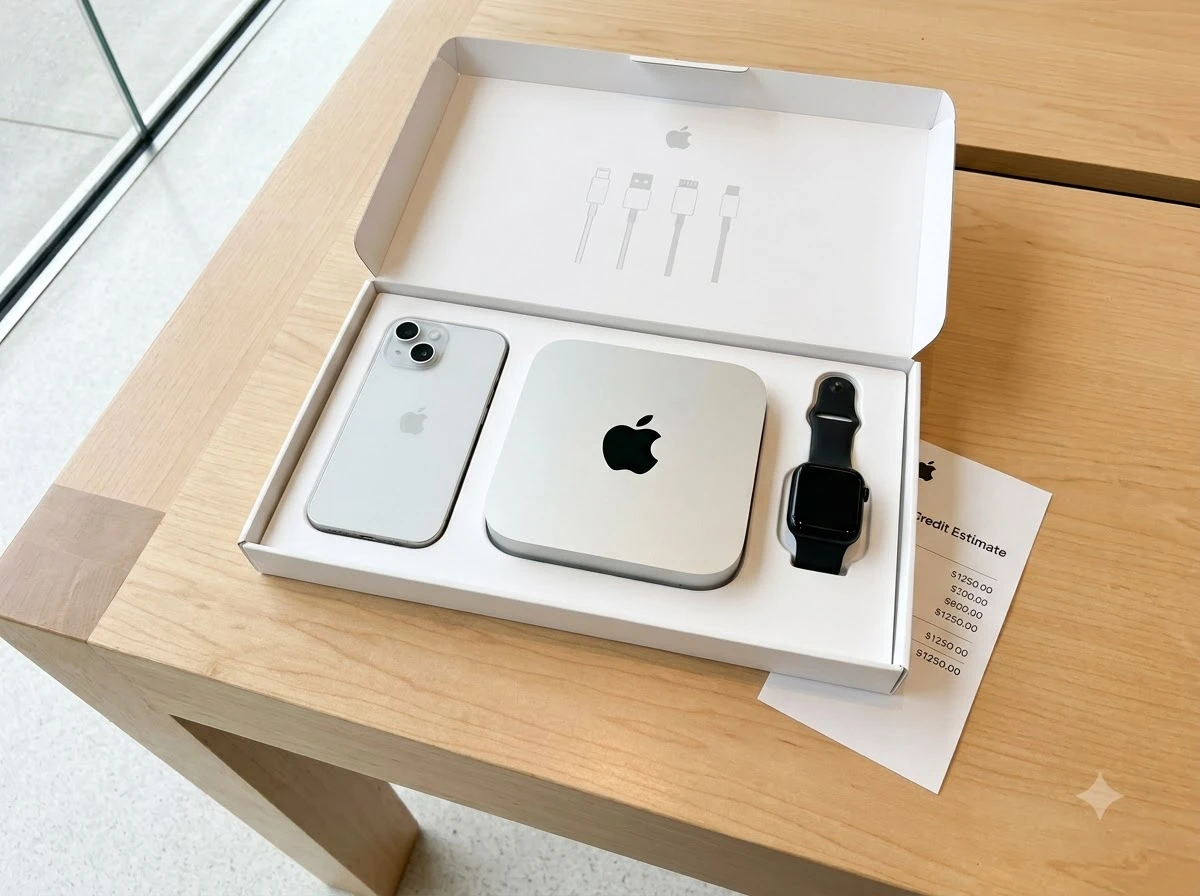
Macs Posted the Steepest Percentage Gains
Desktop and notebook Macs saw the sharpest relative lifts, consistent with the component scarcity that has already forced retail price increases on new Macs and iPads this year.
- Mac mini: $375 to $480 (about 28 percent)
- MacBook Pro: $690 to $855
- Mac Studio: $1,045 to $1,305
- MacBook Air: $520 to $580
- Mac Pro: $2,045 to $2,195
The iMac Pro held steady. Owners of recent Mac minis have noted online that the new trade-in figure sits close to what some paid at launch, a rare retention of value in a fast-depreciating category.
The Mac mini’s jump is the clearest signal in the set. A machine that often loses value quickly now returns a credit near its original street price for recent buyers. That outcome tracks the same memory and storage cost pressure already visible in new Mac list prices.
Notebooks moved in step. The MacBook Pro and MacBook Air both climbed, and the Mac Studio recorded one of the largest absolute dollar moves in the entire update. Even the Mac Pro, a lower-volume machine, ticked higher rather than holding still.
Why the Bump Arrives Now
Apple periodically revises estimates. The last broad update came in late May. This round’s timing and size point past routine maintenance.
iPhone 18 Pro and Pro Max are widely expected next month, with a foldable model also in the mix. Analysts at SAG project that 53 percent of brand-new iPhone purchases in 2026 will involve a professional trade-in program, up from 50 percent the year before. Higher credits keep the net cost of upgrading attractive even if starting prices climb.
Memory costs sit at the center. AI data-center demand has driven DRAM and storage prices sharply higher. Apple has already raised list prices on multiple Macs, iPads and accessories. Crowd reaction on X immediately framed the trade-in lift as preparation for similar pressure on the fall phones. One widely shared post called it “the first sign that Apple plans to raise iPhone prices next month,” drawing thousands of likes and replies speculating on $100-$200 Pro increases.
By raising credits now, Apple reduces the sticker shock for customers who evaluate net upgrade cost rather than full retail. The same move also pulls more devices into Apple’s own refurbishment and recycling stream before the launch rush.
The calendar itself does work for Apple. An August revision gives shoppers several weeks to check values, lock in a credit, and schedule a trade before the September window closes. Waiting until after the keynote usually means older stock hits the secondary market and estimates soften.
Android Models Join the List
Apple expanded the Android side of the program. New entries include the Google Pixel 9 Pro XL at up to $315, Pixel 9 Pro at $305, Pixel 9 at $210, OnePlus 13 at $250 and OnePlus 13R at $165, plus the Samsung Galaxy S21 Ultra at $95.
Some older Android values slipped a few dollars. The expansion still gives switchers a cleaner path into the Apple Store or online checkout without needing a third-party middleman first.
The new Android tier is tiered by recency and position in each brand’s lineup:
- Pixel 9 Pro XL and Pixel 9 Pro anchor the top of the Google range at $315 and $305
- The base Pixel 9 lands at $210
- OnePlus 13 and 13R fill the mid band at $250 and $165
- Galaxy S21 Ultra remains available at $95 for older Samsung stock
That spread lets a switcher see a concrete number before walking into a store or starting checkout. It also keeps the comparison inside Apple’s own flow instead of sending the customer to a separate buy-back site first.
Who Holds More Credit Today
Owners of recent Pro iPhones, current MacBooks and Mac minis see the largest absolute or percentage gains. Someone trading an iPhone 16 Pro now collects up to $70 more than in May. A Mac mini owner gains $105.
The window is short for anyone planning to sell outside Apple. Independent advice has long held that the weeks just before a major iPhone announcement are the high-value period; values typically soften once the new models ship and older stock floods the secondary market.
Customers already eyeing the monthly Apple Upgrade leasing path can stack the higher trade-in credit against lower monthly payments. Apple’s own Apple Upgrade program launch terms allow an initial trade-in to reduce the lease payments for the first term.
The practical choice splits along intent. Owners who want maximum cash or credit now have a reason to act inside Apple’s program while the August table is live. Owners who prefer a private sale still face the same pre-launch clock, only without Apple’s condition guarantees or instant checkout application.
Trade In Credits Narrow the Upgrade Gap
Net cost, not list price, drives many upgrade decisions. A higher trade-in credit directly shrinks the gap between what a customer pays today and what they hand over for the next device.
That math is already visible in the stated gains. The iPhone 16 Pro’s $70 increase and the Mac mini’s $105 increase both land as immediate reductions in out-of-pocket cost for anyone buying through Apple. Stacked against a lease under the Apple Upgrade program, the same credit can lower the opening monthly payments for the first term.
SAG’s projection that trade-in will attach to 53 percent of brand-new iPhone purchases in 2026, up from 50 percent, shows how central the credit has become. A few points of share may look small, yet they represent a growing majority of buyers who never pay full retail in cash.
Apple’s sequence this year reinforces the link:
- Late May: prior broad estimate revision sets the spring baseline.
- Months of chip pressure: DRAM and storage costs climb on AI demand; new Mac and iPad list prices rise.
- August 6: trade-in table lifts across phones, tablets and Macs; Android models expand.
- Next month: iPhone 18 Pro and Pro Max expected, with a foldable also in the mix.
Each step feeds the next. Higher component costs push retail prices. Higher trade-in credits offset part of that pressure at the moment of upgrade. More devices then flow back into Apple’s refurbishment channel ahead of the launch rush.
Component Pressure Reaches the Used Market
The same memory scarcity that lifted new Mac and iPad prices is now visible on the used side of the ledger. When new units cost more to build, recent used units hold value longer. Apple’s August table reads like a reflection of that shift rather than a one-off promotion.
Macs show the pattern most clearly. The Mac mini’s roughly 28 percent rise, the MacBook Pro’s climb from $690 to $855, and the Mac Studio’s move from $1,045 to $1,305 all sit against a year in which Apple already raised list prices on multiple Macs. Trade-in credits are catching up to the new cost floor.
Phones follow a milder version of the same logic. The iPhone 16 Pro Max still leads at $720, and the rest of the Pro stack stepped up in smaller increments. Crowd posts on X treated those steps as an early tell for possible $100-$200 Pro price increases next month. Whether or not those guesses prove right, the credit table already cushions buyers who care about net cost.
Pulling devices in early also serves Apple’s downstream needs. Units that clear condition checks become refurbished stock. Units that do not still enter the recycling stream tied to the company’s material-recovery work. Either path keeps hardware inside Apple’s loop as year-over-year changes arrive.
How the Estimates Translate Into Actual Credit
Apple’s published numbers are starting points. A Specialist or the online process adjusts for battery health, screen condition, functional buttons, storage configuration and whether Find My is off.
- Get the estimate online or in store by answering condition questions.
- Buy the new device and apply the estimated credit at checkout (or receive a gift card).
- Ship or drop off the old device within 14 days of receiving the new one.
- Final verification confirms the condition; shortfalls are charged back to the original payment method.
Devices that earn zero credit can still be recycled free. Apple ties the program to its broader material-recovery work and Apple 2030 carbon reduction goals.
The same logistics that feed refurbished inventory also support the company’s push to keep customers inside its hardware loop as the iPhone 18 Pro modem transition details and other year-over-year changes land.
Condition remains the swing factor. Two phones of the same model can land on different final credits once battery health, screen wear and button function are checked. The published “up to” figure is the ceiling, not a promise.
Storage configuration and Find My status matter as well. A higher-capacity unit can clear a better number; a device still locked to an account cannot complete the handoff until that lock is removed. Shoppers who prepare those details before starting the estimate avoid delays at checkout or during the 14-day return window.
Values remain estimates only. Condition and eligibility decide the final number, and Apple can revise the table again at any time.


NFL Three-Strike Safety Fouls Now Pull Coaches and Clubs In

Browns Fans Tape Protest Signs to Jim Brown Statue Over Watson

Amazon Pixel 11 Deal Erases the $100 Hike for One More Day

Elden Ring on Switch 2 Turns Its Own Worst Label Into a Portable Win

Ternus Takes the Stage With Apple’s Foldable Debut

Ikea Xbox Yxstaby Turns Controller Thumbstick Into Home Furniture

Pokémon Center Turns Past Worlds Wins Into Bundles and a Pikachu Coin

NFL Scraps Pro Bowl Game to Restore Pure Player Honor

New Twitter.now Bets the Brand Musk Left Behind

Bella Mir’s Famous First Loss Meets the Accountant Who Won

Day-One Big Walk Lifts PS Plus August Beyond Recycled AAA

Double Fine Cuts 23 Jobs Weeks After Xbox Independence

Curtis Mead’s Red Sox Debut Ends With Fractured Wrist

John Hight Exits Wizards After Digital Reckoning Hits

Moesch and Dressel Rewrite Night One at 2026 U.S. Nationals

Red Sox Squander Hot Streak Chance in 4-3 Loss to Athletics

Boutte’s Quiet Camp Takeover Forces Patriots Receiver Choices

Take-Two CEO Pushes Netflix Subs for GTA 6 Extended Look

Halo Campaign Evolved Skulls Meet Death Barriers That Kill the Hunt

Wildlands Free Update Hands Players the Tools They Already Invented
-

 TECHNOLOGY3 years ago
How to Adjust a Bulova Watch Band – An Easy Guide
-

 News3 years ago
Fred Pentland: Athletic Bilbao’s English mentor who changed the essence of Spanish football
-

 FINANCE3 years ago
Tax Planning for Every Season: Guide to Maximizing Your Tax Benefits
-

 Education3 years ago
African Ministers New Education Plan
-

 BUSINESS3 years ago
What is Entrepreneurial Operating System? A Comprehensive Guide to EOS
-

 Education3 years ago
Innovate Your Learning Journey with Technology and Enhance Education
-

 News3 years ago
Russians formally out of World Athletics Championships
-

 BUSINESS3 years ago
Top 9 Most Expensive American Cities to Rent an Apartment