
News
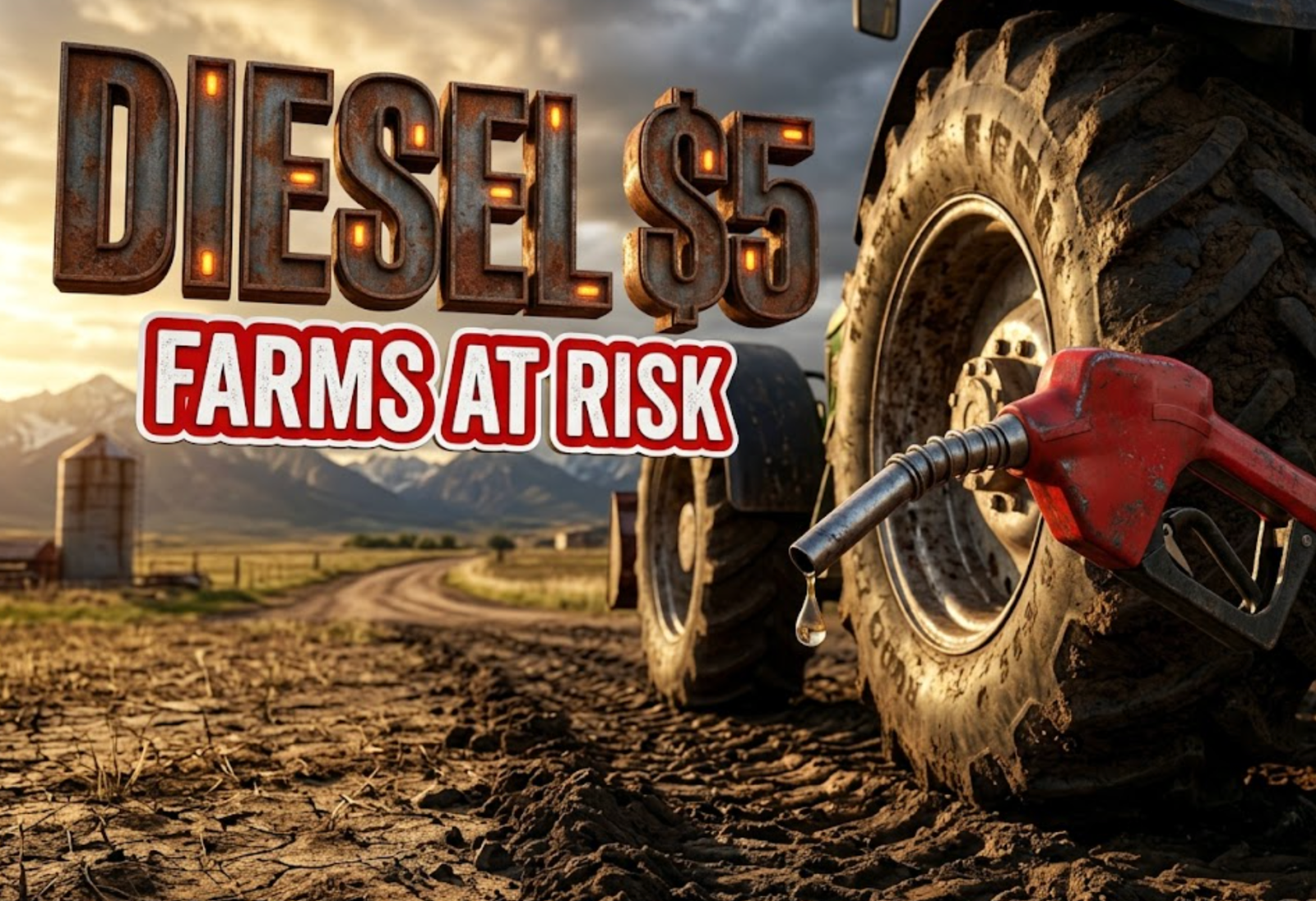
Diesel Prices Surge Past $5, Threatening Western Colorado Farms

Western Colorado farmers are facing a new crisis as diesel prices have skyrocketed more than 25% in just one month, adding severe financial pressure to an agricultural sector already struggling with drought and declining profitability. The surge threatens the viability of family farms across the region.
Sharp Price Jump Hits At Critical Time
Diesel prices in Grand Junction have climbed to just over $5 per gallon, up from under $4 a month ago. The spike comes as Middle East conflicts have disrupted global oil markets, creating immediate consequences for an industry that depends on fuel for nearly every operation.
The timing could not be worse for agricultural producers preparing for spring planting season.
AAA Regional Director of Public Affairs Skyler McKinley explained that diesel prices tracked directly with crude oil increases following escalating tensions in the Middle East over a month ago. Prices have maintained a steady upward trajectory since then, with no relief in sight for producers who operate on razor-thin profit margins.
The agricultural sector consumes diesel at every stage of production. Tractors, combines, irrigation pumps, and transportation vehicles all run on diesel fuel. A single farming operation can burn through hundreds of gallons weekly during peak seasons.
Every Farm Operation Now Costs More
The price increase affects multiple aspects of agricultural production across Western Colorado’s diverse farming landscape. Janie VanWinkle, Fellow for the AgriWest Initiative at the Business Incubator Center, confirmed that fuel prices have become the second most discussed topic among producers, right after weather conditions.
Higher input costs will directly impact every producer in the valley and beyond, with no exception.
The burden extends beyond field machinery. Farmers rely on diesel-powered trucks to transport seed, fertilizer, and supplies to their operations each spring. During harvest season in late summer and fall, when time-sensitive crops must reach markets quickly, fuel costs can make the difference between profit and loss.
Ranchers face equally challenging impacts. Moving cattle to high country pastures for summer grazing requires diesel-powered livestock trailers. Feed delivery, veterinary visits, and transportation to auction all depend on affordable fuel. Each price increase cuts deeper into already narrow operating margins.
Spring Planting Season Faces Cost Explosion
Agricultural producers are now confronting difficult decisions as spring work approaches. The seasonal nature of farming means certain high-fuel operations cannot be delayed or reduced without sacrificing entire crop yields.
Key seasonal impacts include:
- Spring planting requiring intensive tractor work for soil preparation and seeding
- Fertilizer and supply delivery adding transportation costs
- Irrigation pump operation throughout growing season
- Harvest operations demanding round-the-clock machinery use
- Livestock movement to seasonal grazing areas
VanWinkle emphasized that spring represents a particularly vulnerable time when farmers bring in seeds, fertilizers, and supplies for planting. These tasks require significant diesel consumption and cannot be postponed without jeopardizing the entire growing season.
Fall harvest presents another critical pressure point. Crops must be harvested within narrow time windows to ensure quality and prevent losses. Running heavy machinery continuously during harvest already represents one of the largest annual fuel expenses for crop producers.
Sustainability Of Western Colorado Agriculture At Risk
The diesel price spike represents just one pressure point in a mounting crisis threatening the long-term viability of agriculture across Western Colorado. VanWinkle warned that the region is actively losing both farmland and producers as multiple challenges converge.
Western Colorado agriculture faces a perfect storm of drought, succession challenges, input cost pressures, and political obstacles making business increasingly difficult.
Drought conditions have plagued the region for years, reducing crop yields and increasing irrigation costs. Many family farms lack clear succession plans as younger generations pursue opportunities in other industries. Political and regulatory pressures add administrative burdens that smaller operations struggle to manage.
The diesel price increase compounds these existing challenges. Unlike other industries, farmers cannot simply raise prices to cover increased costs. Consumer demand and commodity markets determine what producers receive for their products, leaving them powerless to pass along higher expenses.
Commodity prices for crops like hay, corn, and wheat are set by national and international markets. Ranchers selling cattle face similar price constraints. When input costs rise but product prices remain flat or decline, producers absorb the entire financial impact.
This economic squeeze is accelerating farmland loss across the region. Properties that have supported agricultural production for generations are being sold for development or simply abandoned as economically unviable. Each lost farm diminishes local food production capacity and erodes rural communities.
Regional Food Security Implications
The challenges facing Western Colorado farmers carry implications beyond individual operations. The region supplies food to communities across Colorado and neighboring states. Reduced agricultural production means greater dependence on food shipped from distant locations, increasing costs and reducing freshness.
Local agricultural infrastructure also supports rural economies through equipment dealers, feed stores, veterinary services, and processing facilities. As farms disappear, these supporting businesses struggle, creating a downward spiral for entire communities.
Food prices for consumers may eventually reflect the pressures farmers currently face. While producers cannot immediately raise prices, sustained high input costs typically filter through supply chains over time. Reduced production can also tighten supplies, driving up costs at grocery stores.
The diesel crisis highlights the interconnected nature of energy prices and food security. Modern agriculture depends on affordable fuel to maintain productivity levels that feed growing populations. Disruptions to energy markets quickly translate into agricultural challenges.
As Western Colorado farmers confront another obstacle to profitability, the future of regional food production hangs in the balance. Without relief from mounting cost pressures, more producers will face impossible choices between continuing family farming traditions and financial survival. The conversations happening between farmers after discussing the weather now carry the weight of an industry under siege, where every input cost increase pushes operations closer to the breaking point.
What impact are you seeing from rising fuel prices in your community? Share your thoughts and experiences in the comments below.










Spotify Running Mode hits Android and revives its old tempo experiment

Galaxy Tab S12 Ultra Renders Keep the Notch Fans Hate

Novato Spinning Round House Sells With Six Neighbors for $3.3 Million

Crop Tour Finds Indiana and Nebraska Corn Yields Lagging 2025

Best Buy 60th sale brings Android deals back to its roots

American Airlines reverses seatback screen bet years too late

Iran Hormuz Strikes Force Gulf Oil Onto Costlier Paths

Plague Tale Prequel Day One Joins Game Pass Wave 2 as Witcher Exits

NBA 2K27 opens The City to everyone and rewrites career eras

iOS 26.6.1 Patches 29 Flaws as AI Forces Faster Apple Updates

Double Fine Cuts 23 Jobs Weeks After Xbox Independence

Day-One Big Walk Lifts PS Plus August Beyond Recycled AAA

John Hight Exits Wizards After Digital Reckoning Hits

Curtis Mead’s Red Sox Debut Ends With Fractured Wrist

Red Sox Squander Hot Streak Chance in 4-3 Loss to Athletics

Moesch and Dressel Rewrite Night One at 2026 U.S. Nationals

Boutte’s Quiet Camp Takeover Forces Patriots Receiver Choices

Take-Two CEO Pushes Netflix Subs for GTA 6 Extended Look

Halo Campaign Evolved Skulls Meet Death Barriers That Kill the Hunt

Wildlands Free Update Hands Players the Tools They Already Invented
-

 TECHNOLOGY3 years ago
How to Adjust a Bulova Watch Band – An Easy Guide
-

 News3 years ago
Fred Pentland: Athletic Bilbao’s English mentor who changed the essence of Spanish football
-

 FINANCE3 years ago
Tax Planning for Every Season: Guide to Maximizing Your Tax Benefits
-

 Education3 years ago
African Ministers New Education Plan
-

 BUSINESS3 years ago
What is Entrepreneurial Operating System? A Comprehensive Guide to EOS
-

 Education3 years ago
Innovate Your Learning Journey with Technology and Enhance Education
-

 News3 years ago
Russians formally out of World Athletics Championships
-

 BUSINESS3 years ago
Top 9 Most Expensive American Cities to Rent an Apartment