
Health
FDA Advisers Back Six Peptides but Gray Market Endures
An FDA panel recommended six peptides, including BPC-157, for pharmacy use, lifting Hims stock 13% even as pricing and enforcement gaps suggest the gray market.

The Food and Drug Administration’s compounding advisory panel voted on July 23 and 24 to recommend six peptides for legal pharmacy use, including the biohacker favorite BPC-157. Only Epitalon, pitched as an insomnia treatment, was rejected. Hims and Hers stock jumped 13% the day voting began.
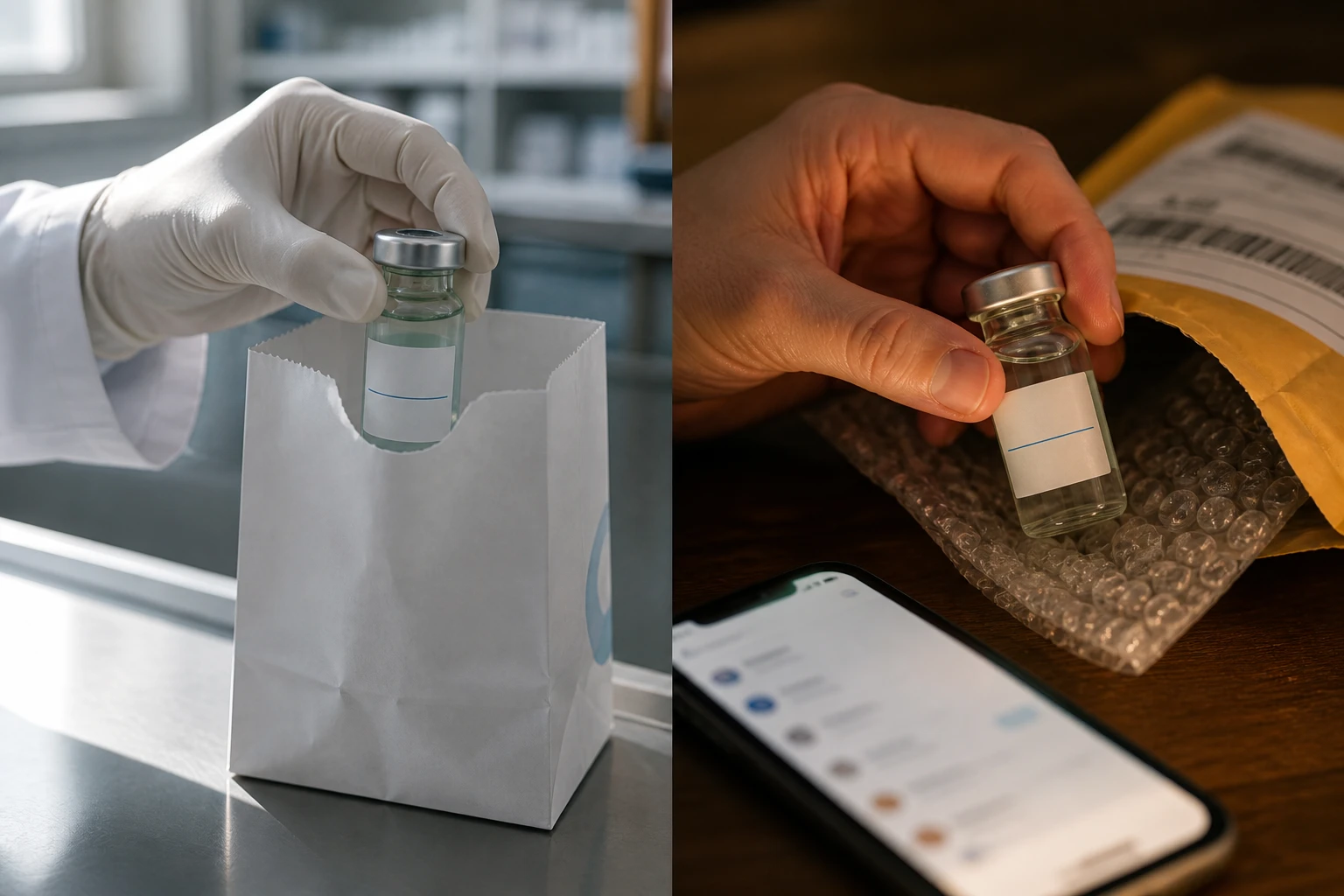
The recommendation does not make these peptides legal today, and it may not solve the problem regulators say they are worried about. A gray market flooded with mislabeled, sometimes contaminated vials shipped from overseas labs already undercuts anything a licensed American pharmacy could charge, and nothing in this week’s vote touches that supply chain.
FDA Advisers Clear Six Peptides for Prescription Use
The two-day hearing before the FDA’s Pharmacy Compounding Advisory Committee opened with its narrowest result. Six peptide suppliers joined a pharmaceutical executive and a compounding pharmacist to approve BPC-157 by an 8-6 vote, the closest margin of the week. By the time the panel adjourned Friday, it had recommended six of the seven peptides under review.
| Peptide | Marketed Use | Panel Outcome |
|---|---|---|
| BPC-157 | Skin, ligament, muscle and bone healing; paired with TB-500 as the “Wolverine Stack” | Approved, 8-6 |
| TB-500 | Tissue and joint recovery, paired with BPC-157 | Approved |
| KPV | Inflammatory skin conditions | Approved |
| MOTS-c | Metabolic conditions | Approved |
| Emideltide | Sleep assistance | Approved |
| Semax | Migraine relief | Approved |
| Epitalon | Insomnia | Rejected |
A yes vote does not make any of these six legal on its own. It recommends removing them from the FDA’s Category 2 list of bulk substances with safety concerns, first applied in September 2023 under the Biden administration, and adding them to the roster licensed compounding pharmacies can use. Insulin and GLP-1 drugs are already full FDA-approved medicines; this vote covers a narrower lane, compounding under a doctor’s prescription, not a new-drug approval.
A Panel Stacked With Industry Ties
The hearing was contested before it started. The Washington Post reported that FDA officials raised concerns this spring about then-agency head Marty Zakary stacking the panel with figures who work in the peptide business. At least seven of the panel’s doctors and pharmacists carry financial ties to the industry they were reviewing.
- Dr. Haleem Mohammed runs Gameday Men’s Health, a Florida clinic chain that sells peptide, vitamin, testosterone and weight loss injections.
- Dr. Gabriel Alizaidy charges $500 for peptide and hormone consultations and promotes BPC-157 and GHK-Cu to his Instagram and TikTok followers.
- Bobby Harshbarger, a pharmacist and Tennessee state senator, is the son of U.S. Rep. Diana Harshbarger, who has pushed Congress toward looser peptide rules.
Controversy over those appointments prompted the FDA to add eight more experts just before the hearing, bringing the voting panel to 14 people. It didn’t quiet the agency’s own scientists. “I’m concerned that we’re responding to a market-induced demand rather than a decision based in solid science,” said Dr. Elizabeth Rebello, a panelist, during the first day of deliberation. A Department of Health and Human Services spokesperson said all panelists went through standard ethics vetting.
What Is the Gray Market Selling?
Mostly research peptides ordered online and labeled “for laboratory use,” sourced from overseas manufacturers, largely in China, and shipped without the sterility testing, dosage verification or purity checks the FDA requires of licensed pharmacies. In New York, some are reportedly sold at bodegas. Independent lab testing has found a meaningful share of what actually arrives doesn’t match the label.
The New Yorker sent gray market vials to an outside lab in April and found lead in a sample of BPC-157, endotoxins in a sample of TB-500, and a vial of CJC-1295 holding less than 42% of its stated dose, a lab-result breakdown that later circulated in a detailed thread on X. “This is not the traditional way that the FDA goes about doing stuff, they typically go through phase one trials, phase two trials, phase three trials, and that takes years,” Dr. Katie Rizzone, a sports medicine specialist at the University of Rochester, told GQ. “I just don’t see the evidence at this point.”
Even Hims’s own chief medical officer conceded the point during his panel testimony. “I’m not going to tell you that the evidence for BPC-157 is strong,” Dr. Anant Vinjamoori said. “It isn’t, and I won’t overclaim it.” The same appetite for unproven fixes has fueled other viral wellness claims this year, including a nasal spray shown to reverse brain aging in mice that made headlines among the same longevity-minded crowd now driving peptide demand.
Why the Cheap Stuff Isn’t Going Anywhere
Industry panelists argued reclassification would pull consumers out of the shadows. “Thoughtful regulation protects patients far better than driving demand into an unregulated marketplace,” said Dr. Carrie Carda, national medical director at 10X Health, a company that sells peptides. “I believe many patients will choose physician-supervised care over purchasing products online.”
Multiple panelists said there is no evidence backing that claim. Gray market users who spoke with GQ largely agreed, since overseas sellers don’t answer to FDA pricing or distribution rules no matter what Washington decides domestically.
That’s like saying Amazon is putting Temu out of business.
One gray market peptide user made that comparison to GQ, arguing that vials shipped directly from labs overseas will keep costing a fraction of whatever a prescription, physician visit and pharmacy markup adds up to. Career FDA scientists have made a related point in posts on the agency’s own website, arguing there still isn’t enough completed human trial data to call these compounds both safe and effective for pharmacies to compound.
Hims Already Placed Its Bet
Hims and Hers, the telehealth company known for direct-to-consumer finasteride and GLP-1 prescriptions, isn’t waiting on Washington. It completed its purchase of a peptide manufacturing plant in 2025, positioning itself to produce peptide therapies at scale the moment regulators allow it. The stock had already surged 50% in one week back in April, after Health and Human Services Secretary Robert F. Kennedy Jr. began publicly pushing for reclassification.
Not every signal from inside the company matched its public bullishness. Financial news outlets reported that Hims’s chief financial officer sold roughly $229,000 in shares in the days before the hearing began. The broader peptide therapeutics category, which already includes approved drugs like insulin and GLP-1s, is worth a $164 billion global market this year, according to Grand View Research, a preview of the scale investors think newly legalized wellness compounds could eventually tap.
From a Podcast Couch to a Federal Hearing Room
This week’s vote traces back to a February appearance on The Joe Rogan Experience. Kennedy told Rogan the Biden administration’s 2023 peptide restrictions were “overreaching and illegal” because nothing showed the compounds were unsafe, and called himself a “big fan” of peptides himself. He has separately questioned the value of well-established vaccines, including for flu and COVID-19.
The FDA had placed BPC-157 on its Category 2 bulk substances list in September 2023, citing safety concerns and effectively barring compounding pharmacies from making it. That restriction is exactly what this week’s panel voted to unwind. In the five months between Kennedy’s podcast appearance and the hearing, peptides went from a fringe biohacker interest promoted by Andrew Huberman, Gary Brecka and Bryan Johnson to a federal regulatory proceeding with 14 voting members and a market of telehealth investors watching every ballot.
The Long Road From Recommendation to Pharmacy
A committee recommendation is not a final rule. The FDA now has to decide whether to formally add these peptides to its compounding list, a process that has historically taken anywhere from months to years for other substances. The agency usually follows its advisory panels, but it has rejected their recommendations before.
- What we know: the panel recommended six of seven peptides on July 23 and 24; BPC-157 passed narrowly, 8-6; Hims and Hers shares rose 13% after the first day; Epitalon was the lone rejection.
- What we know: at least seven panelists carried financial ties to the peptide industry, and career FDA scientists formally objected before and during the hearing.
- Unconfirmed: how long the FDA will take to act on the recommendation, or whether it acts at all.
- Unconfirmed: whether legal, physician-supervised peptides will pull meaningful volume away from cheaper overseas sellers.
Whatever the FDA decides, it won’t happen by Labor Day. The agency’s own timeline suggests peptides sold legally over a pharmacy counter, rather than shipped in from a lab overseas, are still a matter of years, not weeks.
Frequently Asked Questions
What exactly is a peptide?
Peptides are short chains of amino acids, the same building blocks that make up proteins, and they act as chemical messengers between the body’s cells. They help regulate hormones, skin repair and immune response, which is why insulin and GLP-1 drugs like Ozempic and Wegovy, both peptides themselves, have carried full FDA approval for years even as newer compounds like BPC-157 remain unproven in humans.
Is BPC-157 legal to buy right now?
Not for human use. The panel’s recommendation doesn’t change the law by itself. BPC-157 and the other five approved peptides stay in the same “for laboratory use” gray zone until the FDA formally accepts the committee’s advice, which can take months or years for other substances.
Does this vote mean the FDA approved these peptides as drugs?
No. The committee recommended removing peptides like BPC-157 from the FDA’s Category 2 list of bulk substances with safety concerns, which would let licensed compounding pharmacies mix and dispense them under a prescription. That’s a narrower step than full new-drug approval, the kind insulin and GLP-1 medications already carry.
Why did Epitalon fail when six other peptides passed?
The panel didn’t publicly single out one distinct flaw in Epitalon’s case. Its rejection tracked the same objection career FDA scientists raised about all seven compounds, a lack of completed human clinical trials proving safety and effectiveness, one that simply won more no votes for Epitalon than for the other six.
Will FDA action actually shrink the gray market?
Multiple panelists said during deliberations there is no evidence it would. Overseas sellers, many operating out of China and reaching customers through Telegram channels, don’t answer to FDA pricing, distribution or enforcement rules no matter what Washington decides domestically, which is why several gray market users doubt much will change for them.
Disclaimer: This article is for informational purposes only and isn’t medical advice; BPC-157, TB-500, KPV, MOTS-c, Emideltide and Semax remain unapproved for human use pending final FDA action as of July 28, 2026, and anyone considering them should talk to a licensed physician first.


Spotify Running Mode hits Android and revives its old tempo experiment

Galaxy Tab S12 Ultra Renders Keep the Notch Fans Hate

Novato Spinning Round House Sells With Six Neighbors for $3.3 Million

Crop Tour Finds Indiana and Nebraska Corn Yields Lagging 2025

Best Buy 60th sale brings Android deals back to its roots

American Airlines reverses seatback screen bet years too late

Iran Hormuz Strikes Force Gulf Oil Onto Costlier Paths

Plague Tale Prequel Day One Joins Game Pass Wave 2 as Witcher Exits

NBA 2K27 opens The City to everyone and rewrites career eras

iOS 26.6.1 Patches 29 Flaws as AI Forces Faster Apple Updates

Double Fine Cuts 23 Jobs Weeks After Xbox Independence

Day-One Big Walk Lifts PS Plus August Beyond Recycled AAA

John Hight Exits Wizards After Digital Reckoning Hits

Curtis Mead’s Red Sox Debut Ends With Fractured Wrist

Moesch and Dressel Rewrite Night One at 2026 U.S. Nationals

Red Sox Squander Hot Streak Chance in 4-3 Loss to Athletics

Boutte’s Quiet Camp Takeover Forces Patriots Receiver Choices

Take-Two CEO Pushes Netflix Subs for GTA 6 Extended Look

Halo Campaign Evolved Skulls Meet Death Barriers That Kill the Hunt

Wildlands Free Update Hands Players the Tools They Already Invented
-

 TECHNOLOGY3 years ago
How to Adjust a Bulova Watch Band – An Easy Guide
-

 News3 years ago
Fred Pentland: Athletic Bilbao’s English mentor who changed the essence of Spanish football
-

 FINANCE3 years ago
Tax Planning for Every Season: Guide to Maximizing Your Tax Benefits
-

 Education3 years ago
African Ministers New Education Plan
-

 BUSINESS3 years ago
What is Entrepreneurial Operating System? A Comprehensive Guide to EOS
-

 Education3 years ago
Innovate Your Learning Journey with Technology and Enhance Education
-

 News3 years ago
Russians formally out of World Athletics Championships
-

 BUSINESS3 years ago
Top 9 Most Expensive American Cities to Rent an Apartment