
FINANCE
Sandisk and ASML Shares Sink as China Ships Chip Tools
China’s new domestic lithography machines and CXMT’s blockbuster IPO show how years of US export controls fueled the competition now hitting Sandisk and ASML.

China shipped its first homegrown chipmaking machines this week, and the news sent ASML shares toward their worst day since early July while Sandisk fell even harder. Sandisk stock dropped 12% to $1,270 a share on Monday, its steepest one day slide of the summer, the same day ChangXin Memory Technologies (CXMT), China’s largest DRAM maker, went public in Shanghai and jumped 466% on debut.
The two moves share a root cause. Years of US export restrictions built to slow China’s chip industry instead helped finance the replacement equipment now landing inside Chinese factories, and Monday showed investors what that bet looks like once it starts paying off.
China Starts Shipping Chipmaking Machines
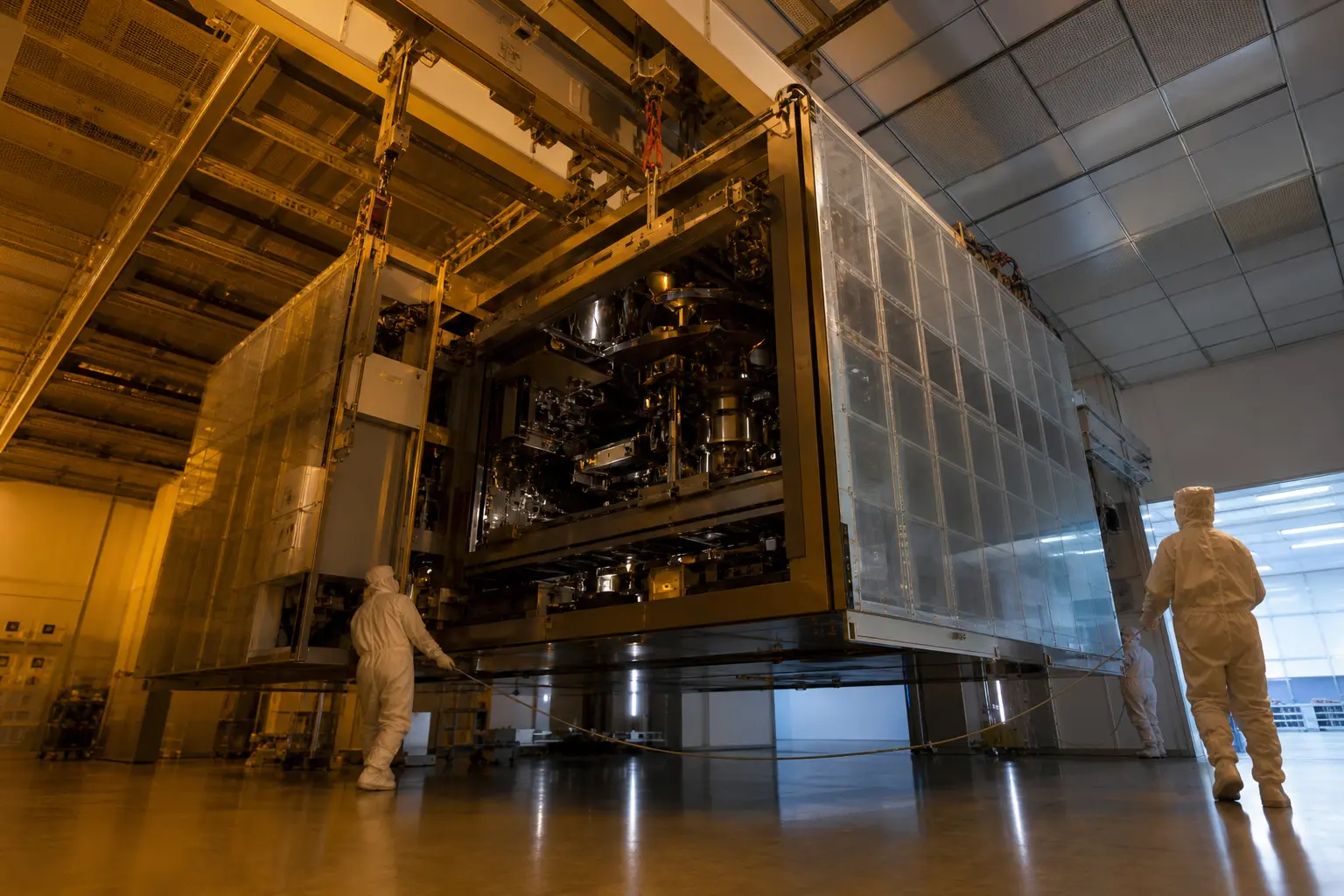
A state-backed startup called Shanghai Yuliangsheng Technology has begun mass production of homegrown immersion deep ultraviolet (DUV) lithography machines, the tool category long dominated by the Dutch equipment maker ASML, according to a report detailed by Tom’s Hardware. Yuliangsheng is working alongside SiCarrier and Huawei on the effort.
Output is modest for now. The consortium plans roughly five systems in 2026, rising to about 20 in 2027. First deliveries are headed to Semiconductor Manufacturing International Corp, Hua Hong Semiconductor and CXMT, the same memory maker whose stock market debut rattled Wall Street the same day.
Most parts inside the machines are domestic, though some critical components still come from Japan, and delays at local suppliers have slowed output this year. Semiconductor Manufacturing International Corp has been testing a Yuliangsheng immersion tool since September 2025, and engineers still need months of further testing before the machines enter full production lines.
| Metric | ASML (Established Player) | China’s Homegrown Effort |
|---|---|---|
| 2025 to 2026 output | 131 immersion DUV systems shipped in 2025 | About 5 units planned for 2026 |
| Target chip node | Serves advanced logic and memory nodes worldwide | 28 nanometer single exposure, with multiple patterning eyed for 7nm and 5nm |
| First customers | Global foundries and memory makers | SMIC, Hua Hong Semiconductor, CXMT |
| Component sourcing | Integrated Dutch-led supply chain | Mostly Chinese parts; some critical components still from Japan |
One widely shared market account, from the trading desk feed Wall St Engine, noted that ASML alone shipped 131 immersion DUV systems in 2025, more than six times China’s entire two-year target. The gap explains why analysts still call the Chinese tools years behind on performance and reliability.
ASML Heads for Its Worst Day Since Early July
ASML shares fell more than 8% Monday, testing the $1,600 support level and marking the stock’s steepest single-day drop since early July. China makes up roughly 20% of ASML’s overall revenue, which is why even a modest domestic competitor can move the stock sharply.
The slide erased much of the optimism from weeks earlier, when an upbeat AI chip forecast that lifted futures had deepened the broader market’s bet on semiconductor demand. Monday’s reversal showed how quickly that optimism can flip on a single supply chain headline.
Most analysts covering the story still see 2030 as roughly the earliest point Chinese lithography could pose credible competition at the advanced end of the market. The near-term reaction, in other words, ran well ahead of the near-term technology.
Why Did Sandisk Fall Harder Than ASML?
Sandisk fell 12% because two China stories landed on the same day: the chipmaking tool report and CXMT’s stock market debut, which together revived fears that Chinese memory supply is closing in faster than bulls had priced in. The stock is now down more than 45% from its June record high.
It was at least the third time since early July that Chinese memory developments had shaken the sector. On July 2, supply-glut fears sent Sandisk down 11% and Seagate down 7%. On July 16, news that CXMT was pricing its IPO knocked Sandisk and SK Hynix down 7% apiece. Monday’s drop was the sharpest of the three.
- SanDisk: fell 12% to $1,270 a share, down more than 45% from its June record high
- Micron Technology: down 5%
- SK Hynix: down 8%
- ChangXin Memory Technologies: shares jumped 466% on their Shanghai STAR Market debut after the company raised at least $8.6 billion
CXMT’s listing on the STAR Market, Shanghai’s Nasdaq-style board for technology companies, briefly made it one of the most valuable chipmakers trading anywhere in China. The company’s 2025 revenue had already surged 130% year over year to more than 55 billion yuan, or roughly $8 billion, according to figures reported by CRN Asia.
Adding to the unease, a 24/7 Wall Street report said Apple had been testing CXMT’s DRAM chips, a claim that has not been independently confirmed by either company. Analysts quoted across the coverage cautioned that CXMT still relies on older, export-restricted tools for its most advanced chips, which limits how quickly it can actually ease the memory shortage that has been lifting Western suppliers’ margins all year.
How Years of US Export Bans Built a Domestic Rival
China’s semiconductor equipment self-sufficiency reached 35% as of January 2026, up from roughly 25% just two years earlier. A separate rule requires Chinese chipmakers to source at least half their new equipment domestically. Industry executives have since mapped a plan targeting 80% self-sufficiency by 2030, the same year most analysts expect any credible advanced competition with ASML to begin.
Research institutes tracking the policy, including the Alan Turing Institute’s Centre for Emerging Technology and Security, track China’s broader semiconductor self-sufficiency campaign as a direct response to years of tightening export rules on advanced chipmaking tools.
- September 2025: SMIC begins testing an immersion DUV tool from state-backed startup Shanghai Yuliangsheng Technology.
- January 2026: China’s equipment self-sufficiency reaches 35%, up from about 25% two years earlier, under a rule mandating domestic tools for new capacity.
- July 27, 2026: The Yuliangsheng-led consortium, joined by SiCarrier and Huawei, begins mass production of homegrown immersion DUV machines bound for SMIC, Hua Hong and CXMT.
- 2027: Planned output rises to about 20 systems, still a fraction of the 131 units ASML shipped in 2025 alone.
- By 2030: Chip executives are targeting 80% self-sufficiency, the threshold most analysts treat as the earliest point for real competition with ASML’s advanced tools.
The pattern is not new to chip investors this year. A Kimi K3 model release revived DeepSeek style fears earlier in 2026, briefly hitting the same group of stocks before losses were trimmed. Monday’s selloff had more staying power because it combined a hardware breakthrough with an actual public listing.
Congress May Be a Bigger Threat Than Shanghai
Coverage of Monday’s selloff surfaced a genuine split among analysts over what actually threatens ASML first.
- The competition camp points to China’s domestic tools reaching SMIC, Hua Hong and CXMT this year as the start of a long-term erosion of ASML’s mid-tier DUV business, even if advanced lithography stays out of reach for years.
- The regulation camp, reflected in reporting on the pending MATCH Act, argues the nearer risk is Washington itself: new legislation could tighten export rules on chipmaking tools, including those built by allied companies like ASML, and shrink the Dutch firm’s addressable China market regardless of how good Chinese machines become.
- The skeptics note CXMT still depends on export-restricted equipment for its most advanced memory, meaning near-term supply relief, and near-term pain for Western rivals, may be smaller than Monday’s stock moves implied.
The MATCH Act is legislation moving through the US Congress that would tighten export rules on chipmaking equipment, including tools built by allied nations’ companies, sold into China. Reporting on CXMT’s new domestic tool access framed it as a way to blunt the bill’s intended effect, since Chinese fabs would need fewer imported machines regardless of what Washington restricts next.
Sandisk’s Next Test Lands August 5
Sandisk reports quarterly earnings on August 5, 2026, giving investors their first chance to hear management address Chinese competition directly, alongside real pricing data from the current memory cycle.
That cycle has been unusually strong. TrendForce, the Taiwan-based research firm, said conventional DRAM contract prices climbed as much as 95% in a single quarter earlier in 2026, with NAND Flash prices up as much as 60%, driven largely by AI server demand. Those gains are exactly what a wave of new Chinese supply threatens to undercut over time.
By the third quarter, TrendForce’s outlook showed price gains moderating as consumer demand weakens, even as AI server demand kept a floor under the market. CXMT, meanwhile, is working with Naura, Maxwell and a firm identified as U-Preseason on assembly tools for domestic high-bandwidth memory production it hopes to reach by the end of 2026.
By the time Monday’s trading closed, ChangXin Memory Technologies, the company years of export controls were built to contain, had become one of the most valuable chipmakers listed anywhere in China.
Frequently Asked Questions
What Is the Difference Between DUV and EUV Lithography?
Deep ultraviolet (DUV) lithography uses longer light wavelengths and has been the workhorse for mainstream chips for two decades. Extreme ultraviolet (EUV) machines, which only ASML makes, are required for the most advanced logic chips below roughly 7 nanometers. China’s new machines are DUV tools, meaning they compete for the larger but less cutting-edge slice of the market rather than the segment powering the newest AI processors.
Can China’s Domestic Machines Reach Advanced Chip Nodes?
Engineers believe multiple patterning, running a wafer through the machine several times, could stretch the new tools from their native 28 nanometer single-exposure capability down to 7 nanometer and even 5 nanometer chips. Yields still trail ASML’s equipment, and the multi-pass approach adds cost and time that single-exposure EUV avoids entirely.
What Is CXMT and Why Did Its IPO Move Sandisk’s Stock?
ChangXin Memory Technologies is China’s largest DRAM producer and the world’s fourth largest. It listed on Shanghai’s STAR Market on July 27, 2026, raising at least $8.6 billion as shares jumped 466% on debut. Its 2025 revenue had already surged 130% year over year past 55 billion yuan, or about $8 billion, a growth rate that fed investor bets that Chinese memory supply will keep expanding into markets Sandisk and Micron currently dominate.
What Other Chinese Companies Are Involved Besides CXMT?
The tool-making side includes Shanghai Yuliangsheng Technology, SiCarrier and Huawei. On the memory side, CXMT is working with Naura, Maxwell and a firm identified as U-Preseason on assembly equipment for domestic high-bandwidth memory chips used in AI accelerators, which it hopes to produce by the end of 2026.
Could This Affect the Price of Phones and Laptops?
Not immediately. TrendForce data shows DRAM and NAND contract prices climbing through most of 2026 on AI server demand, and China’s new tools remain years from advanced production at meaningful scale. Over the long run, more Chinese memory supply competing for capacity could eventually cool consumer device prices, though nothing in current forecasts points to a near-term drop.
Disclaimer: This article is for informational purposes only and does not constitute investment advice; chip and memory stocks are volatile and sensitive to geopolitical headlines, so consult a licensed financial adviser before trading, and note that all figures here are accurate as of publication on July 28, 2026.


Spotify Running Mode hits Android and revives its old tempo experiment

Galaxy Tab S12 Ultra Renders Keep the Notch Fans Hate

Novato Spinning Round House Sells With Six Neighbors for $3.3 Million

Crop Tour Finds Indiana and Nebraska Corn Yields Lagging 2025

Best Buy 60th sale brings Android deals back to its roots

American Airlines reverses seatback screen bet years too late

Iran Hormuz Strikes Force Gulf Oil Onto Costlier Paths

Plague Tale Prequel Day One Joins Game Pass Wave 2 as Witcher Exits

NBA 2K27 opens The City to everyone and rewrites career eras

iOS 26.6.1 Patches 29 Flaws as AI Forces Faster Apple Updates

Double Fine Cuts 23 Jobs Weeks After Xbox Independence

Day-One Big Walk Lifts PS Plus August Beyond Recycled AAA

John Hight Exits Wizards After Digital Reckoning Hits

Curtis Mead’s Red Sox Debut Ends With Fractured Wrist

Moesch and Dressel Rewrite Night One at 2026 U.S. Nationals

Red Sox Squander Hot Streak Chance in 4-3 Loss to Athletics

Boutte’s Quiet Camp Takeover Forces Patriots Receiver Choices

Take-Two CEO Pushes Netflix Subs for GTA 6 Extended Look

Halo Campaign Evolved Skulls Meet Death Barriers That Kill the Hunt

Wildlands Free Update Hands Players the Tools They Already Invented
-

 TECHNOLOGY3 years ago
How to Adjust a Bulova Watch Band – An Easy Guide
-

 News3 years ago
Fred Pentland: Athletic Bilbao’s English mentor who changed the essence of Spanish football
-

 FINANCE3 years ago
Tax Planning for Every Season: Guide to Maximizing Your Tax Benefits
-

 Education3 years ago
African Ministers New Education Plan
-

 BUSINESS3 years ago
What is Entrepreneurial Operating System? A Comprehensive Guide to EOS
-

 Education3 years ago
Innovate Your Learning Journey with Technology and Enhance Education
-

 News3 years ago
Russians formally out of World Athletics Championships
-

 BUSINESS3 years ago
Top 9 Most Expensive American Cities to Rent an Apartment