
News
Archaeologists Uncover 6,000 Pieces Of Fish-Scale Armor In The Tomb Of Liu He

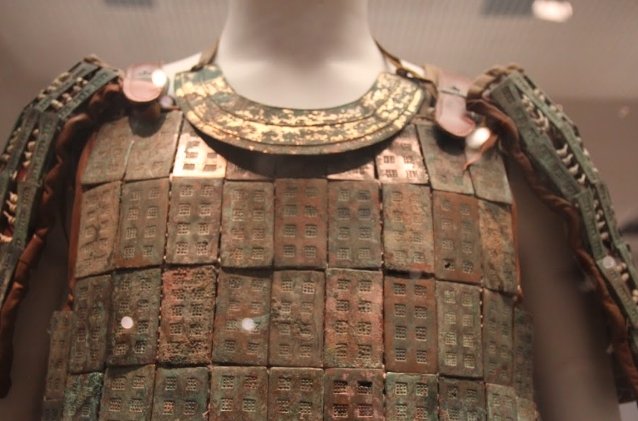
Excavations of Chinese Emperor Liu He’s tomb have revealed an extraordinary find: over 6,000 pieces of intricately crafted fish-scale armor. This discovery, made from iron, copper, and leather, offers a rare glimpse into the advanced craftsmanship of the Han dynasty more than two millennia ago.
A Burial Fit For A Disgraced Emperor
Liu He, the grandson of Emperor Wu, ascended to the throne in 74 B.C.E. under extraordinary circumstances. His reign, however, lasted only 27 days — one of the shortest in Chinese history.
Historical accounts describe Liu He’s behavior during mourning for his uncle, Emperor Zhao, as scandalous. Officials documented 1,127 instances of misconduct, including extravagant feasts, games, and other distractions.
Stripped of his imperial title, Liu He was demoted to Marquis of Haihun and exiled to a small fiefdom in Jiangxi Province. Despite his fall from grace, his tomb is among the richest archaeological finds from the Han dynasty.
Unveiling Treasures From The Marquis Of Haihun
Since its discovery in 2011, Liu He’s tomb has yielded more than 20,000 artifacts, including:
- Bronze coins: An astonishing 2 million coins were found, underscoring the wealth allocated to his burial.
- Fish-scale armor: This composite armor, made from multiple materials, is the first of its kind from this period.
- Bronze lamp: A goose-shaped lamp adds to the inventory of remarkable items uncovered.
The tomb’s contents highlight the opulence of Liu He’s burial despite his political disgrace.
The Significance Of Fish-Scale Armor
The fish-scale armor is particularly noteworthy. Crafted using iron, copper, and leather, it reflects a level of sophistication that was rare for the time.
This type of composite armor offered several advantages:
- Flexibility: The overlapping design allowed for greater movement during combat.
- Durability: Combining materials like iron and copper made the armor resilient.
- Artistry: The intricate patterns suggest armorers prioritized aesthetics alongside functionality.
The discovery underscores the military and artistic advancements of the Han dynasty.
Insights Into Han Dynasty Society
Liu He’s tomb provides more than just artifacts; it offers insights into Han dynasty society. The lavish burial contradicts his disgrace, indicating that familial honor outweighed political failure.
Artifacts such as the goose-shaped bronze lamp and the fish-scale armor also reveal the dynasty’s artistic innovation. The tomb’s wealth suggests that even a demoted figure like Liu He commanded significant resources.


iPhone 18 Pro Max vs iPhone 15 Pro Max: Three Years of Hardware Gap

Scientists Build Programmable Protein Cages That Mimic Viruses

Meta Layoffs Hit Safety Teams Ahead of a $62 Billion Trial

Why the Class of 2026 Booed Every AI Speech This Spring

Bitcoin Miners Gain as Nvidia Posts Record $81.6 Billion Quarter

Sinkhole Swallows LaGuardia Runway Built on 1930s Landfill

Xbox Game Pass Adds Five Games on May 20, and Premium Catches Them All

Sony Sets 60-Minute State of Play for June 2 With Wolverine and Big Stakes

Discord Turns On Default Encryption for Calls, Leaves Text Behind

LEGO Batman: Legacy Of The Dark Knight Hits 86 As Rocksteady’s Quiet Return Lands

Mitchell Matches Kobe in Game 7 Rout, Cavaliers Reach East Finals

Colt Emerson Debuts, Mariners Get Swept by Padres in Vedder Cup

Shai Gilgeous-Alexander Wins Second Straight MVP With 83 of 100 First-Place Votes

Brent at $111 Hides the Hormuz Damage Hitting Fed and Asia

Santa Marta’s Fossil Fuel Exit Plan Puts Scotland’s Drilling U-Turn on the Clock

Samsung Strike Looms May 21 as Union Eyes SK Hynix Bonus Formula

Xperia 1 VIII Holds Price, Xiaomi 17 Max Loads Up: Week 20 Phone News

Jaylen Brown Calls Stephen A. Smith the Face of Clickbait Media

Rousey Finishes Carano in 17 Seconds and Hands Netflix Its MMA Opening

LIRR Strike Hits Third Day as 250,000 Commuters Face a Tougher Manhattan Run
-

 TECHNOLOGY3 years ago
How to Adjust a Bulova Watch Band – An Easy Guide
-

 FINANCE3 years ago
Tax Planning for Every Season: Guide to Maximizing Your Tax Benefits
-
 BUSINESS3 years ago
What is Entrepreneurial Operating System? A Comprehensive Guide to EOS
-

 Education3 years ago
African Ministers New Education Plan
-

 News3 years ago
Fred Pentland: Athletic Bilbao’s English mentor who changed the essence of Spanish football
-

 Education3 years ago
Innovate Your Learning Journey with Technology and Enhance Education
-

 News3 years ago
Russians formally out of World Athletics Championships
-

 BUSINESS3 years ago
Top 9 Most Expensive American Cities to Rent an Apartment