
News
Fort Wayne First Responders Level Up Skills at Emergency Symposium

FORT WAYNE, Ind. — When seconds count and lives hang in the balance, first responders cannot afford to be anything less than razor-sharp. Thats exactly why hundreds of paramedics, firefighters, and EMTs packed the Pre-Hospital Emergency Care Symposium on Thursday, marching through intense, real-world scenarios that most people hope they never see.
This years fourth annual event, held at the Allen County War Memorial Coliseum, turned the conference center into a high-stakes training ground for adult trauma, obstetric emergencies, and critically ill children.
Hands-On Scenarios Push Responders to the Limit
Participants rotated through stations that felt ripped from the toughest shifts anyone could work.
One room echoed with the cries of a high-fidelity mannequin giving birth. In another, a simulated car-crash victim bled heavily while the clock ticked. Down the hall, a toddler mannequin coded, forcing teams to run full pediatric resuscitation protocols.
Firefighter Paramedic Drew Edmondson, a 15-year veteran with Fort Wayne Fire Department, called the obstetrics station a game-changer.
Ive delivered babies in the front seat of cars and on kitchen floors, but the new tips the doctors shared today? Those are things I wish Id known ten years ago, Edmondson said as he wiped simulated blood off his gloves.
The training mannequins, some costing more than $100,000, bleed, breathe, talk, and even seize, giving responders the closest thing to real patients without the real risk.
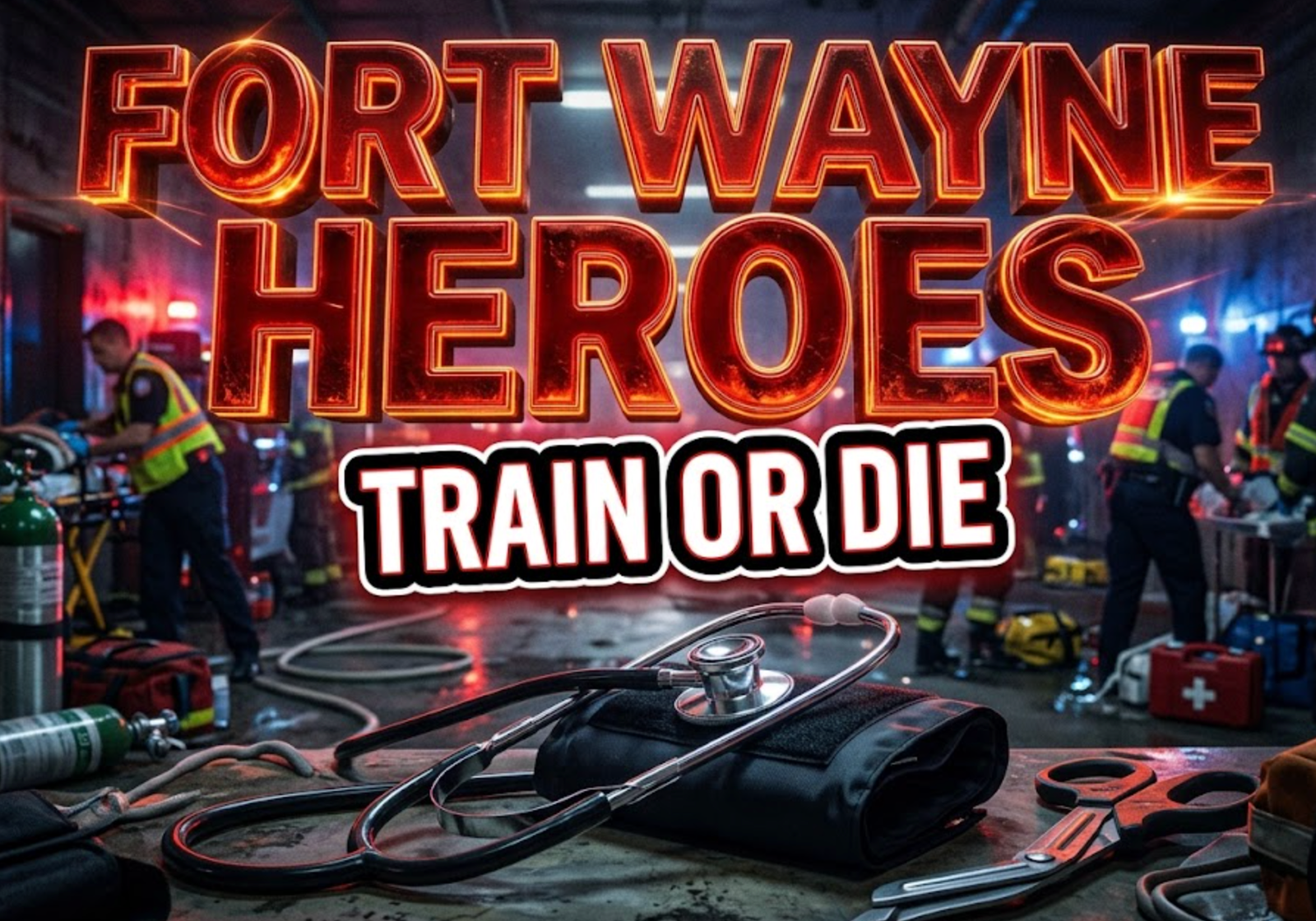
Doctors and Street Medics Train Side by Side
What sets this symposium apart is the direct access to physicians who rarely work alongside pre-hospital crews.
Tony Stimpson, Lutheran Hospital flight paramedic and lead coordinator, says thats intentional.
We want our medics asking trauma surgeons Why did you do it that way in the OR? and getting answers right there, Stimpson explained. That conversation makes everyone better when the pager goes off at 3 a.m.
Physicians from Lutheran, Parkview, and IU Health ran stations alongside street medics, trading stories of saves and near-misses. One ER doctor openly shared a case where delayed recognition of a tension pneumothorax cost a patient their life, a lesson no textbook can teach the same way.
Real Numbers Behind the Training
Fort Wayne Fire Department alone ran more than 36,000 calls last year. Parkview Samaritan helicopters flew 1,200 missions across the region. Three Rivers Ambulance Authority handled another 45,000 transports.
That volume means even seasoned providers see rare cases only a handful of times in their careers.
This symposium gives them reps on the calls that haunt you if you get them wrong, Edmondson said.
A quick look at the numbers shows why the extra practice matters:
- Motor vehicle crashes remain the leading cause of traumatic death in Allen County
- Opioid overdoses spiked 28% in northeast Indiana in 2025
- Pediatric cardiac arrests, though rare, carry survival rates under 10% without perfect intervention
Every minute spent practicing chest compressions on a child mannequin could translate to a life saved on some Fort Wayne street next month.
Building Trust That Saves Lives
Beyond the skills, the day strengthened relationships that pay off when multiple agencies roll up to the same chaos.
You show up to a mass-casualty incident and suddenly youre working with people you only met today, Stimpson said. But if you already broke bread with them, joked with them, and watched them run a code, you trust them when bullets are still flying or the building is still burning.
By late afternoon, exhaustion showed on every face, but so did satisfaction. Providers swapped phone numbers with doctors theyd never met before. Firefighters thanked flight nurses for tips on managing crushed chests in helicopter cabins.
One young EMT, still wide-eyed after delivering her first simulated baby, summed it up best.
I feel way more ready for whatever comes next, she said.
And in a job where whatever comes next can arrive without warning, feeling ready is everything.











Spotify Running Mode hits Android and revives its old tempo experiment

Galaxy Tab S12 Ultra Renders Keep the Notch Fans Hate

Novato Spinning Round House Sells With Six Neighbors for $3.3 Million

Crop Tour Finds Indiana and Nebraska Corn Yields Lagging 2025

Best Buy 60th sale brings Android deals back to its roots

American Airlines reverses seatback screen bet years too late

Iran Hormuz Strikes Force Gulf Oil Onto Costlier Paths

Plague Tale Prequel Day One Joins Game Pass Wave 2 as Witcher Exits

NBA 2K27 opens The City to everyone and rewrites career eras

iOS 26.6.1 Patches 29 Flaws as AI Forces Faster Apple Updates

Double Fine Cuts 23 Jobs Weeks After Xbox Independence

John Hight Exits Wizards After Digital Reckoning Hits

Day-One Big Walk Lifts PS Plus August Beyond Recycled AAA

Curtis Mead’s Red Sox Debut Ends With Fractured Wrist

Moesch and Dressel Rewrite Night One at 2026 U.S. Nationals

Red Sox Squander Hot Streak Chance in 4-3 Loss to Athletics

Boutte’s Quiet Camp Takeover Forces Patriots Receiver Choices

Take-Two CEO Pushes Netflix Subs for GTA 6 Extended Look

Halo Campaign Evolved Skulls Meet Death Barriers That Kill the Hunt

Wildlands Free Update Hands Players the Tools They Already Invented
-

 TECHNOLOGY3 years ago
How to Adjust a Bulova Watch Band – An Easy Guide
-

 News3 years ago
Fred Pentland: Athletic Bilbao’s English mentor who changed the essence of Spanish football
-

 FINANCE3 years ago
Tax Planning for Every Season: Guide to Maximizing Your Tax Benefits
-

 Education3 years ago
African Ministers New Education Plan
-

 BUSINESS3 years ago
What is Entrepreneurial Operating System? A Comprehensive Guide to EOS
-

 Education3 years ago
Innovate Your Learning Journey with Technology and Enhance Education
-

 BUSINESS3 years ago
Top 9 Most Expensive American Cities to Rent an Apartment
-

 News3 years ago
Russians formally out of World Athletics Championships