
FINANCE
Oil Rebounds as Strikes Hit and SPR Hits 1983 Floor
Brent hits $87.95 after intercepted Iranian missiles and a 3.3 million barrel API crude draw, with the SPR already at multi-decade lows stripping market buffers.

Brent crude climbed to $87.95 a barrel, up 4.59%, while West Texas Intermediate reached $82.89, up 4.58%, in early Asian trade Wednesday. The jump erased much of Tuesday’s selloff after Iranian missiles targeted U.S. bases and the American Petroleum Institute reported a 3.3 million barrel crude draw.
A short pause in hostilities had let the geopolitical risk premium unwind. That window closed overnight.
Missiles End the Brief Lull
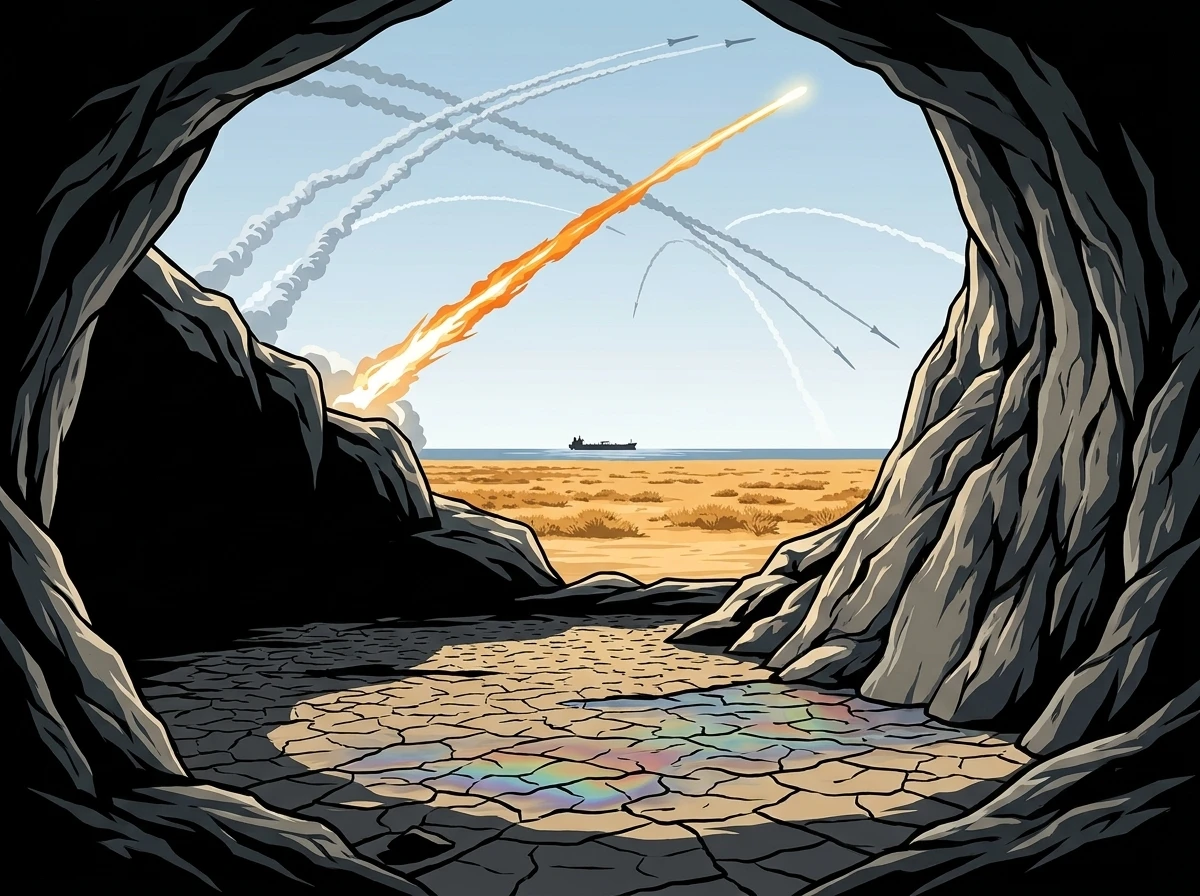
U.S. Central Command said Iranian forces launched multiple ballistic missiles from Iran at 5:45 p.m. ET Tuesday in an attempted surprise attack on U.S. forces across the Middle East.
All Iranian missiles were successfully intercepted. U.S. forces remain vigilant and at a high state of readiness.
The post from @CENTCOM drew more than three million views. No U.S. positions were hit.
CENTCOM and Saudi forces then conducted precision strikes against terrorist sites in eastern Iraq. The targets were Iran-aligned logistics and weapons sites directed by the Islamic Revolutionary Guard Corps. The action answered more than 30 IRGC-directed drone attacks in the prior 72 hours. From February through April 2026, Iran-aligned militias had attempted more than 600 attacks on U.S. citizens and facilities in Iraq.
The U.S. did not strike inside Iran itself. Still, the exchange ended the calm that followed 13 consecutive nights of U.S. attacks on Iran, which stopped last Thursday.
- Tuesday evening: Iranian ballistic missiles launched and intercepted
- Same night: U.S. and Saudi aircraft hit multiple eastern Iraq sites
- Result: short-lived diplomatic hopes cooled and the risk premium returned
Traders had priced in a softer stance. The intercepts and counter-strikes forced a rapid reset.
API Draw Confirms Tighter Supplies
The American Petroleum Institute data added another bid. Crude stockpiles fell by about 3.3 million barrels in the week ended July 24. Gasoline inventories rose 918,000 barrels. Distillate stocks increased 355,000 barrels. Reuters sources matched those figures exactly.
| Measure | Change | Notes |
|---|---|---|
| API crude stocks | -3.3 million barrels | Week ended July 24 |
| Gasoline | +918,000 barrels | Build |
| Distillates | +355,000 barrels | Build |
| Brent (Asian open) | +4.59% to $87.95 | Spike erases prior losses |
| WTI | +4.58% to $82.89 | Parallel move |
The same period saw another 3.7 million barrels leave the Strategic Petroleum Reserve. That release pushed the SPR to its lowest level since March 1983.
Market participants now wait for the official EIA Weekly Petroleum Status Report due later Wednesday. A matching crude draw would keep the upward pressure intact.
The Reserve Cushion Is Already Thin
The inventory story runs deeper than one weekly draw. The SPR has been released in large volumes for months under a broader exchange and sale program tied to the Iran conflict. Recent readings placed stocks near 311 million barrels, a 43-year low. At its 2009 peak the reserve held more than 726 million barrels.
311 million barrels covers far fewer days of U.S. demand than the old peak. Analysts on X noted the drop from roughly 36 days of coverage to around 16. The Department of Energy has discussed operational floors as low as 70 million barrels in some contexts, though earlier market consensus sat nearer 250-300 million.
Details on SPR inventory by site and capacity show the four Gulf Coast salt-dome complexes still hold hundreds of millions of barrels in total authorized space of 714 million. Sweet grades are especially depleted. That leaves less flexible supply for a sudden physical disruption.
One internal look at the same trend captured how SPR already near a 43-year low collided with Hormuz traffic risks earlier this summer. The buffer that once let Washington release oil into a spike is now the thinnest it has been in four decades.
- Peak inventory: 726.6 million barrels (December 2009)
- Recent low: near 311 million barrels (July 2026 readings)
- Days of cover: roughly halved from prior peaks
- Draw pace: multi-million-barrel weekly releases continuing
That structural thinning is why a single night of missiles and an API number moved prices so sharply. The market has fewer tools left to fade geopolitical noise.
Who Absorbs the Rebound
Producers and tanker owners with secure routes gain first. Higher flat prices and elevated war-risk premiums lift cash flow for those still moving barrels. Refiners face mixed signals: tighter crude can support crack spreads if product stocks stay comfortable, yet feedstock costs rise.
Consumers and rate-sensitive sectors feel the other side. Gasoline and diesel already carry the earlier war premium. Fresh spikes feed into inflation prints and mortgage rate pressure, a dynamic already visible when oil fears pushed borrowing costs higher earlier in the cycle.
Asian importers and chip-heavy markets have shown the linkage before. When oil jumps on Iran news, equity indexes with heavy energy or transport exposure often reverse. China’s earlier crude demand cut helped keep prices from racing to extreme levels at the war’s start. That demand restraint may still limit the upside ceiling, but it does little for short-term volatility.
Saudi and UAE supply flexibility remains a counterweight. Both have issued tenders and adjusted routes around Red Sea and Hormuz risks. Those volumes can moderate physical tightness even while the risk premium stays elevated.
Earlier Releases Built This Floor
The current SPR level did not appear overnight. Coordinated IEA-member releases and U.S. exchange authority moved large volumes after the Iran conflict intensified. One program targeted 172 million barrels over a set window. Auctions and deliveries continued into the summer even as commercial inventories swung.
- Late 2025-early 2026: conflict escalates; emergency release planning begins
- Spring-summer 2026: multi-million-barrel weekly SPR draws push stocks under 340 million then toward 310 million
- June-July: successive reports confirm multi-decade lows; commercial stocks also fluctuate with Hormuz traffic
- July 28: API crude draw plus 3.7 million barrel SPR release coincides with renewed strikes
Each release bought temporary price relief. Cumulatively they left the emergency stockpile at levels last seen when the reserve was still filling in the early 1980s. The policy choice to prioritize near-term supply now shows up as higher sensitivity to every new headline.
Volatility Becomes the Base Case
Traders will track two signals in the next sessions. First, whether the EIA confirms the API crude draw. Second, whether Iranian forces or proxies launch another wave and whether intercepts hold. CENTCOM has already stated that the IRGC and its proxies must cease attacks to avoid further response. The steel-wall blockade and naval presence remain in place.
Even without new physical damage to export terminals, the proximity of military activity to oil arteries keeps a premium embedded. Crowd discussion on X after the CENTCOM alert focused less on immediate supply loss and more on how thin the remaining buffer has become. One widely shared note put the SPR cover at roughly half its former days of demand protection.
If diplomacy restarts, prices can still unwind part of the overnight gain. The difference from earlier pauses is the starting point: commercial stocks are not overflowing, and the SPR cannot repeat the scale of prior releases without approaching hard operational limits. That second-order constraint turns every flare-up into a larger price move than the same news would have produced a year ago.
For now the market has spoken in the only language it trusts. Brent and WTI reclaimed the bulk of Tuesday’s losses in a matter of hours. The missiles were intercepted. The inventory number was bullish. And the emergency reserve sits at its lowest mark in more than forty years.


Spotify Running Mode hits Android and revives its old tempo experiment

Galaxy Tab S12 Ultra Renders Keep the Notch Fans Hate

Novato Spinning Round House Sells With Six Neighbors for $3.3 Million

Crop Tour Finds Indiana and Nebraska Corn Yields Lagging 2025

Best Buy 60th sale brings Android deals back to its roots

American Airlines reverses seatback screen bet years too late

Iran Hormuz Strikes Force Gulf Oil Onto Costlier Paths

Plague Tale Prequel Day One Joins Game Pass Wave 2 as Witcher Exits

NBA 2K27 opens The City to everyone and rewrites career eras

iOS 26.6.1 Patches 29 Flaws as AI Forces Faster Apple Updates

Double Fine Cuts 23 Jobs Weeks After Xbox Independence

Day-One Big Walk Lifts PS Plus August Beyond Recycled AAA

John Hight Exits Wizards After Digital Reckoning Hits

Curtis Mead’s Red Sox Debut Ends With Fractured Wrist

Moesch and Dressel Rewrite Night One at 2026 U.S. Nationals

Red Sox Squander Hot Streak Chance in 4-3 Loss to Athletics

Boutte’s Quiet Camp Takeover Forces Patriots Receiver Choices

Take-Two CEO Pushes Netflix Subs for GTA 6 Extended Look

Halo Campaign Evolved Skulls Meet Death Barriers That Kill the Hunt

Wildlands Free Update Hands Players the Tools They Already Invented
-

 TECHNOLOGY3 years ago
How to Adjust a Bulova Watch Band – An Easy Guide
-

 News3 years ago
Fred Pentland: Athletic Bilbao’s English mentor who changed the essence of Spanish football
-

 FINANCE3 years ago
Tax Planning for Every Season: Guide to Maximizing Your Tax Benefits
-

 Education3 years ago
African Ministers New Education Plan
-

 BUSINESS3 years ago
What is Entrepreneurial Operating System? A Comprehensive Guide to EOS
-

 Education3 years ago
Innovate Your Learning Journey with Technology and Enhance Education
-

 News3 years ago
Russians formally out of World Athletics Championships
-

 BUSINESS3 years ago
Top 9 Most Expensive American Cities to Rent an Apartment