
FINANCE
US Crude Stocks Build as the Emergency Reserve Hits a 43-Year Low
US crude inventories rose this week, but the Strategic Petroleum Reserve is now within 64 million barrels of its legal floor as Hormuz attacks resume.

US commercial crude oil inventories rose by 2.603 million barrels in the week ending July 17, the American Petroleum Institute (API) estimated. The build came a day after a Kuwaiti tanker was struck by a projectile in the Strait of Hormuz, sending Brent crude back above $90 a barrel. Behind that headline number sits a much thinner cushion: the Strategic Petroleum Reserve (SPR) just fell to 316.5 million barrels, its lowest level in more than 43 years.
The reserve is now within roughly 64 million barrels of the legal floor Congress built into the system, just as attacks on Gulf shipping escalate again.
Crude Stocks Rise While the Emergency Cushion Shrinks
The API’s build followed a 564,000 barrel decline the week before. Commercial crude stocks, excluding the SPR, have fallen fast this spring and summer, shedding just over 57 million barrels across the last thirteen weeks alone.
Yet on a year to date basis, US crude inventories are down only 7 million barrels, according to API data. The difference is being filled by the reserve, not by new commercial supply.
| Category | Week Ending July 17 | Week Ending July 10 |
|---|---|---|
| US Commercial Crude (API) | +2.603 million barrels | -564,000 barrels |
| Gasoline | -1.379 million barrels | -1.664 million barrels |
| Distillate | +1.759 million barrels | +2.3 million barrels |
| Cushing, Oklahoma | -737,000 barrels | +238,000 barrels |
US production crept higher too. Output for the week ending July 10 rose to 13.861 million barrels per day, up slightly from 13.860 million bpd the prior week and up 486,000 bpd from a year earlier. Cushing, Oklahoma is the delivery hub for WTI futures contracts, which makes its stockpile a closely watched gauge of stress in the futures market.
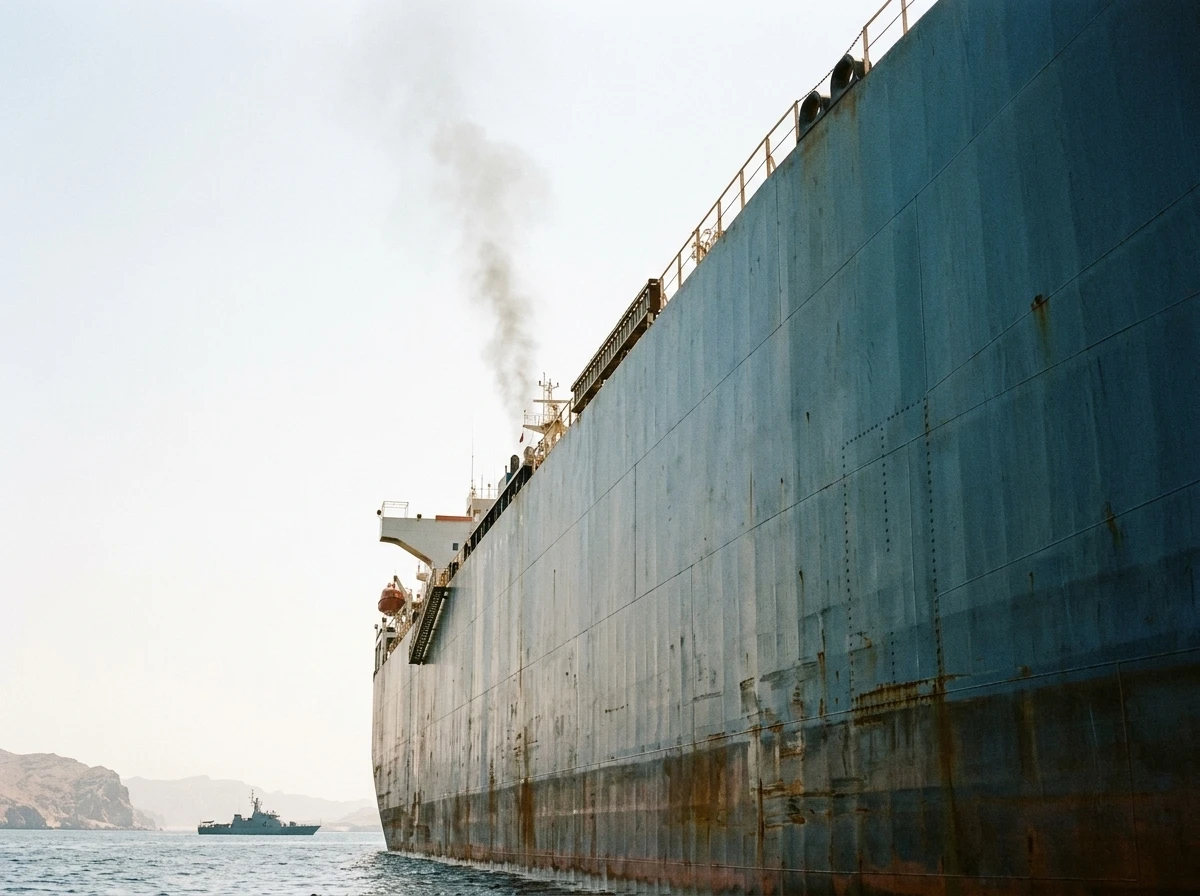
A Tanker Strike Sends Brent Back Above $90
At 4:28 pm ET on Tuesday, July 21, Brent crude traded at $91.36 a barrel, up 2.40% on the day. WTI, the US benchmark, rose $2.03, or 2.46%, to $84.51, roughly $5 higher than a week earlier.
The move followed an attack on the Kaifan, an oil products tanker owned by Kuwait Oil Tanker Co. S.A.K. The vessel was struck by an unknown projectile about 8 nautical miles northeast of Limah, Oman, according to the UK Maritime Trade Operations (UKMTO), the body that tracks Gulf shipping incidents. The crew abandoned ship into a lifeboat, and UKMTO reported no environmental impact.
- Tanker strikes keep coming – the Kaifan is only the latest vessel hit since fighting first shut down the strait this spring.
- Iran hit Kuwaiti infrastructure directly – Iran’s Revolutionary Guards struck Kuwaiti power generation and water desalination plants this week, widening the conflict beyond shipping lanes.
- Houthi rebels are adding a second front – a threat to blockade Saudi Arabia in the Red Sea is layering fresh risk on top of the Hormuz standoff.
Prices remain well below the war’s earlier peak. Brent had briefly slid below $80 after an early diplomatic opening between Washington and Tehran, and China’s reduced buying that kept oil under $200 during the worst of the fighting is still capping how far this latest spike can run.
How Close Is the SPR to Its Legal Floor?
The Strategic Petroleum Reserve held 316.5 million barrels as of July 17, after another 5.1 million barrel withdrawal. Federal rules tied to the Energy Policy and Conservation Act restrict standard drawdowns once the reserve falls below 252.4 million barrels, the point past which the system struggles to pump oil efficiently. That leaves roughly 64 million barrels of working room.
The current total is already lower than the 2023 low struck during the Biden administration’s drawdown, and it is the lowest weekly level in more than four decades. The reserve also remains more than 400 million barrels below the all-time peak of 727 million barrels it reached in December 2009.
At the pace of the last several weekly withdrawals, roughly 5 million to 6 million barrels, the reserve could approach that 252.4 million barrel floor within about three months if the current drawdown continues unchanged.
How the Reserve Got This Low
The Biden-Era Drawdown
The slide didn’t start this year. The reserve has been drawn down, refilled a little, then drawn down again across three administrations.
- December 2009: The SPR reaches its all-time peak of 727 million barrels.
- January 2021: The reserve holds 638 million barrels as Biden takes office.
- 2022: Biden orders a 180 million barrel emergency release, the largest in SPR history at the time, tied to the war in Ukraine.
- January 2025: Trump returns to office with the reserve sitting at roughly 395 million barrels.
- March 11, 2026: Energy Secretary Chris Wright announces a new 172 million barrel release tied to the Iran war.
- July 17, 2026: The SPR falls to 316.5 million barrels, its lowest weekly level in more than 43 years.
Trump’s Own Record Release
On March 11, 2026, Wright authorized a 172 million barrel release from the reserve, the largest single country release in SPR history, as part of a coordinated action with 32 member nations of the International Energy Agency.
Earlier today, 32 member nations of the International Energy Agency unanimously agreed to President Trump’s request to lower energy prices with a coordinated release of 400 million barrels of oil and refined products from their respective reserves.
Chris Wright, the US Secretary of Energy, said in the statement announcing the release. The Department of Energy said delivery would take about 120 days, a window that closes right around now, just as fresh attacks on shipping revive the case for tapping the reserve again.
By late April, the department had released 17.5 million barrels from the SPR, including a single week of 7.1 million barrels, the fastest weekly pace since October 2022.
The Refill Plan Is a Bet on Falling Prices
Part of the release isn’t a straight sale. The Department of Energy structured a portion of it as an exchange: companies borrow barrels now and must return more oil later, with interest, instead of cash changing hands up front.
The first solicitation covered 86 million barrels from three storage sites, carrying minimum return premiums of 18% to 22%, with the borrowed oil due back between November 2026 and September 2028. On paper, that means the reserve should eventually recoup more oil than it released. In practice, the trade only pays off for companies if crude is cheaper when the bill comes due than it is today.
With Brent back above $90 and Gulf shipping risk climbing again, that bet looks shakier than it did in March. The Government Accountability Office has raised questions about the SPR’s optimal size, and it says the full timing and market implications of the current release were still not known as of May 2026.
The libertarian magazine Reason has argued for scrapping the reserve entirely, noting it now costs more than $200 million a year to maintain even as US production sits at record levels. Others counter that a war capable of shutting the world’s busiest oil chokepoint is exactly the scenario the reserve was built for.
Refiners Feel the Squeeze as Fuel Stocks Lag
Gasoline and distillate stocks are still catching up to normal. As of the week ending July 10, gasoline inventories sat 8% below their five year seasonal average, and distillate stocks were 11% below that same benchmark, according to EIA data.
Refiners are running hard to close the gap. US refineries operated at 96.2% of operable capacity in the week ending July 10, near the top of what the industry can sustain for long stretches.
That squeeze is already showing up at the pump. Gasoline prices have climbed back above $4 a gallon in parts of the country, undercutting an early promise of cheap fuel at the pump.
Frequently Asked Questions
What Is the Difference Between the SPR and Commercial Crude Inventories?
Commercial crude inventories are the oil held by refiners, pipeline operators and storage terminals for ordinary business use, tracked weekly by the Energy Information Administration (EIA). The Strategic Petroleum Reserve is a separate, federally owned stockpile held in underground salt caverns along the Gulf Coast, reserved for emergencies and released only by presidential order or under specific statutory triggers.
How Much Oil Moves Through the Strait of Hormuz Each Day?
The strait is the world’s busiest oil chokepoint, normally carrying roughly a fifth of global seaborne crude trade, according to energy analysts. Attacks since the war began have repeatedly cut that flow to a fraction of normal levels, sending tanker owners scrambling for alternate routes or costly insurance cover.
Can the US Release More Oil From the SPR Right Now?
Yes, but with less room than before. Standard drawdowns become legally restricted once the reserve falls below 252.4 million barrels under the Energy Policy and Conservation Act, and physically, pumping oil from a half empty reserve strains wells and pipelines built for a fuller system. Any new large release would likely need a fresh presidential emergency declaration.
What Happens to the SPR Refill Plan If Prices Keep Rising?
The math gets harder. The Department of Energy’s exchange deals only pay off for companies if oil is cheaper when the borrowed barrels come due, and rising prices erode that incentive. Separately, the Government Accountability Office notes that 92.6 million barrels of mandated congressional sales remain on the books through 2031, meaning the reserve faces further required drawdowns even without a new crisis.


Walmart’s $50 Million Opioid Settlement Closes Case Without Admission

California Sues Over $120 Million Morro Bay Wind Lease Buyout

Gilead Bixlenvo FDA Nod Opens Single Pill Path for Complex HIV Cases

Meta’s $18B Kids Deal Forever Shields Data Used to Spot Under-13s

Lettuce Outbreak Drove Record Cyclospora Spike Across 20 States

Amazon Shaves $20 Off M6 Mac Mini Before It Even Ships

SpaceX Louisiana Port Tests Debt Markets on Orbital AI Scale

Microsoft High Lifts Indexes as Small Caps Crack Support

Apple Replays 2015 Saturday Midnight Preorder for iPhone 18 Pro

Updated COVID Shots Clear FDA but Access Friction Hits High-Risk Groups

Take-Two CEO Pushes Netflix Subs for GTA 6 Extended Look

Destiny 2 Fans Unlock Vaulted Maps After Live Service Ends

Wildlands Free Update Hands Players the Tools They Already Invented

Quake Gets 19 Free Maps From MachineGames Quake Club

Quordle Monday Delivers Gavel Crush Speed Ethos Cleanly

Stripe Bid Shows PayPal Moat Cracked After Years of Slide

Tyson’s Five-Year Utah Plant Falls to Cattle Shortage Reckoning

Silver Lake Workday Talks Signal Private Floor for Software

Kennedy Lewis Takes Majority Control of The Greenbrier in $500M Deal

Best Buy Marks 60 Years With Sale That Echoes Its Audio Shop Roots
-

 TECHNOLOGY3 years ago
How to Adjust a Bulova Watch Band – An Easy Guide
-

 News3 years ago
Fred Pentland: Athletic Bilbao’s English mentor who changed the essence of Spanish football
-

 FINANCE3 years ago
Tax Planning for Every Season: Guide to Maximizing Your Tax Benefits
-

 Education3 years ago
African Ministers New Education Plan
-

 BUSINESS3 years ago
What is Entrepreneurial Operating System? A Comprehensive Guide to EOS
-

 Education3 years ago
Innovate Your Learning Journey with Technology and Enhance Education
-

 News3 years ago
Russians formally out of World Athletics Championships
-

 BUSINESS3 years ago
Top 9 Most Expensive American Cities to Rent an Apartment