
News
OpenAI Bets $300 Donut Speaker Can Beat Smart Home Economics
OpenAI’s reported $300-400 donut-shaped AI speaker with Jony Ive design and moving parts wagers premium personality can break the unprofitable smart-speaker mold.

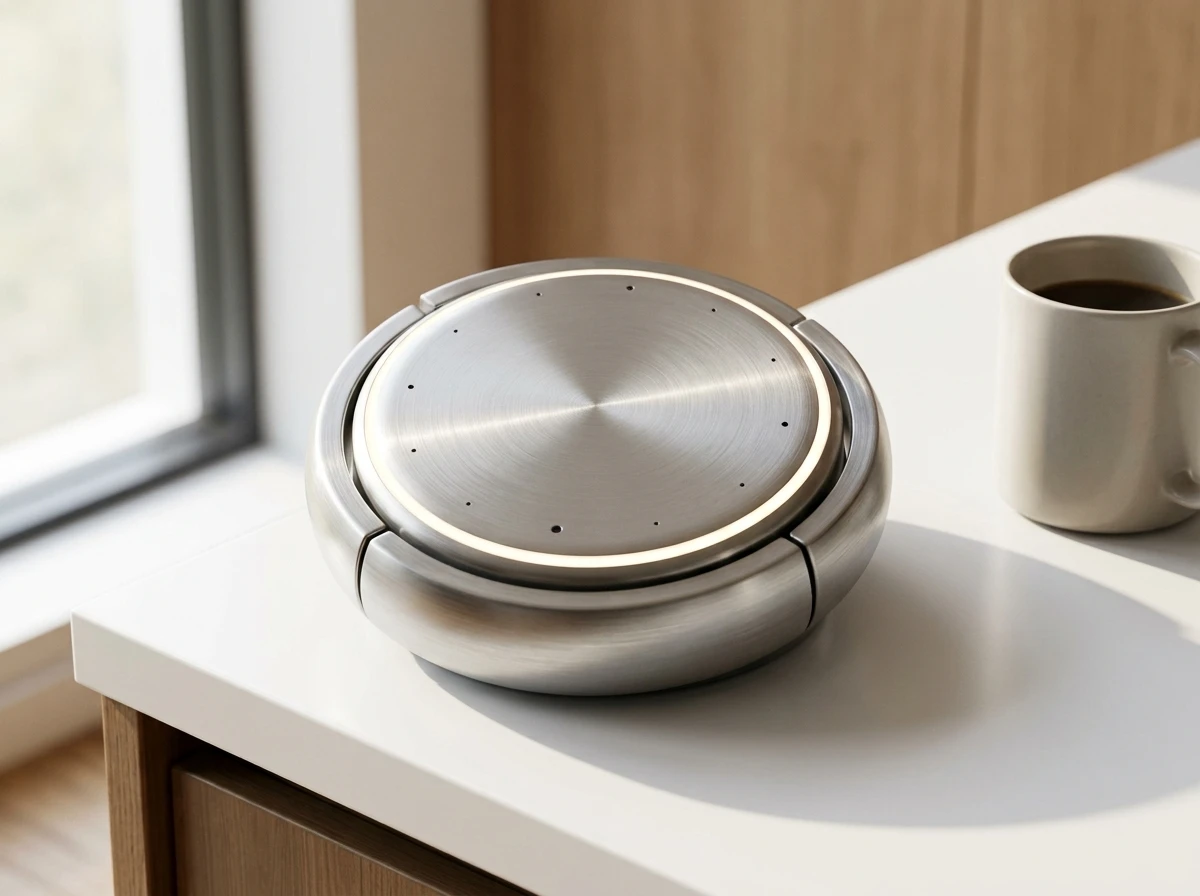
OpenAI’s first consumer device will reportedly be a portable, doughnut-shaped smart speaker the size of a hockey puck that sells for $300 to $400 and arrives in 2027. Bloomberg’s Mark Gurman, citing people familiar with the plans, says the battery-powered unit is meant to be carried room to room and serves as a physical ChatGPT companion with no display.
The price alone sets the wager. Most living-room speakers cost far less. OpenAI is betting Jony Ive’s design studio and a set of moving parts that signal personality can make people pay a premium Amazon and Google never commanded.
What the Device Is Said to Look Like
Sources describe a ring-shaped form factor built from high-quality metal with a premium finish. It packs speakers, microphones, a camera system, environmental sensors and lights. Most striking are the moving mechanical parts intended to give the unit a sense of life when it listens or responds.
The unit is screen-free and rechargeable so owners can set it on a bedside table, kitchen counter or carry it by hand. It is expected to control smart-home gear, play media, answer questions, handle messages and draw on the full range of ChatGPT capabilities. Design work sits with LoveFrom, the independent studio Ive founded, after OpenAI folded the io Products team into its hardware group.
- Doughnut or ring shape roughly hockey-puck size
- Battery power and one-hand portability
- Camera, mics, sensors and lights
- Self-moving parts for expressive feedback
- No display; metal construction
A source told Fortune the initial design is already finalized while work continues on a broader family of AI devices.
Why $300 to $400 Changes the Math
Amazon’s Echo Dot routinely sells near $50 or lower on promotion. Apple’s full-size HomePod sits near $300 and the Mini near $100. Google Nest options land in the same low-to-mid range. OpenAI’s rumored tag matches or exceeds the high end of the current best smart speaker price range while offering no screen and relying on voice plus personality.
| Device | Typical price | Form notes |
|---|---|---|
| Amazon Echo Dot (recent gen) | $40-$50 | Compact cylinder, always-on voice |
| Google Nest Mini / Audio | $50-$100 | Fabric-covered, multiroom |
| Apple HomePod Mini | ~$100 | Small sphere, strong audio |
| Apple HomePod (full) | ~$300 | Premium sound, limited AI |
| OpenAI device (reported) | $300-$400 | Metal donut, moving parts, ChatGPT |
The premium is deliberate. After OpenAI paid roughly $6.5 billion in stock for io Products, the hardware effort carries the expectation of craft rather than commodity volume. Yet volume is how smart speakers historically justified themselves, and that path produced heavy losses.
Amazon Spent Billions Learning the Hard Way
Amazon sold more than 500 million Alexa devices by 2023. Between 2017 and 2021 the devices business still lost more than $25 billion, according to internal documents reviewed by the Wall Street Journal and reported by the New York Post. Speakers were priced at or below cost to seed homes and drive shopping, music and services. The downstream revenue never covered the gap at the scale expected.
Former executives described the devices group as a 10,000-plus person “smart timer” operation. CEO Andy Jassy later pushed for profitability, killed money-losing projects such as Halo and Glow, and demanded clearer monetization through subscriptions. Google and Apple never matched Amazon’s unit scale and also struggled to turn pure hardware into durable profit centers.
Key markers from the Alexa era:
- >$25 billion in devices losses 2017-2021
- 500 million+ Alexa devices sold by 2023
- Sold near or below cost for “downstream” shopping lift that under-delivered
- Later cost cuts, team reductions and project cancellations under Jassy
OpenAI enters the same category without Amazon’s retail flywheel. Its wager is that better AI conversation and an expressive object will create willingness to pay and daily habit that cheap cylinders never did.
Ive’s Studio and the $6.5 Billion Design Bet
In May 2025 Sam Altman and Jony Ive published an official letter from Sam Altman and Jony Ive announcing that the io Products team would merge into OpenAI while LoveFrom stayed independent and took deep design responsibility across the company. Ive had founded io a year earlier with Scott Cannon, Evans Hankey and Tang Tan, assembling hardware talent that included many longtime collaborators.
AI is an incredible technology, but great tools require work at the intersection of technology, design, and understanding people and the world. No one can do this like Jony and his team.
Altman wrote those words in the joint letter. Ive replied that three decades of experience had led him to the collaboration and that he hoped to restore some of the delight he first felt with early personal computers.
The hardware group now exceeds 400 employees and works from the original io building in San Francisco’s Jackson Square while the rest of OpenAI sits across town in Mission Bay. Ive is not a formal employee yet spearheads the aesthetic. The same Fortune reporting notes that more than 400 former Apple staff now work at OpenAI overall, a concentration that fuels both capability and legal risk. This speaker is only the first piece; larger hardware ambitions already visible include possible phones, glasses and other form factors.
Apple’s Lawsuit Casts a Long Shadow
In July 2026 Apple filed a 41-page complaint in Northern District of California court accusing OpenAI, io Products and two former Apple employees of systematically taking trade secrets. Apple alleges Tang Tan, now OpenAI’s chief hardware officer and a 24-year Apple veteran who rose to vice president over iPhone and Watch design, encouraged recruits to share confidential information and even bring hardware parts into interviews. Chang Liu is accused of downloading dozens of files covering unreleased products, specs and supplier data.
Apple claims OpenAI’s nascent hardware business “rests on the shakiest of foundations, rotten to its core by its illegal reliance on misappropriated trade secrets.” OpenAI responded that it has no interest in other companies’ secrets and remains focused on building its own technology. Ive himself is not named in the suit. Legal observers told Fortune the case is more likely to force quarantines, rework or supplier changes than to kill the project outright, yet any delay is costly when the first ship date sits in 2027 and an IPO looms.
The fight is personal. OpenAI and Apple once partnered on ChatGPT integration into Apple platforms; that relationship cooled and Apple later turned to Google for parts of Apple Intelligence. Two former partners are now contesting the next device category in court.
Earlier AI Gadgets Already Showed the Failure Modes
Humane’s AI Pin, built by ex-Apple talent and backed by hundreds of millions, sold poorly and was ultimately acquired and shut down by HP. Rabbit’s R1 became a punchline within weeks of launch. Meta’s Ray-Ban smart glasses are the rare relative success, and they lean on an established fashion brand rather than pure AI novelty. Crowd reaction on X quickly linked the OpenAI donut to that graveyard: a $300-$400 moving speaker competing with a $30 Echo Dot looks bold until the unit economics and adoption curves are examined.
Privacy adds another layer. A always-present camera and microphones inside the home raise the same discomfort that has dogged every smart speaker. Analysts note that a beautiful object does not automatically solve a trust deficit around Sam Altman or around always-listening AI. Voice quality, latency and the balance between helpful and intrusive will decide whether the moving parts feel charming or gimmicky.
The Stakes for OpenAI and Everyone Else
For OpenAI the speaker is more than a gadget. With model leadership no longer uncontested, hardware offers a way to own the user relationship, gather richer context and keep people inside its ecosystem even if rival models match raw capability. Success would validate the $6.5 billion design bet and give the company a physical beachhead before the IPO window. Failure would add another expensive distraction while the company already burns cash at high rates.
Amazon and Google would face a premium voice competitor that could skim high-value households even if it never matches their unit volumes. Apple sees a direct challenge built by its own alumni and is already using the courts to slow the effort. Component suppliers and contract manufacturers stand to gain if the metal, moving-parts design scales; they lose if legal pressure forces redesigns. Consumers who want a more conversational, less screen-centric home AI finally get a high-end option; those who just want a cheap timer and music player stay with the $50 cylinders.
Similar plays have appeared in adjacent categories. One recent example turned fixed hardware turned into a platform bet by emphasizing battery life and ongoing software rather than one-time features. OpenAI is attempting the same elevation for the living room.
The device is still more than a year from any public release. Price, features and even the moving-parts concept can shift. What will not shift is the core gamble: that craftsmanship, personality and frontier AI can finally make a smart speaker something people willingly pay a premium to live with every day.


NFL Three-Strike Safety Fouls Now Pull Coaches and Clubs In

Browns Fans Tape Protest Signs to Jim Brown Statue Over Watson

Amazon Pixel 11 Deal Erases the $100 Hike for One More Day

Elden Ring on Switch 2 Turns Its Own Worst Label Into a Portable Win

Ternus Takes the Stage With Apple’s Foldable Debut

Ikea Xbox Yxstaby Turns Controller Thumbstick Into Home Furniture

Pokémon Center Turns Past Worlds Wins Into Bundles and a Pikachu Coin

NFL Scraps Pro Bowl Game to Restore Pure Player Honor

New Twitter.now Bets the Brand Musk Left Behind

Bella Mir’s Famous First Loss Meets the Accountant Who Won

Double Fine Cuts 23 Jobs Weeks After Xbox Independence

Day-One Big Walk Lifts PS Plus August Beyond Recycled AAA

John Hight Exits Wizards After Digital Reckoning Hits

Curtis Mead’s Red Sox Debut Ends With Fractured Wrist

Red Sox Squander Hot Streak Chance in 4-3 Loss to Athletics

Moesch and Dressel Rewrite Night One at 2026 U.S. Nationals

Boutte’s Quiet Camp Takeover Forces Patriots Receiver Choices

Take-Two CEO Pushes Netflix Subs for GTA 6 Extended Look

Halo Campaign Evolved Skulls Meet Death Barriers That Kill the Hunt

Wildlands Free Update Hands Players the Tools They Already Invented
-

 TECHNOLOGY3 years ago
How to Adjust a Bulova Watch Band – An Easy Guide
-

 News3 years ago
Fred Pentland: Athletic Bilbao’s English mentor who changed the essence of Spanish football
-

 FINANCE3 years ago
Tax Planning for Every Season: Guide to Maximizing Your Tax Benefits
-

 Education3 years ago
African Ministers New Education Plan
-

 BUSINESS3 years ago
What is Entrepreneurial Operating System? A Comprehensive Guide to EOS
-

 Education3 years ago
Innovate Your Learning Journey with Technology and Enhance Education
-

 News3 years ago
Russians formally out of World Athletics Championships
-

 BUSINESS3 years ago
Top 9 Most Expensive American Cities to Rent an Apartment