
FINANCE
US Foreclosures Jump to a Six-Year High as Buyers Circle
ATTOM data shows US foreclosures jumped 21% in early 2026 as the FHA’s staged pandemic relief shutdown and rising costs squeeze specific housing markets.

Lenders filed foreclosure paperwork against 227,548 U.S. homes in the first half of 2026, the highest midyear total since 2019, according to ATTOM’s Mid-Year 2026 U.S. Foreclosure Market Report. That is a 21% jump from a year earlier and 28% above the same six months of 2024. Bank repossessions climbed 33%, and homes that reach that final stage are now moving through the system faster than at any point since 2013.
The timing traces to a specific date. On September 30, 2025, the Federal Housing Administration (FHA, the agency that insures low-down-payment home loans) closed out its last Covid-era relief option for struggling borrowers. Foreclosures on FHA-backed loans jumped 28% the following quarter, and mortgage servicers say the pipeline keeps building for another six to eighteen months.
Foreclosure Filings Jump to a Six-Year High
ATTOM, the property data firm that has tracked foreclosure filings since 2005, counted 164,566 foreclosure starts in the first six months of 2026, up nearly 18% from 140,006 a year earlier. Lenders completed the process on 27,983 homes outright, a 33% increase that still sits 26% below the pace set in the first half of 2020.
ATTOM chief executive Rob Barber called it a market “gradually returning to more typical patterns.” Timelines back him up. Homes foreclosed in the second quarter spent an average of 563 days in the process, the shortest stretch since 2013 and down 13% from a year earlier.
The pain is not evenly spread. Five states carried the worst foreclosure rates of the first half.
| State | H1 2026 Foreclosure Rate | National Rank |
|---|---|---|
| Florida | 0.27% | 1st |
| South Carolina | 0.26% | 2nd |
| Indiana | 0.25% | 3rd (tie) |
| Delaware | 0.25% | 3rd (tie) |
| Illinois | 0.23% | 5th |
Growth tells a different story than level. Idaho’s foreclosure activity jumped 59% year over year, the largest increase nationwide, followed by Colorado at 57%, Georgia at 52%, North Carolina at 47% and Mississippi at 45%.
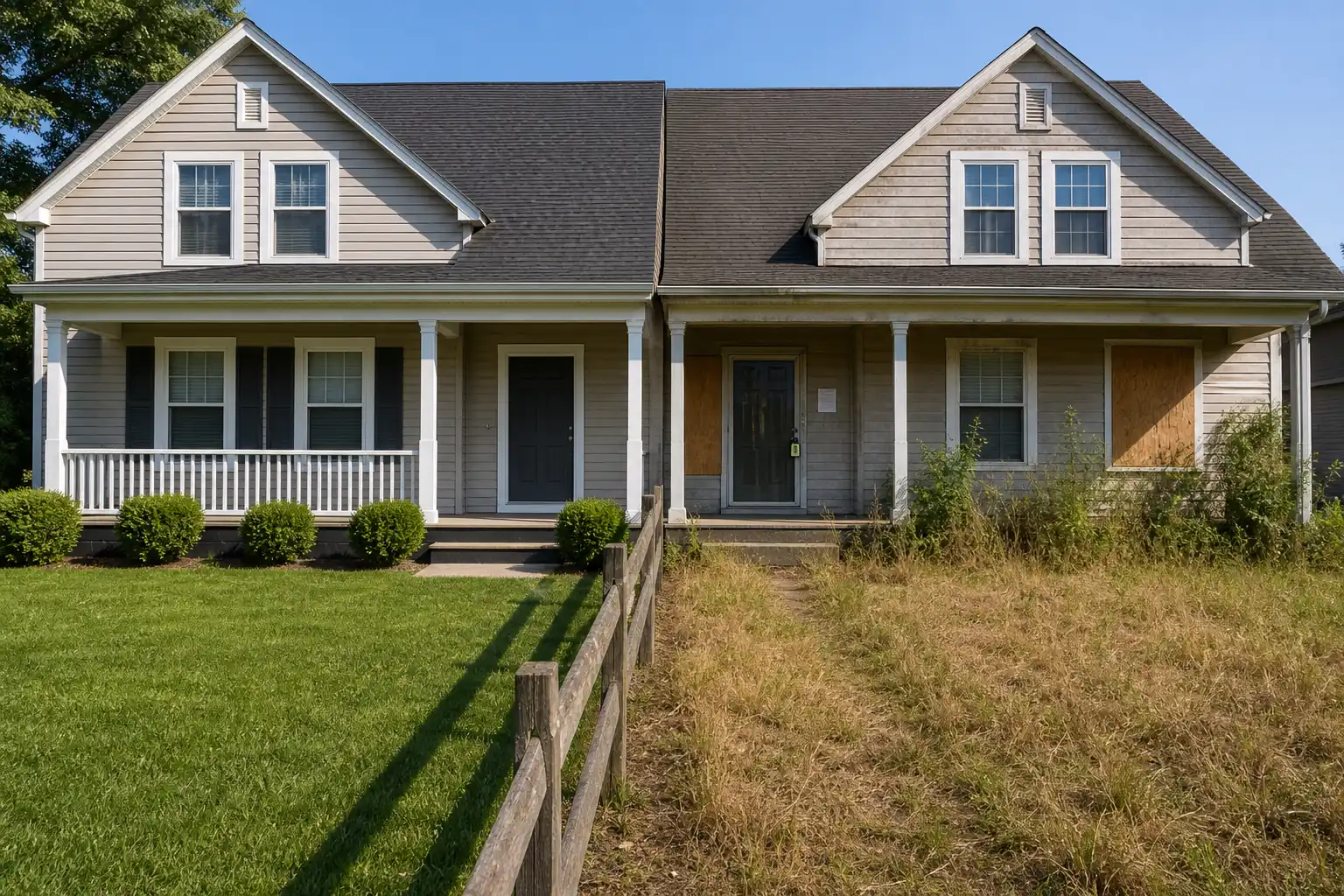
The Forbearance Safety Net Wound Down in Stages
Regulators had good reason to delay this reckoning. The Consumer Financial Protection Bureau estimated in 2021 that a foreclosure costs the average homeowner at least $12,500 in fees and lost equity, and that nearby home values often dip after a sale closes.
Realtor.com senior economist Joel Berner said the broad wind-down of pandemic protections finished in 2024. “This rise is happening because pandemic-era forbearance and moratorium programs fully wound down in 2024, and the homeowners feeling it most are the ones who bought at peak prices and are now squeezed by rising insurance, taxes, and adjustable-rate payments,” Berner said.
The FHA’s own tail end came later and in stages. The agency had already extended its pandemic-era loss mitigation waterfall once, pushing its deadline to April 2025, according to Urban Institute research. It then shut the program down entirely that September, and American Banker reported the FHA-backed foreclosure rate jumped 28% in the first quarter that followed.
We’ve reached a period of exhausted loss mitigation and there’s no more to give.
Ron Malik, senior vice president of default operations at Dovenmuehle, an Illinois-based mortgage subservicer, put it that way to American Banker. Ted Tozer, a former president of Ginnie Mae now at the Urban Institute’s Housing Finance Policy Center, told the outlet that servicers had “really kicked the can down the road” for three or four years running.
Rising monthly costs are not helping borrowers catch up. Homeowners looking to refinance out of an adjustable loan now face a market where mortgage rates have climbed to 6.55%, the highest level in nearly a year, which narrows the options for anyone trying to lower a payment before it becomes unaffordable. Servicers now expect the deterioration to keep playing out for another six to eighteen months, per American Banker’s reporting.
Where the Pressure Is Concentrated
Foreclosures cluster in the cheapest corners of the map, not the priciest ones. Lake Charles, Louisiana, has the nation’s highest share of bank-owned listings, and a stagnant local market is compounding it. Active listings there were down more than 26% year over year in June, and homes that do sit for sale are sitting longer.
“This is a market where overall demand has fallen enough that foreclosures make up a bigger slice of a smaller pie,” said Jake Krimmel, a Realtor.com senior economist. “And those foreclosed homes are sitting.”
- 10.2% of listings in Lake Charles, LA, are bank owned, with a median list price of $238,700
- 7.7% of listings in Tuscaloosa, AL, are bank owned
- 6% of listings in Dayton, OH, are bank owned
- 5.7% of listings in Davenport, IA, are bank owned
- 5.7% of listings in Montgomery, AL, are bank owned
Three Alabama metros land on that list partly because of a quirk in state law. Alabama’s statutory right of redemption lets a foreclosed owner buy the home back from whoever purchased it at auction, simply by reimbursing that buyer. The risk scares off investors, so more properties end up sitting as bank-owned listings instead of changing hands at the courthouse steps.
Colorado, where filings jumped 57% year over year, illustrates the same cost squeeze from another angle. The state has separately rolled out a fund that gives millions of dollars to pay off HOA debt, one of the same homeowners association and escalating-cost pressures pushing borrowers toward default in the first place.
What a Foreclosure Discount Looks Like
The number that draws bargain hunters is the discount. Foreclosed homes sold for a median 27.2% below their estimated market value in the first half of 2026, according to Realtor.com’s foreclosure report. That sits inside the roughly 20% to 35% range the company has tracked since 2018.
- 27.2% median discount to estimated market value for foreclosed homes sold in H1 2026
- 1.3% share of April listings that were bank owned, the most for that month since 2020
- 26.5% more page views than a typical listing, despite sitting 11 days longer on the market
- 30.4% fewer listing photos than a standard for-sale listing
The extra attention does not translate into a faster sale. Most bank-owned homes sell as-is, and their listing descriptions run 33% shorter than a typical home’s, a sign of how little marketing effort goes into a repossessed property before it hits the market.
Is Now a Good Time to Buy a Foreclosed Home?
For a prepared buyer with cash set aside for repairs, the math works: foreclosed homes sell for roughly a quarter less than market value. For anyone who needs a move-in-ready house, cannot absorb a surprise repair bill, or is unfamiliar with buying from a bank, the savings can vanish fast once inspections begin.
“There are a lot of risks and a lot of complications with buying these things, so it’s not for everybody,” Realtor.com senior economist Joel Berner said. He added that foreclosures are becoming more of an option for buyers simply because they now make up a larger slice of the market.
Once a home fails to sell at auction and becomes a lender-owned listing, buyers can typically inspect it and use conventional financing rather than cash, unlike many auction-stage sales. That widens the buyer pool, but repair costs still land squarely on whoever signs the closing papers, since previous owners who could not afford their mortgage often could not afford upkeep either.
Far From 2010’s Wreckage
However fast the increase feels, it remains a fraction of the last real crisis. In 2010, RealtyTrac counted a record 2.9 million properties with foreclosure filings across the full year, or one in every 45 U.S. housing units. ATTOM’s tally for the entire first half of 2026 is 227,548 properties, about one in every 632 housing units.
Indiana puts the gap in sharper focus. The state posted more than 14,000 foreclosure filings in some quarters during the Great Recession. It logged just over 4,000 in the first quarter of 2026, Barber said.
Frequently Asked Questions
What’s the Difference Between a Foreclosure and a Short Sale?
A short sale happens before foreclosure, when a lender agrees to let an underwater homeowner sell for less than the remaining mortgage balance. There were just over 28,000 short sales in 2025, about 0.6% of all home sales, and that volume jumped 16% year over year in the first quarter of 2026. Discounts on short sales used to run far deeper than foreclosure discounts, reaching 50% in 2022, but the two have converged as home price growth has cooled.
Can Buyers Get a Regular Mortgage on a Bank-Owned Home?
Often, yes. Once a home becomes a lender-owned, or REO, listing after failing to sell at auction, buyers can typically inspect the property and use conventional financing. Many earlier-stage auction sales, by contrast, require cash. Lenders still price REOs to move quickly, and nearly all are marketed as-is, so financing approval does not remove the need to budget for repairs.
Why Does a Foreclosure Take Longer to Complete in Some States?
State law decides the pace. Properties foreclosed in Louisiana during the second quarter of 2026 spent an average of 3,491 days in the process, the longest in the country, while Texas properties took just 155 days. States with judicial foreclosure, which routes every case through the courts, generally move far slower than states that let lenders foreclose without a judge’s sign-off.
What Changed for FHA Borrowers Trying to Avoid Foreclosure?
The FHA now limits borrowers to one loan modification every 24 months, and new rules require a three-month trial period to prove a borrower can afford the new payment before any modification is finalized. Those tighter rules, layered on top of the shutdown of pandemic-era relief, are part of why FHA-backed foreclosures jumped 28% in the first quarter of 2026.
Disclaimer: This article is for informational purposes only and is not financial, legal or real estate investment advice. Foreclosure purchases carry legal and repair risks that vary by state and property, so buyers should consult a licensed real estate agent or attorney before bidding. Figures reflect data available as of publication in July 2026.


Walmart’s $50 Million Opioid Settlement Closes Case Without Admission

California Sues Over $120 Million Morro Bay Wind Lease Buyout

Gilead Bixlenvo FDA Nod Opens Single Pill Path for Complex HIV Cases

Meta’s $18B Kids Deal Forever Shields Data Used to Spot Under-13s

Lettuce Outbreak Drove Record Cyclospora Spike Across 20 States

Amazon Shaves $20 Off M6 Mac Mini Before It Even Ships

SpaceX Louisiana Port Tests Debt Markets on Orbital AI Scale

Microsoft High Lifts Indexes as Small Caps Crack Support

Apple Replays 2015 Saturday Midnight Preorder for iPhone 18 Pro

Updated COVID Shots Clear FDA but Access Friction Hits High-Risk Groups

Take-Two CEO Pushes Netflix Subs for GTA 6 Extended Look

Destiny 2 Fans Unlock Vaulted Maps After Live Service Ends

Wildlands Free Update Hands Players the Tools They Already Invented

Quake Gets 19 Free Maps From MachineGames Quake Club

Quordle Monday Delivers Gavel Crush Speed Ethos Cleanly

Stripe Bid Shows PayPal Moat Cracked After Years of Slide

Tyson’s Five-Year Utah Plant Falls to Cattle Shortage Reckoning

Silver Lake Workday Talks Signal Private Floor for Software

Kennedy Lewis Takes Majority Control of The Greenbrier in $500M Deal

Best Buy Marks 60 Years With Sale That Echoes Its Audio Shop Roots
-

 TECHNOLOGY3 years ago
How to Adjust a Bulova Watch Band – An Easy Guide
-

 News3 years ago
Fred Pentland: Athletic Bilbao’s English mentor who changed the essence of Spanish football
-

 FINANCE3 years ago
Tax Planning for Every Season: Guide to Maximizing Your Tax Benefits
-

 Education3 years ago
African Ministers New Education Plan
-

 BUSINESS3 years ago
What is Entrepreneurial Operating System? A Comprehensive Guide to EOS
-

 Education3 years ago
Innovate Your Learning Journey with Technology and Enhance Education
-

 News3 years ago
Russians formally out of World Athletics Championships
-

 BUSINESS3 years ago
Top 9 Most Expensive American Cities to Rent an Apartment