
FINANCE
US-Japan Yen Buy Rewires Global Funding Currency Risks
The coordinated July 31 yen purchase returns sovereign FX firepower as a priced risk, pushing carry capital toward the euro and embedding geopolitics in.

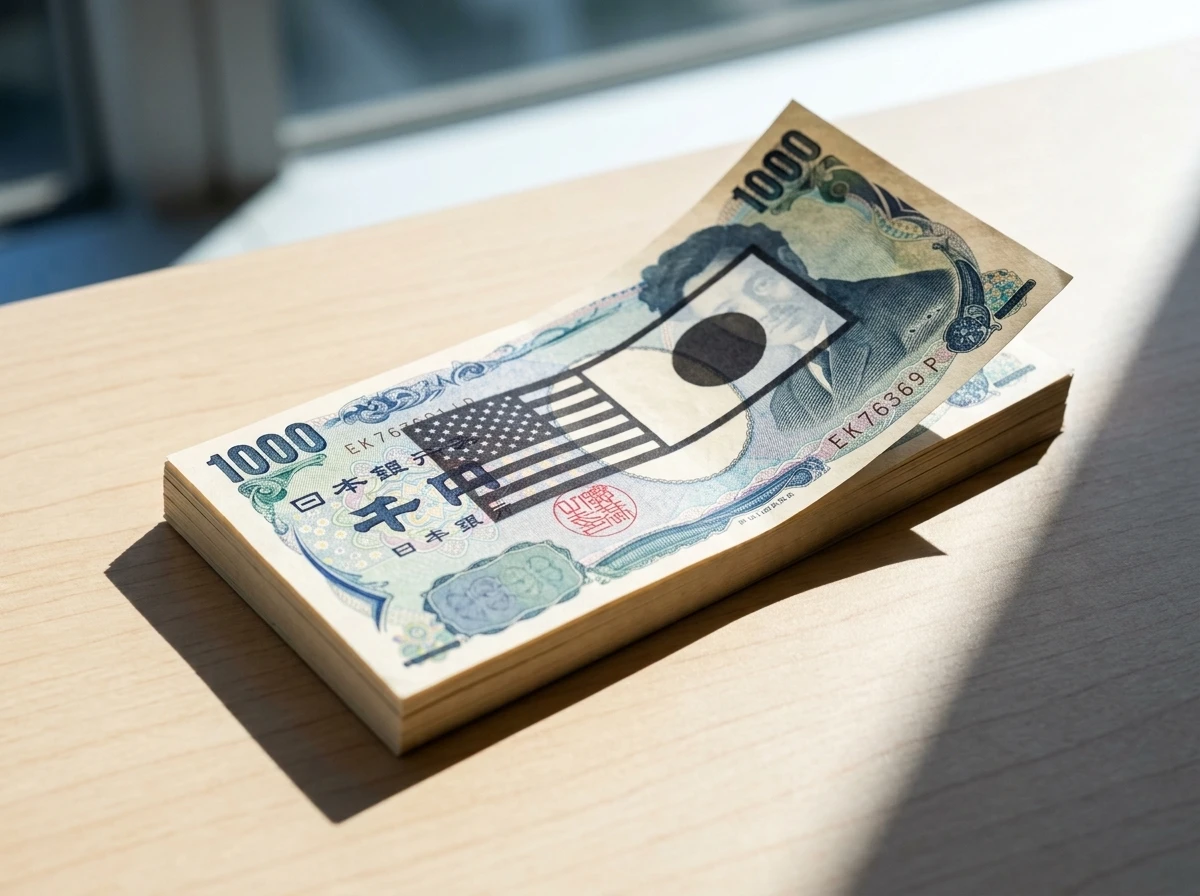
The United States and Japan jointly bought yen on July 31, 2026, the first coordinated yen-buying operation between the two since 1998, lifting the currency from multi-decade lows near 164 and forcing a sharp rethink of funding trades. Japan’s Ministry of Finance and the U.S. Treasury confirmed the action days later, with estimates putting Japan’s outlay near $53 billion to $59 billion while the U.S. side used euro sales.
Markets now treat the joint firepower as a live variable rather than a distant threat.
The Joint Buy That Hit New York Trading
On Friday July 31 (U.S. Eastern Time), Japan’s Ministry of Finance purchased yen in coordination with the U.S. Department of the Treasury. The Ministry of Finance confirmed the joint purchase on August 3, stating it countered excessive volatility and disorderly movements in recent months. It was taken pursuant to the September 2025 finance ministers framework.
USD/JPY had traded near 40-year lows above 160 earlier that week. The yen surged as much as roughly 3 percent in New York hours, briefly touching the 157-158 area before settling higher. Later data and broker estimates put Japan’s likely sales of dollars or equivalents at up to about 8.2 trillion yen, or roughly $53 billion to $59 billion. The U.S. contribution was smaller, with some notepad and market estimates in the $5 billion to $10 billion range.
- Pre-move levels: USD/JPY approached or exceeded 163-164 in late July.
- Immediate spike: Yen strengthened several yen per dollar in a single session.
- Post-confirmation hold: Pair traded near 158 area days later with intervention risk still priced.
- Follow-on signal: Both sides said they will not hesitate to act again.
Finance Minister Satsuki Katayama told reporters Japan remains attentive and in close communication with U.S. counterparts. U.S. Treasury Secretary Scott Bessent posted that Friday’s actions countered disorderly yen movements and that Treasury will not hesitate to participate in further joint intervention.
Why the Operation Used Euros Instead of Dollars
Reports and official comments indicate the U.S. side sold euros from reserves to buy yen rather than selling dollars directly into the dollar-yen pair. Brad W. Setser of the Council on Foreign Relations noted the United States intervened by selling euros from its international reserves and buying yen. Bessent later described the euro sales as a reallocation of resources and said the euro sat closer to equilibrium while the yen showed substantial undervaluation.
This choice limited direct pressure on the dollar and avoided signaling against U.S. currency strength. It also drew on the Exchange Stabilization Fund toolkit that Bessent had used in 2025 for Argentina’s peso, including a large swap line and open-market peso purchases. Analysts called the common thread statecraft via the ESF: same Treasury, same fund, same willingness to back aligned governments.
President Donald Trump publicly framed the move as support for a friend, saying Washington is always there for Japan. Japanese officials linked it to the earlier bilateral understanding rather than a one-off favor.
1998 Buy Versus 2011 Sell
History shows how rare joint action remains. The last U.S.-Japan yen-buying coordination came in 1998 during the Asian financial crisis. The New York Fed reported a 1998 coordinated yen purchase of $833 million split between the Federal Reserve and the ESF on June 17 that year, after which the yen strengthened on hopes of Japanese policy follow-through.
| Year | Direction | Partners | Approx. Scale | Context |
|---|---|---|---|---|
| 1998 | Buy yen | U.S. + Japan | $833 million U.S. share | Asian crisis, yen weakness |
| 2011 | Sell yen (weaken) | G7 including U.S. + Japan | Japan ~¥11.7 trillion total period | Post-earthquake yen surge |
| 2026 | Buy yen | U.S. + Japan | Japan ~$53-59 bn est.; U.S. smaller | 40-year lows, rate gap, fiscal concerns |
The 2011 episode after the Tohoku earthquake and Fukushima disaster was the opposite: G7 action to stop an excessive yen rise that threatened Japan’s export recovery. This year’s move is the first bilateral buy-yen operation in nearly three decades and the first U.S.-Japan coordinated intervention of any kind since 2011.
Japan also signaled future use of the Federal Reserve’s FIMA Repo Facility as a backstop. Bessent urged that facility be upsized.
What Separated This Round From Solo Japan Moves
Japan has intervened alone many times, including large 2022 and 2024 operations. Three features set July 31 apart.
- Explicit U.S. Treasury participation and public confirmation from Bessent and Trump.
- Execution reportedly via the euro-yen cross on the U.S. side, not pure dollar-yen.
- Political framing as alliance support rather than pure technical volatility control.
Jesper Koll, expert director at Monex Group, said the two ministries “have successfully weaponized the yen.” He argued the countries deployed public balance sheets in concert to influence market psychology. “When increasingly scarce national assets are spent in unison on the same target by two major sovereigns, markets will have to listen,” Koll said.
When increasingly scarce national assets are spent in unison on the same target by two major sovereigns, markets will have to listen.
Koll made the comment in reference to the deterrence effect on short-yen positions.
Carry Trades Now Carry Intervention Risk
The yen has long been the preferred funding currency for carry trades. Investors borrow at Japan’s low rates and invest in higher-yielding assets elsewhere. Large short-yen positions built up as the currency weakened through 2025 and 2026 on the interest-rate gap and concerns over expansionary fiscal policy under Prime Minister Sanae Takaichi.
Billy Leung, investment strategist at Global X ETFs, said the episode “changes the calculus for funding trades specifically.” If investors see intervention risk as a live and coordinated threat, they become more cautious running large short-yen books and rotate toward alternative funding currencies such as the euro. Currency policy itself returns as a source of market risk after fading for a decade.
Crowd discussion on X tracked the same shift. Leveraged shorts received a real-time lesson that a 3-4 percent currency reversal can erase months of carry in hours. The structure of the trade remains large, but the threat of joint action in thin liquidity windows raises the cost of holding it. Some observers framed the U.S. role as an attempt to manage any unwind rather than let it run disorderly across global equity and bond markets.
Masahiko Loo, senior fixed income strategist at State Street, put the bigger change simply: traders now have a new variable to price, policy reaction functions, not just macro fundamentals.
Geopolitics Sits Beside the Macro Gap
Cornell professor Eswar Prasad called the operation more defensive yet still a sign that foreign-exchange policy has taken on a geopolitical tinge. The Trump administration appears more willing to support central banks of countries it views as aligned. Parallels to the 2025 Argentina package, where the ESF provided a $20 billion swap and bought pesos ahead of midterms, reinforced the pattern.
David Roche of Quantum Strategy suggested political considerations extended beyond pure financial stability, noting possible support for Takaichi. Setser added a strategic U.S. angle: a sharply weaker yen pressures other Asian currencies and works against efforts to encourage investment in the United States rather than high-surplus Asia. Stabilizing the yen removes one source of competitive pressure.
Underlying drivers remain. The rate differential between the Bank of Japan and the Federal Reserve is still wide. Fiscal questions around Takaichi’s proactive spending have kept pressure on Japanese bonds, with Japan’s borrowing costs testing Takaichi already visible in the market. Intervention buys time; it does not close the gap.
The September 2025 U.S.-Japan Finance Ministers’ Joint Statement had already set the ground rules: exchange rates should be market-determined, excess volatility can harm stability, and intervention is reserved for disorderly moves in either direction, with monthly disclosure commitments.
Reaction Functions Become Part of the Model
The lasting second-order effect is behavioral. Short-yen positioning will stay smaller or more hedged while the threat of joint action remains credible. Funding demand may migrate toward the euro or other low-rate currencies that lack the same two-sovereign backstop. Volatility in Asian crosses could rise whenever Tokyo or Washington signals concern.
For the yen itself, sustained strength still requires Bank of Japan rate hikes that narrow the real-rate gap and clearer fiscal signals that reduce hedging costs for Japanese investors holding foreign assets. Without those, the bounce risks fading once the immediate shock wears off, just as earlier solo interventions did.
Bessent has been explicit that intervention is a signal, while only strong domestic policies produce durable results. Japan plans continued close contact and possible FIMA use. Markets will watch the next BOJ meeting, Japanese fiscal updates, and any further rate-check chatter from the New York Fed desk for clues on whether the deterrent holds.
The July 31 operation proved two major balance sheets can still move a G10 currency when they choose. Traders who treat that possibility as a permanent input will adjust positioning faster than those who wait for the next surprise.
Frequently Asked Questions
When did the US and Japan last jointly buy yen before 2026?
The previous coordinated yen-buying operation was in June 1998, when U.S. authorities sold $833 million for yen in cooperation with Japan during the Asian financial crisis; the 2011 G7 action went the opposite direction to weaken the yen after the earthquake.
How large was Japan’s share of the July 2026 intervention?
Bank of Japan money-market data and broker estimates pointed to Japan selling as much as roughly $53 billion to $59 billion equivalent to buy yen, an outsized single-episode figure compared with many earlier solo operations though still an estimate pending full monthly disclosure.
Why did the United States sell euros rather than dollars?
Official and market accounts indicate the Treasury reallocated euro reserves to acquire yen, avoiding direct dollar sales into the pair; Bessent described the euro as nearer equilibrium while the yen was substantially undervalued, limiting any signal against the dollar.
What is the yen carry trade and how does intervention affect it?
Investors borrow in low-yielding yen to fund higher-yielding assets elsewhere; coordinated buy-yen action raises the risk of sudden funding-cost spikes, encouraging smaller positions, more hedges, or rotation into alternative funding currencies such as the euro.
Does the Exchange Stabilization Fund get used for these operations?
Yes, the ESF has long been the Treasury vehicle for FX intervention and was also used in the 2025 Argentina support package; the 1998 yen buy split costs between the ESF and the Federal Reserve System, and similar tools remain available.
Disclaimer: This article is for informational purposes only and does not constitute investment advice. Currency markets involve substantial risk of loss.


NFL Three-Strike Safety Fouls Now Pull Coaches and Clubs In

Browns Fans Tape Protest Signs to Jim Brown Statue Over Watson

Amazon Pixel 11 Deal Erases the $100 Hike for One More Day

Elden Ring on Switch 2 Turns Its Own Worst Label Into a Portable Win

Ternus Takes the Stage With Apple’s Foldable Debut

Ikea Xbox Yxstaby Turns Controller Thumbstick Into Home Furniture

Pokémon Center Turns Past Worlds Wins Into Bundles and a Pikachu Coin

NFL Scraps Pro Bowl Game to Restore Pure Player Honor

New Twitter.now Bets the Brand Musk Left Behind

Bella Mir’s Famous First Loss Meets the Accountant Who Won

Take-Two CEO Pushes Netflix Subs for GTA 6 Extended Look

Halo Campaign Evolved Skulls Meet Death Barriers That Kill the Hunt

Wildlands Free Update Hands Players the Tools They Already Invented

Quake Gets 19 Free Maps From MachineGames Quake Club

Destiny 2 Fans Unlock Vaulted Maps After Live Service Ends

Quordle Monday Delivers Gavel Crush Speed Ethos Cleanly

Stripe Bid Shows PayPal Moat Cracked After Years of Slide

Tyson’s Five-Year Utah Plant Falls to Cattle Shortage Reckoning

Silver Lake Workday Talks Signal Private Floor for Software

Kennedy Lewis Takes Majority Control of The Greenbrier in $500M Deal
-

 TECHNOLOGY3 years ago
How to Adjust a Bulova Watch Band – An Easy Guide
-

 News3 years ago
Fred Pentland: Athletic Bilbao’s English mentor who changed the essence of Spanish football
-

 FINANCE3 years ago
Tax Planning for Every Season: Guide to Maximizing Your Tax Benefits
-

 Education3 years ago
African Ministers New Education Plan
-

 BUSINESS3 years ago
What is Entrepreneurial Operating System? A Comprehensive Guide to EOS
-

 Education3 years ago
Innovate Your Learning Journey with Technology and Enhance Education
-

 News3 years ago
Russians formally out of World Athletics Championships
-

 BUSINESS3 years ago
Top 9 Most Expensive American Cities to Rent an Apartment