
Health
Jalapeño Salmonella Outbreak Echoes 2008 Pattern Across 27 States
A Salmonella outbreak from Sinaloa jalapeños has hospitalized 36 people and repeats the 2008 pepper pattern that once wrecked the tomato market.

A Salmonella Javiana outbreak linked to jalapeño peppers has reached 345 cases and 36 hospitalizations across 27 states, with no deaths reported. The peppers came from a grower in Sinaloa, Mexico, and were distributed by Coast Citrus Distributors mainly to restaurants and wholesalers.
Illness onsets ran from June 19 to July 20, 2026. Of 191 people interviewed, 93 percent had eaten at a Mexican-style restaurant in the weeks before they got sick. Chipotle and Qdoba pulled the product weeks ago. The pattern looks familiar to anyone who followed the massive 2008 outbreak once blamed on tomatoes.
Minnesota and Colorado Lead the Case Counts
Minnesota and Colorado each reported 110 illnesses, far ahead of every other state. Illinois logged 30. Kansas had 13. Most other states reported single digits.
| State | Cases |
|---|---|
| Minnesota | 110 |
| Colorado | 110 |
| Illinois | 30 |
| Kansas | 13 |
| Wisconsin | 9 |
| Oklahoma | 8 |
| Missouri | 7 |
The remaining states on the list are Alabama, Arkansas, California, Georgia, Indiana, Kentucky, Louisiana, Michigan, Montana, Nebraska, North Carolina, North Dakota, Ohio, South Carolina, Tennessee, Texas, Utah, Virginia, Washington and Wyoming. CDC notes the true total is likely higher because many people recover without testing.
- 345 confirmed cases of the outbreak strain
- 36 hospitalizations, zero deaths
- 27 states with reported illnesses
- 93% of interviewed patients ate at Mexican-style restaurants
Meal dates for those restaurant visits stretched from June 14 to July 14. FDA and CDC say the investigation remains open.
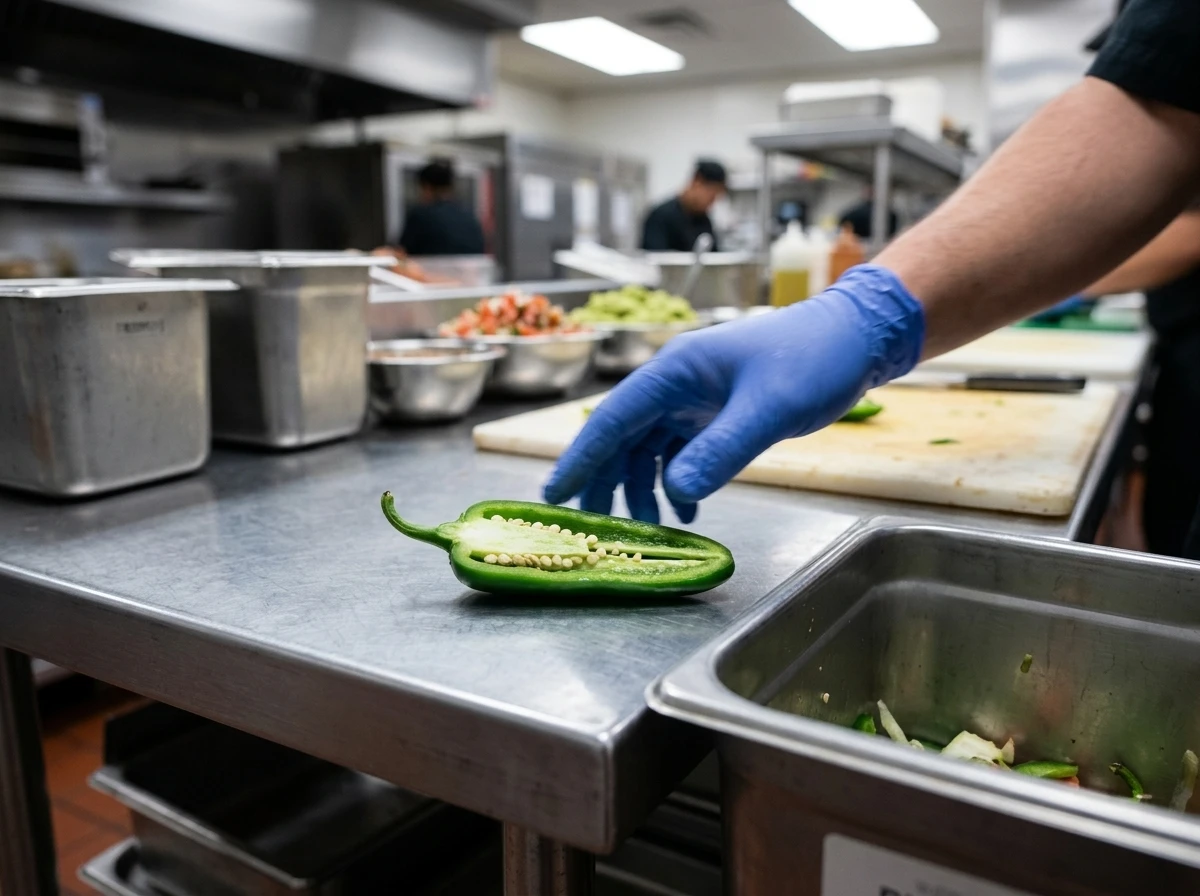
How Salmonella Reaches a Pepper
Salmonella does not grow inside a healthy jalapeño. It arrives from outside the plant. Contaminated irrigation water, manure that was not properly treated, animals moving through fields, and dirty hands or equipment during harvest and packing all introduce the bacteria.
Once the pathogen is on the fruit, rinsing under a kitchen tap rarely removes it from the stem scar or skin crevices. Peppers are often eaten raw or only lightly cooked, so heat never gets a chance to kill the bacteria.
- Surface water used for irrigation in warm growing regions
- Animal intrusion into open fields
- Poor sanitation at packing houses or on harvest crews
- Cross-contamination during distribution and restaurant prep
Food safety specialist Wade Syers of Michigan State University Extension has pointed out that the lack of a reliable kill step for raw peppers leaves the bacteria intact until someone bites into salsa or a burrito.
The 2008 Outbreak That First Named Peppers
Eighteen years ago a Salmonella Saintpaul outbreak sickened 1,442 people across 43 states, the District of Columbia and Canada. At least 286 were hospitalized. Investigators spent months focused on tomatoes and wiped out large parts of the domestic tomato market before the evidence shifted.
- Spring-summer 2008: Cases climb rapidly; early epidemiology points to raw tomatoes and Mexican-style restaurants.
- July 2008: FDA advises consumers to avoid fresh jalapeños and serranos grown in Mexico. The outbreak strain turns up on a jalapeño in a Texas warehouse and in a patient’s home.
- Late July-August 2008: Strain recovered from irrigation water and a serrano pepper on a Mexican farm. Tomato traceback never converges.
- Aftermath: Tomato growers report losses in the hundreds of millions. Border records later showed peppers had been among the most frequently rejected Mexican crops for Salmonella that year.
A smaller 2016 outbreak of Salmonella Anatum sickened 32 people in nine states and was also linked to imported hot peppers. FDA had already isolated the matching strain from an Anaheim pepper months earlier during routine sampling. The match only became clear after the illnesses appeared.
Bill Marler, the food-safety attorney who has tracked these events for decades, wrote this week that the 2026 Sinaloa case “should have surprised nobody.” The shape is identical: Mexican grower, U.S. importer, restaurant clusters, and a warning that arrives after most of the crop has already been eaten.
Chipotle and Qdoba Moved First
Chipotle identified the common lot through its own traceability system and switched suppliers for affected restaurants beginning July 20. Qdoba stopped using jalapeños entirely on July 28.
We have a robust ingredient traceability system and, upon learning of a potential Salmonella outbreak in the supply chain impacting wholesalers and restaurants, we identified jalapeños from a particular grower in Sinaloa, Mexico and distributed by Coast Citrus Distributors as a common ingredient from a common lot, proactively removed them from the restaurants where they had been distributed, and replaced them with product from different growers.
That statement came from Chipotle’s newsroom on August 5. The company stressed the recalled peppers are no longer in its restaurants. FDA and CDC both say they no longer consider Chipotle or Qdoba an ongoing risk for this outbreak.
Coast Citrus agreed to recall remaining inventory and is contacting customers. The firm has stopped importing from the implicated grower. The peppers went primarily to distributors, restaurants and food-service companies, not directly to grocery stores, though FDA is still checking retail channels.
Investors reacted quickly. Chipotle shares dropped sharply in the days after the company first disclosed the supply issue, with some market notes tracking losses of roughly 8 to 12 percent on the week. The stock move arrived before every outlet had even named both chains.
What FDA Sampling Already Documented
Between 2015 and 2017 the FDA ran a large sampling assignment on hot peppers. The results were published years ago. Mexican hot peppers showed a 2.61 percent Salmonella rate in Mexican hot peppers (29 positives out of 1,112 samples). Peppers from the Dominican Republic hit 8.33 percent. Domestic peppers tested far lower at 0.31 percent.
| Origin | Samples | Salmonella positives | Prevalence |
|---|---|---|---|
| Mexico | 1,112 | 29 | 2.61% |
| Dominican Republic | 84 | 7 | 8.33% |
| United States (domestic) | 322 | 1 | 0.31% |
| All imported | 1,293 | 46 | 3.48% |
One in roughly 38 Mexican hot peppers the agency pulled carried Salmonella. That is not a one-off bad lot. It is baseline data for a commodity Americans routinely eat raw. The same assignment led FDA to place two Dominican firms on import alert. Follow-up inspections occurred at Mexican firms that tested positive, but the prevalence figure itself never produced a structural change in how the trade is managed.
Traceability remains the practical bottleneck. Peppers are often sold loose without labels. Once diced into salsa or pico de gallo they become invisible to the diner and hard to isolate on a questionnaire. Restaurant meals mix multiple raw items, so epidemiology has to work harder than it does with a sealed package of ground beef or eggs. An earlier egg Salmonella recall of nearly 19 million eggs and the later Kroger and Brookshire’s egg pull show how packaged protein outbreaks often move faster once a lot code exists. Fresh produce rarely offers that luxury.
Who Still Needs to Be Careful
FDA’s traceback to a Sinaloa grower and the Coast Citrus recall cover remaining inventory. Anyone who knows they have those peppers should throw them out and sanitize surfaces and containers that touched them. If the origin is unknown and the peppers match the outbreak timeframe, the safest choice is disposal, especially for households with young children, older adults, pregnant people or anyone with a weakened immune system.
Symptoms of salmonellosis usually start 6 hours to 6 days after exposure and include diarrhea (sometimes bloody), fever and stomach cramps. Most people recover in 4 to 7 days without antibiotics. Seek care for fever above 102°F, diarrhea lasting more than three days, bloody stool, persistent vomiting, or signs of dehydration.
People who recently ate at a Mexican-style restaurant and later became ill should contact a doctor and mention the possible exposure. CDC and FDA continue to update case counts and distribution details as new information arrives.
The peppers that caused the bulk of the illnesses were already consumed in June and early July. The public recall is largely a clean-up of what remains in the pipeline. That lag is the same one that defined 2008 and 2016. The data on contamination rates has been public for years. The next time a Mexican hot-pepper lot turns up in a restaurant cluster, the only surprise will be if anyone still claims to be surprised.
Frequently Asked Questions
How did Salmonella get onto the jalapeño peppers?
The bacteria typically arrive via contaminated irrigation water, untreated manure, animal intrusion into fields, or poor sanitation during harvest and packing. Once on the surface or in the stem scar, ordinary rinsing does not reliably remove it, and peppers are often eaten raw.
How does the 2026 outbreak compare with the 2008 Salmonella Saintpaul event?
The 2008 outbreak sickened 1,442 people in 43 states plus Canada and hospitalized at least 286. It was initially blamed on tomatoes before jalapeños and serranos were confirmed. The 2026 event is smaller so far (345 cases, 36 hospitalizations) but follows the same Mexican-pepper and Mexican-restaurant pattern.
What did FDA sampling show about Salmonella in hot peppers?
In its FY2016-2017 assignment the agency found Salmonella in 2.61 percent of Mexican hot-pepper samples and 8.33 percent of Dominican samples, versus 0.31 percent in domestic peppers. Those figures have been public for years and describe the baseline risk for a raw-eaten commodity.
Are Chipotle and Qdoba still serving the recalled jalapeños?
No. Chipotle switched suppliers for impacted stores on July 20 and states the recalled product is gone. Qdoba stopped serving jalapeños on July 28. Both CDC and FDA say there is no ongoing risk from those two chains for this outbreak.
What should consumers do with loose jalapeños bought around the same time?
If you can confirm they came from Coast Citrus and Sinaloa, discard them and clean any surfaces they touched. If the source is unknown and the purchase falls in the June-July window of the outbreak, food-safety experts recommend throwing them away, particularly for high-risk household members.


NFL Three-Strike Safety Fouls Now Pull Coaches and Clubs In

Browns Fans Tape Protest Signs to Jim Brown Statue Over Watson

Amazon Pixel 11 Deal Erases the $100 Hike for One More Day

Elden Ring on Switch 2 Turns Its Own Worst Label Into a Portable Win

Ternus Takes the Stage With Apple’s Foldable Debut

Ikea Xbox Yxstaby Turns Controller Thumbstick Into Home Furniture

Pokémon Center Turns Past Worlds Wins Into Bundles and a Pikachu Coin

NFL Scraps Pro Bowl Game to Restore Pure Player Honor

New Twitter.now Bets the Brand Musk Left Behind

Bella Mir’s Famous First Loss Meets the Accountant Who Won

Take-Two CEO Pushes Netflix Subs for GTA 6 Extended Look

Halo Campaign Evolved Skulls Meet Death Barriers That Kill the Hunt

Wildlands Free Update Hands Players the Tools They Already Invented

Quake Gets 19 Free Maps From MachineGames Quake Club

Destiny 2 Fans Unlock Vaulted Maps After Live Service Ends

Quordle Monday Delivers Gavel Crush Speed Ethos Cleanly

Stripe Bid Shows PayPal Moat Cracked After Years of Slide

Tyson’s Five-Year Utah Plant Falls to Cattle Shortage Reckoning

Silver Lake Workday Talks Signal Private Floor for Software

Kennedy Lewis Takes Majority Control of The Greenbrier in $500M Deal
-

 TECHNOLOGY3 years ago
How to Adjust a Bulova Watch Band – An Easy Guide
-

 News3 years ago
Fred Pentland: Athletic Bilbao’s English mentor who changed the essence of Spanish football
-

 FINANCE3 years ago
Tax Planning for Every Season: Guide to Maximizing Your Tax Benefits
-

 Education3 years ago
African Ministers New Education Plan
-

 BUSINESS3 years ago
What is Entrepreneurial Operating System? A Comprehensive Guide to EOS
-

 Education3 years ago
Innovate Your Learning Journey with Technology and Enhance Education
-

 News3 years ago
Russians formally out of World Athletics Championships
-

 BUSINESS3 years ago
Top 9 Most Expensive American Cities to Rent an Apartment