
Featured
Warsaw Man Killed in Huntington County Motorcycle Crash

A Saturday afternoon ride on a rural Indiana highway turned fatal when a 55-year-old Warsaw man lost control of his Harley-Davidson, struck a guardrail, and was thrown from his bike. He never made it home. The crash has reignited urgent questions about motorcycle safety and helmet use on Indiana roads.
What Happened on State Road 5
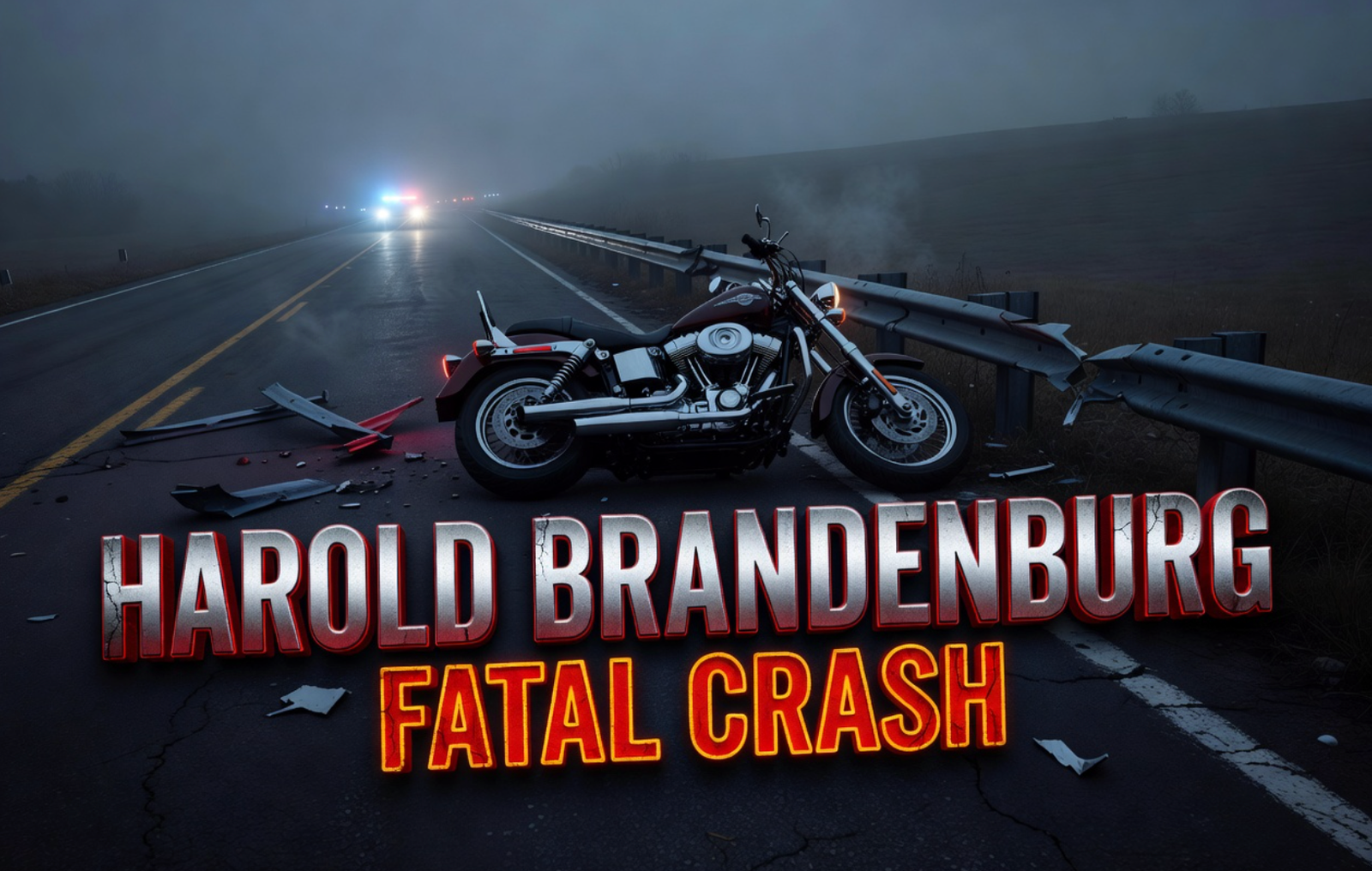
Harold L. Brandenburg Jr., 55, of Warsaw, Indiana, was killed Saturday afternoon after his motorcycle failed to navigate a curve on State Road 5 northbound in Huntington County.
Authorities say the crash happened around 4:20 p.m., approximately a quarter mile north of County Road 600 North. Brandenburg was riding a 2012 Harley-Davidson when the bike veered off its path, hit a guardrail, and launched him from the seat.
He was found by first responders on an embankment along the east side of the roadway. Despite emergency services being called to the scene, Brandenburg was pronounced dead at the location. He never had a chance.
Agencies That Responded to the Scene
The crash brought multiple agencies together on that rural stretch of highway. Several teams worked the scene side by side.
- Huntington County Sheriff’s Office
- Huntington City Police Department
- Bippus Fire Department
- Parkview Huntington Hospital EMS
- Huntington Central Dispatch
- Pearson’s Wrecker Service
The scale of the response reflects how seriously local authorities took the incident. Investigators documented evidence at the scene while emergency personnel worked the area before clearing the roadway.
What the Coroner Found
The Huntington County Coroner’s Office identified Brandenburg and officially ruled the cause of death as multiple blunt force injuries. His death was classified as accidental.
Authorities confirmed Brandenburg was not wearing a helmet at the time of the crash. That single fact carries enormous weight in a case like this.
The Huntington County Coroner’s Office and the Huntington County Sheriff’s Office are jointly investigating the circumstances surrounding the crash. Key questions remain unanswered, including what caused Brandenburg to lose control. Investigators will look at factors such as road conditions, speed, and possible mechanical failure. Toxicology results, which are standard in fatal crash investigations, may take several weeks to finalize.
Indiana’s Helmet Law and the Risk It Creates
Brandenburg’s crash puts a spotlight on a law that safety experts have long debated.
Under Indiana state law, riders aged 18 and older who hold a full motorcycle endorsement are not legally required to wear a helmet. Only riders under 18, and those riding with a learner’s permit, must wear one by law. At 55, Brandenburg was well within his legal right to ride without a helmet, and that is precisely the problem many safety advocates point to.
“Helmets reduce the risk of head injury by up to 69 percent and lower an operator’s risk of death by up to 37 percent.”
The statistics tell a sobering story. In Indiana, motorcycle crashes accounted for roughly 16 percent of all traffic fatalities, even though motorcycles made up less than two percent of all vehicles involved in collisions across the state. A DOT-approved helmet is estimated to be about 67 percent effective in preventing serious brain injuries. Yet, data shows that male motorcyclists aged 45 to 54 had the lowest helmet usage rate in all crashes at just 22 percent in Indiana. Riders in the 55 to 64 age group fared no better.
Indiana repealed its universal helmet law back in 1979 after Congress removed the federal government’s power to financially penalize states that lacked such laws. Today, Indiana sits among 28 states with only a limited helmet law. The result plays out on roads like State Road 5 every riding season.
A Bigger Problem Across Indiana Roads
Brandenburg’s death is not an isolated tragedy. It is part of a troubling pattern that safety officials across Indiana have been watching closely.
From 2019 to 2022, motorcycle fatalities in Indiana rose by 18 percent. Rural crashes are especially dangerous. Data shows that rural areas recorded a fatality rate of 5.0 percent per crash, compared to 3.3 percent in urban settings. The reasons are straightforward: higher speeds, less traffic control infrastructure, and slower emergency response times all add to the risk.
| Risk Factor | Impact on Motorcycle Fatalities |
|---|---|
| No Helmet | 78% of Indiana motorcycle deaths in 2020 involved riders not wearing a helmet |
| Rural Roads | Fatality rate is 5.0% per crash vs. 3.3% in urban areas |
| Motorcycle vs. Car Risk | Motorcyclists face a fatality rate nearly 25 times higher per mile traveled |
| Age Group 55-64 | Highest number of fatal accidents in Indiana by age bracket |
Nationally, motorcycles make up only 3 percent of all registered vehicles but account for 15 percent of all traffic fatalities. In 2023 alone, 6,335 motorcyclists were killed across the country. Indiana has consistently mirrored this national trend, with riders accounting for roughly 13 percent of all state traffic fatalities in recent years.
Guardrails, while lifesaving for car occupants, present a unique and serious danger to riders. A motorcyclist striking a guardrail at speed can suffer catastrophic trauma from the impact and force of ejection. The absence of a protective cabin, seatbelt, or airbag means riders absorb every ounce of energy from a crash directly.
Harold Brandenburg had a name, a home in Warsaw, and a Saturday afternoon ride he never finished. His death is a reminder that every curve on every rural road asks something of the rider, and that a single missed turn can close a life in seconds. As his family and the communities of Warsaw and Huntington County grieve his loss, the investigation continues and questions remain. Whether it leads to answers or only more sorrow, the road where he fell will be travelled again tomorrow by other riders, and the hope is that fewer of them will take that same risk without a helmet.
What do you think Indiana should do about its motorcycle helmet laws? Share your thoughts in the comments below and start the conversation.











Iowa Farmer Built Resilience for 16 Years Then Tariffs Hit Hard

HHS Adds FDA Tech and Drugs Deputies to Lock In AI and Review Power

Nvidia Earnings Carry a Built-In Sell-the-News Trap

HP Licenses Huawei Wi-Fi Patents Despite the Entity List

Poland Named in $131B F-15 Deal Echoes Apache Path

Sewer Scavengers Near Penn Station Repeat a Decades-Old NYC Pattern

Second Muni Fatigue Crash Exposes Surface Line Gaps

Chick-fil-A Chicken and Waffles Closes Its 80-Year Loop

Musk Data Centers Leave a Mississippi Family’s Historic Land Empty

OpenAI Data Center Chief Exits as Stargate Strategy Shifts

Double Fine Cuts 23 Jobs Weeks After Xbox Independence

Day-One Big Walk Lifts PS Plus August Beyond Recycled AAA

Curtis Mead’s Red Sox Debut Ends With Fractured Wrist

John Hight Exits Wizards After Digital Reckoning Hits

Red Sox Squander Hot Streak Chance in 4-3 Loss to Athletics

Moesch and Dressel Rewrite Night One at 2026 U.S. Nationals

Boutte’s Quiet Camp Takeover Forces Patriots Receiver Choices

Take-Two CEO Pushes Netflix Subs for GTA 6 Extended Look

Halo Campaign Evolved Skulls Meet Death Barriers That Kill the Hunt

Wildlands Free Update Hands Players the Tools They Already Invented
-

 TECHNOLOGY3 years ago
How to Adjust a Bulova Watch Band – An Easy Guide
-

 News3 years ago
Fred Pentland: Athletic Bilbao’s English mentor who changed the essence of Spanish football
-

 FINANCE3 years ago
Tax Planning for Every Season: Guide to Maximizing Your Tax Benefits
-

 Education3 years ago
African Ministers New Education Plan
-

 BUSINESS3 years ago
What is Entrepreneurial Operating System? A Comprehensive Guide to EOS
-

 Education3 years ago
Innovate Your Learning Journey with Technology and Enhance Education
-

 News3 years ago
Russians formally out of World Athletics Championships
-

 BUSINESS3 years ago
Top 9 Most Expensive American Cities to Rent an Apartment